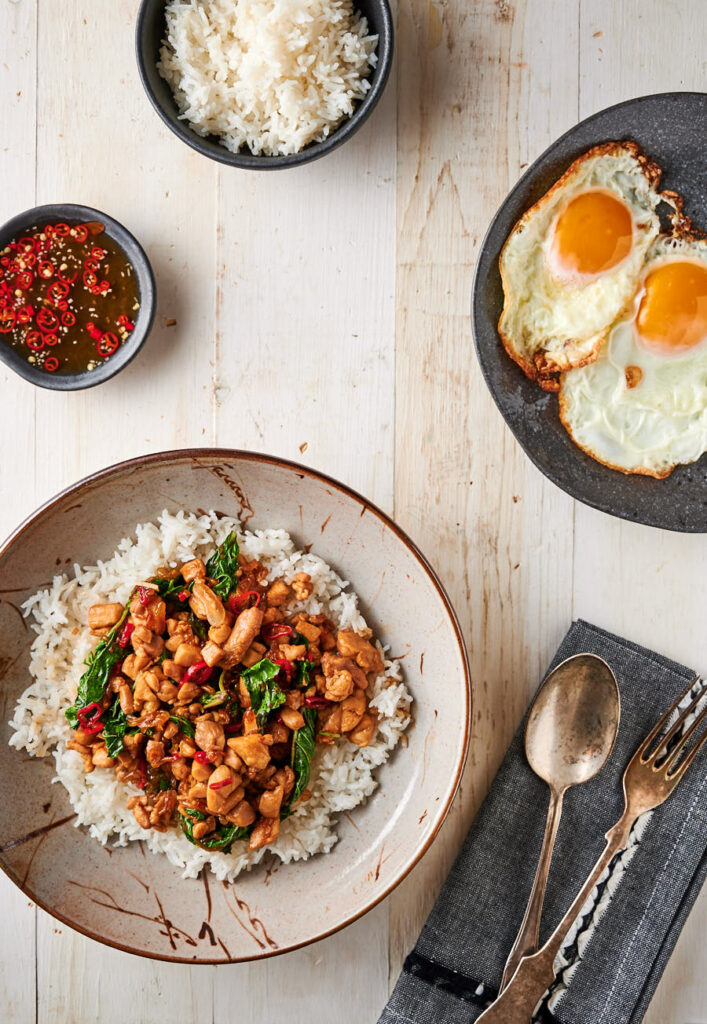
Thai basil chicken is a delicious mix of spicy, salty and savoury. It’s no wonder it’s almost as popular as pad Thai.
It’s easy to make. Way easier than pad Thai. Or Thai curry. Almost nothing to it. Chilies. Garlic. Shallots. Chicken. Basil. A super easy sauce. A quick stir fry.
Fifteen minutes max and dinner’s on the table. Fast food can be really good food. Sometimes it can be easy and delicious. This is one of those times.
Pad kra pao is street food
Just like pad thai. Pad kra pao. Thai basil chicken is street food. Takes about 7-8 minutes to make once your prep is done. High heat. Good reflexes. Focus. That’s what you need to make Thai basil chicken at home.
Once you start there’s no stopping. You need to pay attention. Be in the moment. When it’s done you have one seriously tasty dinner. Like something you could get in an alley in Bangkok. But in your kitchen. Think of the airfare you just saved…
You need to approach it like street food. Everything needs to be prepped. Ready to go.
Think about street food vendors. They have everything on hand. Close by. Toss in some of this. A bit of that. Stir fry. Serve. That’s what you need to do too.
Be ready. Thai basil chicken takes no time to make. You do not have time to screw around trying to chop shallots. Prep. Then cook. Or fail. Sad. But true. Don’t say I didn’t warn you.
Holy basil is not the same as regular Thai basil
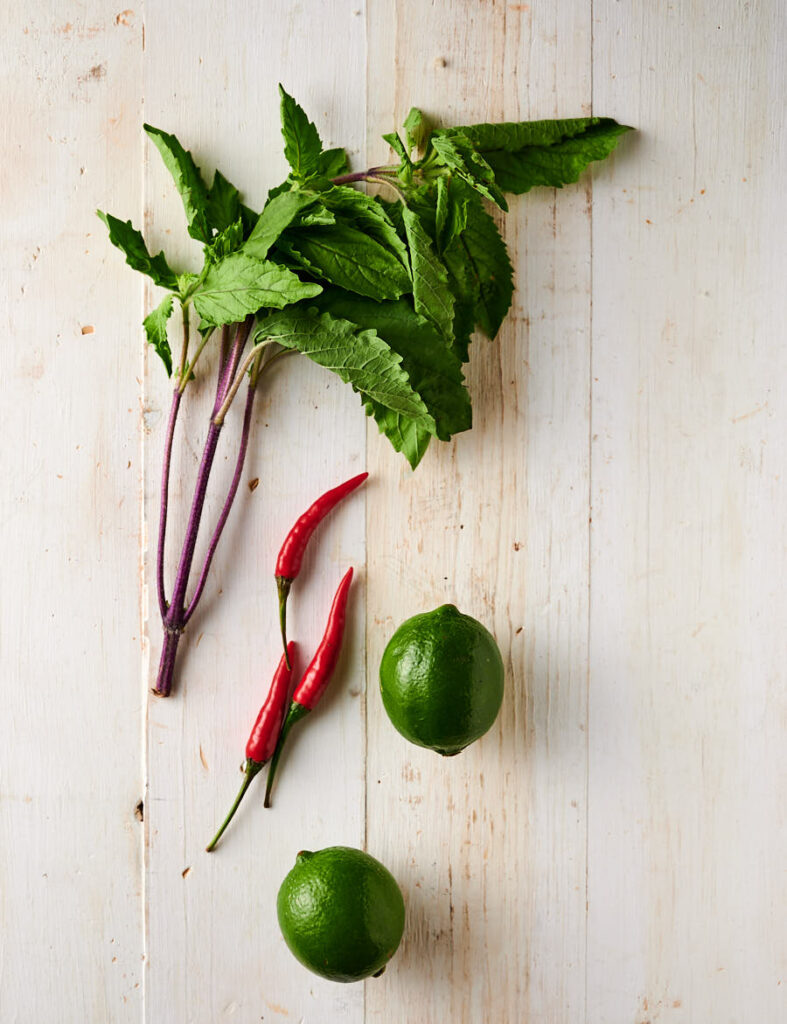
Holy basil is a thing. It is not some fancy name for Thai purple basil. And it’s not the same as Italian basil. Not even close.
It’s worth seeking out. It is somewhere between a green and an herb. It’s milder than other basils. A bit more peppery. Really good in this dish.
It’s not super easy to find where I live. Definitely Asian market territory. Don’t go looking for holy basil at a grocery store. Unless you live in Thailand I guess.
It’s a big part of Thai basil chicken. You can swap it out for Thai basil. That will still work. Different. But still tasty. Regular Italian basil though. Save that for your pesto.
Thai style fried egg
A fried egg is a classic topping for pad kra pao. But not just any fried egg. Thai style fried eggs are puffy, soft and crispy all at the same time.
Eggs are amazing things. You can do so many different things with them. If you’ve never tried frying eggs Thai style here’s one more for the list.
Lots of oil. High heat. A wok. And a spoon. That’s what you need. Heat a few tablespoons of oil in a wok. Until it shimmers. And you see wisps of smoke.
Then crack an egg into the wok. It will sputter. And sizzle. It may even scare you a bit. Be brave. It’s worth it.
Once the egg white is set up about half way through tilt the wok and spoon hot fat onto the top. Watch it puff up. It’s crazy.
As soon as the white is set remove the egg. Salt it. And eat the first one you make. So you know what it’s all about. Tasty stuff.
Leave the oyster sauce out for this Thai basil chicken
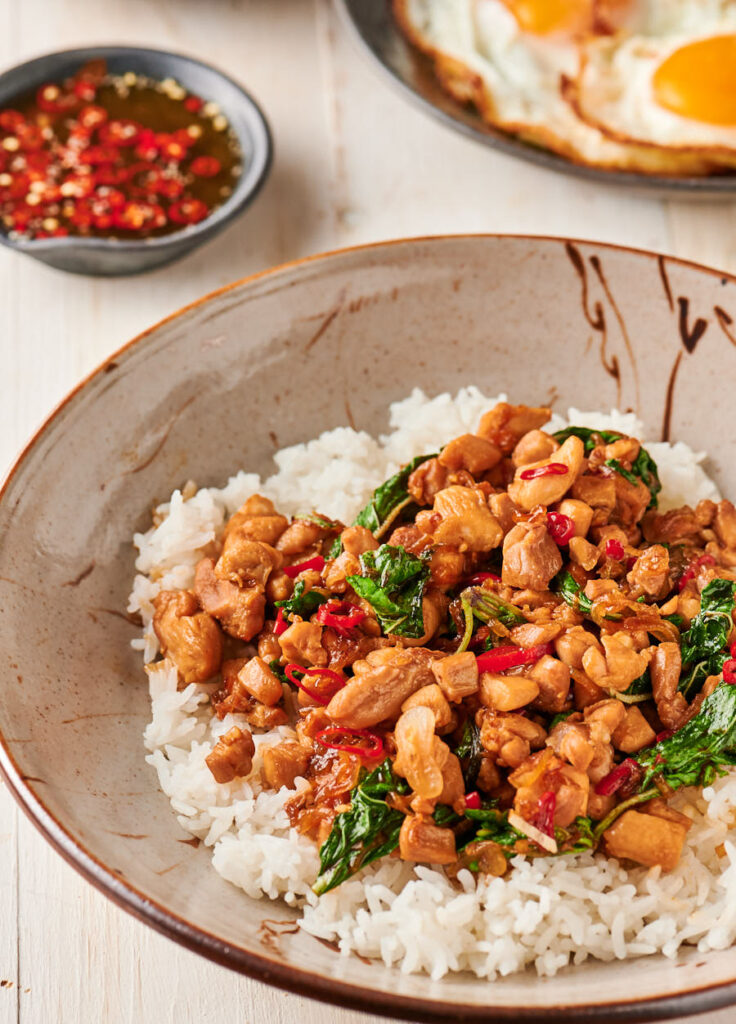
There are a lot of recipes for Thai basil chicken out there that include oyster sauce. This is not one of them.
I have nothing against oyster sauce. But I don’t like it here. From what I can tell oyster sauce is not authentic. Not that I care about authentic. I care about tasty. But in this case I think the more authentic approach is tastier.
Oyster sauce is salty. Fish sauce is salty. Dark soy is salty. Put all three things together and you get really salty. Or you don’t have enough fish sauce flavour. Either way it’s a step backwards.
Fish sauce is core to Thai cooking. So less of that doesn’t make sense. Dark soy is classic in this dish. Thai black soy in fact. Adds a little sweetness. And colour.
Something has to give. And for me oyster sauce doesn’t add much. Except salt. Too much salt. So I leave it out. I like it better that way.
If you really want oyster sauce I’d roll back on the soy before the fish sauce. But not one for one. Oyster sauce is way saltier than dark soy. Be careful.
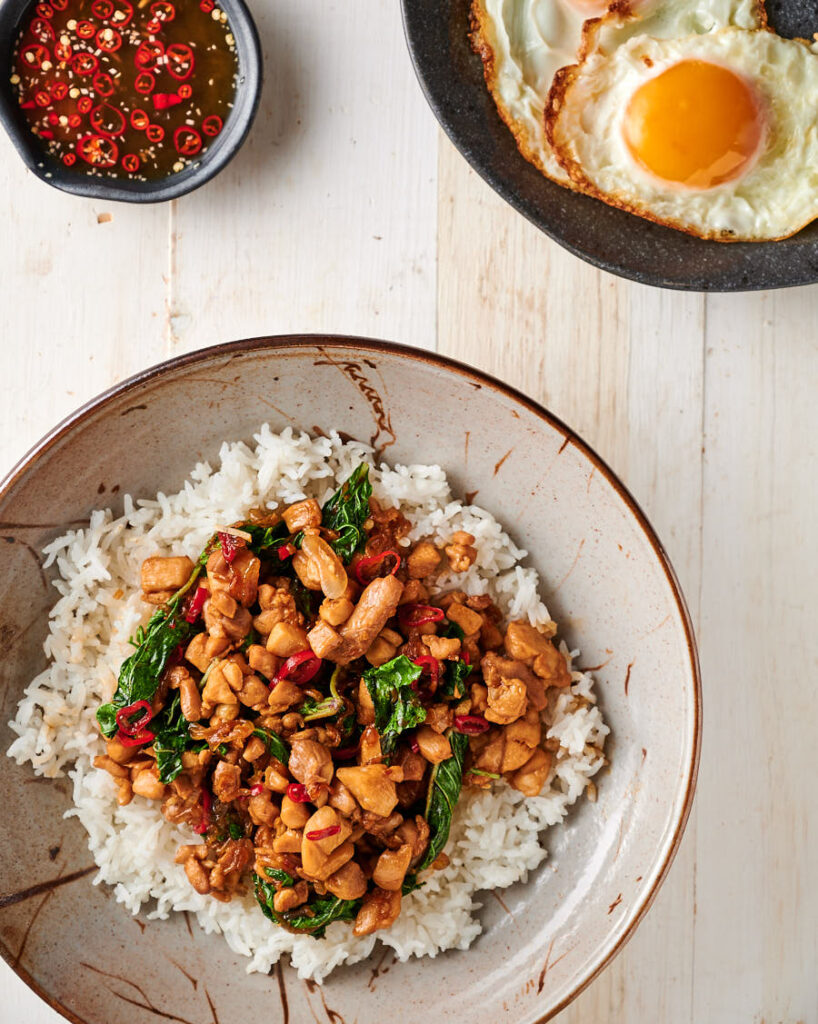
Pad kra pao is easy, fast and delicious
I love this type of recipe. Easy and delicious. Weeknight speed. Weekend taste. You need to be ready. But if you are it comes together in no time.
Not as easy as picking up the phone and ordering. But if you’re here you probably don’t care. A little work is worth it.
And it’s fun to cook. Especially the Thai style egg. You don’t get to do that everyday. Thai basil chicken. Pad kra pao. Call it what you want. But do try it if you like Thai flavours. It could become a house favourite.
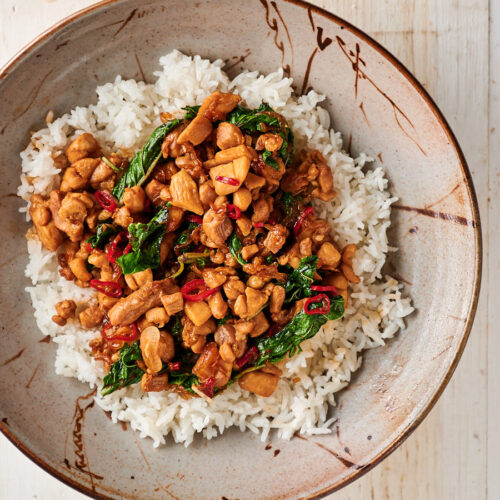
Thai basil chicken – pad kra pao
Ingredients
- 12 oz chicken thighs boneless, skinless and chopped into small pieces
- 1 cup shallots thinly sliced
- 1 tbsp garlic minced (chopped, not crushed)
- 2 tbsp fish sauce
- 1 tbsp dark soy – thai black soy is better here if you can get it.
- 2 thai red chilies thinly sliced
- 2 red finger hot chilies thinly sliced (or use more thai red chilies if you like really spicy)
- 1 tsp sugar
- 2 cups holy basil – you can use regular thai basil but it is not the same
- 3 tbsp vegetable oil
- 2 eggs
Instructions
Do your prep
- This is street food cooking. It goes fast. Really fast. Make the nam pla prik (see note) if you are serving it. Chop your chicken. Slice your shallots. Mince your garlic. Slice your chilies.
- Combine the fish sauce, sugar and dark soy. Set aside. If you are making more than 2 servings do all your prep. But don’t cook more than two servings (the whole recipe) at once. It won’t cook right if you try to double this recipe.
Fry your eggs Thai style
- Heat the 3 tbsp of oil in a wok over medium high heat.
- When the oil starts to shimmer add one egg. It should sputter and maybe puff up. Let it cook for until the whites are about half done. Now spoon a bit of the hot oil onto the egg white. It should puff up at this point. As soon as the white is set remove the egg from the wok. Repeat with the second egg. Set aside. You are going for eggs with a bit of crispy on the edges. Check out the pictures to get a feel.
Make your Thai basil chicken
- Turn your heat to medium. Add the garlic. Cook, stirring constantly, until the garlic just starts to colour up. If you burn the garlic start again.
- Add the chicken, chilies and shallots. Stir fry until the chicken is done. This takes around 4-5 minutes. But that depends on how big the chicken pieces are. And how powerful your stove is. Cook the chicken until it’s done.
- Add the soy fish sauce sugar mixture. Stir to combine. Add the basil and stir it into the chicken. As soon as the basil wilts it’s ready to serve.
- Thai basil chicken is great with rice and a bit of nam pla prik (see notes).
Notes
Nutrition

Thai basil chicken - pad kra pao
Ingredients
- 12 oz chicken thighs boneless, skinless and chopped into small pieces
- 1 cup shallots thinly sliced
- 1 tbsp garlic minced (chopped, not crushed)
- 2 tbsp fish sauce
- 1 tbsp dark soy - thai black soy is better here if you can get it.
- 2 thai red chilies thinly sliced
- 2 red finger hot chilies thinly sliced (or use more thai red chilies if you like really spicy)
- 1 tsp sugar
- 2 cups holy basil - you can use regular thai basil but it is not the same
- 3 tbsp vegetable oil
- 2 eggs
Instructions
Do your prep
- This is street food cooking. It goes fast. Really fast. Make the nam pla prik (see note) if you are serving it. Chop your chicken. Slice your shallots. Mince your garlic. Slice your chilies.
- Combine the fish sauce, sugar and dark soy. Set aside. If you are making more than 2 servings do all your prep. But don’t cook more than two servings (the whole recipe) at once. It won’t cook right if you try to double this recipe.
Fry your eggs Thai style
- Heat the 3 tbsp of oil in a wok over medium high heat.
- When the oil starts to shimmer add one egg. It should sputter and maybe puff up. Let it cook for until the whites are about half done. Now spoon a bit of the hot oil onto the egg white. It should puff up at this point. As soon as the white is set remove the egg from the wok. Repeat with the second egg. Set aside. You are going for eggs with a bit of crispy on the edges. Check out the pictures to get a feel.
Make your Thai basil chicken
- Turn your heat to medium. Add the garlic. Cook, stirring constantly, until the garlic just starts to colour up. If you burn the garlic start again.
- Add the chicken, chilies and shallots. Stir fry until the chicken is done. This takes around 4-5 minutes. But that depends on how big the chicken pieces are. And how powerful your stove is. Cook the chicken until it’s done.
- Add the soy fish sauce sugar mixture. Stir to combine. Add the basil and stir it into the chicken. As soon as the basil wilts it’s ready to serve.
- Thai basil chicken is great with rice and a bit of nam pla prik (see notes).
Notes
Nutrition
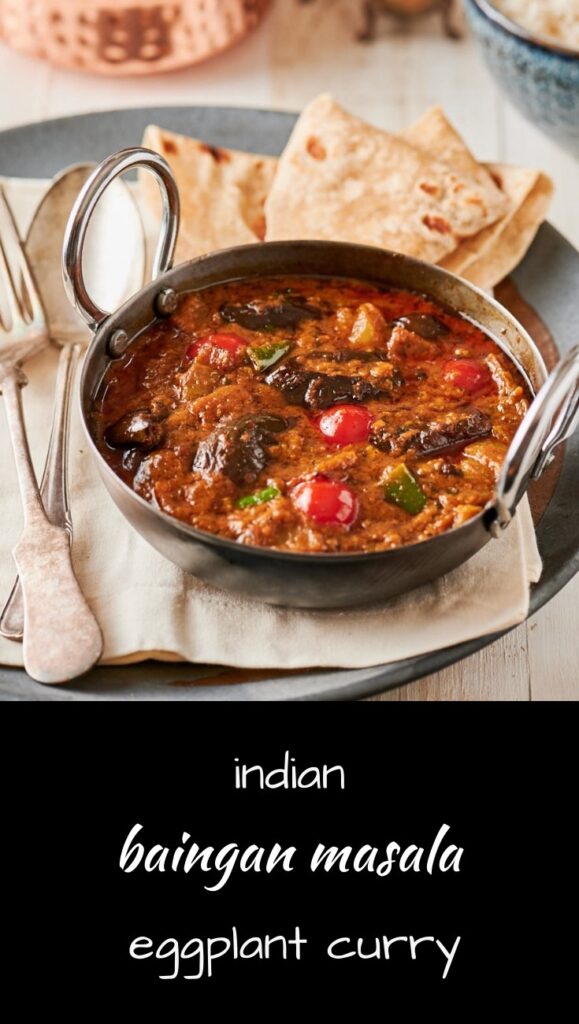
Eggplant curry makes an awesome vegetarian main course or side dish for any Indian meal. Big flavours of onion, garlic, ginger and spice. And that lush restaurant style sauce. This is one seriously tasty vegetable curry.
Baingan masala. Eggplant curry. Brinjal bhaji. Aubergine curry. It goes by many names. Doesn’t matter what you call it. It’s sure to satisfy.
I worked hard coming up with this one. Took me forever. They make it at my local Indian restaurant. But they wouldn’t give me any tips. Not a single one. So I kept tinkering. And I finally got it.
Baingan masala not baingan bhaji
That was my problem. My local restaurant calls it baingan bhaji. But it’s not. I looked at recipe after recipe. Couldn’t find anything close. Every recipe was mush. Like cream of eggplant. Not right. Tasty. But not what I was looking for.
The version I was after had pieces of eggplant. And skin. Texture. And taste that just was not like any recipe I tried.
It’s tough to figure things out when you have barely any clues. I ordered it again. And again. Poke at it. Test a theory. Then another. Slow going. My friends thought I was a bit mad. I am a bit mad actually. They weren’t surprised. Not really.
But finally I figured it out. And now I can make it any time I want. I’m tempted to go back to that restaurant and tell them I don’t need them anymore.
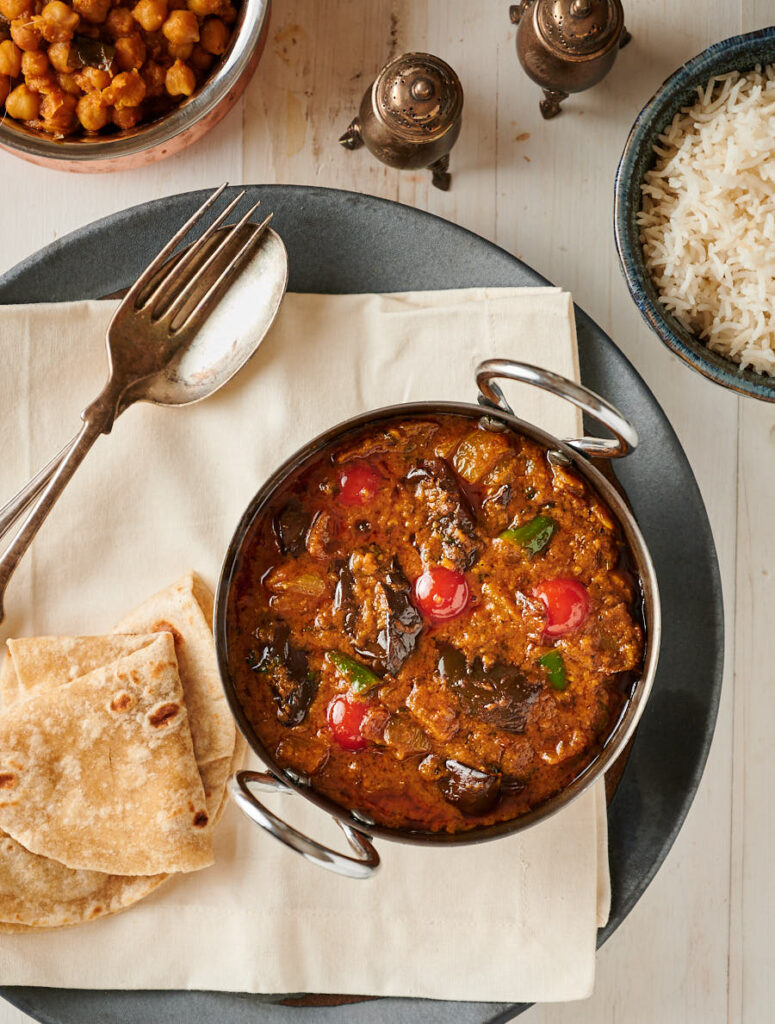
Eggplant matters when you make eggplant curry
That should not be a surprise. It’s eggplant curry. Or aubergine curry if that’s what you call it. Either way the eggplant you choose is important.
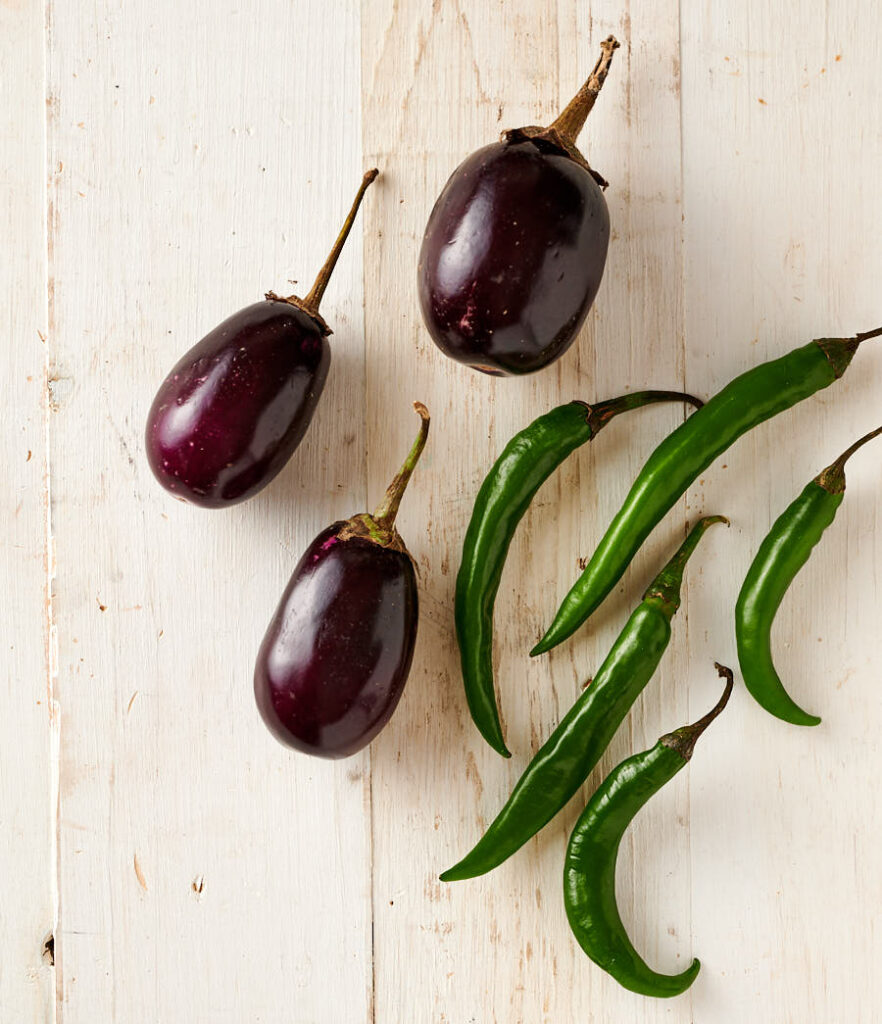
For Indian eggplant curry you need to use Indian eggplant. Those big Italian eggplants are just not right. Good for parm. Not so good for eggplant curry.
I get them at my local Indian grocer. The sign above them says brinjal. But they are also known as ratna. They are small. Like a big egg. Purple. Usually beat up. In a box in the back. Shopping at Indian grocers is a whole experience where I live.
I’m picky about this because you get a good mix of eggplant to skin. And the skin matters in this recipe.
Roasted works for eggplant curry
Eggplant is a sponge for oil And it’s really good when it soaks up a bunch of oil. But deep frying is a pain. Stinks up the whole house.
I do deep fry. Because sometimes you just have to. But for this dish you don’t. So I don’t. You can if you want to. Free country. If you don’t mind your house smelling like a deep fryer have at it.
I roast the eggplant for this curry. It works. Just coat the cut up eggplant with vegetable oil. And roast. Easy. And it doesn’t smell.
The one problem is the skin gets tough. But there’s a trick. Pull the eggplant from the oven. And put it into a tupperware. Seal the tupperware. And let it sit on the counter.
The eggplant steams a bit in the tupperware. The skin softens up. It softens up some more in the curry. So you get a mix of textures. The creamy eggplant. Up against an ever so slightly toothy skin. It works.
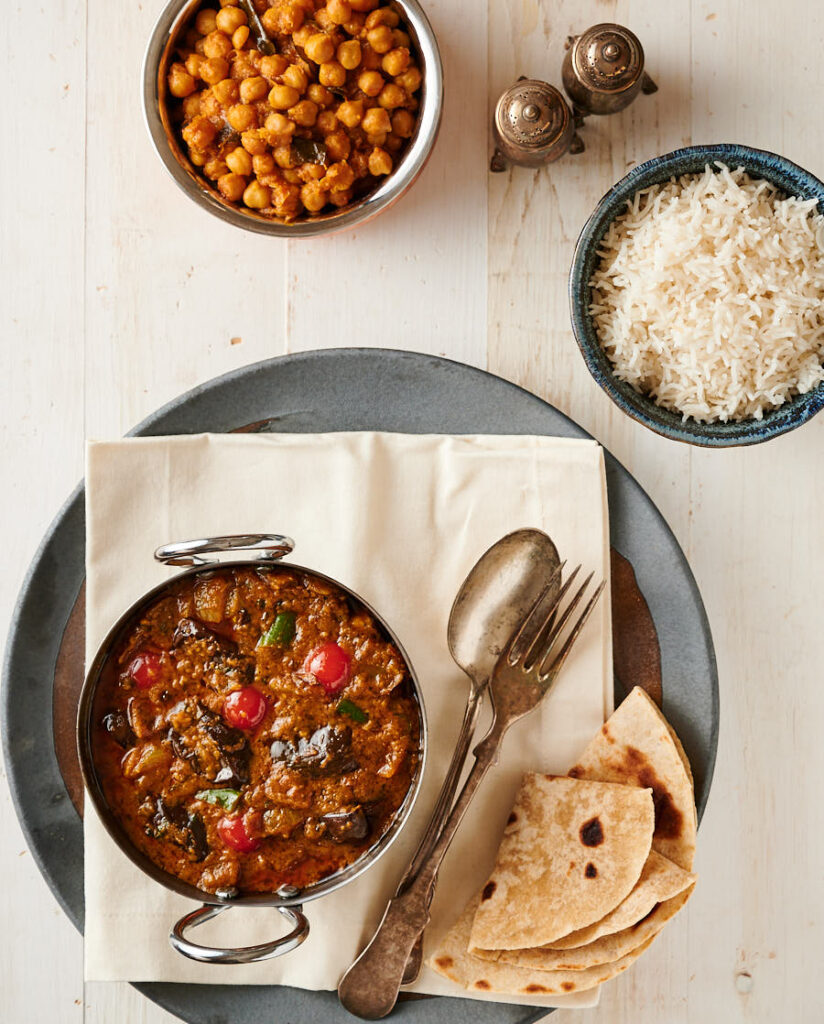
This is Indian restaurant style cooking
To get the restaurant flavours you can’t just talk the talk. You need to walk the walk. So you need to cook the same way they do in restaurants.
That means using curry base. And restaurant style spice mix. And high heat. Lots of prep. Everything ready to go.
Then it’s about technique. And timing. It’s not hard. I’ve written a whole primer on Indian restaurant technique . Read that and you’ll be good to go. Ready to tackle any Indian restaurant style recipe.
There are lots of recipes out there that say “restaurant style”. A lot of them aren’t even close. You need to walk the walk.
And wear old clothes. This is messy stuff. Splatter. Turmeric. Clothing destruction cooking. But it’s fun. And it works.
Eggplant curry. Baingan masala. Brinjal bhaji. Whatever you want to call it, it was a tough one for me to figure out.
But now I know. And so do you. Try it. You won’t be disappointed.
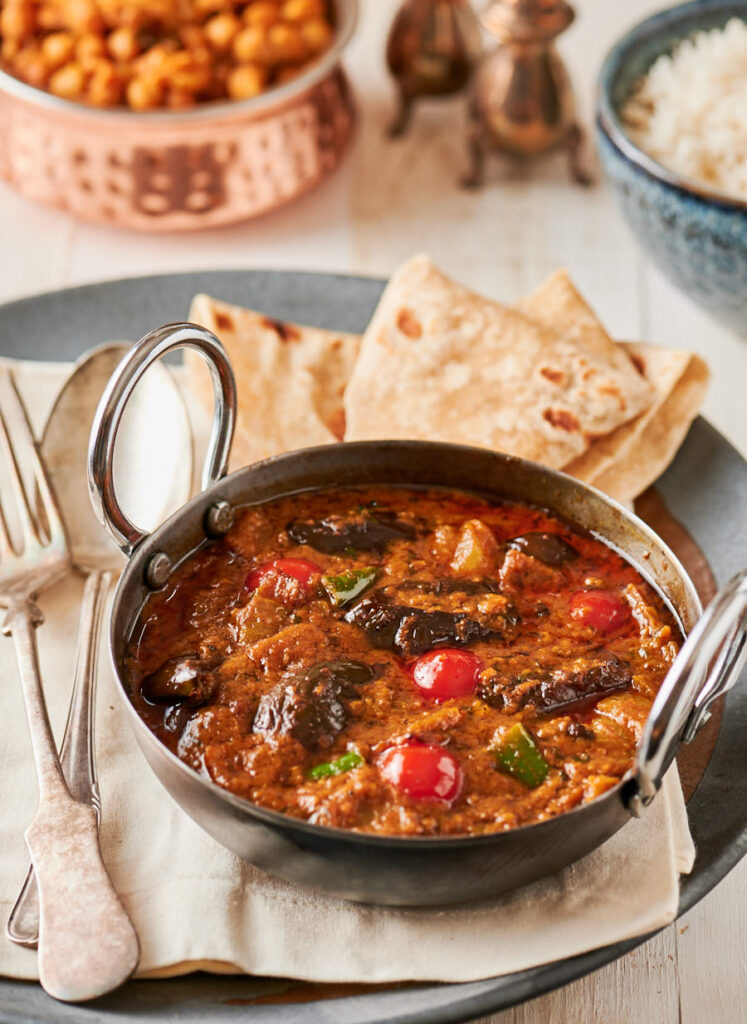
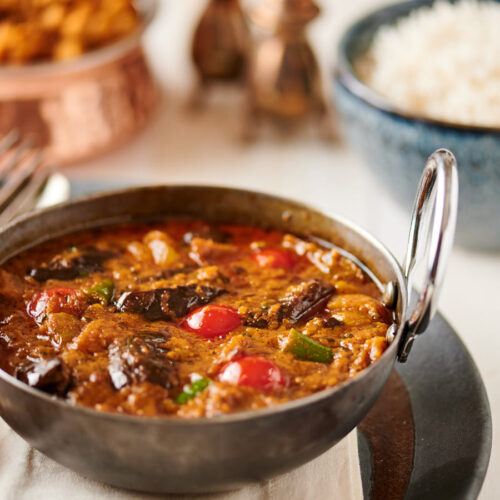
eggplant curry – baingan masala
Ingredients
Spice mix
- 2 tsp Indian restaurant spice mix – recipe link below
- 1 tsp kasoor methi – fenugreek leaves
- 1 tsp kashmiri chili powder
- 1/2 tsp amchoor powder – dried mango powder
- 1/2 tsp kosher salt
Eggplant curry
- 3-4 Indian eggplants aka ratna or brinjal
- 3 tbsp vegetable oil
- 1/2 tsp cumin seed
- 1/2 onion coarsely chopped
- 1 tbsp garlic ginger paste
- 1 green chili sliced lengthwise and cut into 3/4 inch pieces
- 15 oz curry base – recipe link below
- 1 tbsp cilantro stems finely chopped
- 5-6 cherry tomatoes sliced in half
- vegetable oil to coat the eggplant
Instructions
Roast the eggplant
- Pre-heat your oven to 350 degrees
- Remove the stem from the Indian eggplant. Cut each eggplant into 4 wedges lengthwise. Think of cutting an egg in half for deviled eggs and then half again. Cut it that way.
- Toss the eggplant in a little vegetable oil. You don’t want to drown it but make sure every piece is coated.
- Place on a cookie sheet or pizza pan, skin side down. Sprinkle with salt.
- Roast in the oven until the eggplant is soft and just starting to colour. This should take about 25 minutes.
- When the eggplant comes out of the oven the skin will be hard. You don’t want that. Place the hot eggplant in a small tupperware and cover. Set aside on the counter for 30 minutes. The skin will soften.
Make the baingan masala
- Pick a skillet that can take heat. Something with an insulated handle is good. Put on some shabby clothes. Cooking Indian restaurant style is messy stuff.
- Place the skillet over medium low heat.
- Add 3 Tbsp of oil. When it starts to shimmer add the onions and cook until the edges of the onions start to colour. This should take 3-4 minutes. Add the cumin seed and green chilies and cook another 30 seconds or so.
- Move the onions to one side. There should be a fair bit of oil in the bottom of the pan. Add the spice mix and stir to thoroughly coat the spices in oil. It should start to bubble a bit. Cook the spices for about 30 seconds. Watch your pan carefully. You don’t want to let your spices burn.
- Add the garlic ginger paste and chopped cilantro stems and stir the spices, garlic ginger paste and onions to combine. Cook about 30-45 seconds.
- Turn the heat up to medium high. Add 3 oz of curry base. Stir to combine. Let cook about a minute. You should see craters forming and a bit of oil separating out.
- Now add 6 oz of curry base. Stir to combine and cook about 90 seconds. You want to see the same little craters.
- Add the remaining curry base. Stir to combine. Reduce the heat to medium low.
- Add the eggplant, stir to combine and let simmer about 3 minutes. Then add the cherry tomatoes and let simmer another minute or two.
- Garnish with a bit of chopped cilantro if desired. Serve with rice or Indian flatbreads. This makes a great vegetable side dish or vegetarian main course.
Notes
Nutrition