Shanghai sweet and sour spare ribs. Tang Cu Pan Gu. That’s Mandarin for seriously tasty.
Tender pork ribs. A sticky garlic black vinegar sauce. Sweet and sour in perfect balance. Complex. Tangy. Addictively delicious. I can’t stop eating them.
This may not be what your takeaway is making. Not yet anyway. But it is what they should be making.
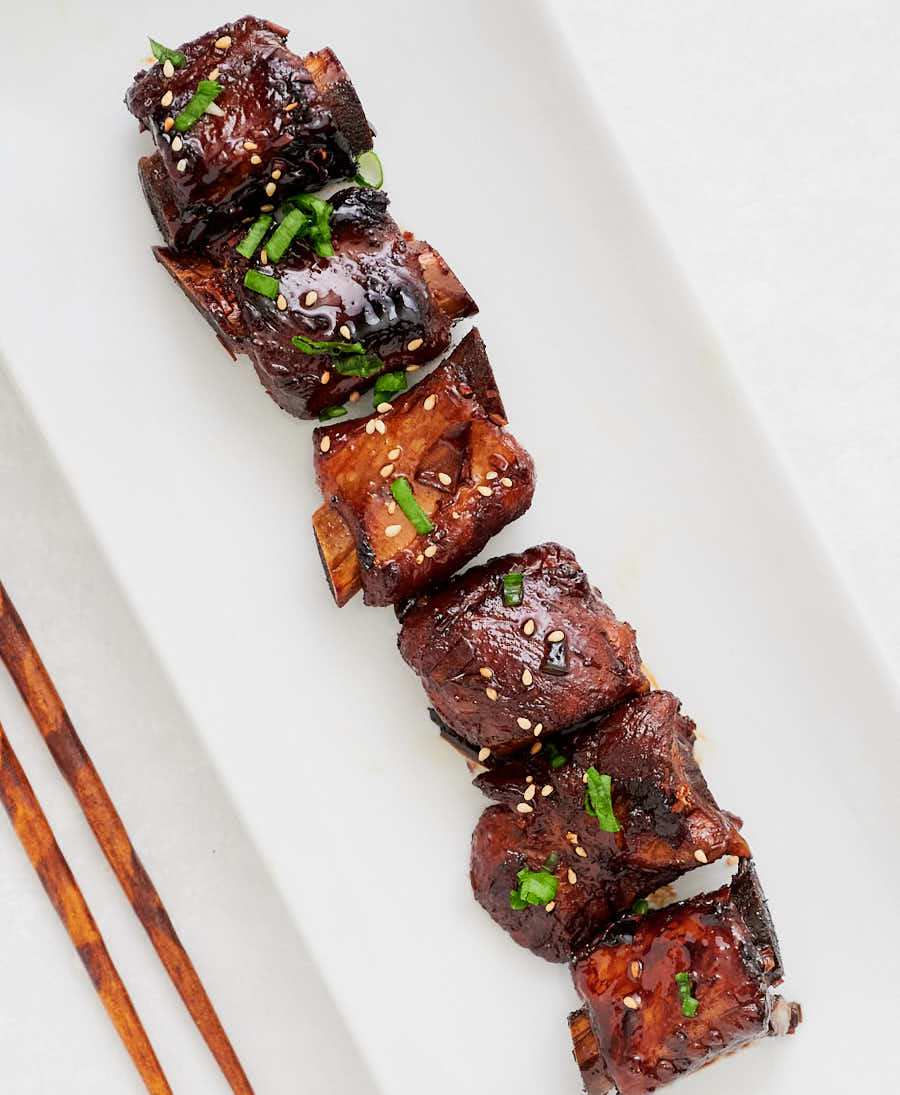
The sour in sweet and sour spare ribs comes from black vinegar
You’ve probably never heard of black vinegar. It sounds scary. But it’s not. It’s vinegar. Not that different from other vinegars.
It’s sour. Has vinegar in the name so that shouldn’t be a surprise. But it’s more than just sour. It has a lot going on. Hints of anise. Malt. Umami.
It’s China’s answer to balsamic vinegar. Craft vinegar. That doesn’t mean balsamic is interchangeable though. Don’t make that mistake. No matter what the internet says.
Definitely worth getting your hands on a bottle. It’s not just for Shanghai sweet and sour spare ribs. You’ll find other uses for it.
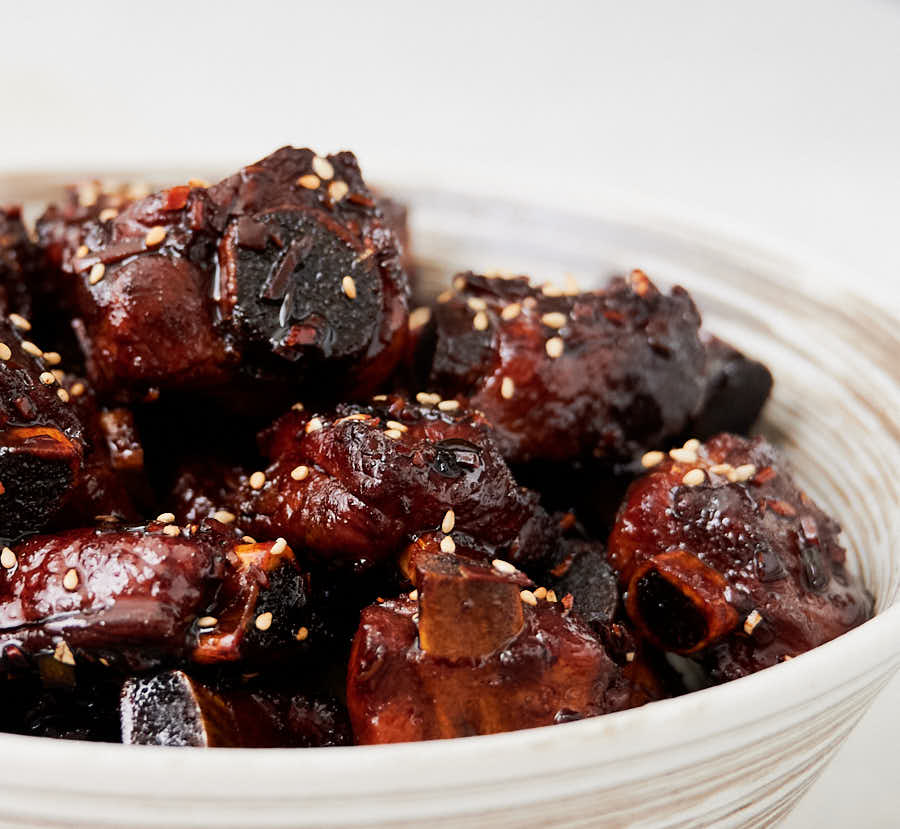
Sweet and sour spare ribs are mostly about technique
This is a rib recipe. Ribs are slow food. And this starts off as a slow food type recipe.
Before you even pull out your wok you need to braise the ribs. That’s technique number one. One everyone needs to know.
Not just a regular braise. Not quite. I’m borrowing from my tonkotsu ramen broth. Blanching. Toss the ribs in a pot. Enough water to cover the ribs. Bring it to a lively boil for a minute or two.
You’ll see a mess of gunk form at the surface. I don’t like gunk. Nobody likes gunk. That’s why it’s called gunk. If it was good they’d call it crema.
So down the drain it goes. Wipe out the pot. Give the ribs a quick rinse under cold water and return to the pot.
Add water to cover the ribs again. A few flavourings this time. Shaoxing wine. Soy. Star Anise. A gentle simmer. And time. Time to get the ribs tender.
Tender can be a guess. Stick a fork in the ribs. Take your best guess. But I like a more disciplined approach. Internal temperature is how I do it.
These ribs are ready at around an internal temperature of 195F. 198F is probably OK too. But 185F is probably not. That’s the magic of cooking wit science.
Easy. Repeatable. Foolproof. An instant read thermometer is secondon my list of favourite kitchen tools. Right after sharp knives.
A good set of restaurant tongs are third on my list if you’re wondering.
Don’t dump the broth
The liquid left over after you braise the ribs? That’s pork stock. Tasty, tasty pork stock. With great Asian background flavours.
Do not pour that down the drain. It’s tasty stuff. And tasty stuff makes for tasty dishes. Like an Asian inspired pork noodle soup.
Yes. Pork noodle soup. That’s not a thing. Not yet. But it could be. Should be even. It’s delicious. I’ll be replacing this text with a link to one as soon as I publish it.
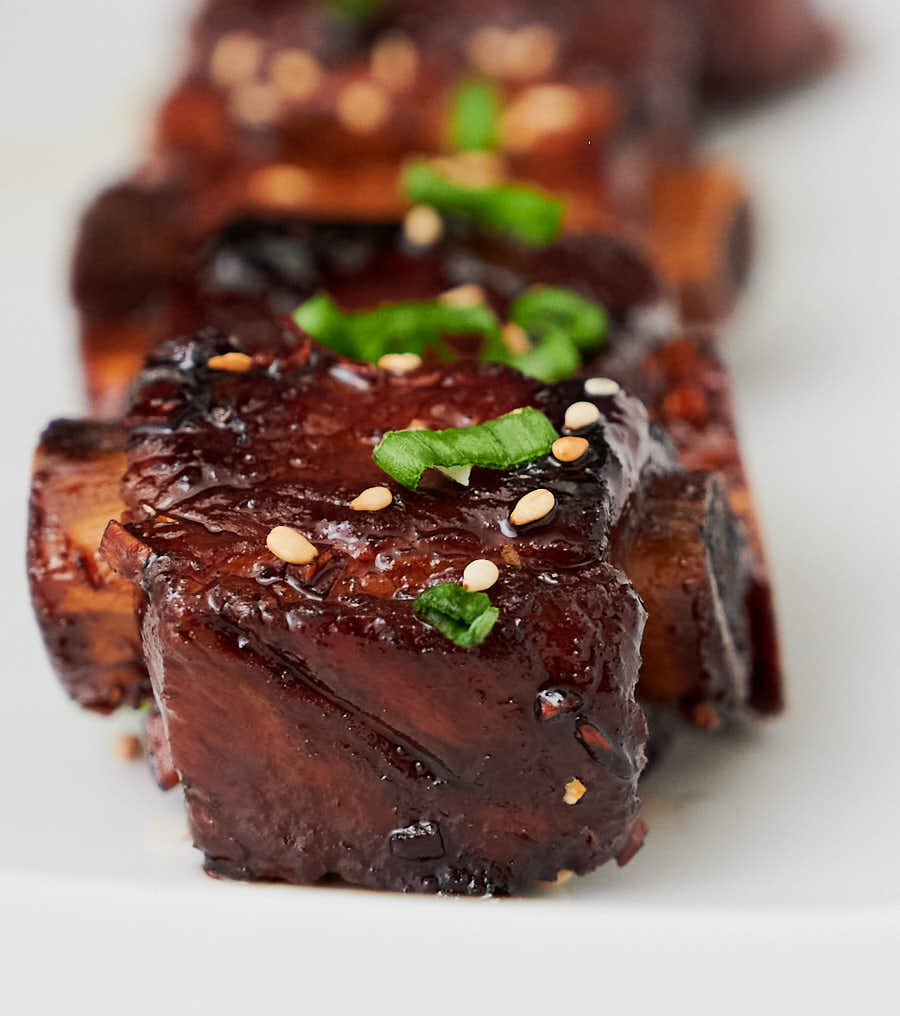
Shanghai sweet and spare sour ribs go fast in the wok
Hopefully you have a good sized wok. Or a big skillet and nerves of steel. This part goes fast. Braising is slow. Wok cooking is fast.
Heat the oil. Add the rock sugar. And wait for it to melt. That’s the sweet in sweet and sour ribs. It’s also why I think a wok is key for this recipe. Narrow at the bottom.
Melting sugar in oil isn’t something I do a lot. But it’s a super handy trick. And by the time the sugar melts it magically turns a lovely caramel colour.
Ribs go in next. This is where having a wok spatula is a wonderful thing. Best $15 I’ve ever spent. And I got a super fancy one.
Leave the wok on the stove. Use the spatula to move things around. Unless you have big wok mojo. In which case go nuts.
You want the ribs well coated with the candy oil. That’s the goal. When everything starts to look shiny and delicous you know you’re done.
Choice of soy matters
If you’ve never done a soy tasting you should put it on your bucket list. In the super easy section. But still. The subtleties are amazing. And they’re not all that subtle.
Thai is not the same as Indonesian is not the same Japanese is not the same as Chinese. And there are variations from each country. It’s a bit of a rabbit hole.
So it shouldn’t be a huge surprise that Chinese soy is right for Chinese. But it doesn’t stop there.
There’s all purpose soy. That’s probably what you have in your fridge. Jack of all trades. But not really. I don’t think anyway.
It can stand in for light soy. Pretty close I find. So I don’t really understand why you wouldn’t just stick with light. And leave the all purpose at the store.
And there’s Chinese dark soy. Any time you see a dark, shiny Chinese dish it’s a safe bet there’s dark soy in the mix.
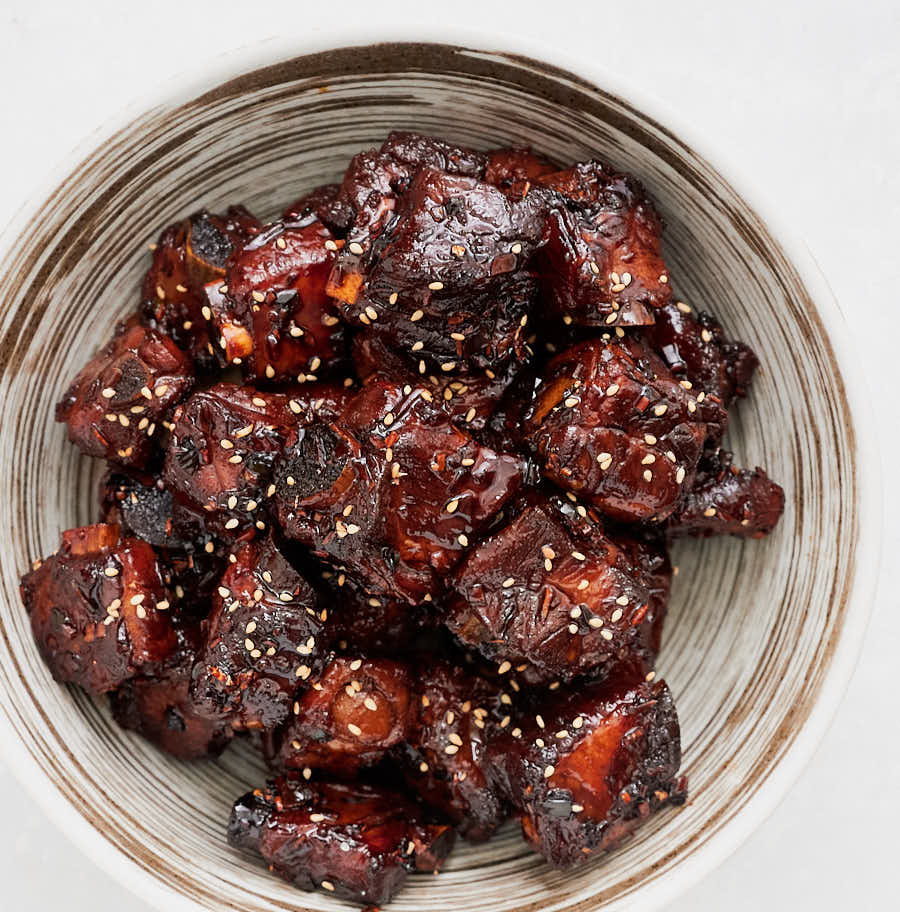
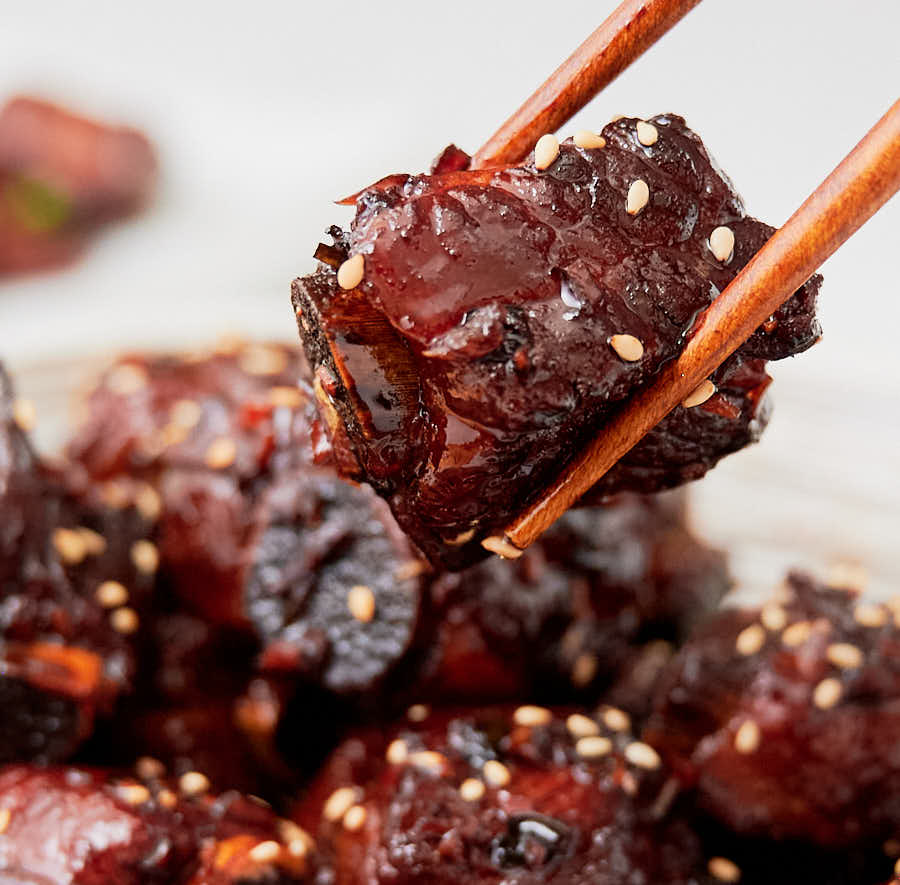
Have a look at the pictures. Shanghai sweet and sour spare ribs is all about the dark soy. If you don’t have it you need to go shopping. It’s magical stuff.
You need to try these sweet and sour spare ribs
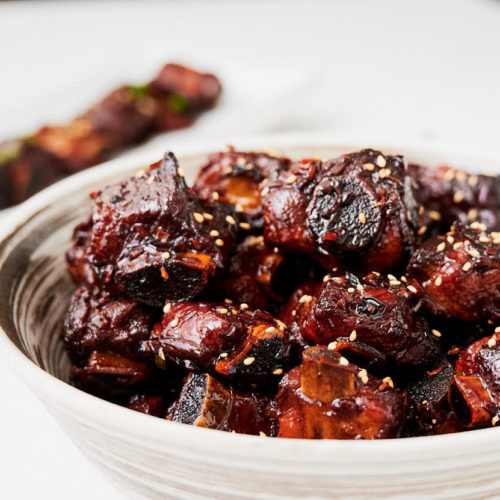
Tang Cu Pan Gu. Shanghai sweet and sour spare ribs. Doesn’t matter what you call them. What you need to do is make these.
There’s a lot going on. The fattiness of the ribs. Balanced by the acid in the black vinegar. Sticky sweet but not cloying. A bit salty. Like a good barbecue sauce.
Garlic, chili and sesame oil for complexity. Dark soy to bring it home. Deceptively simple. Seriously delicious. Shanghai sweet and sour ribs. I’m a fan.
Shanghai sweet and sour spareribs
Ingredients
Pre-cooked spareribs
- 1.5 lbs spare ribs cut into individual ribs and into one inch pieces. Your grocer or butcher should be able to help.
- 3 tbsp all purpose soy
- 2 tbsp shaoxing wine
- 1 star anise
- enough water to cover
The sweet and sour ribs
- the pre-cooked ribs from above
- 2 tbsp neutral oil – something with a high smoke point like canola or safflower. Not olive oil. Please not olive oil.
- 2 Ounces rock sugar – by weight. About 1/4 cup
- 1 tbsp minced ginger
- 2 tbsp minced garlic
- 1 tbsp minced fresh green chili – seeded finger hot or jalapeño work nicely
- 2 tbsp dark soy
- 1 tbsp black vinegar – available at Chinese groceries
- 1 tsp sesame oil
- 1/2 tsp ajinomoto aka MSG (optional but not really optional)
- 1 tbsp shaoxing wine
Instructions
Braise the ribs
- Blanching meat when making stocks is a great trick I am borrowing from making Tonkotsu broth. Grab a pot large enough to hold the ribs, cover with water and bring to a boil over medium heat. Let them boil a couple of minutes.
- You should be looking at a big raft of gunk at this point. Strain the ribs, discarding the liquid and give them a good rinse under cold water. Why cold? Because the ribs are hot and you are going to have to handle them.
- Depending on how gunked up the ribs are you may have to rinse each rib individually. The pork broth you are going to make here is great for noodle soups. You will want to keep it.
- Combine the 3 tbsp all purpose soy sauce, 2 tbsp shaoxing wine, the star anise, water and the now blanched ribs in the same pot (rinsed of any gunk from the previous step). I prefer a pot over a wok here but that’s just me. Do what you know.
- Bring to a simmer, cover and cook until the ribs are just tender. If you have an instant read thermometer 195-200F is your target. This should take between 1 and 2 hours. Depends on just how meaty your ribs are.
- Remove the ribs from the liquid. Strain the liquid and store in the fridge. When cooled, skim the fat from the surface. You now have some great stock for an Asian noodle soup.
- If you get into these ribs you can make big batches and freeze them. That way you can make these ribs any night of the week.
Make the ribs
- Do your prep. This is going to go fast. Chop your garlic, ginger and chilies. Combine the soy, black vinegar and sesame oil in a small bowl. Measure out your shaoxing wine.
- Preheat your wok. I’d say 12 inches is about the minimum diameter you want here.
- Add the oil and rock sugar. Stir until the sugar melts and you turns light caramel colour. This should take three or four minutes.
- Add the ribs and toss until they are well coated with the caramel. You’ll be able to clearly see what is coated and what is not.
- Add the garlic, ginger and chilies. Cook, tossing the ingredients in the pan for about 30 seconds. You want to keep things moving here to make sure you don’t burn the garlic.
- Turn the heat up. Add the soy/vinegar/sesame oil mixture. Pour it down the sides of the wok. It isn’t easy getting wok hei at home. Everything helps. Add the MSG if using.
- Cook for about a minute. You want things to reduce a bit. Then add the shaoxing wine. Cook another minute or so.
- Serve garnished with sesame seeds if you like.
Notes
Nutrition
Shanghai sweet and sour spareribs
Ingredients
Pre-cooked spareribs
- 1.5 lbs spare ribs cut into individual ribs and into one inch pieces. Your grocer or butcher should be able to help.
- 3 tbsp all purpose soy
- 2 tbsp shaoxing wine
- 1 star anise
- enough water to cover
The sweet and sour ribs
- the pre-cooked ribs from above
- 2 tbsp neutral oil - something with a high smoke point like canola or safflower. Not olive oil. Please not olive oil.
- 2 Ounces rock sugar - by weight. About 1/4 cup
- 1 tbsp minced ginger
- 2 tbsp minced garlic
- 1 tbsp minced fresh green chili - seeded finger hot or jalapeño work nicely
- 2 tbsp dark soy
- 1 tbsp black vinegar - available at Chinese groceries
- 1 tsp sesame oil
- 1/2 tsp ajinomoto aka MSG (optional but not really optional)
- 1 tbsp shaoxing wine
Instructions
Braise the ribs
- Blanching meat when making stocks is a great trick I am borrowing from making Tonkotsu broth. Grab a pot large enough to hold the ribs, cover with water and bring to a boil over medium heat. Let them boil a couple of minutes.
- You should be looking at a big raft of gunk at this point. Strain the ribs, discarding the liquid and give them a good rinse under cold water. Why cold? Because the ribs are hot and you are going to have to handle them.
- Depending on how gunked up the ribs are you may have to rinse each rib individually. The pork broth you are going to make here is great for noodle soups. You will want to keep it.
- Combine the 3 tbsp all purpose soy sauce, 2 tbsp shaoxing wine, the star anise, water and the now blanched ribs in the same pot (rinsed of any gunk from the previous step). I prefer a pot over a wok here but that’s just me. Do what you know.
- Bring to a simmer, cover and cook until the ribs are just tender. If you have an instant read thermometer 195-200F is your target. This should take between 1 and 2 hours. Depends on just how meaty your ribs are.
- Remove the ribs from the liquid. Strain the liquid and store in the fridge. When cooled, skim the fat from the surface. You now have some great stock for an Asian noodle soup.
- If you get into these ribs you can make big batches and freeze them. That way you can make these ribs any night of the week.
Make the ribs
- Do your prep. This is going to go fast. Chop your garlic, ginger and chilies. Combine the soy, black vinegar and sesame oil in a small bowl. Measure out your shaoxing wine.
- Preheat your wok. I’d say 12 inches is about the minimum diameter you want here.
- Add the oil and rock sugar. Stir until the sugar melts and you turns light caramel colour. This should take three or four minutes.
- Add the ribs and toss until they are well coated with the caramel. You’ll be able to clearly see what is coated and what is not.
- Add the garlic, ginger and chilies. Cook, tossing the ingredients in the pan for about 30 seconds. You want to keep things moving here to make sure you don’t burn the garlic.
- Turn the heat up. Add the soy/vinegar/sesame oil mixture. Pour it down the sides of the wok. It isn’t easy getting wok hei at home. Everything helps. Add the MSG if using.
- Cook for about a minute. You want things to reduce a bit. Then add the shaoxing wine. Cook another minute or so.
- Serve garnished with sesame seeds if you like.
Notes
Nutrition
Sometimes I do blog posts just for me. This is one of those times. This is my go to coleslaw. Posted so I have always have it handy.
This isn’t even my recipe. It’s from The New York Cookbook by Molly O’Neill. That book has about a million recipes in it. I have no idea how I found this one.
But I did. About 300 years ago. And I’ve been making it ever since.
You’d think I would have it memorized by now. I almost do. But somehow I’m never 100 percent sure. The quantities are close. 1 cup vs 3/4 cup. Which is which?
So I’m writing it down. So I can always find it. Seriously. This one is for me. I’m not joking…
But you can make it too. I hope you do. It’s definitely worth making. I think anyway.
I wasn’t planning to post this. The notion just popped into my head as I was making it. I’m not even at home.
Grabbed the pics with my phone. I promise I’ll try harder next time…
Coleslaw with a tangy bite
I love this coleslaw. Because it is the perfect counterpoint to big barbecue. I serve it with ribs. With brisket. Pulled pork. Anything fatty. If it doesn’t fly. Or swim. Then this is the one.
It works because it’s not creamy. It’s a little tart. And a little sweet. Has just the right amount of crunch.
Creamy coleslaws have their place. Creamy coleslaw is great with grilled chicken. Or turkey. A hamburger even. Kind of somewhere between salad and potato salad.
But for pork and brisket and beef ribs I always, always, always turn to this one.
There are no secret ingredients in this slaw
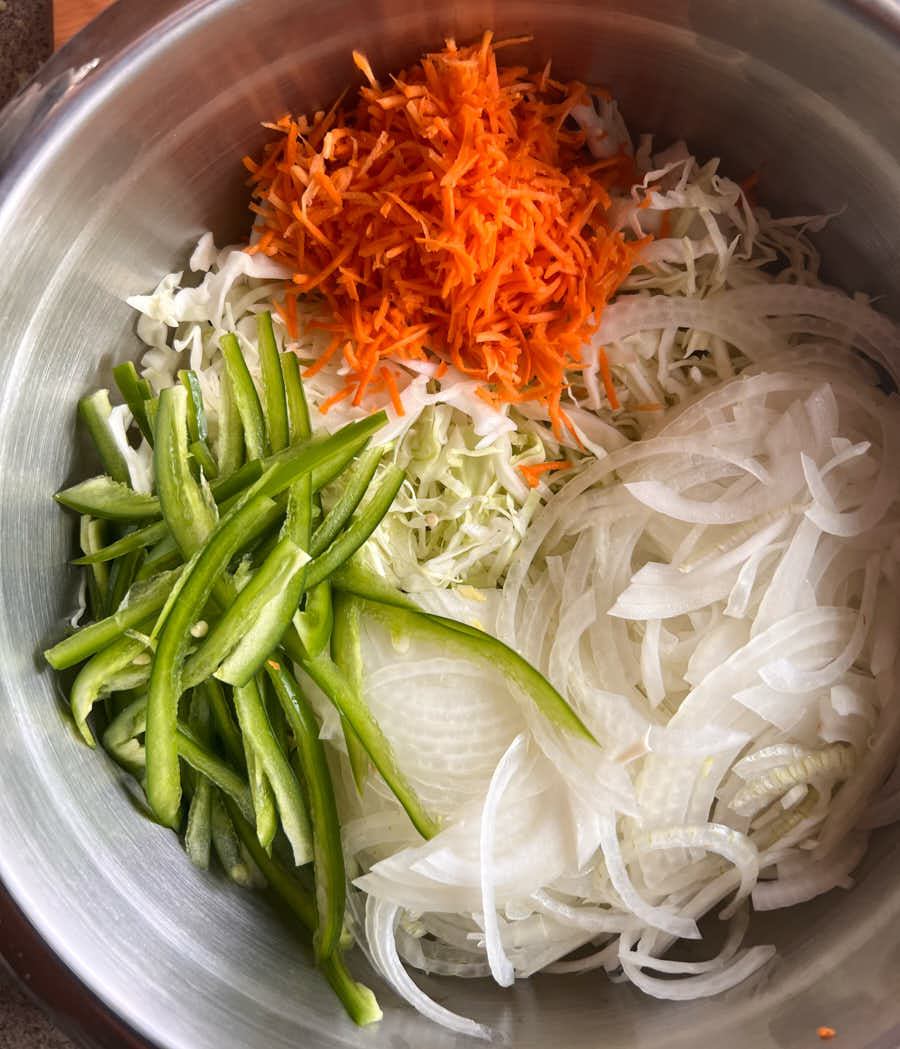
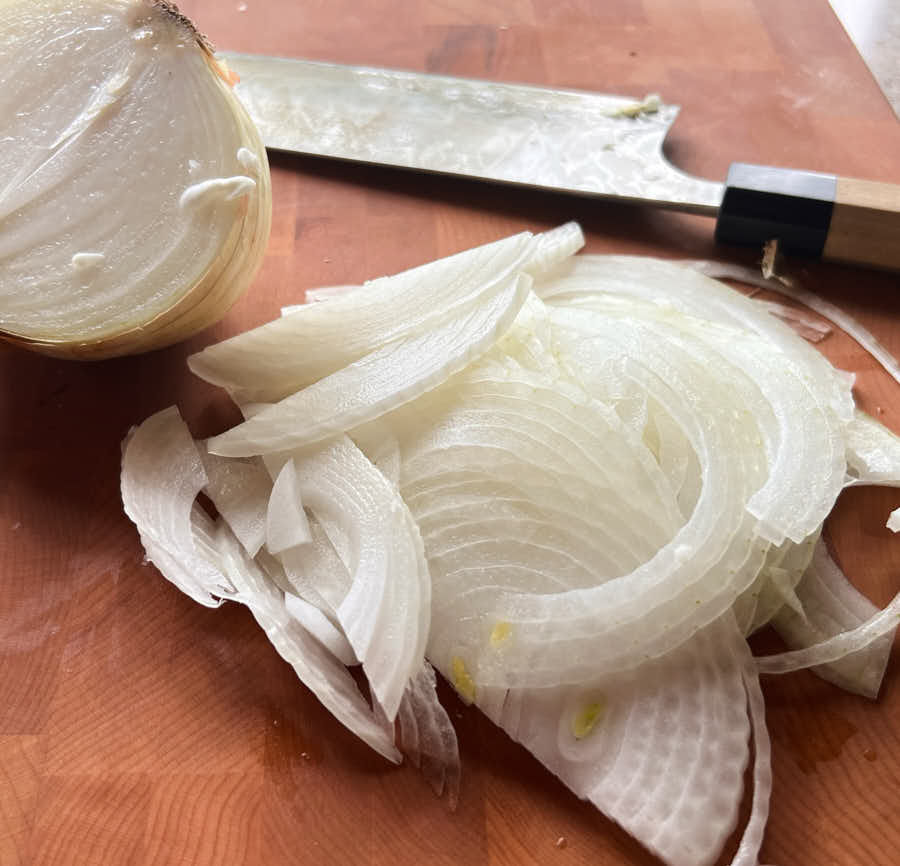
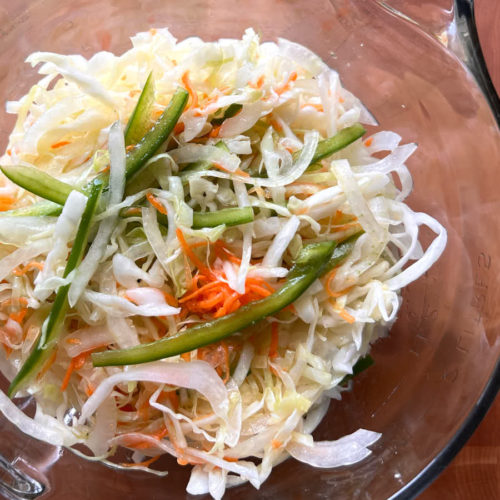
This slaw is about cabbage. And Spanish onion. There’s a little green pepper. For a hint of flavour. And some carrot for colour.
I do swap in jalapeños for green peppers. Adds a nice bite. That’s my only twist on the original.
Nothing too unusual about the dressing either. A bit low brow. But it works. Somehow. Candidate for Ripley’s museum maybe?
Vinegar. Nasty white vinegar. The stuff you use to clean with. I’ve finally found a second use for it. Pickling. That’s a given. And this killer coleslaw.
Sugar. Plain white sugar. Refined sugar. Just sweet. Nothing fancy here.
Oil. Vegetable oil. Or canola. A neutral oil. The less flavour the better. Not olive oil. Absolutely not olive oil. That would suck. A lot.
Salt and mustard powder round out the list. Super simple. Crazy delicious. Not sure exactly why it works. But it does.
Hot dressing hits cool cabbage and magic happens
What makes this one a little different is how the ingredients come together.
Cabbage. Onion. Green pepper. Carrot. That’s every coleslaw ever.
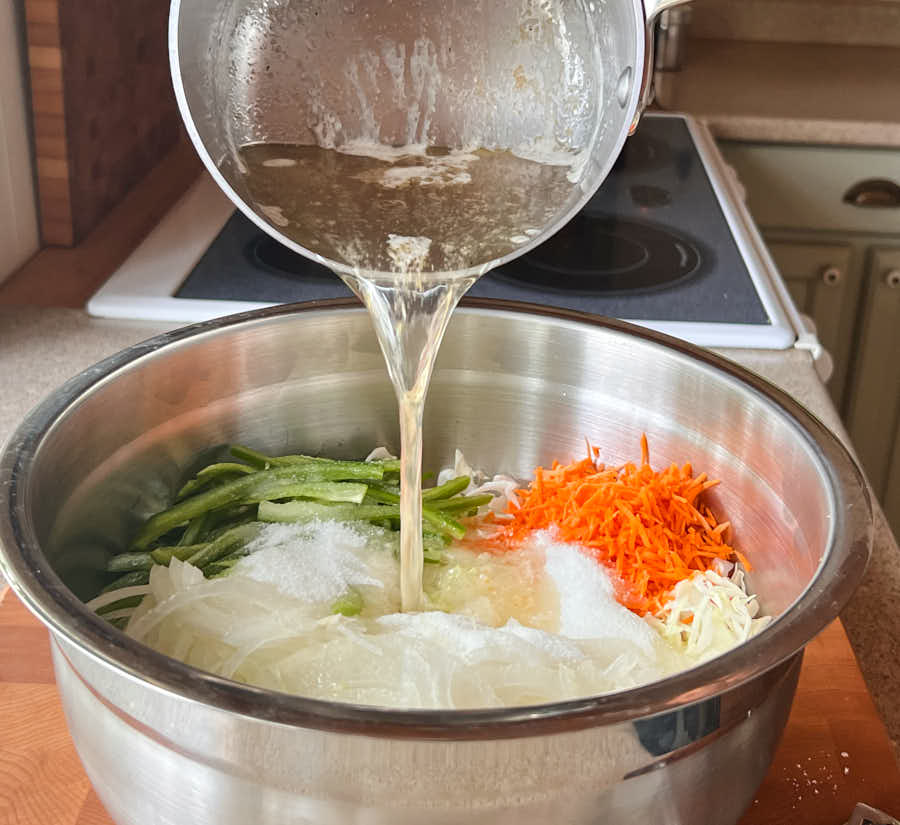
The gee whiz here is the dressing. A hot dressing. Boiling hot in fact. Sounds crazy. But that little bit of insanity is what makes this coleslaw great.
Hot dressing wilts cabbage. A bit. Softens everything. Just enough. Pour it on and stir. Really stir. Toss it into the fridge and wait. 4 hours is good. Overnight is better.
And somehow, inexplicably, everything just comes together nicely. The whole is greater than the sum of the parts. Cliche. But true.
You won’t believe. Until you try it for yourself. And then you will be converted.
I don’t know when I became a coleslaw evangelist. But it seems it happened. When I wasn’t looking.
It’s healthier than you think
There’s a lot of sugar in this recipe. And a lot of oil. Might seem alarming at first. But it’s necessary. Part of the technique. But it isn’t part of what you actually eat.
The key to this coleslaw is moving the cabbage mixture through the hot dressing. To get the wilting action. So you need enough hot dressing. It won’t work otherwise.
Most of that dressing is going to wind up in the bottom of the bowl. You’ll see. It’s not going in anyone’s mouth.
It’s a bit wasteful I suppose. But it’s also way less calories than the nutritional calculator spits out.
Unless you drink the dressing I guess. You do you though. It’s a free culinary universe. FWIW – I don’t drink it.
This is my one true coleslaw
I am always experimenting. Can’t help myself. Tinkering. Trying new things. That’s who I am. I can never leave well enough alone.
There’s always something I want to change. Evolve. Refresh. Renew. Or even just throw everything I think I know out the window. And try something completely different.
Which is why this coleslaw is special to me. I don’t mess with it. I just make it. Over. And over. And over.
I know I’m in a rut. There’s no doubt about it. But the wonderful thing is I just don’t care.
Because it’s part of who I am. This one stays forever.
Killer coleslaw
Ingredients
The dressing
- 1 cup white vinegar – yes, the super nasty stuff. It works.
- 1/4 cup white sugar
- 3/4 cup neutral oil
- 1 tbsp kosher salt – plus maybe a bit more to taste once it’s cooled
- 1 tsp mustard powder – I use Keen’s brand but any powdered mustard will do.
The coleslaw
- 1 small green cabbage – sliced as thin as you can
- 1 large spanish onion – sliced as thin as you can
- 1 green pepper – julienned. If you like a little bite a couple large, seeded jalapeños are a nice touch.
- 1 large carrot – shredded
- 3/4 cup white sugar – in addition to the sugar in the dressing
Instructions
Prep the vegetables
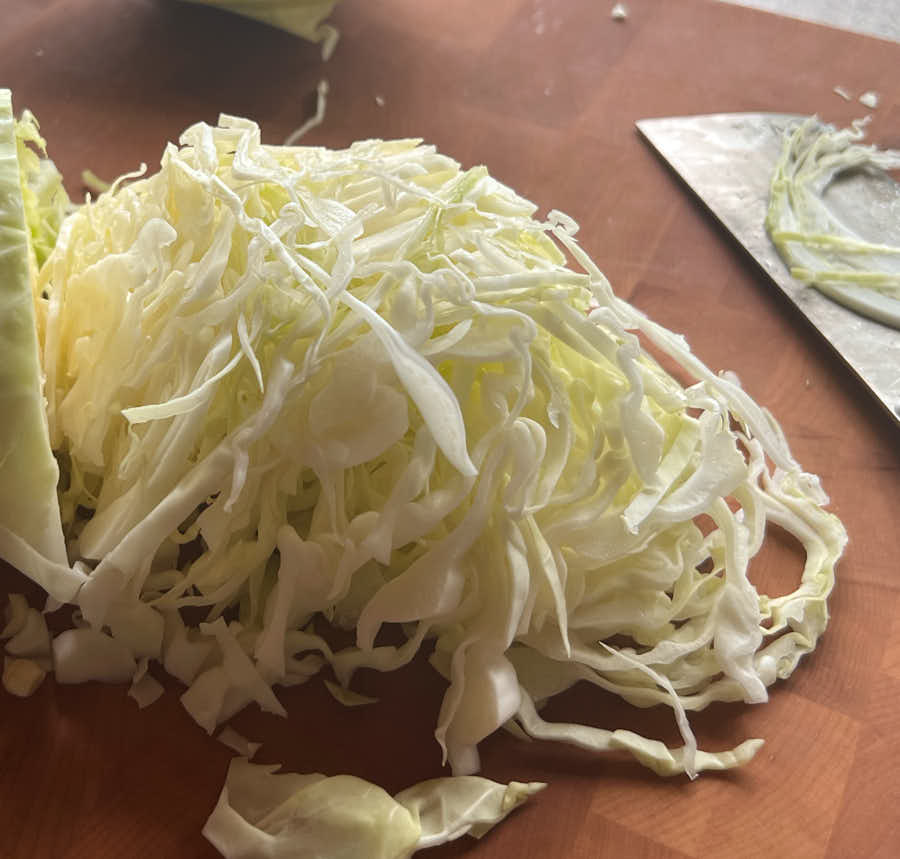
- You want thin. As thin as you can. Grab a sharp knife. Core the cabbage. Set the flat side down and start shaving.
- Same story for the onion. Except you don’t need to core it.
- Julienne the pepper and shred the carrots.
- Put everything including 3/4 cup sugar into a heat proof bowl and make the dressing.
Make the dressing
- Combine the oil, vinegar, 1/4 cup of white sugar, salt and mustard powder in a small saucepan.
- Bring to a gentle simmer. Make sure the sugar has dissolved.
Assemble the coleslaw
- Pour the hot dressing over the vegetables.
- Grab a set of tongs and mix everything together. Really mix. Keep the vegetables moving through the hot dressing for a minute or two.
- Cover and refrigerate 4 hours. I like this slaw best the next day but it’s nearly as good after 4 hours.
- To serve use tongs to pull the coleslaw from the bowl. You’ll leave all the excess dressing behind this way.
