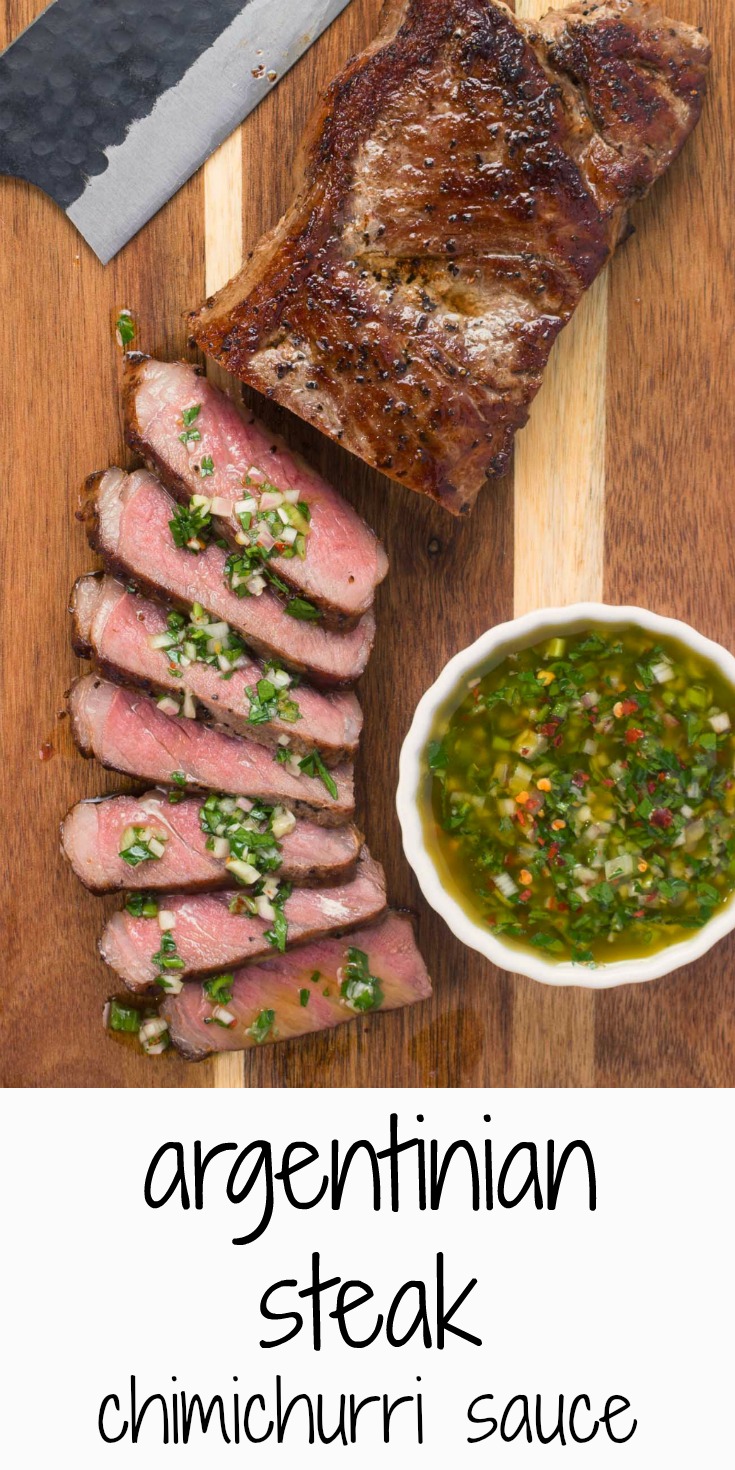
Steak with chimichurri sauce is a great way to add some zing to your every-day pan-fried or grilled steaks.
It’s an Argentinian steak sauce brimming with olive oil, chili, garlic, lemon, parsley and onion flavour. It’s a totally different take on steak sauce.
Juicy steak depends on internal temperature
This post is more of a rant on the myths that seem to surround cooking steaks than a recipe. Don’t turn your steak more than once or the juices will run out. Don’t poke your steak or the juices will run out.
And please don’t wear a yellow hat and face north on a Tuesday when cooking steaks or the juices will run out.
Low and slow BBQ aside, the only thing that affects moisture in a piece of meat is internal temperature. Nothing else. This is science.
Meat is made of protein. The more you heat a protein, the tighter the molecules get. The tighter the molecules get, the less room there is for water. The less water there is, the drier the meat becomes.
It’s not a lot more complicated than that. Get an instant read thermometer and use it religiously. You will become a star of the grill, the roast, the chop, everything you cook.
Cook your steaks to a target internal temperature of 123F for rare or 127F for medium rare. Let them rest – they continue to cook while they rest. Do that and your steak with chimichurri sauce will be the talk of the next backyard BBQ.
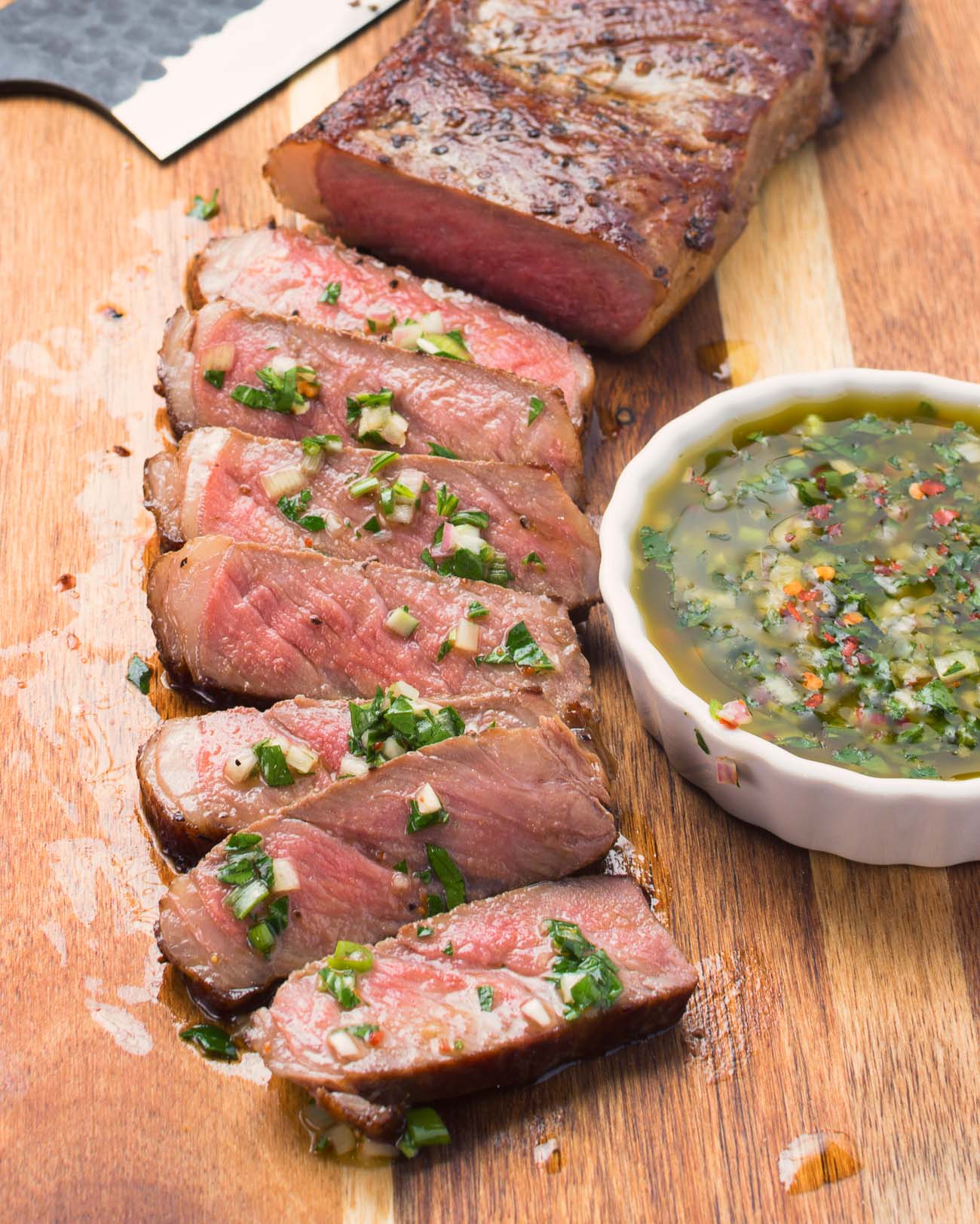
steak with chimichurri sauce
Ingredients
Steaks
- 4 10 oz good quality steaks Striploin or sirloin work well if you are pan frying - skirt or flank if you are grilling. This is really wide open.
Chimichurri sauce
- 1 shallot finely minced
- 2 green onions finely chopped
- 1/3 cup parsley chopped
- 1/3 cup olive oil
- 1/2-1 tsp crushed red chili flakes
- 1 Tbsp red wine vinegar
- 2 cloves garlic crushed
- Juice of 1/6 lemon
- 2 Tbsp of cilantro or fresh oregano (optional) - one or the other using
Instructions
Chimichurri sauce
- Combine all the ingredients and let sit for an hour at room temperature
Grill your steaks
- Season your steaks with salt and pepper.
- Build a two zone fire (or turn one side of the grill up higher than the other).
- Start your steak in the cooler zone for about one minute per side.
- Move to the hotter zone and continue to cook, flipping every minute or so, until your steaks are just under your target temperature. Remove, tent with foil and let rest 5 minutes before slicing.
Pan fry your steaks
- Season your steaks with salt and pepper.
- Pre-heat your pan over medium heat. Film with olive oil.
- Fry your steaks, flipping as required, for about 3 minutes per side for medium rare.
- Remove, tent with foil and let rest for 5 minutes before slicing.
Sous vide your steaks
- Cook your steaks sous vide for 2 hours at a temperature of 118F for steaks one inch or thinner. For steaks over an inch, cook at 123F.
- Remove steaks from the vac pac, pat dry and season with salt and pepper.
- Pre-heat a pan over medium-high heat. Film with oil. Your goal is to get a crust on the meat as quickly as possible without continuing to cook the steaks significantly. Flip as required. You are cooking for colour as the steak was already done when it hit the pan.
- One trick that helps the look of the steaks is to stand them up on end to brown the edges.
- Cover with foil and let rest 5 minutes before serving.
Nutrition
Want something different? Something that isn’t the same 10 curries you make over and over? Aloo chaat chicken curry is one of the tastiest Indian curries you have never heard of.
Aloo chaat chicken curry doesn’t exist on a menu anywhere that I’m aware of. I made it up. It’s different from the run-of-the-mill curries you see on almost every Indian restaurant menu.
And what makes it special is the chaat masala. That really gives it a distinctive tang. If you’ve never had chaat you have no idea what I’m talking about.
But if you have, you know. I’m loving the chaat masala these days. Different. In a funky, good way.
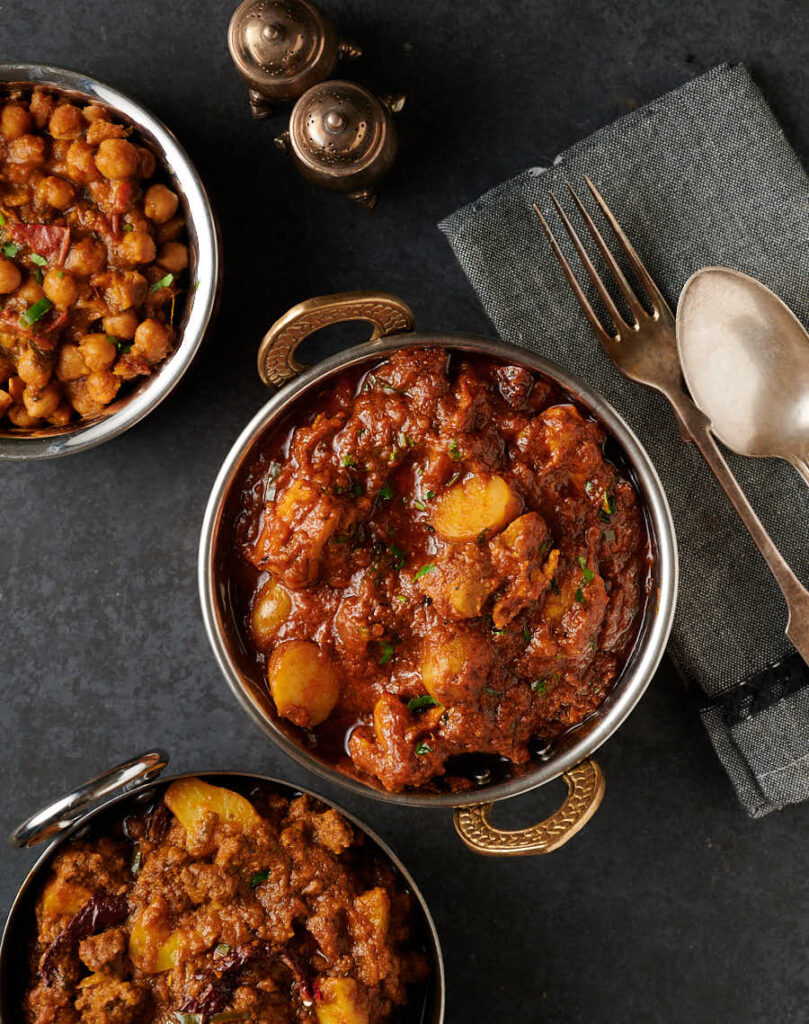
Aloo chaat chicken curry is a take on Indian street food
Think fried potatoes are tossed in a mix of spices, green chilies and maybe some lemon or lime juice. Sound good? Aloo chaat. Indian street food.
That’s the inspiration here. Takes the flavours of aloo chaat and runs with it. Street food becomes restaurant curry.
The big flavour here comes from the chaat masala. Without it, it’s just another curry with potatoes and chicken. I’m not saying that is a bad thing. I’m saying it can be better. Something special.
Your choice of chaat masala matters. The key ingredient in chaat masala- the one that really makes it – is black salt. It’s important. Gives it the distinctive tang.
Some chaat masalas have it. Some don’t. Not sure why that is. Read the ingredients and make sure the one you get has it. Or you can make chaat masala yourself.
If you can’t find a chaat masala with black salt you can just buy some at your Indian grocer.Black salt is kala namak in Hindi. Just ask for it. It’s cheap. Just add a pinch of it in when you add your chaat masala. Easy fix.
This is cooking Indian restaurant style
It’s a pretty straightforward and follows the Indian restaurant technique exactly. Do yourself a favour and read that post first. There are pictures and a video to help you understand.
Prep your ingredients. Make your curry base . Have some heated and ready to go. Pre-cook your meat. Measure out your ingredients. Put on some old clothes – the curry sputters.
Make this aloo chaat chicken curry as written. Or make it with lamb. That works too. Or use chickpeas. Makes a great potato curry. Lot’s of possibilities.
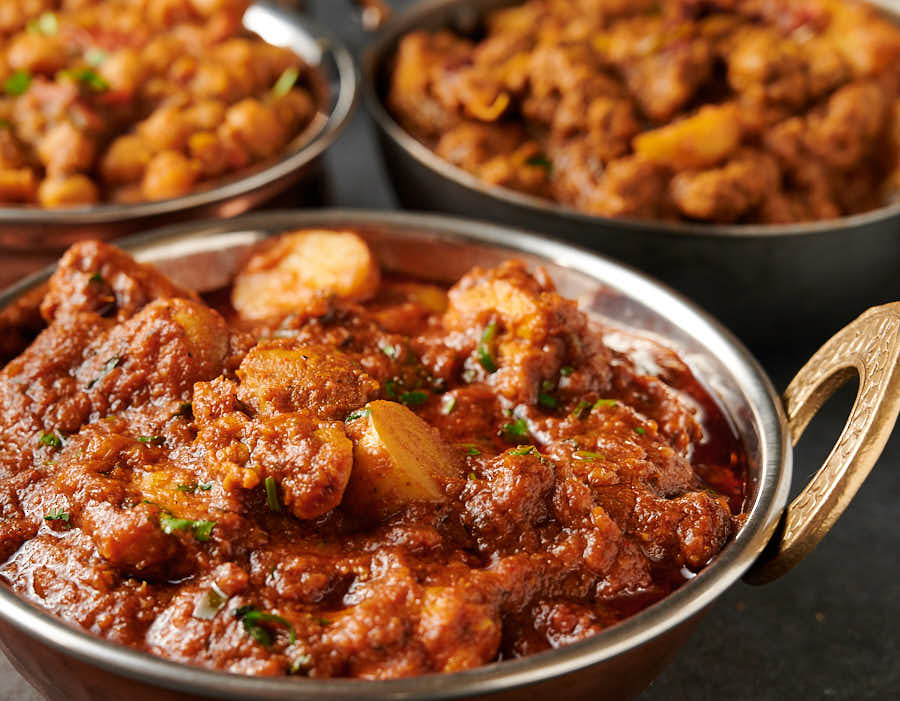
Restaurant style aloo chaat chicken curry. May not be the most common dish on restaurant menus but it should be.
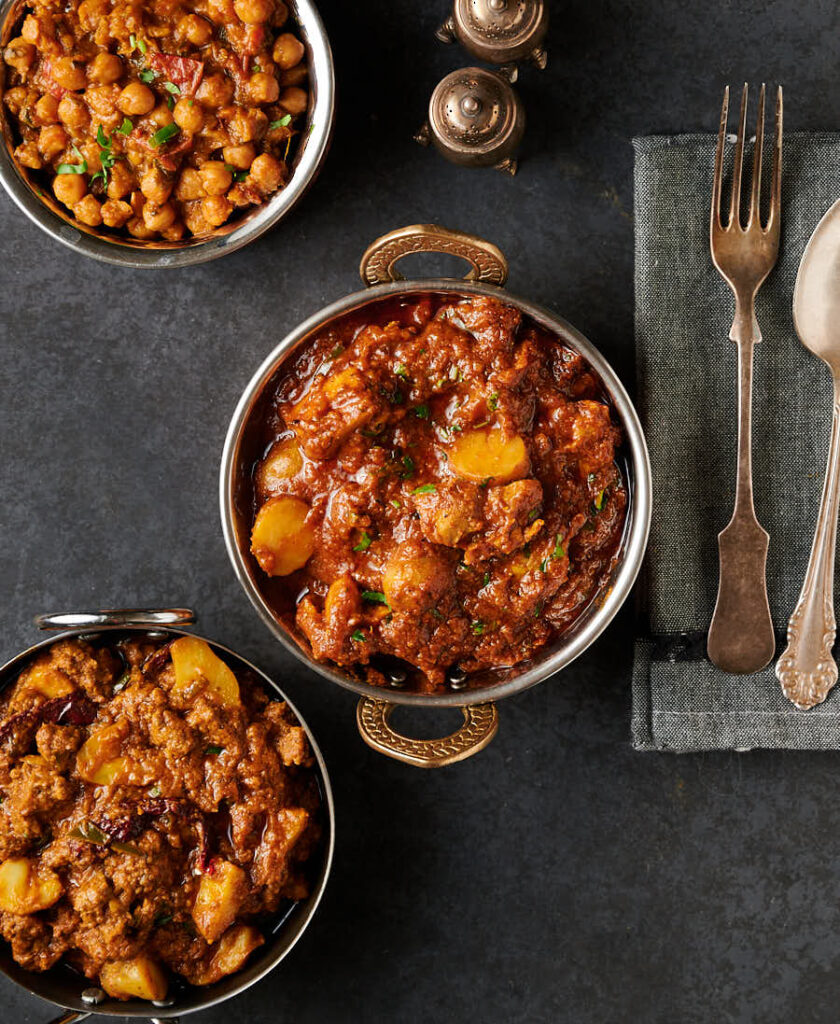
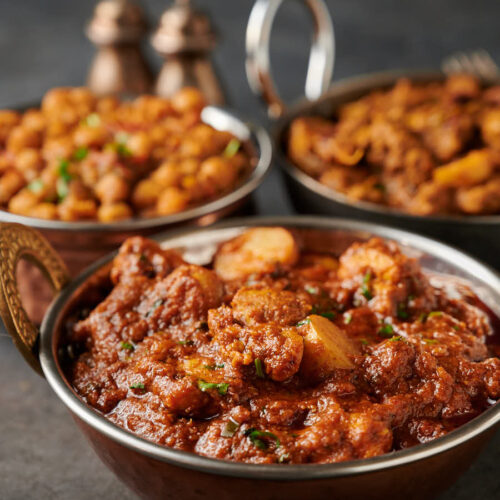
restaurant style aloo chaat chicken curry
Ingredients
The spice mix
- 2 tsp hot madras curry powder or use indian restaurant mix powder if you don’t have any madras curry powder
- 1 tsp kashmiri chili powder or 1/4 tsp cayenne mixed with 3/4 tsp paprika
- 1 tsp kasoor methi – dried fenugreek leaves
- 1/2 tsp kosher salt
The curry ingredients
- 3 Tbsp oil
- 1/2 large onion minced
- 1 green chili seeded and minced
- 1 Tbsp garlic/ginger paste – recipe link below
- 1 Tbsp tomato paste with enough water to dilute to the consistency of pasatta
- 15 oz curry base – recipe link below
- 10-12 oz pre-cooked chicken
- 8 small new potatoes – pre-cooked
- 1 1/2 tsp chaat masala powder available at any Indian grocery
- 1 Tbsp chopped fresh coriander leaves
- Juice of 1/6 lemon – around 1 tsp or so
Instructions
- Make the spice mix.
- Dilute the tomato paste with enough water to get to the consistency of passata.
- Heat your frying pan (don’t use non-stick) briefly over medium heat. Add the oil.
- Add the onions and stir constantly until the edges of the onions start to brown. This takes about a minute or two, depending how hot your pan is. Mix in the green chili and cook another 30 seconds or so.
- Next comes the garlic ginger paste. Add it into the pan and cook it, stirring constantly, until it stops sputtering.
- Turn down the heat and add the spice mix. This is the critical step. Stir it constantly for 30 seconds. If it starts to darken lift the pan off the heat. You want the spice mix to cook in the oil but not burn.
- Turn the heat up to medium high. This is important. The heat is what makes the curry base do its magic. Gives the curry it’s Indian restaurant flavour. As you become more comfortable with this technique try pushing it. Add the diluted tomato paste and stir until bubbles form (the oil will likely separate). This takes around 30 seconds to one minute depending on the heat.
- Add 3 oz of curry base. Stir until bubbles form (little craters really), around 30 seconds. Think lively boil. Watch the edges of the pan. The curry can stick here. Sticking is OK. Just scrape it back into the base. Burning is bad.
- Now add 6 oz of curry base and stir briefly. Let it cook until the bubbles form again. This takes 1-2 minutes.
- Add the rest of the curry base and let cook until the bubbles form. Turn the heat down to low and add the chaat masala powder, pre-cooked chicken and potatoes.
- Let the curry simmer for about 5 minutes. If it gets too thick add a bit more curry base. Don’t add water.
- Mix in the lemon juice and coriander leaves.
- Garnish with a bit of chopped fresh cilantro and serve.
