Simple dal. Really simple dal. Really tasty dal. Fresh. Bright. Satisfying. This one has everything going for it.
Dead easy. Delicious. Cheap. That’s an amazing combo. Doesn’t happen often. So when I find it I stick with it.
Get to know this one. Seriously. It’s a house favourite around here.
Simple dal is about simple ingredients
There really isn’t a lot to this recipe. Which is exactly why it works. A few great ingredients can be better than a lot of mediocre ingredients.
Each ingredient contributes. No ingredient gets lost in the mix. Sometimes less is more.
Not too spicy. Not in your face. It’s like Indian mild. Harmonious. That’s not a word I use often when describing Indian flavours. But in this case it fits.
Tomatoes. Good tomatoes please. A little spice. Some green chili. Onion. Garlic. Salt. And a handful of cilantro. That’s simple dal. Diabolically simple dal.
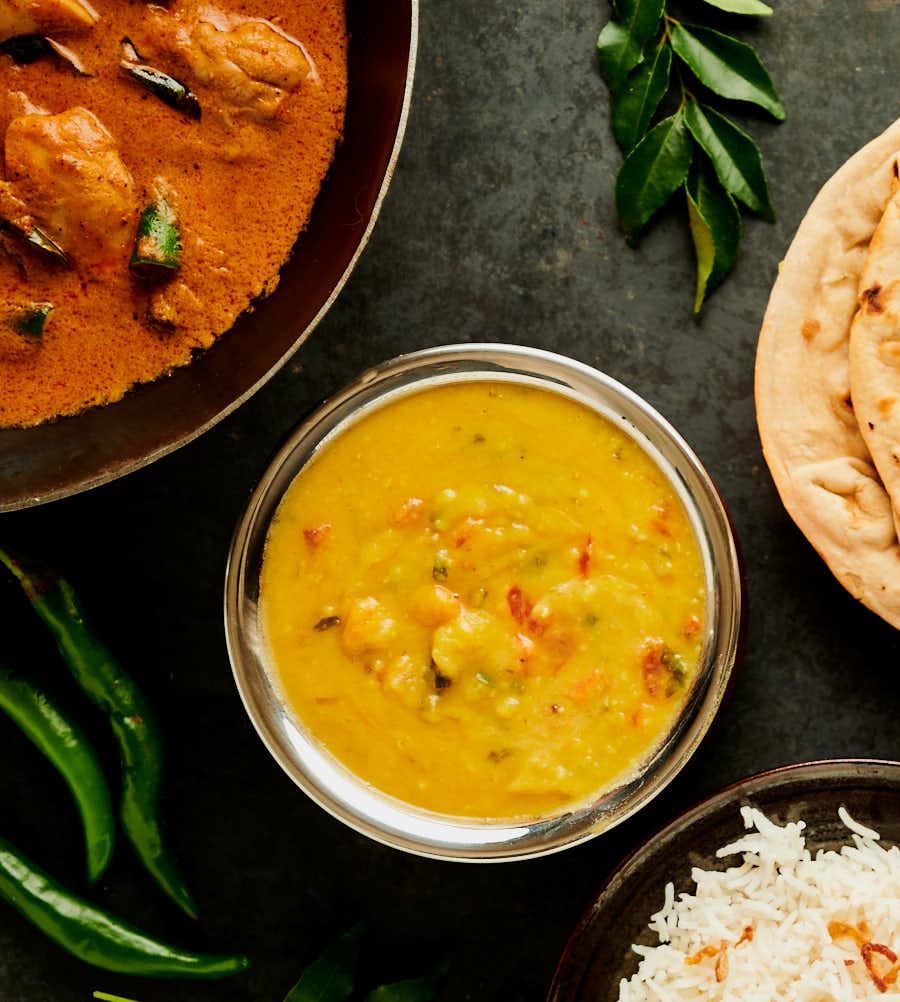
Stretch your food buck
Lentils are cheap. Lentils are good for you. And lentils can be delicious. You may not realize that yet. But it’s true.
I am not vegetarian. I don’t have vegetarian tendencies. I’m not anti-plant though. I’m just pro-omnivore. I love vegetarian food. Right next to non-vegetarian food.
I’m not trying to convert anyone. I don’t have an agenda. I’m just saying that on any given Thursday this simple dal and a chapati is enough to make me happy.
And on a Saturday I like this one next to a jalfrezi. Or a madras. Or both. With butter chicken. Or lamb dhansak. This one is the little black dress of lentils.
I already have way too many dal recipes on glebekitchen. And I’m putting up another one.
Not because it’s a great way to stretch your budget. Or because it’s heathy. Or good for the planet.
I’m putting it up because it’s delicious. And because my wife said “I can’t believe you’ve never posted this one.”
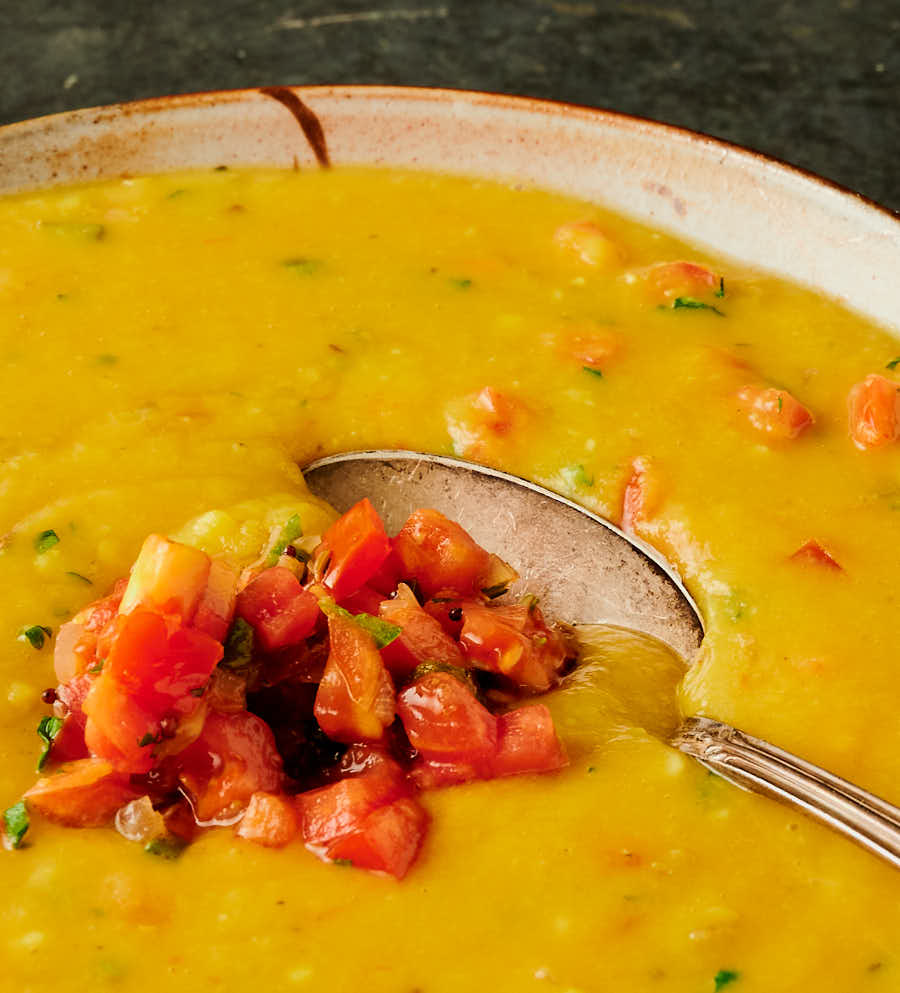
Indian or Indian-ish?
I don’t know that this is actually a thing in India. Nobody has ever served it to me. It’s a little different.
Indian cooking is about contrasts. Butting things up against each other. It’s like a jazz band.
Everything is moving in slightly different directions. But somehow it all hangs together.
This simple dal isn’t like that. It doesn’t just hang together. It is together. All the flavours moving in the same direction. Like a classical string quartet. Harmonious.
Which puts it somewhere between the Indian you expect and the Indian you should get to know. That’s what I call Indian-ish.
But it isn’t really that either. Simple dal is its own thing I guess.
Garlic isn’t always in your face
You walk into a kitchen. Someone is cooking garlic in oil. It slams into you. An assault on the senses.
That is totally wrong for this dish. SImple dal is not about being in your face. Harmonious remember? Luckily there’s more than one way to cook garlic.
Think of the mellow flavour that is roasted garlic. Mild. Creamy. Gentle. That’s what this is about.
Except there’s no roasting involved. You just toss in some whole garlic cloves with the dal and let it happen while the dal cooks.
A mellow garlic infusion. That is the magic here. The one little trick that makes this work. The backbone of this recipe.
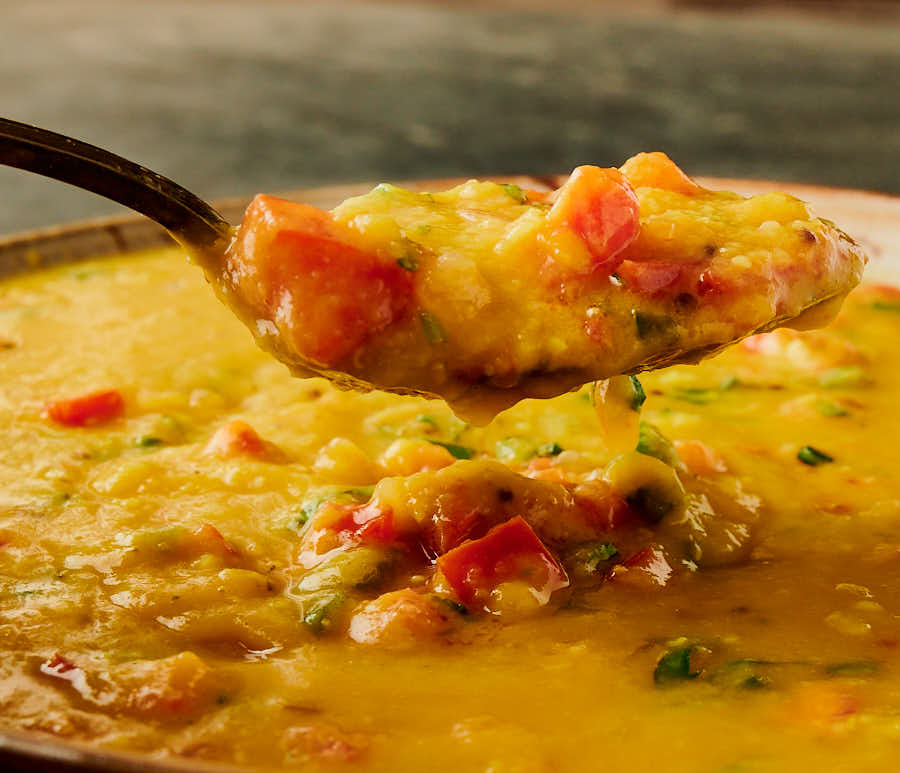
Jalapeños are the right green chili for simple dal
I know what you’re thinking. “Jalapeños? How is that right? How is that even a little bit Indian?”
And I understand that. Finger hot or jwala chilies should be perfect for this dish. They are the green chili for everything Indian.
But they are not right for this dish. The wall of the chili is too thin. They bite a little too hard. The flavour profile isn’t quite right.
Jalapeños are not a very Indian choice. But they bring a brightness. And the thicker wall delivers that flavour perfectly.
It might seem like a subtle point. But it makes a big difference. Trust me on this one. Finger hots are a big step in the wrong direction.
The tomatoes are the thing
This dish leans heavily on fresh tomatoes. Good tomatoes make for really good simple dal. Great tomatoes and you have a mind-blower.
Average tomatoes and you will have a solid dish. Not quite magical. But pretty darn good.
Lousy dead of winter tomatoes? I think you can figure that out. Just don’t bother. You won’t understand this dish at all.
I don’t make simple dal after November. Or before May. I pull this one out when the tomatoes let me. Sad. But true.
Simple dal always leaves me wanting more
The English have an expression. They say some things are “more-ish”. Something that is “more-ish” is something that makes you eat more of it.
I’ve never actually used that expression in a sentence. Never said it out loud. Until right now. Simple dal is absolutely “more-ish”.
It’s a bit of an odd one. The recipe might not jump out at you. Wouldn’t jump out at me either. Except I know. And now you do too.
I really shouldn’t post this one. Because I’m guessing it will become your favourite. And all my other dal recipes will be lonely.
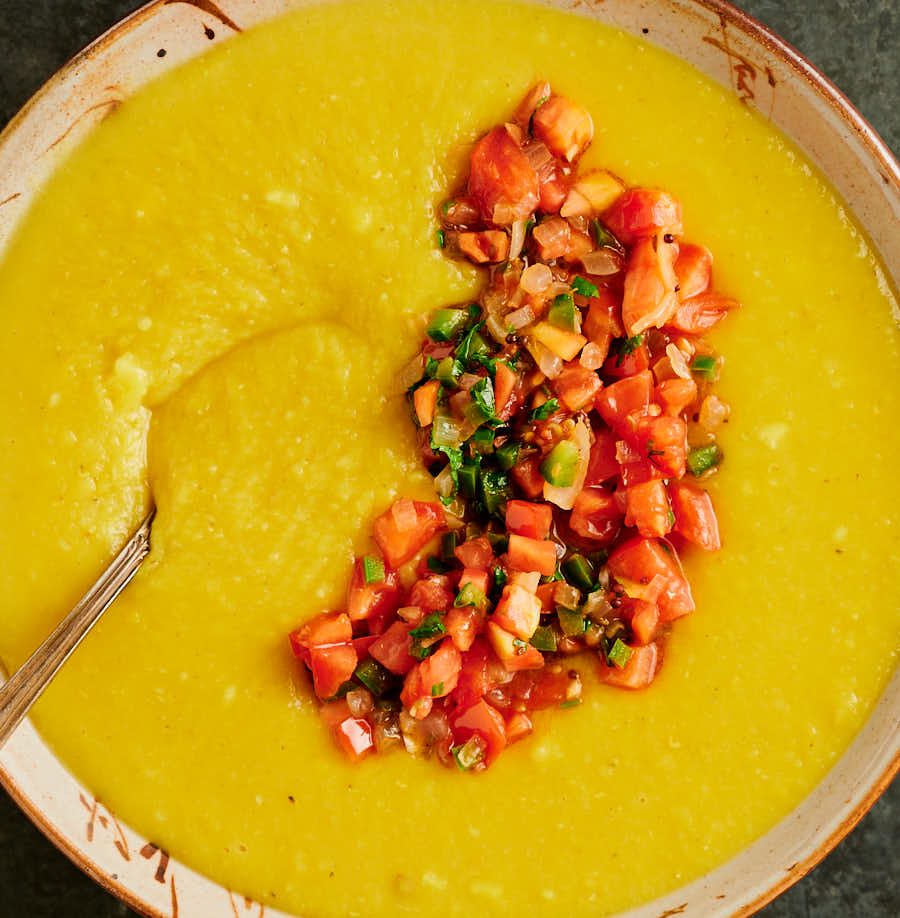
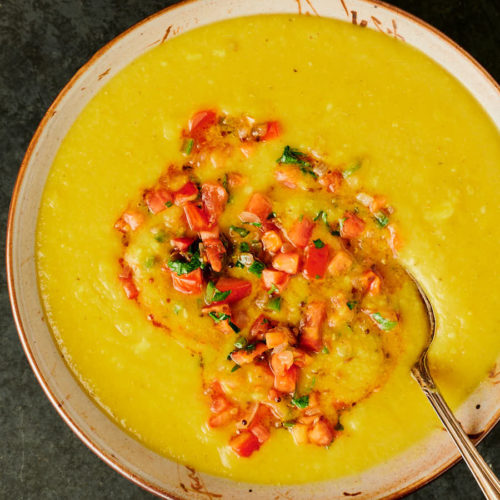
Really simple dal
Ingredients
The dal
- 1 cup masoor dal – those little red lentils you see everywhere
- 3 1/2 cups water
- 6 cloves garlic
- 1/2 tsp turmeric
The final flavour burst (the tarka or tempering)
- 1 cup onions finely diced
- 3 tbsp neutral oil
- 1/2 tsp cumin seed
- 1/2 tsp mustard seed
- 1 jalepeno seeded and finely diced
- 1 large tomato you want summer tomatoes for this
- 3 tbsp cilantro minced
- 1 tsp kosher salt – you want to use about half this much table salt
Instructions
Make the dal
- Combine the lentils, water, whole garlic cloves and turmeric.
- Bring to a simmer, reduce heat and cover. The order matters. Bringing the pot to a boil when covered gets incredibly messy. Trust me. I’ve done it. More than once.
- Cook until the lentils have disintegrated. Stir them along the way to prevent them from sticking. You want lentil mush. Like a sauce almost. If you can see a whole lentil you need to cook them some more. This should take about 45 minutes.
- Remove from heat and set aside.
Make the final flavour burst (the tarka or tempering)
- Do this while your lentils cook if you’re pressed for time.
- Heat a not too big skillet over medium low heat. Add the oil. When the oil starts to shimmer add the onions. Sweat the onions, stirring occasionally, until soft and translucent. This takes around 5 minutes or so.
- Toss in the diced jalapeño and cook for another minute.
- Add the cumin seed and mustard seed. This is the tricky part. You want the oil to form little bubbles around the seeds. See them all move just a little. Like a whole spice rave in the pan. Let the spices party for about 30 seconds.
- Toss in the tomato and the cilantro and continue cooking until the tomato is just warmed through.
- Fold the mixture into the dal. Add the salt. Taste. You are going to need more. Creep up on the salt profile that works for you.
- Serve as a side dish with tandoori chicken or the curry of your choice. Or serve it as a main with an Indian flatbread. I’m in heaven with this dal and a paratha or chapati.
Really simple dal
Ingredients
The dal
- 1 cup masoor dal - those little red lentils you see everywhere
- 3 1/2 cups water
- 6 cloves garlic
- 1/2 tsp turmeric
The final flavour burst (the tarka or tempering)
- 1 cup onions finely diced
- 3 tbsp neutral oil
- 1/2 tsp cumin seed
- 1/2 tsp mustard seed
- 1 jalepeno seeded and finely diced
- 1 large tomato you want summer tomatoes for this
- 3 tbsp cilantro minced
- 1 tsp kosher salt - you want to use about half this much table salt
Instructions
Make the dal
- Combine the lentils, water, whole garlic cloves and turmeric.
- Bring to a simmer, reduce heat and cover. The order matters. Bringing the pot to a boil when covered gets incredibly messy. Trust me. I’ve done it. More than once.
- Cook until the lentils have disintegrated. Stir them along the way to prevent them from sticking. You want lentil mush. Like a sauce almost. If you can see a whole lentil you need to cook them some more. This should take about 45 minutes.
- Remove from heat and set aside.
Make the final flavour burst (the tarka or tempering)
- Do this while your lentils cook if you’re pressed for time.
- Heat a not too big skillet over medium low heat. Add the oil. When the oil starts to shimmer add the onions. Sweat the onions, stirring occasionally, until soft and translucent. This takes around 5 minutes or so.
- Toss in the diced jalapeño and cook for another minute.
- Add the cumin seed and mustard seed. This is the tricky part. You want the oil to form little bubbles around the seeds. See them all move just a little. Like a whole spice rave in the pan. Let the spices party for about 30 seconds.
- Toss in the tomato and the cilantro and continue cooking until the tomato is just warmed through.
- Fold the mixture into the dal. Add the salt. Taste. You are going to need more. Creep up on the salt profile that works for you.
- Serve as a side dish with tandoori chicken or the curry of your choice. Or serve it as a main with an Indian flatbread. I’m in heaven with this dal and a paratha or chapati.
It’s a funny thing. Chinese chicken curry is a bit addictive. There’s not much to it. A simple dish really. But somehow it just works.
It tastes like China went to India on the way to the west. Except there’s nothing really Chinese here. Nothing particularly Indian either.
I think it actually went from India to the UK to Hong Kong. Back to the UK and then off to the rest of the world. That’s my theory anyway. Probably wrong.
It got a little further from the motherland every step of the way. Until it became unrecognizable as Indian. Or Chinese. Not much of an endorsement. I know.
But for some reason I like it. A lot of people like it. There’s no explaining affairs of the mouth. Sometimes you just have to give it what it wants.
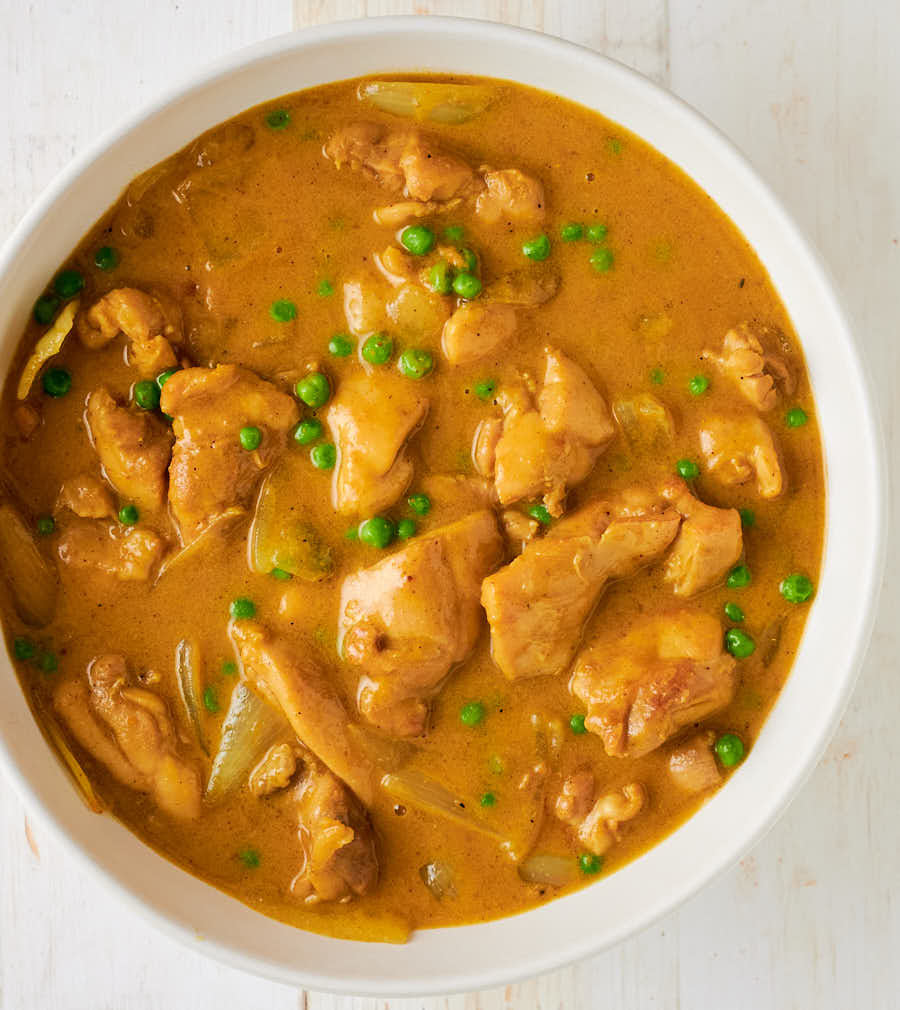
This is the easiest curry you will ever make
I cook a lot of Indian. Look around. There are more than a hundred Indian recipes on glebekitchen. There’s a section on global curries too. I love curry.
Chinese chicken curry is the easiest curry I make. By a long shot. There’s almost nothing to it.
Which makes it the perfect any night curry. You can make this in less time than it takes to cook rice. And you need rice with Chinese chicken curry. So that works out nicely.
Stir fry some chicken. Add a few aromatics. Toss in a little spice. Some stock. A bit of coconut milk. Some potato starch. Done. For real.
Ready in around 10 minutes. It’s absolutely crazy how fast this comes together.
No curry pastes required
There’s a whole industry built around Chinese curry paste. Videos on how to make it. It’s not huge like the Japanese cubes. But it’s a thing.
Which perplexes me a bit. Because there really isn’t a lot to it. Stop and look at the ingredient list on a commercial paste.
Flour. Oil. Curry powder. MSG. That’s it. The whole list.
Those with sharply honed culinary skills will immediately see that’s roux with curry powder and a bit of yum yum.
Which begs the question. Why would you give up valuable storage space for that? Especially if it has to go in the fridge.
I don’t know about you but I have zero room to spare in my fridge. There’s no way I’m trading my gochujang tub or my miso collection for something I can make in minutes.
Glebekitchen is about cooking from scratch. You aren’t here to read about following instructions on a package. At least I hope you aren’t.
If you do make paste go crazy
There’s definitely something to be said about making your own paste. It gives you control. Lets you take your Chinese chicken curry to the next level.
What you shouldn’t bother with is what you get in a commercial paste. Curry powder. Flour. Fat. That’s just not worth the effort.
If you want to go the distance then go the distance. Develop your own custom spice profile. Play with funkier ingredients. Lemongrass. Fruit. Citrus. Aromatics. Skies the limit really.
Custom paste is Chinese chicken curry addict territory. If that’s you then this probably isn’t the recipe for you.
This one is for the rest of us. For those of us that want a quick and easy fix. On a Tuesday night.
You don’t actually need a wok for Chinese chicken curry
I’m a big fan of a good wok. A well-seasoned carbon steel wok is the perfect weapon for a lot of Asian dishes. Great for tossing ingredients around.
So you’d think I’d suggest a wok for this dish. Problem is it doesn’t really bring a lot of value to this dish.
And you really shouldn’t put your wok in the dishwasher. So it’s an unwieldy pan you need to hand wash. And oil before you put it away.
If you feel you need the cred in front of guests go for it. It’s never a bad idea to work on your wok skills.
But bottom line. No wok required. If you use yours it’s really just for fun. A big skillet works. A pot does too.
You could probably make Chinese chicken curry in a bucket. This one is as easy as it gets.
To be clear. I haven’t made this in a bucket. And it is actually pretty hard to bloom spices in a bucket. Masterchef territory. Don’t try this at home.
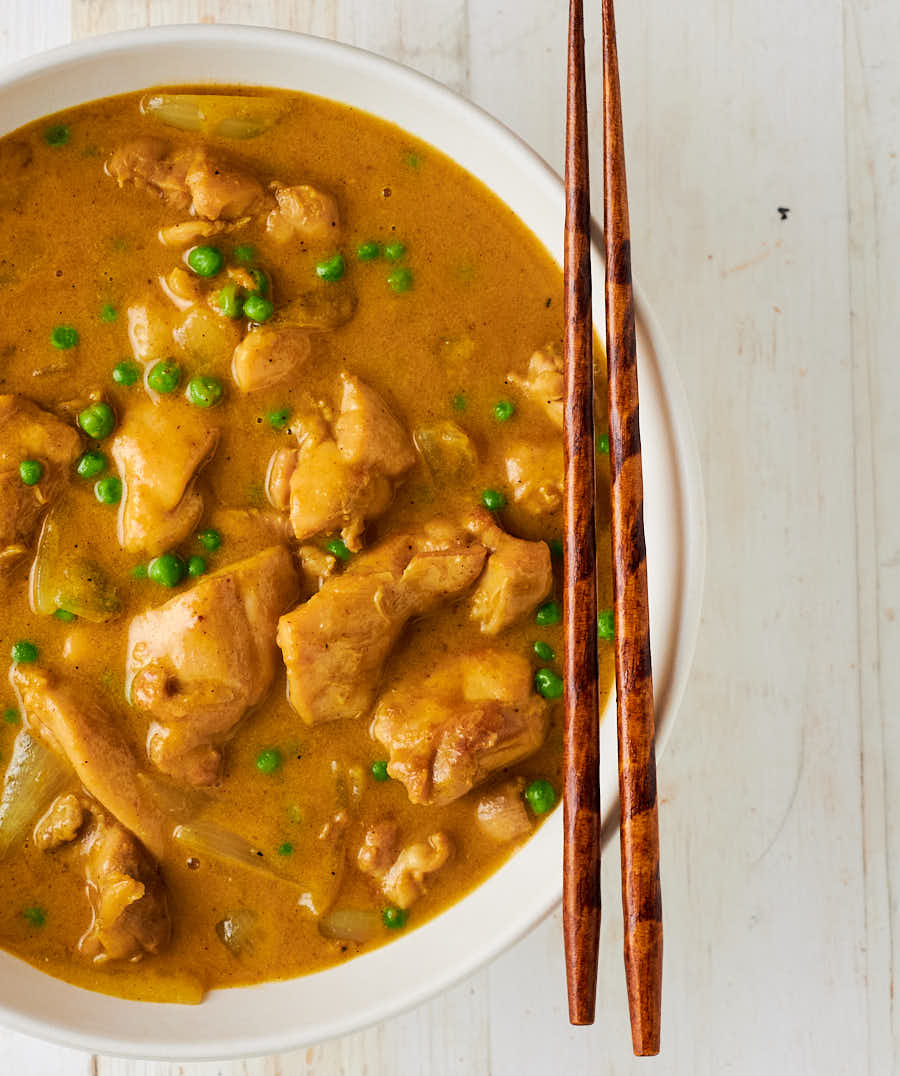
The curry powder is the thing
All curry powders are not created equal. That should be obvious. There are about 100 different masalas or spice blends at my local Indian grocer.
So just picking any run of the mill curry powder for Chinese chicken curry is not a recipe for success. The blend matters. The flavour profile matters.
I’ve tried this one with a few different commercially available blends. The results have varied.
I suppose I should just come up with one for Chinese chicken curry. That’s on the to do list. But I have a lot on the to do list. It will be a while.
Regular commercial curry powder is OK. It’s a bit flat. For this dish anyway. Missing some key nuances.
Madras curry powder is no better. A bit spicier maybe. But not right on it’s own.
I didn’t try garam masala. Because garam masala is a finishing spice. It’s not meant to be the backbone to any dish. Question anyone who tells you otherwise.
Malaysian meat curry powder brings a lot to the table. It has star anise, black pepper and fennel. Those are important flavours for this dish.
But it has a lot of chili in it as well. I like that. If you want a Chinese chicken curry with a kick Malaysian curry powder works.
Turns out there is no silver bullet. At least I can’t find one. Nothing works straight off the shelf. But the fix is super easy.
A little five spice mixed in with regular curry powder. That’s the right blend.
The regular curry powder brings the base flavours. The five spice adds the nuances. Pushes it into the zone. This is a tale of two spice mixes.
I make a copycat version of Bolsts if you want to try mixing up your own curry powder. Much cheaper. But you don’t get the fancy tin.
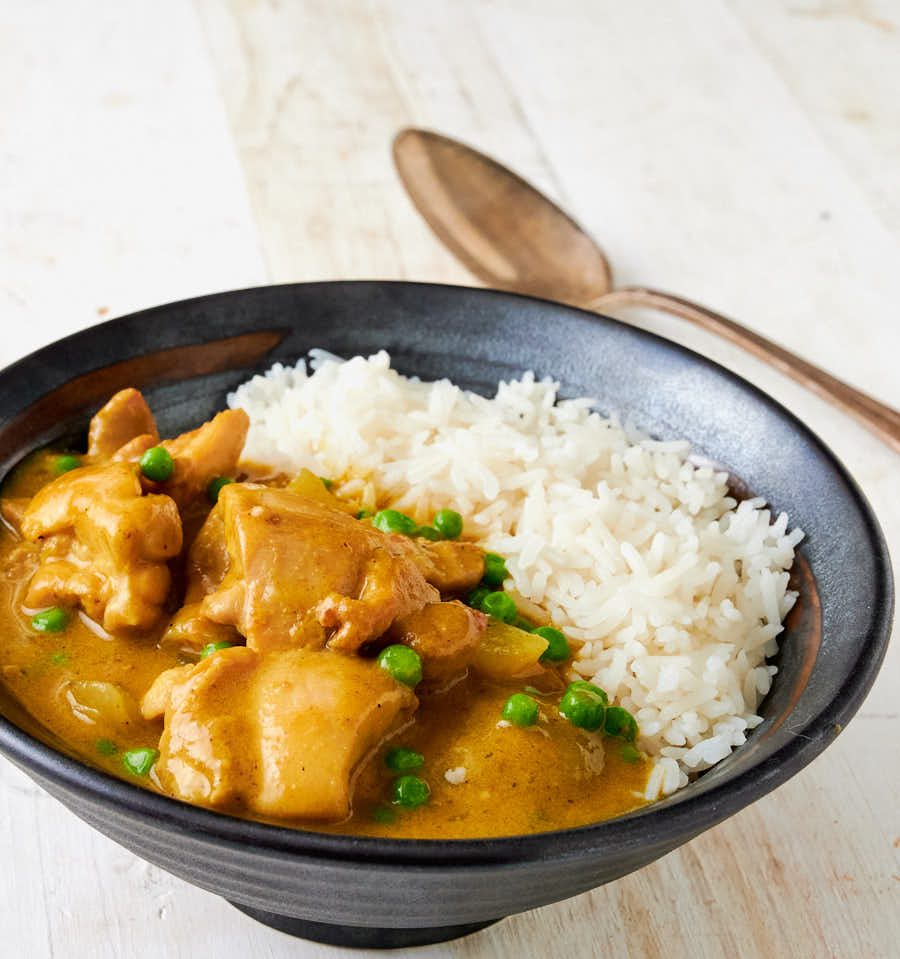
Pick your vegetables
You can put whatever vegetables you like into Chinese chicken curry. Within reason I guess. Avacado is not going to work. Beets probably won’t rock anyone’s world.
Onions are a must I think. That’s the only one I’m going to say has to be there. The one mandatory ingredient.
Peas are a classic addition. I like peas. And they are credible. Keema matar amazing. That’s my defence.
Potatoes are unconventional. But if you want to bulk the dish out a bit potatoes work. I like them in this dish. Pre-cook them and toss them in at the end.
I also like peppers. Green peppers especially. The char you get when stir frying really does it for me. If you’ve ever made an Indian jalfrezi you know what I mean.
I don’t always add peppers. I have to be in a bit of a mood. But when I am they hit the spot. When I add peppers I do pull out the wok.
I don’t like celery or carrot in this dish. So I leave them out. But they are classic ingredients.
It’s up to you. Do what you want. What makes you happy is what matters. Peas and onions make me happy. But you do you. It’s your mouth.
Potato starch is the new cornstarch
I’m going out on a limb. Poking at the status quo. You may think I’m crazy. That’s OK. I think I’m crazy. But I can never leave well enough alone.
Cornstarch is (until now) the undisputed king of thickening agents in Chinese cooking.
It’s held the crown for 5000 years or so. Since the beginning of recorded culinary history anyway. It has cred. Serious cred. I made that up. But it is the champion.
And I’m taking a shot at it. Because I think there’s a better way. For Chinese chicken curry anyway.
Cornstarch is a little easier to work with. You can add it too soon and recover. It’s not delicate. But it does have some drawbacks.
Undercook it and you can taste it. It gets gloppy when it cools. Looks OK in the pan. But not always so great on the plate. You have to have a delicate touch.
These problems go away with potato starch. It thickens at a lower temperature. So it’s almost impossible to under-cook. It cools more gracefully.
And it looks better. In the pan. And on the plate. That’s the one that does it for me. The sauces are a little silkier. A little less cloudy.
That’s why I like potato starch better. That’s why I think you will like potato starch better.
The downside is it doesn’t stand up to overcooking as well as cornstarch. So you have to add it right at the end.
And it doesn’t reheat as well as cornstarch. That’s its Achilles heel. Cornstarch is still the king of leftovers.
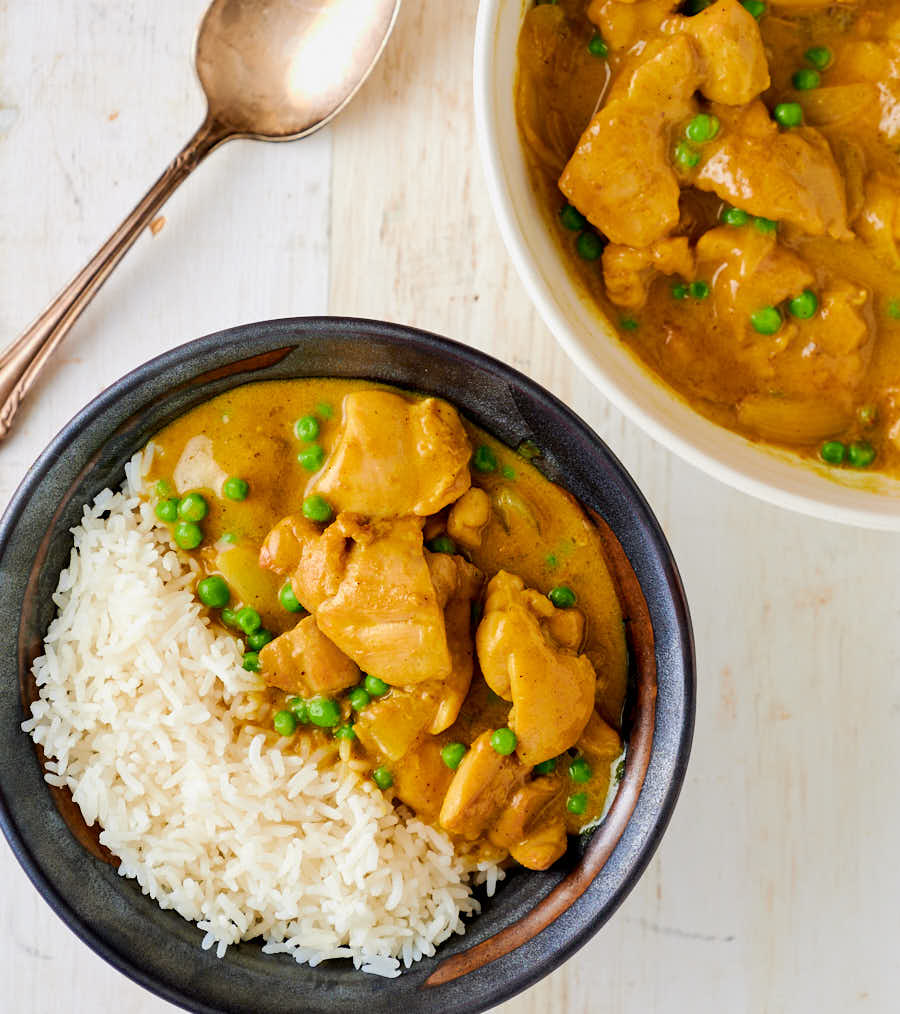
MSG is not optional in Chinese chicken curry
There. I said it. And I mean it. MSG is why Chinese chicken curry works. It’s an essential ingredient. In my opinion anyway.
The thing that keeps you putting it in your mouth. That’s the MSG.
I’d say it adds that “je ne sais quoi” to the dish. Except I know exactly what it adds. Umami. Pure umami. And that is what makes this dish what it is.
I don’t use it in most recipes on glebekitchen. So when I do suggest MSG it’s because it matters. And even then I try to make it optional if I can.
But for this dish I don’t think you can leave it out. Not and get anything worth eating.
If you aren’t going to add MSG to this dish you probably just shouldn’t make it. You won’t be happy. It’s a subtle thing. But it’s surprisingly important.
You may not find something called MSG in your local grocery store or Asian grocer. It hides in plain sight though.
In Asian markets look for Ajinomoto. That’s a brand name for pure MSG. In Europe Knorr Aromat stands in. It’s salt and MSG and a few other bits and bobs.
If neither of those work look for Chinese bouillon powder. Read the ingredients. It’s almost always full of MSG.
Key takeaway. You aren’t going to be impressed with this one if you don’t use MSG.
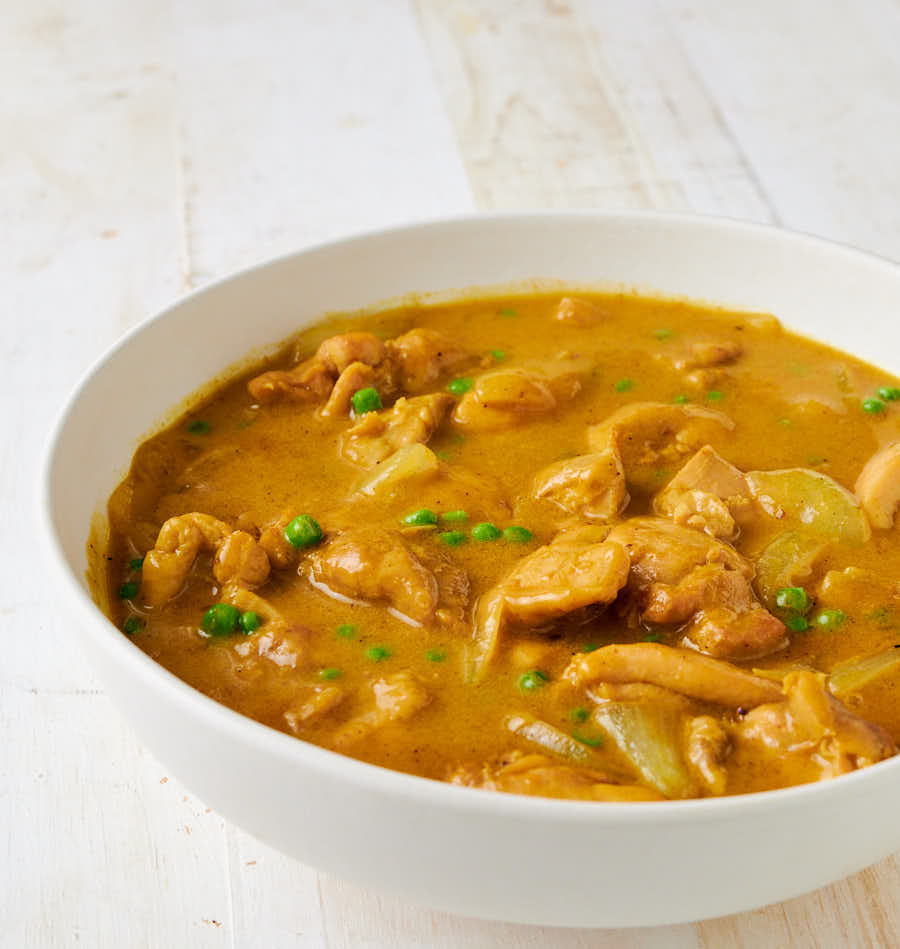
The magic that is Chinese chicken curry
This one is a bit of a puzzle. I’m actually not sure why it works. I only know that it does. It’s not particularly lush. The flavours are not complex. There’s no real depth.
It’s kind of trashy really. Low brow. The peanut butter and jelly sandwich of curries. There’s absolutely no reason I should like this. And yet I do.
I almost didn’t do this one. I’m still not sure why I did. Yet somehow while I write this I’m thinking I want to do it as a noodle dish.
Plus it takes about 10 minutes once you’re done a very little bit of prep. A curry in 10 minutes. That has to count for something.
Chinese chicken curry. It makes no sense. But I keep coming back to it. You might too. This one is just a conundrum.
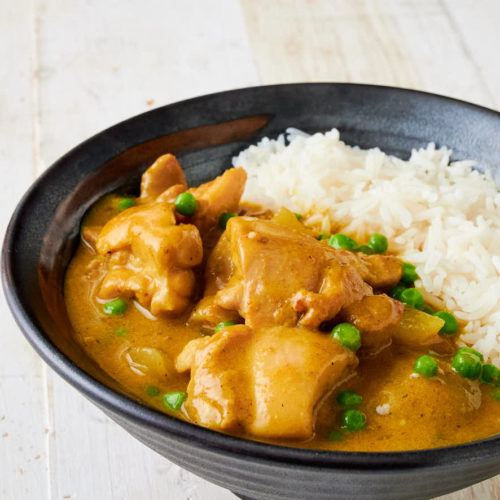
Chinese chicken curry
Ingredients
The marinated chicken
- 12 oz chicken thighs boneless, skinless and cut into small bite size pieces
- 1 tsp shaoxing wine
- 1 tsp soy sauce all purpose or light
- 1 tsp potato starch cornstarch is OK too
Chinese chicken curry
- 3 tbsp neutral oil vegetable, canola etc
- the marinated chicken
- 1 cup diced onion fairly large dice
- 1/2 cup green pepper, carrot, celery etc optional and see note
- 1 tbsp garlic ginger paste – or 2 cloves of garlic and 1/2 inch knob of ginger extremely finely diced
- 1 tbsp curry powder
- 1/2 tsp five spice powder
- 1 cup low sodium chicken stock – stock is not bouillon cubes
- 1/4 cup coconut milk
- 1 tbsp shaoxing wine
- 1 tsp sesame oil
- 1/2 tsp monosodium glutamate – just do it. It matters…
- 1/4 cup peas – see note
- 1 1/2 tsp potato starch mixed in a couple tablespoons of water. Corn starch is OK too.
- 1/4 tsp kosher salt – you may need a little more at the end. Depends how salty your shaoxing wine is and if you omit the MSG.
Instructions
Do your prep
- Combine the chicken with the marination ingredients (1 tsp shaoxing, 1 tsp light or all purpose soy and 1 tsp of potato starch or cornstarch).
- Stir vigorously to combine. Set aside for at least 10 minutes and up to 30 minutes.
- Chop your onions. Prep your garlic and ginger if not using paste. Chop whatever vegetables you are using. Measure out your spices, stock and coconut milk. This goes really fast. Be ready.
Make the Chinese chicken curry
- Heat your wok (or big skillet) over medium high heat. Don’t use a bucket. That was a joke.
- Add the oil. Swirl the oil up the sides of the wok. Turn the heat up to high. Yes. You want real heat here.
- Add the chicken and cook, stirring constantly, until the chicken is just opaque.
- Toss in the onions and sturdy vegetables if using, the garlic and ginger (or paste), the curry powder and the Chinese five spice.
- Stir fry for about 90 seconds. Add the stock, coconut milk, salt and monosodium glutamate. Stir to combine thoroughly.
- Add 1 tablespoon of shaoxing wine and 1 teaspoon of sesame oil.
- Add the peas and bring to a boil. Turn the heat down to a simmer. Cook until the chicken is done. This should take 3 or 4 minutes (depends on the size of your bites). If you are concerned you are going for an internal temperature of 170F.
- Give the potato starch slurry a last minute stir (it settles) and add it to the curry. Bring to a simmer to thicken.
- Taste for salt. If you are using shaoxing from a grocery store it has salt and you should be good but if not add a little at a time. You can always add salt. You can never take it away.
- Serve with plain white rice. I like jasmine. I’m thinking I’d like this as a noodle dish too. Something to think about.
