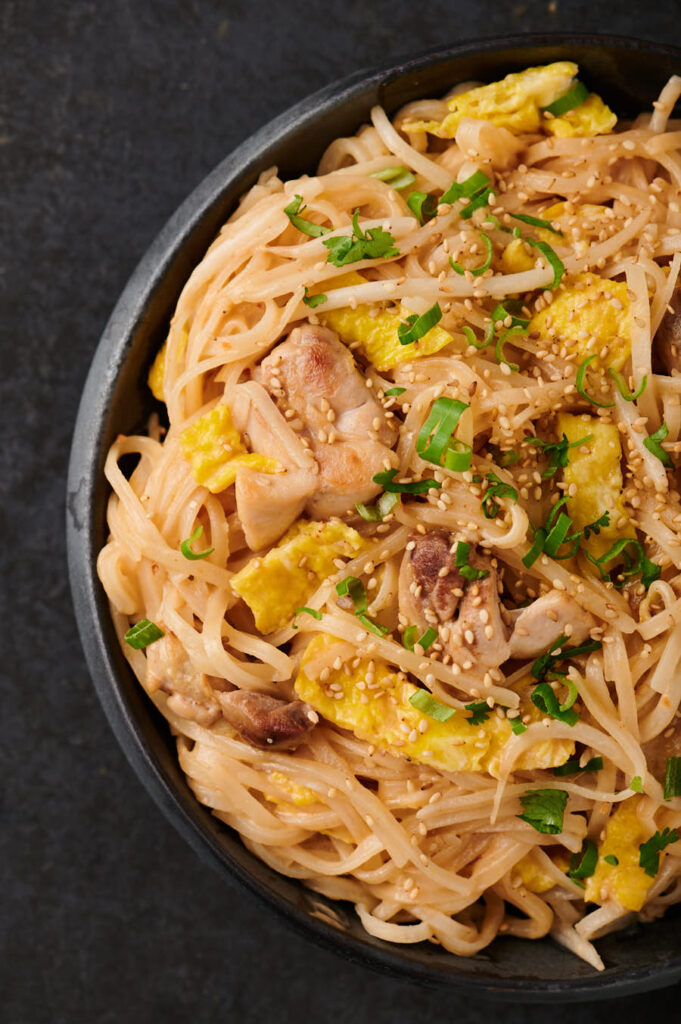
Thai sesame noodles. Think pad Thai with a big boost of sesame flavour. That’s what this is. Sesame sauce. Rice noodles. Chicken. Or shrimp. Or both. Egg. Delicious.
It’s a tasty weeknight dinner that’s good enough to serve friends. Like takeout. But better. Because you made it yourself.
Sesame noodles mania
Funny thing where I live. Pad Thai has become Thai sesame noodles. I don’t know what’s going on. But lots of restaurants have jumped on the bandwagon.
I don’t really understand what’s going on. But it’s popular. That’s understandable. It’s really good. Not pad though. By any definition I know. So I’m calling it Thai sesame noodles.
I don’t even know if there’s a real Thai version. Don’t think I’ve ever seen it in a Thai cookbook. Pretty sure Andy Ricker isn’t serving it a Pok Pok. But it’s everywhere here. And I like it. So I wanted to figure it out.
Sesame paste makes this recipe super easy
I started down a path of finely chopping peanuts and sesame seeds. I wanted to make it better than they serve here. More authentic somehow. I was wrong.
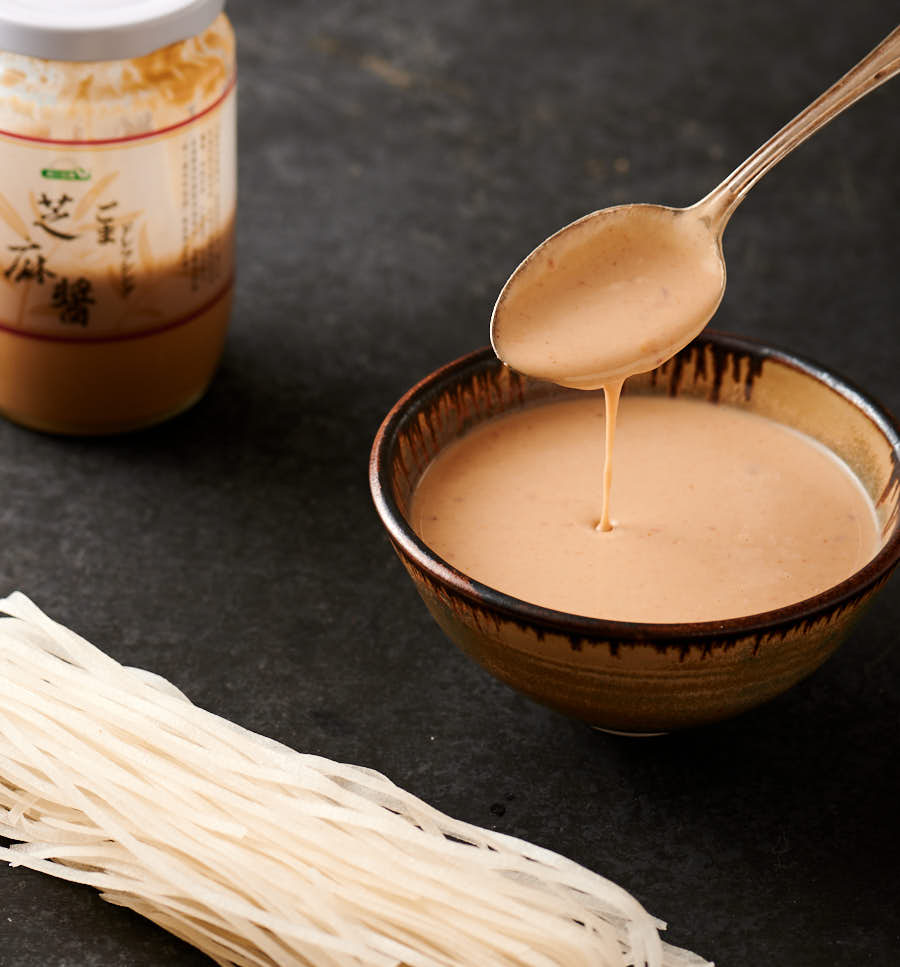
It didn’t taste right. It didn’t have the right texture. So I made things easy on myself. Chinese sesame paste. It melts into the sauce. Adds great texture. It just works. Why fight it?
You could substitute tahini here. It would be close. But if you can get to an Asian market then Chinese sesame paste is the way to go.
The sesame seeds in Chinese sesame paste are toasted before they are turned into paste. They go in untoasted in tahini. Makes a difference. It’s worth trying to find the Chinese stuff I think.
Chinese in a Thai dish. A little odd I know. But I don’t think this is actually a real Thai dish. So let’s bend the rules a bit. Live a little…
Make the sauce then make the sesame noodles
At first I was sure I would just make a pad Thai. Toss in some sesame paste. And I’d be done. Wrong again. Not even close.
I played with adding Thai red curry paste. It added some zing. But it started tasting like Thai curry. Which isn’t what I wanted. It was tasty though. Might do a Thai red curry sesame noodle dish some day.
You are making an emulsion here. Look at the pictures. It’s smooth. Cohesive. Take the time to follow the instructions. They work. The order of ingredients and how you mix them in is important.
Not as tricky as mayonnaise. Not even close. But you don’t want lumps. Smooth. Look at the picture. Like whipping cream.
On cooking eggs
This recipe is written like someone in a stall by the side of the road would make it. On a blazing hot day at lunch. You point. You mime eating. Some guy who doesn’t speak a word of whatever language you do holds up a finger. One order or two?
There’s an easier way. And I’m only going to put this tip here. I’m leaving it out of the recipe. So all those people who didn’t take the time to read this are never going to know. But you will.
It’s tricky cooking the omelette in the pan with the noodles. You have to be fast. If you want everything perfect cook the eggs in a separate pan while the chicken cooks. Make an omelette on the side.
Take the cooked omelette and flip it out onto a cutting board. Slice it into ribbons. Toss them in when you add the bean sprouts. Perfect eggs. Easier. Maybe not as cool. But easier. Now you know.
How to get the perfect rice noodle texture
Rice noodles are delicate. The go from perfect to mush in a flash. I’ve done it. I’m guessing you have as well. Everybody learns at some point.
What I’ve learned is when you are frying rice noodles you just need to soak them in really hot water. You want them softened but not anywhere near done.
Pliable. That’s the key. Still toothy. Not more than 30 minutes. And not boiling water.
Think about it. You are frying noodles. And then adding a wet sauce. Heating that through. All these things cook rice noodles.
So if you start with perfectly done rice noodles you are going to wind up with mush. Don’t do it. Just soak and go. It’s less mess. It works better. There’s no reason to do otherwise.
This is street food style
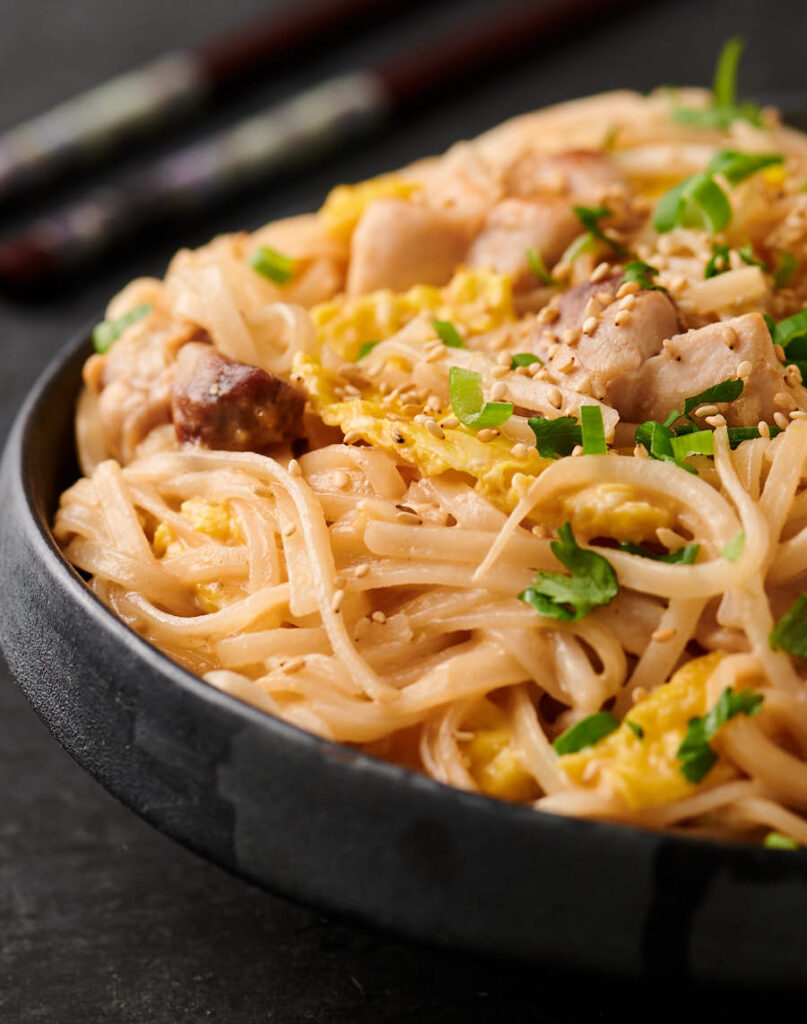
Make the sauce. Stir fry. Serve. This is street food style cooking. It goes fast. Really fast.
So be ready. Have your sauce made. Noodles soaked and drained. Garnishes prepped and handy. Everything at hand. Mise en place.
And then go. Heat the pan. Add some oil. Some bits of chicken. A little garlic. Toss in the noodles. Scramble an egg. Toss in some bean sprouts. Add the sauce. Garnish. Serve.
Just like that. Literally around 10 minutes from start to finish. And most of that is cooking the chicken. Please make sure everything is ready to go before you start. It will end badly if you don’t.
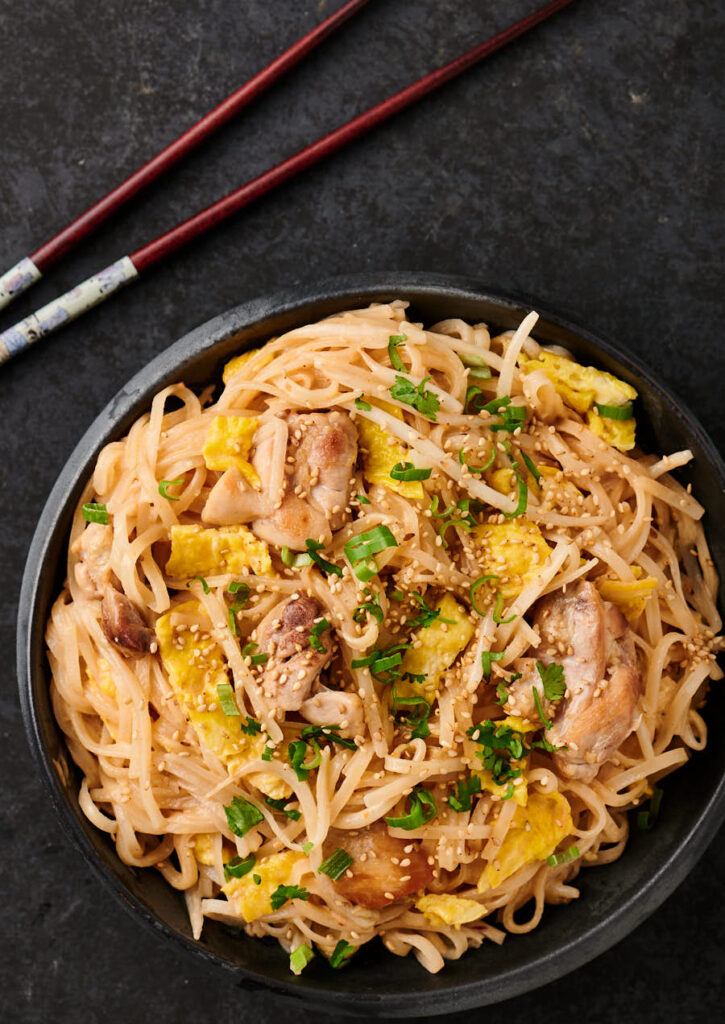
This is great food fast. Weeknight food. Better than takeout. Thai sesame noodles. If you like rice noodles half as much as I do try this dish.
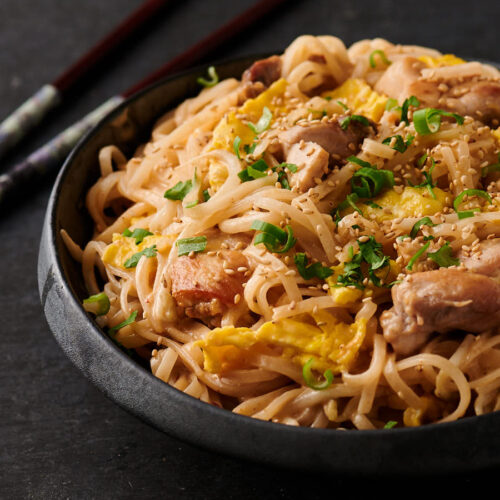
thai sesame noodles
Ingredients
Sesame noodles
- 8 oz flat rice noodles
- 3 chicken thighs or one large chicken breast. Boneless, skinless.
- 1 clove garlic
- 2 eggs beaten
- 3 tbsp vegetable oil
- 1 cup bean sprouts
- the sesame noodle sauce
- cilantro, green onion, sesame seeds and chopped peanut to garnish
Sesame noodle sauce
- 2 tbsp sesame paste available at Asian markets
- 1 tbsp peanut butter smooth for texture
- 1 tbsp rice wine vinegar
- 2 tbsp fish sauce
- 1 tbsp tamarind sauce I like Maggi brand – sour and sweet
- 1/2 cup coconut milk
- 2 tsp Asian chili sauce optional – like sriracha or sambal oelek. Use your favourite but realize it will affect the flavours.
Instructions
Pre-soak your noodles
- Fully submerge the rice noodles in lots of hot water. As hot as you can get it out of the tap.
- Soak the noodles for about 30 minutes. It really depends on the brand. You want them pliable but still very toothy. They will cook more when you make the dish.
Make the sesame noodle sauce
- Combine the sesame paste, peanut butter, tamarind sauce and rice wine vinegar. Stir until it comes together in a paste. Add the fish sauce and stir until it forms a smooth emulsion.
- Gradually stir in the coconut milk. You want to keep the mixture smooth and even.
- Add the chili sauce if using. Stir to combine. Set aside.
Make the Thai sesame noodles
- Use a large non-stick pan or well seasoned wok for this. You want room to stir fry.
- Cut the chicken into bite sized pieces.
- Heat the pan over medium low heat. Add the oil and then the chicken. Cook, stirring regularly, until it is just done. This should take around 5-7 minutes but really depends on how big your pieces are.
- Now add the garlic and fry, stirring continuously for about 30 seconds.
- Turn up the heat to medium to medium high. Things will go pretty fast now. Add the noodles and stir to coat them with oil. Continue cooking, stirring constantly until the are just a little under your target consistency. This takes about a minute.
- Move the noodles to one side and pour in the eggs. Scramble them. When they are set add the bean sprouts and start to stir everything to try to get the egg, chicken and bean sprouts distributed into the noodles. This is not easy. If it doesn’t work for you don’t worry too much. Just make sure you even things out when you serve.
- Remove the pan from heat and add the sesame noodle sauce. Stir to get the noodles coated with the sauce.
- Portion the noodles into two bowls and garnish with cilantro, sesame seeds or peanuts (or both) and green onion.
Notes
Nutrition
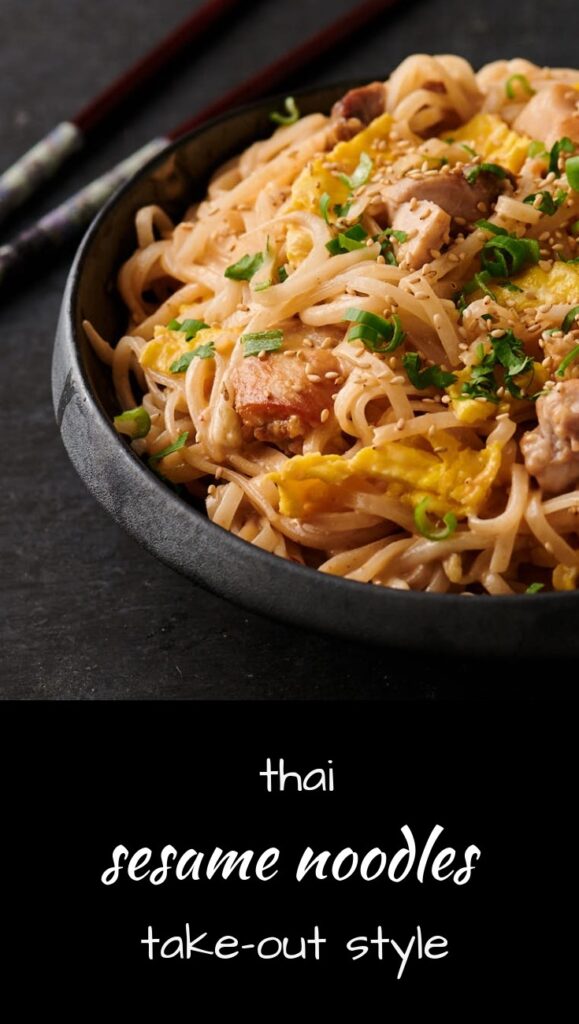
thai sesame noodles
Ingredients
Sesame noodles
- 8 oz flat rice noodles
- 3 chicken thighs or one large chicken breast. Boneless, skinless.
- 1 clove garlic
- 2 eggs beaten
- 3 tbsp vegetable oil
- 1 cup bean sprouts
- the sesame noodle sauce
- cilantro, green onion, sesame seeds and chopped peanut to garnish
Sesame noodle sauce
- 2 tbsp sesame paste available at Asian markets
- 1 tbsp peanut butter smooth for texture
- 1 tbsp rice wine vinegar
- 2 tbsp fish sauce
- 1 tbsp tamarind sauce I like Maggi brand - sour and sweet
- 1/2 cup coconut milk
- 2 tsp Asian chili sauce optional - like sriracha or sambal oelek. Use your favourite but realize it will affect the flavours.
Instructions
Pre-soak your noodles
- Fully submerge the rice noodles in lots of hot water. As hot as you can get it out of the tap.
- Soak the noodles for about 30 minutes. It really depends on the brand. You want them pliable but still very toothy. They will cook more when you make the dish.
Make the sesame noodle sauce
- Combine the sesame paste, peanut butter, tamarind sauce and rice wine vinegar. Stir until it comes together in a paste. Add the fish sauce and stir until it forms a smooth emulsion.
- Gradually stir in the coconut milk. You want to keep the mixture smooth and even.
- Add the chili sauce if using. Stir to combine. Set aside.
Make the Thai sesame noodles
- Use a large non-stick pan or well seasoned wok for this. You want room to stir fry.
- Cut the chicken into bite sized pieces.
- Heat the pan over medium low heat. Add the oil and then the chicken. Cook, stirring regularly, until it is just done. This should take around 5-7 minutes but really depends on how big your pieces are.
- Now add the garlic and fry, stirring continuously for about 30 seconds.
- Turn up the heat to medium to medium high. Things will go pretty fast now. Add the noodles and stir to coat them with oil. Continue cooking, stirring constantly until the are just a little under your target consistency. This takes about a minute.
- Move the noodles to one side and pour in the eggs. Scramble them. When they are set add the bean sprouts and start to stir everything to try to get the egg, chicken and bean sprouts distributed into the noodles. This is not easy. If it doesn’t work for you don’t worry too much. Just make sure you even things out when you serve.
- Remove the pan from heat and add the sesame noodle sauce. Stir to get the noodles coated with the sauce.
- Portion the noodles into two bowls and garnish with cilantro, sesame seeds or peanuts (or both) and green onion.
Notes
Nutrition
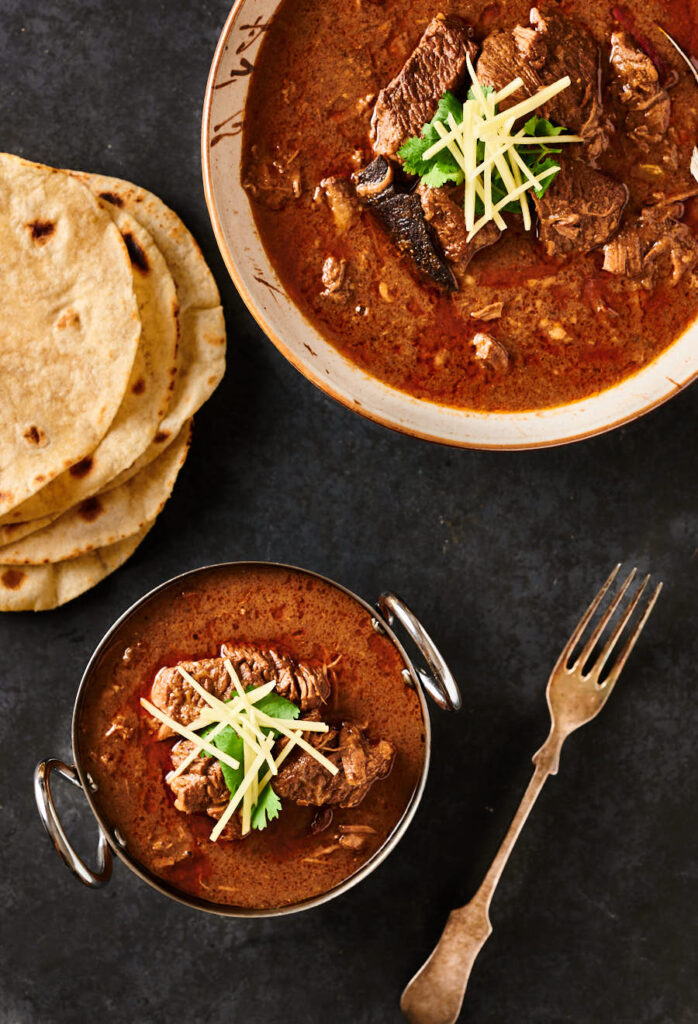
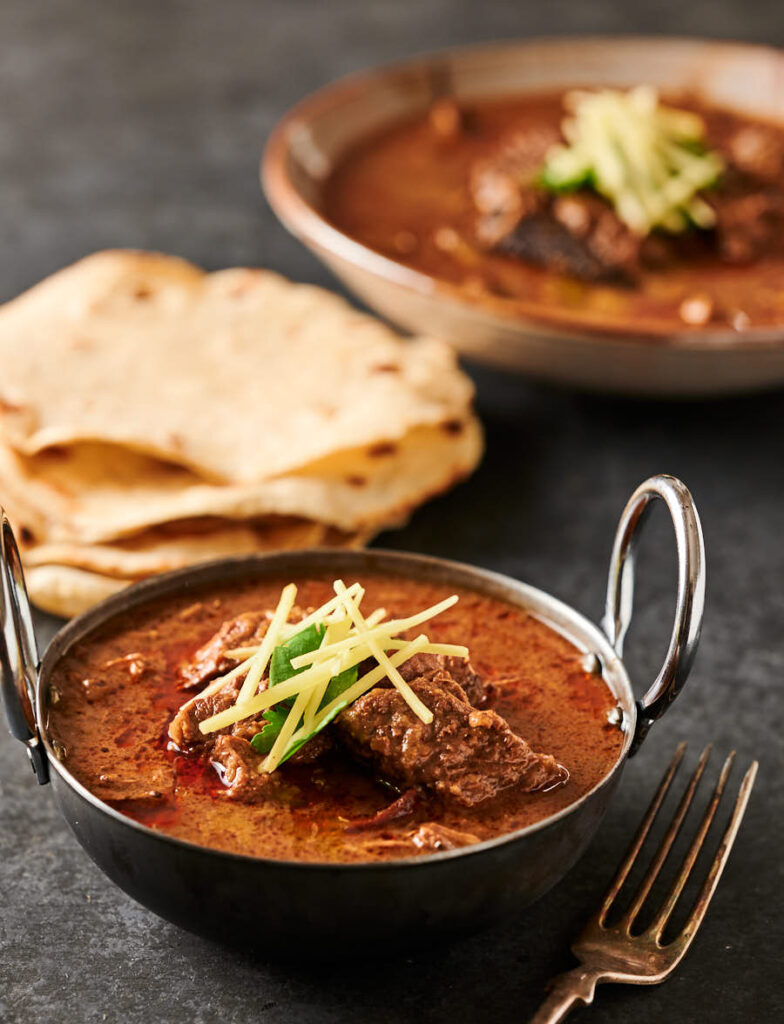
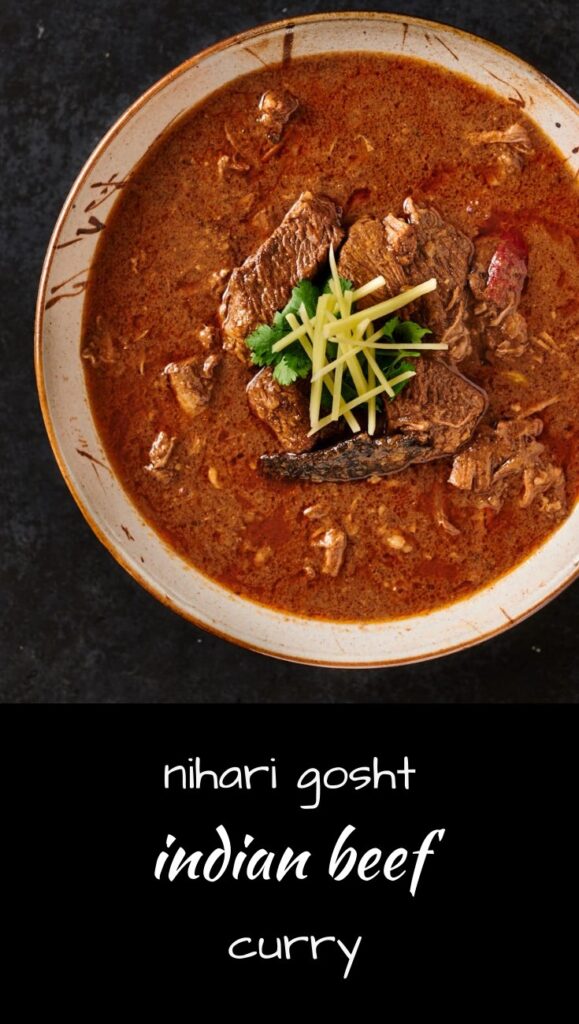
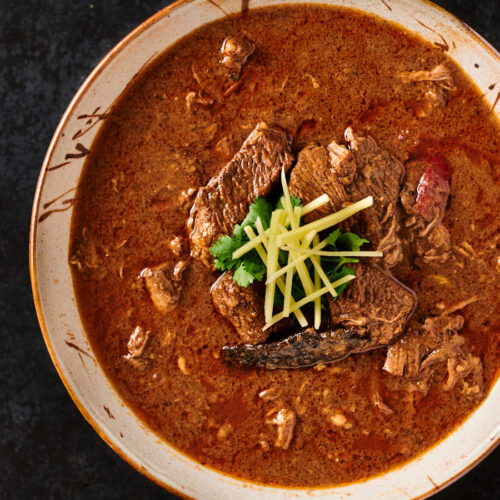
Nihari gosht is seriously tasty beef stew Indian style. Beef in spicy gravy. Big bold Indian flavours. Seriously beefy. It’s a classic for a reason.
Nihari dates back to the 18th century. And it’s still wildly popular in India and Pakistan. Tradition says it’s a beef curry. But you can make it with lamb. Or goat. I’ve even seen it done with chicken.
I like it best with beef. Some will say it has to be beef. Beef shin. Beef on the bone. But you can make it with oxtails. Or chunks of chuck.
That’s what I usually do. Add some marrow bones. That’s really good. Or oxtails. Oxtails push it right over the top. Crazy good. Bones really do make stew better.
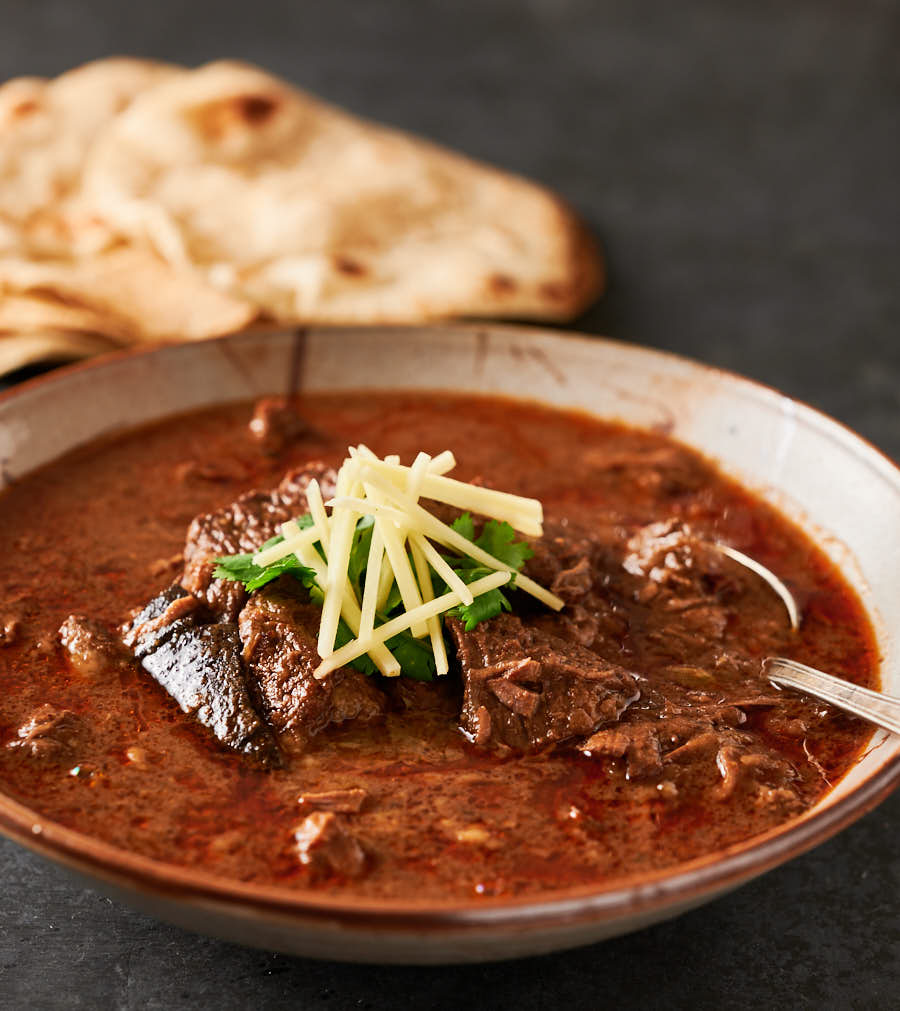
Nihari is breakfast food
Seriously. It’s breakfast food. Once upon a time anyway. And what a breakfast it makes. A bit of beef. That crazy gravy. And a chapati or some naan. My kind of breakfast.
History says this was a dish they would start at night. So it would be ready first thing in the morning. That’s how they rolled. Awesome.
If curry for breakfast isn’t your thing then have it for dinner. I’m guessing that’s how most people eat it.
I like savoury for breakfast so I’m happy either way. As long as I get some nihari I’m good.
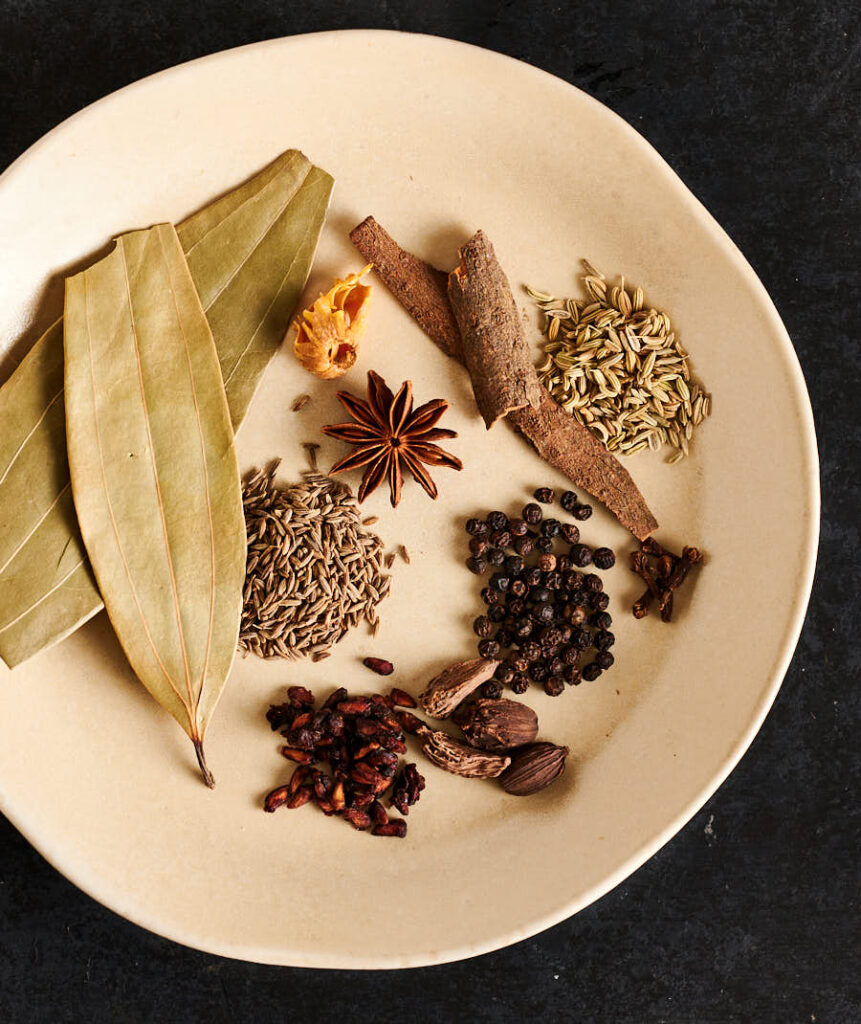
Nihari masala makes this dish
Don’t let the long list of ingredients in the nihari masala throw you. I know there are a lot. A bit daunting even. But each one adds a little something. Complex flavours. But that’s what makes nihari what it is.
Think garam masala. This is just like that but a different blend. There are all sorts of masalas in Indian cooking. This is just another one of those. Not a big deal really.
Roll up your sleeves and get it done. It doesn’t take that long. And you’ll have an arsenal of Indian spices at the end of it.
If you really don’t feel like making nihari masala you can buy it. All the big spice mix companies make it. Check with your Indian grocer. It will still be good. Just a bit less special.
Fry your spices
I always do this. And so should you. Frying spices is part of the magic. They call it blooming. I call it mandatory.
Because I cannot stand the jarring edges you wind up with if you don’t fry your spices. Seriously. Not. Good. Am I being unsubtle enough here? Just please fry your spices.
There’s a fair bit of spice in this nihari. The other problem you run into if you don’t fry your spices is texture. You get this background grittiness. Maybe I’m over-sensitive. But why risk it? Just fry your spices and don’t worry about it.
Bones make for great nihari
Bones make better food. I really believe that. And Cook’s Illustrated has proven it. So if you can get bones into this dish just do it.
I think that’s key for any homestyle curry. Or stew for that matter. It goes across borders. Stew is always better with bones.
If you are serving guests remove the bones before you plate. Unless those guests are good friends. Then serve them bones. Let them enjoy the marrow. Messy. Tasty. Fun.
If you can’t get bones I’ll let you in on a trick I use sometimes. It’s unorthodox but I like it. Stock. Veal stock in fact. That’s my secret for pretty much every beef stew I make.
Because it adds the gelatin you get from bones. The flavour. The mouth feel. Crazy but it works. Every Indian reading this now thinks I’m crazy. But I’m only half Indian. The other half is French.
Make a roux to thicken the stew
That’s the French in me as well. Roux. And then an Indian equivalent of a béchamel. Actually technically it is a velouté because it’s not milk but let’s not sweat the small stuff.
What it’s not is just a slurry of flour and water. Again against conventional thinking. But I don’t like raw flour any more than I like raw spices.
When you pull the nihari from the oven you’ll see a bunch of red fat floating on top. That colour is an indication that the fat is loaded with all the fat soluble spice flavours.
It would kill me to throw that away. That’s throwing away flavour. But I don’t want my stew swimming in fat either. Don’t get me wrong. I like some. Just not too much.
So I use the fat to make the roux. It’s just exactly like making gravy. Spicy, magical gravy.
Beef in spicy gravy. Not the best marketing in the world. But think about it. Beef. In spicy gravy. Who doesn’t want that?
Comfort food meets Indian spice. It’s no wonder this dish is popular. It hits all the comfort food tick boxes. Indian style. There is nothing here not to love. Make it and see for yourself.
nihari gosht – indian beef stew
Ingredients
nihari masala
- 1 tsp fennel seed
- 1 tsp cumin seed
- 1 tsp pomegranate seed also known as anardana
- 5 whole cloves
- 4 whole black cardamom
- 1 tsp black peppercorns
- 2 indian bay leaves also known as tej patta
- 4 inches cinnamon bark
- 1 star anise
- 1 blade mace
- 2 tsp kashmiri chili powder
- 2 tsp coriander powder
- 1/2 tsp ginger powder
- 1/4 tsp nutmeg powder
nihari gosht
- 2 1/2 lbs beef chuck stew plus some marrow bones if you can get them
- 1 large onion thinly sliced
- 8 tbsp vegetable oil or 4 tbsp oil and 4 tbsp ghee
- 1 black cardamom
- 5 green cardamom
- 1 2 inch piece cinnamon bark
- 1-2 whole kashmiri chilies
- all the nihari masala
- 2 tsp kosher salt
- 3 tbsp yoghurt
- 6 cups water – maybe more. Depends how much evaporation you get while cooking. Not more than 8 cups in all.
- 3 tbsp whole wheat flour
- 1 inch fresh ginger julienned as fine as you can
Instructions
Make the nihari masala
- Heat a small skillet over medium low heat. Add the cinnamon bark, star anise, and black cardamom. Toast until just starting to get fragrant. You will smell cinnamon.
- Add the fennel seed, black peppercorn, cumin seed, and cloves. Toast another 30 seconds or so.
- Let cool. Transfer the whole spices along with the mace, pomegranate seed and Indian bay leaves to a spice grinder. You will need to break up the bay leaves to get them to fit. Grind to a powder.
- Add the kashmiri chili powder, coriander powder, ginger powder and nutmeg powder and stir to combine. This is your nihari masala.
make the nihari gosht
- Pre-heat your oven to 325F.
- Heat 6 tbsp of the oil in a dutch oven large enough to hold all the ingredients (or 4 tbsp ghee and 2 tbsp oil) over medium low heat.
- Add the sliced onion and cook, stirring regularly, until the onion starts to brown. You may need to adjust your heat up a bit.
- Once the onion has started to brown turn the heat back to medium low if necessary. Add the whole spices and cook for about 30 seconds.
- Now add the nihari masala and salt and stir to combine. You want the spices coated in fat. If it looks dry add a bit more oil or ghee. Cook, stirring constantly, for about about a minute. Watch carefully. You don’t want your spices to burn.
- Add the beef and stir to combine. Cook the beef, stirring occasionally, until you no longer see any red. Be careful. You still don’t want your spices to burn. If the spices start to stick you may need to add the remaining oil/ghee to make this work. I usually do.
- Add half the yoghurt. Stir to combine and cook for about a minute. Add the rest of the yoghurt and repeat.
- Add the water and the marrow bones if you can get them. Bring to a simmer. Cover the pot with a sheet of aluminium foil and then the lid. This acts similar to a flour dum. Another French trick.
- Place in the 325F oven and cook. Give it a stir every hour. Cook until tender. This should take 2 to 2 1/2 hours. There’s no hard and fast rule. It’s done when it’s tender. That depends on how close your oven is to mine. It depends on the size of the beef. And it depends on the beef. So nobody can tell you for sure. It’s done when it’s done I’m afraid.
- When the beef is tender remove the dutch oven from the oven. Set on the stove. Give it a few minutes to stop simmering. There should be a good layer of bright red fat floating on the surface. That stuff is gold.
- Skim off as much fat as you want to remove. Remember that fat has all sorts of wonderful flavours in it so don’t go overboard. A little fat is good. If you are going to remove the bones now is the time to do it. But please don’t think bones are a bad thing. Leaving them in is good too. Up to you.
- Transfer 4 tablespoons of the fat to a small saucepan over medium low heat. Add 3 tablepoons of whole wheat flour. Stir to get all the flour coated in the fat. Cook the fat flour mixture for about 90 seconds, stirring constantly.
- Add about a tablespoon of liquid from the nihari pot and stir to combine. It will turn into this thick paste. Don’t panic. Do it again. And again. And again. After the 4th time add a bit more at a time. Maybe 2 tablespoons or so. Stir until it all comes together. Do that again. And again.
- Now add around a 1/2 cup. Stir to combine. Finally add around a cup. Stir until it’s a nice even texture. It should have the consistency of a fairly thick gravy at this point. Add this mixture into the nihari and stir to combine. Bring to a gentle simmer. If it seems a bit thicker than you would like add a bit of water. Up to a cup or so.
- Taste at this point and adjust salt. It will need a bit more but not alot so be careful and creep up on it.
- Add most of the julienned ginger. Keep a bit back for garnish.
- To serve, spoon into bowls and garnish with a cilantro and a little bit of julienned ginger. Serve with an Indian flatbread. I like chapatis with nihari but naan works as well. Parathas are always good but the combination of parathas with nihari is pretty rich. If you are going for absolutely decadent that’s a good way to do it.
