Keema matar is not your run of the mill curry. It’s a little different. Ground lamb or beef with peas. Sometimes different is really good. This is one of those times.
It’s not common on restaurant menus. Which is a shame. I’ve seen it once or twice. Discovered it in a restaurant in fact. But it’s rare. Outside the usual formula menus safe zone.
Which is too bad. That’s the problem with Indian restaurants these days. Everyone has all the same dishes. Some do it better than others. But it’s always madras and jalfrezi and butter chicken. Why?
India has one of the most diverse cuisines on the planet. There are literally thousands of dishes. And yet you see the same 20 curries on every single menu. So boring…
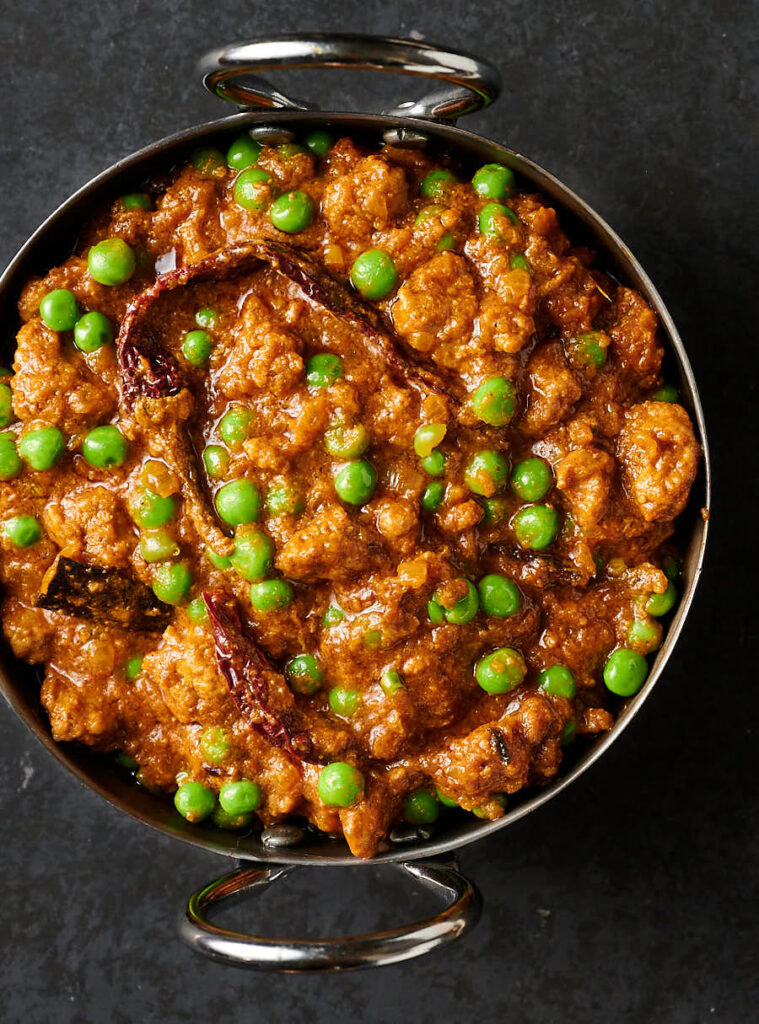
Dare to be different – make keema matar
You don’t have to be like them. You have the ability to stand out. Make something new. Make keema matar.
This isn’t hamburger helper. It’s a real curry. Done restaurant style. It has tons of flavour. And peas work so well in curry. Little green bursts of flavour. Up against a rich meaty curry. Balance.
I know it’s a leap of faith. I get that you’ve never even heard of it. But it’s not so far out there. It’s a meat curry. A little drier than some maybe. And it has some peas. Like aloo matar. Not scared of aloo matar, are you?
I’m being too harsh. I know. It just makes me crazy that restaurants can’t mix it up a bit. So I tend to rant about it. Sorry.
It’s outside the formula. Where only those who dare take control. Try keema matar. Try something new. You won’t be sorry.
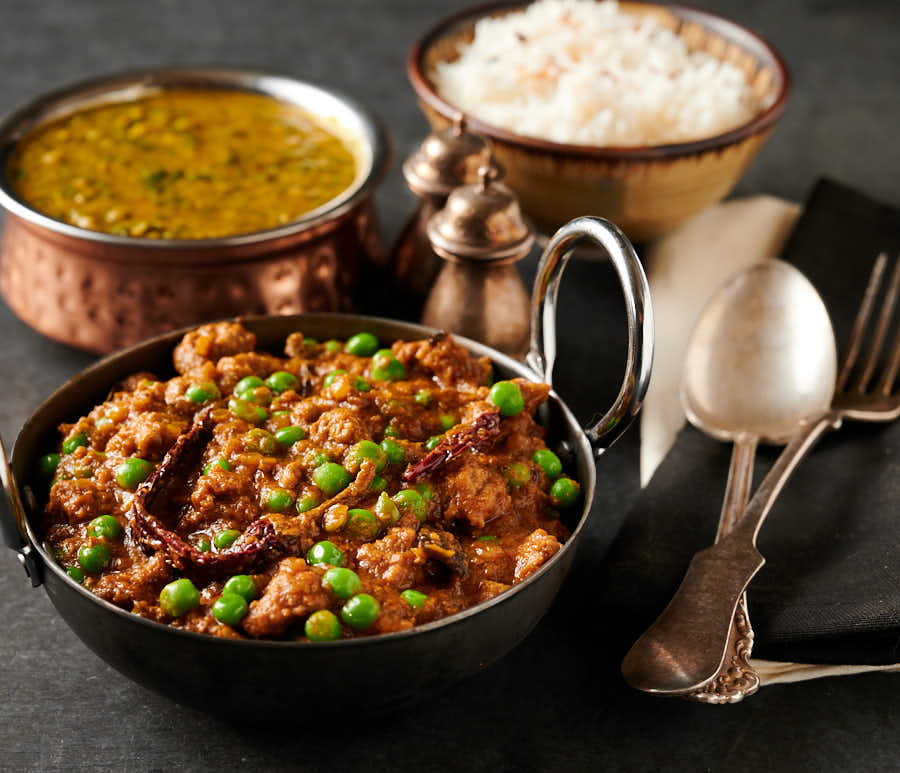
This is restaurant style cooking
This is a restaurant style curry. Done using all the restaurant techniques. Just exactly like what’s going on in the kitchen when you go out to dinner.
Restaurant style cooking goes fast. Really fast. So be ready. Have everything at hand.
Do your prep. That’s important. Make your curry base and have some heated and ready to go. Pre-cook your keema . Measure out your ingredients.
Have everything ready. Put on an apron or some old clothes. This is going to get messy. A bit of splatter is part of the fun. You are playing Indian chef here.
If you have not read the guide to Indian restaurant technique yet, do it now. This isn’t the same as traditional Indian cooking. So if you haven’t done it before it’s a good idea to read up a bit before you put oil to pan.
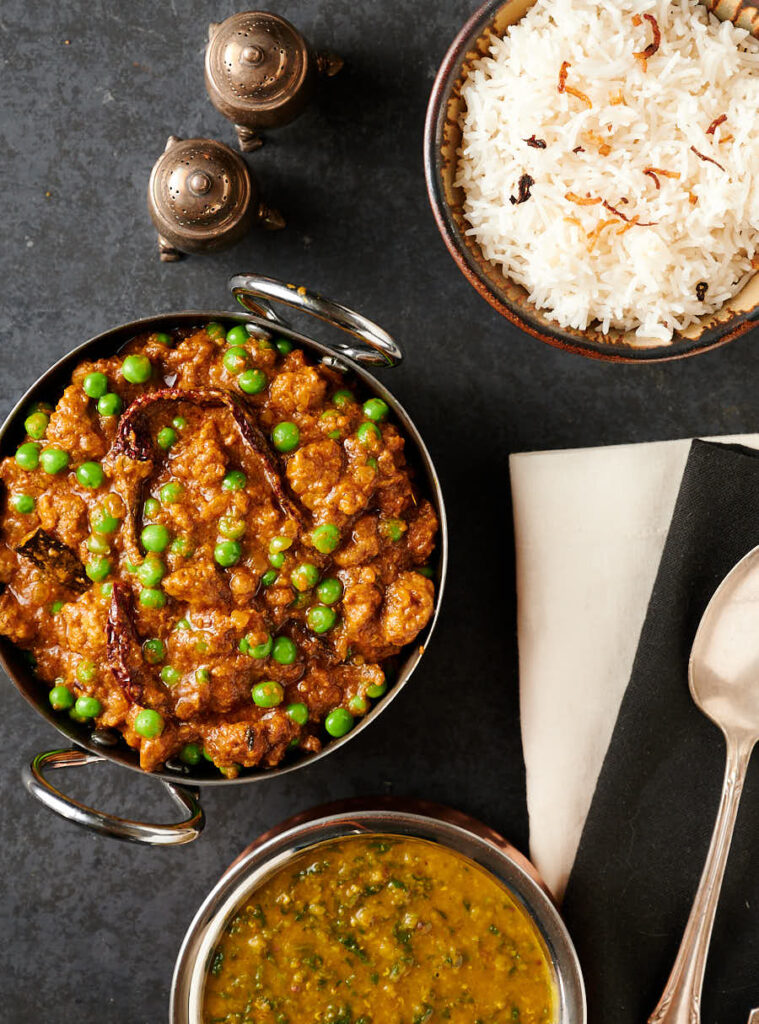
Lamb or beef?
You can do this with just about any ground meat. It’s most common with lamb or beef. It’s probably least common with turkey. Even I don’t think I’d like it with turkey. Don’t try that…
Both lamb and beef are good. They are very different though. Lamb tends to be a bit richer. To my palate anyway. Beef is more assertive. In your face.
It’s really up to you. What you like. I like lamb better. My wife likes beef. So we mix it up.
More beef than lamb though. Because keema matar is one of her favourite curries of all. For real. See – I’m not making this up.
Keema matar. For when you don’t want to toe the line. For when you dare to be different. Try it. You’ll see.
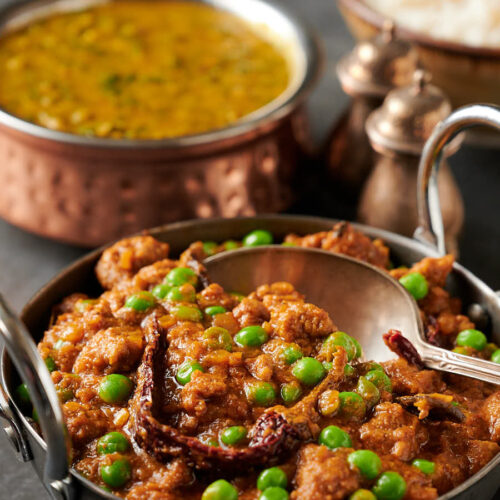
restaurant style keema matar
Ingredients
- 2 Tbsp oil
- 1/2 onion – finely minced
- 2 tsp garlic ginger paste – recipe link below
- 1/2 tsp kasoor methi – fenugreek leaves
- 2 tsp Indian restaurant spice mix – recipe link below
- 1 tsp kashmiri chili powder
- 1/2 tsp kosher salt remember you added salt to the keema already
- 2 tsp tomato paste with enough water to dilute to the consistency of pasatta
- 15 oz curry base – recipe link below
- 1 cup peas fresh or frozen
- 12 oz pre-cooked keema – recipe link below
- juice of 1/4 lemon
- salt to taste – or not
- a bit of sliced red chili to garnish – optional
Instructions
- Combine Indian restaurant spice mix, kasoor methi, chili powder and salt in a small bowl.
- Dilute the tomato paste with enough water to get to the consistency of passata.
- Heat your frying pan (don’t use non-stick) briefly over medium heat. Add 2 Tbsp vegetable oil. Use all the oil specified. It’s important.
- When the oil starts to shimmer add the onion and cook until translucent.
- Stir in the garlic ginger paste. Cook it, stirring constantly, until it stops sputtering.
- Turn down the heat and add the spice mix. This is the critical step. Stir it constantly for 30 seconds. If it starts to darken lift the pan off the heat. You want the spice mix to cook in the oil but not burn.
- Turn the heat up to medium high. Add the diluted tomato paste and stir until bubbles form (the oil will likely separate). This takes around 30 seconds to one minute depending on the heat.
- Add 3 oz of curry base. Stir until bubbles form (little craters really), around 30 seconds. Watch the edges of the pan. The curry can stick here.
- Now add 6 oz of curry base and stir briefly. Let it cook until the bubbles form again. This takes 1-2 minutes.
- Add the rest of the curry base and let cook until the bubbles form. Turn the heat down to low and add the pre-cooked keema.
- Let the curry simmer for about 5 minutes. If it gets too thick add a bit more curry base. Don’t add water.
- Add the peas (thawed if using frozen) and cook another 2-3 minutes to warm the peas through.
- Stir in the lemon juice, taste and adjust salt and lemon to taste.
- Garnish with sliced red chili if you like.
Notes
Nutrition
restaurant style keema matar
Ingredients
- 2 Tbsp oil
- 1/2 onion - finely minced
- 2 tsp garlic ginger paste - recipe link below
- 1/2 tsp kasoor methi - fenugreek leaves
- 2 tsp Indian restaurant spice mix - recipe link below
- 1 tsp kashmiri chili powder
- 1/2 tsp kosher salt remember you added salt to the keema already
- 2 tsp tomato paste with enough water to dilute to the consistency of pasatta
- 15 oz curry base - recipe link below
- 1 cup peas fresh or frozen
- 12 oz pre-cooked keema - recipe link below
- juice of 1/4 lemon
- salt to taste - or not
- a bit of sliced red chili to garnish - optional
Instructions
- Combine Indian restaurant spice mix, kasoor methi, chili powder and salt in a small bowl.
- Dilute the tomato paste with enough water to get to the consistency of passata.
- Heat your frying pan (don’t use non-stick) briefly over medium heat. Add 2 Tbsp vegetable oil. Use all the oil specified. It’s important.
- When the oil starts to shimmer add the onion and cook until translucent.
- Stir in the garlic ginger paste. Cook it, stirring constantly, until it stops sputtering.
- Turn down the heat and add the spice mix. This is the critical step. Stir it constantly for 30 seconds. If it starts to darken lift the pan off the heat. You want the spice mix to cook in the oil but not burn.
- Turn the heat up to medium high. Add the diluted tomato paste and stir until bubbles form (the oil will likely separate). This takes around 30 seconds to one minute depending on the heat.
- Add 3 oz of curry base. Stir until bubbles form (little craters really), around 30 seconds. Watch the edges of the pan. The curry can stick here.
- Now add 6 oz of curry base and stir briefly. Let it cook until the bubbles form again. This takes 1-2 minutes.
- Add the rest of the curry base and let cook until the bubbles form. Turn the heat down to low and add the pre-cooked keema.
- Let the curry simmer for about 5 minutes. If it gets too thick add a bit more curry base. Don’t add water.
- Add the peas (thawed if using frozen) and cook another 2-3 minutes to warm the peas through.
- Stir in the lemon juice, taste and adjust salt and lemon to taste.
- Garnish with sliced red chili if you like.
Notes
Nutrition
If you like Asian noodles you need to try mee goreng. It’s just a whole lot of crazy delicious in a bowl.
Chewy noodles. Chicken. Shrimp. A little bit spicy. A little bit sweet. Incredibly savoury. How can you not want that?
And it’s a snap to make. Not a whole lot of ingredients. Weekend flash with weeknight effort. 30 minutes and it’s on the table. Less time even.
Forget takeout. Make this. Do it soon.
Mee goreng means fried noodles
That isn’t figurative. Mee goreng (or mie goreng – depends who you ask) literally translates to fried noodles. And that is exactly what this is. With noodles as the star. Tasty, tasty noodles. Who doesn’t want that?
Less is more here. There aren’t a lot of ingredients. Not because that makes it easier. Because it makes it better. And that’s what really matters.
I tinkered with this recipe. I tried adding bean sprouts. Chinese greens. Cabbage. Green onions. Distractions. That’s what I wound up calling extra ingredients.
There’s nothing I would take away in this mee goreng. And there’s nothing I would add. You may think boring. But try it. You’ll see.
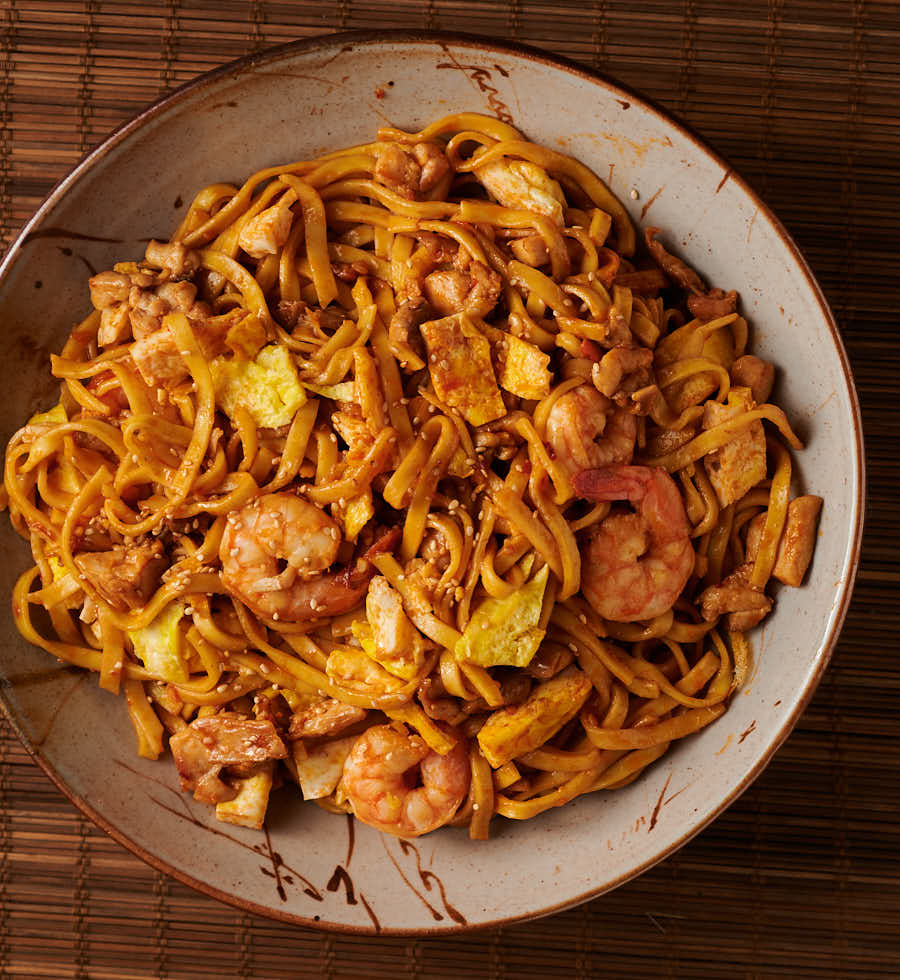
Malaysian curry powder makes this crazy good
There’s a secret ingredient here. Malaysian curry powder. That’s the fairy dust that makes this dish special. Seriously. The wow. The magic.
I am addicted to the taste of Malaysian curry powder. There. I said it. Full disclosure. So you know where I’m coming from.
Never trust an addict. That’s good advice. Especially if all they are doing is trying to get you to join them. Which is exactly what I’m doing here. You know you want to.
You might need to hunt a bit to get it. Drive around looking to score. But it’s so worth it. The bag says meat curry powder. I say noodle curry powder. Or chicken curry powder. It makes some seriously amazing chicken curry .
I use Baba’s brand. Not because it’s the best. Because that’s what they sell where I live. It’s really good. But I imagine other brands are just as tasty.
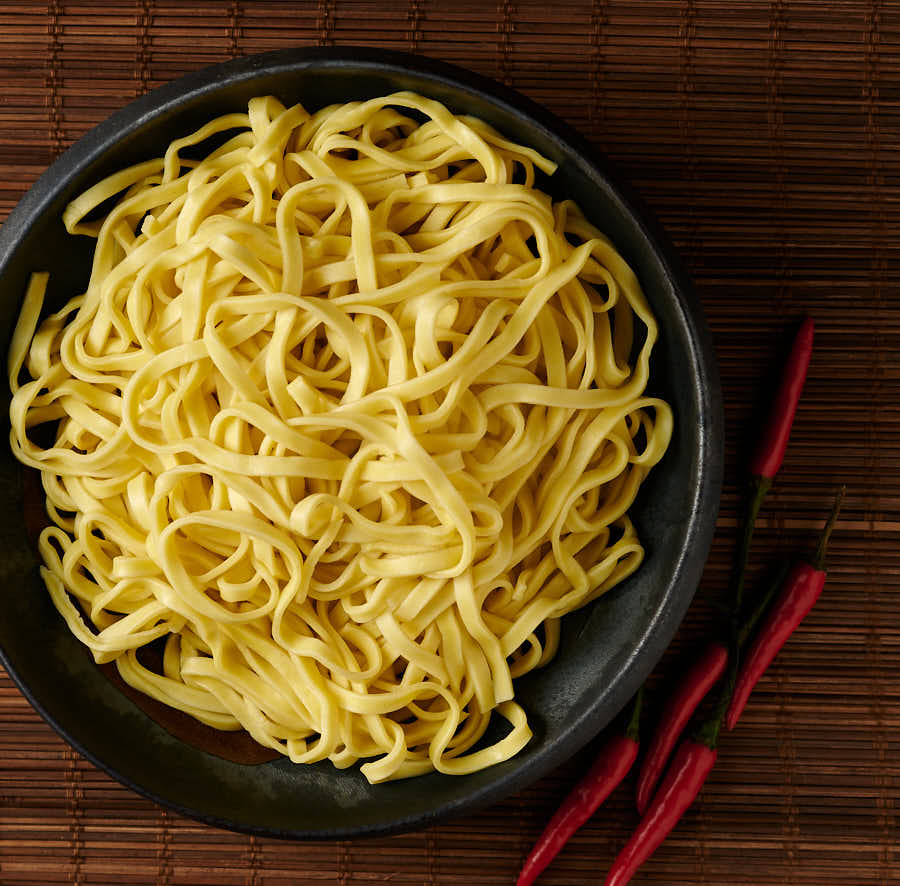
The right noodles for mee goreng
These are fried noodles. So you don’t want too soft going in. Maybe not quite al dente but a little firm. That’s important.
I like fresh lo mein noodles for this dish. Yellow egg noodles. Just the right amount of chew. But that’s me.
I have an Indonesian friend that uses linguine. Mie goreng is fried noodles in Indonesian as well. So she knows what she’s doing.
I’m thinking about trying this with rice noodles. Pad Thai meets mee goreng. The ultimate noodle cage fight. Bottom line. Don’t get too hung up on the noodles you have. Just make this. Eat it. And then you’ll see.
Crazy talk, I know. But this recipe isn’t about following the rules. Fried noodles. Sweet soy and sambal oelek. That’s the guideline. So I figure I’m in bounds here.
Go your own way here if you want. Just please make sure the noodles aren’t too soft going in. Or you will have a tasty bowl of mush. Which is nowhere as good as it should be.
Ingredients matter
That’s the thing about recipes with such a short ingredient list. There’s nowhere to hide. So the soy you choose matters.
I like Thai soy sauce. Use it in almost everything. If it isn’t Japanese and it calls for soy, it’s getting the Thai treatment. Same goes for oyster sauce. I like the Thai version best.
Kecap manis is the classic choice for this dish. For the sweet soy. And if you have it, use it. It’s good. I stock Thai sweet soy. So that’s what I use. I have five different soy sauces in the fridge. Even I don’t have room for another one.
I did a kecap vs Thai tasting. They aren’t all that different. And if you’re wondering – it’s pronounced ketchup. Now you know.
Whatever sweet soy you choose do consider Thai thin soy. For anything that isn’t Japanese it is wonderful stuff. My go to general purpose soy. It’s good stuff.
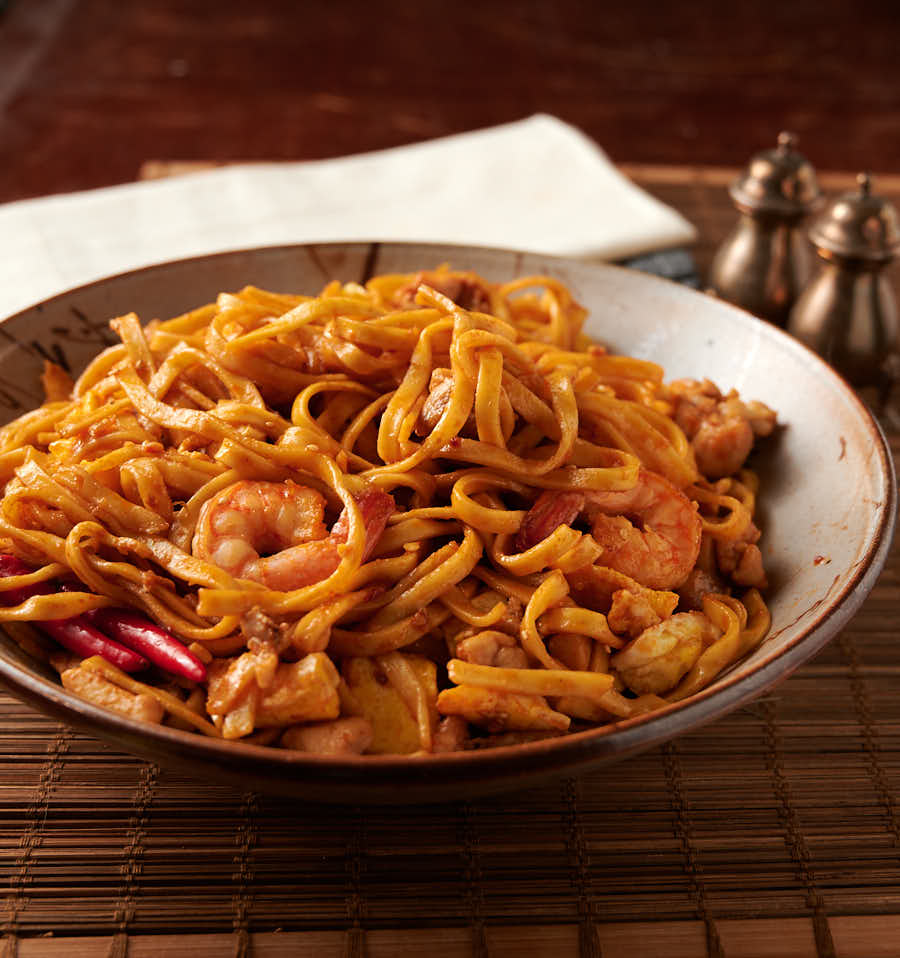
Sometimes simple is best
This is a deceptively simple recipe. And it has ketchup in it. Not kecap. Ketchup. Which is reason enough for you to run away. I’m pretty sure I would run away as well if I didn’t know better.
But it works. Somehow. The curry flavours against the soy. The acid and tomato and sugar in the ketchup. The chew of the noodles. And no distractions.
No garnishes either. I could have made the pictures look better. A little cilantro. Some chopped peanuts. Pretty green onions. I wanted to. But I couldn’t. Because they don’t add anything. More distractions.
This is how I would make mee goreng if I was running a food stall on the streets of Malaysia. If my livelyhood depended on it. I’d line up for it. And once you try it I bet you would too.
Mee goreng – Malaysian fried noodles
Ingredients
Mee goreng sauce
- 1 tbsp soy sauce – I like Thai thin soy sauce for this
- 1 tbsp sweet soy – kecap manis or Thai sweet soy
- 2 1/2 tbsp ketchup – yes, plain old every day ketchup
- 2 tsp sambal oelek
Mee goreng
- 3 chicken thighs – cut into 1/2 inch pieces
- 6 shrimp 31-40 shrimp per pound (large or medium large in the UK)
- 1 clove garlic minced
- 1 tsp Malaysian curry powder It’s called meat powder on the package. You can substitute Madras curry powder.
- 12 oz fresh yellow noodles cooked
- 3 tbsp vegetable oil plus 1/2 tsp to fry the eggs
- 2 large eggs lightly scrambled
Instructions
Prep your sauce
- Combine the sweet soy, the thin soy, the ketchup and the sambal oelek in a small bowl.
- Stir and set aside
Make your mee goreng
- This goes fast. Be ready. Have your ingredients prepped and at hand. Make sure your noodles are cooked. Not a bad idea to leave them in your colander so you can run some hot water over them right before you start to fry them. Hot water will loosen them up so you aren’t starting with a big, solid glob of noodles.
- Heat your wok over medium heat. Non-stick or well-seasoned really helps here. Turn on your hood fan.
- Stir your eggs to combine the yolks and whites. Add 1/2 tsp of oil. When the oil starts to shimmer add the eggs. Fry the eggs until they start to set up. Break a hole in the middle of the eggs and push the uncooked egg into it. Think omelette.
- When the eggs are mostly cooked through fold them over themselves (in half) and slide the egg out of the wok onto a plate. Cut the eggs into ribbons. Set aside.
- Add 3 tablespoons of oil to the wok. Add the chicken. Stir fry until the chicken is almost done. This should take about 4 minutes but check your chicken. You don’t want raw chicken. Maybe a little pink at this stage.
- Add the shrimp and continue to stir fry. You just want them turning pink. Overdone shrimp are expensive pencil erasers. Not good. This should take about a minute for 31-40 count.
- Add the garlic. Stir fry for about 30 seconds.
- Look at your pan. Is there still a fair amount of oil in it or is most of it splattered on your stove. If it looks dry add a bit more oil. These are fried noodles. Fried isn’t dry roasted.
- Add the Malaysian curry powder. Stir to combine. You want to see the spices frying in the oil. Cook for about 30 seconds.
- Crank the heat. Toss in the noodles. Stir fry them carefully. You don’t want to break them. but you do want them to get them well coated with oil and frying a bit. Remember, this is fried noodles. Cook for about 90 seconds.
- Add the sauce. Return the eggs to the pan. Stir to combine. Serve immediately.
