Punjabi dal makhani is a wondrously rich lentil curry from Northern India. This is the restaurant version. You can make it in ten minutes once your lentils are cooked. The traditional version can take a whole day.
Dal makhani is celebration food in India. It’s rich. Creamy. Mildly spiced. Not an every day dish. I don’t think they even had a home cooked version originally.
It originated in Punjab. In the north of India. But it has spread throughout India. Now it’s everywhere. All around the world. And now you can make it at home.
Vegetarian main course or side dish
Dal makhani is a seriously hearty dish. It’s big enough to stand alone as a main course in a vegetarian meal. I’m not vegetarian. Not remotely so. But this is satisfying in a way that will make even the most carnivorous palates smile.
It’s incredible as a side dish too. Or part of a thali. But be sure to make your best main courses to go with it. Or it will steal the show.
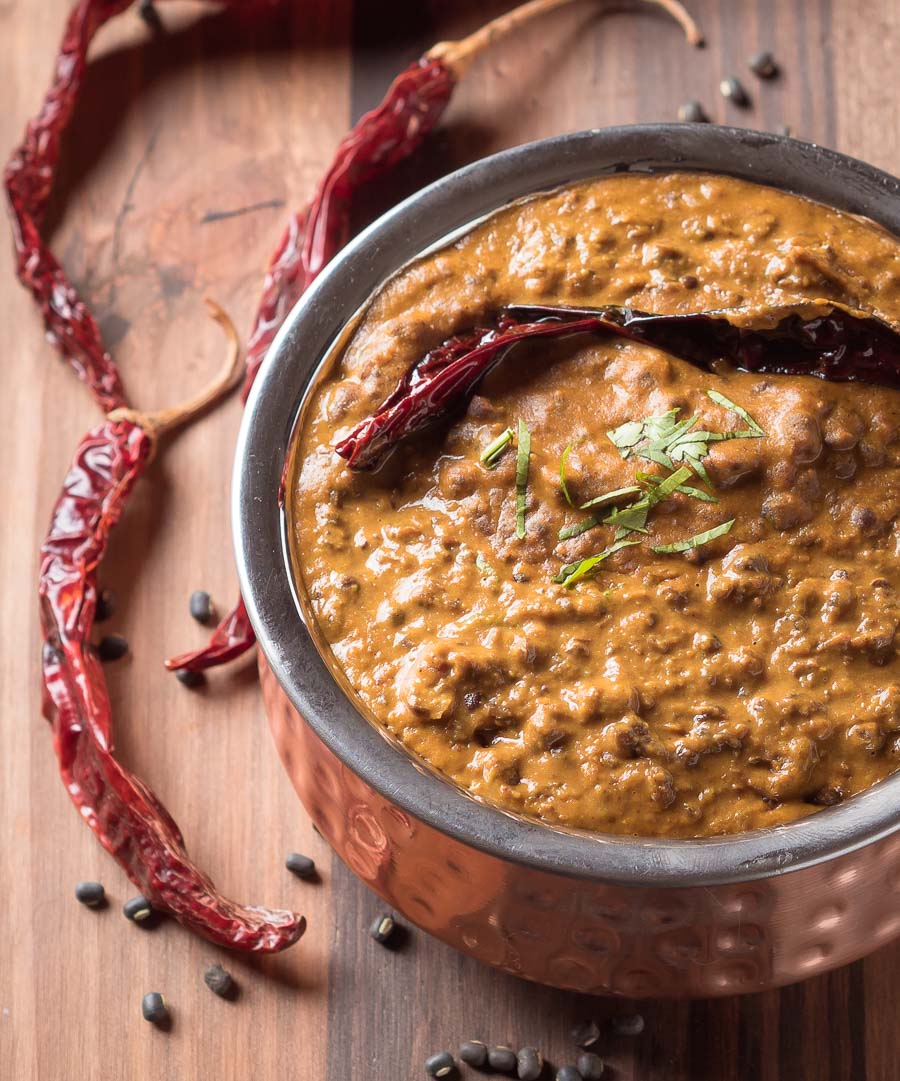
punjabi dal makhani
Ingredients
- 1 cup whole urad dal - soaked overnight
- 2 Tbsp ghee
- 1 Tbsp garlic/ginger paste - recipe link below
- 2 black cardamom whole, split
- 1 2 inch piece cassia bark or cinnamon stick
- 3 whole dried red chilies - kashmiri if you can find them
- 1 Tbsp Indian restaurant spice mix - recipe link below
- 1 Tsp kasoor methi - crumbled between your fingers
- 3 Tbsp tomato paste with enough water to dilute to the consistency of pasatta
- 15 oz curry base - recipe link below
- 2 Tbsp butter
- 1/2 cup heavy cream (35%)
- 1 tsp salt to taste
Instructions
- Pre-soak the urad dal, preferably overnight, in cold water. Cover them by about an inch with the water.
- Simmer the lentils in 4 cups water until tender - this could be a couple hours. Urad dal takes forever.
- Drain the lentils. Puree about 1/2 the lentils and return to the pot with the remaining whole lentils
- Warm your curry base.
- Pre-heat a frying pan over medium heat. Add the ghee.
- Add the whole dried chilies, cardamom and cinnamon to the pan and let them sizzle for about 15 seconds. The chilies will start to change colour.
- Add garlic/ginger paste and cook until sizzling subsides.
- Turn the heat down to medium low. Add the kasoor methi and cook 20 seconds.
- Add the Indian restaurant spice mix and salt. Cook over medium low heat about 30 seconds.
- Add tomato paste, increase heat to medium and cook until oil separates and craters form.
- Add 3 oz of the curry base. Raise heat and cook until craters form and oil separates.
- Add 6 oz of the curry base and cook until craters form and oil separates.
- Add another 6 oz of the curry base and cook until craters form and oil separates.
- Simmer 5 minutes.
- Return the pot with the lentils to the stove over medium low heat.. Add contents of the pan to the pot with the urad dal and stir to combine.
- Mix in butter until melted.
- Stir in heavy cream. Continue to heat until the dal makhani comes back to temperature.
- Adjust salt to taste and garnish with a bit more cream (optional) and cilantro.
Notes
Nutrition
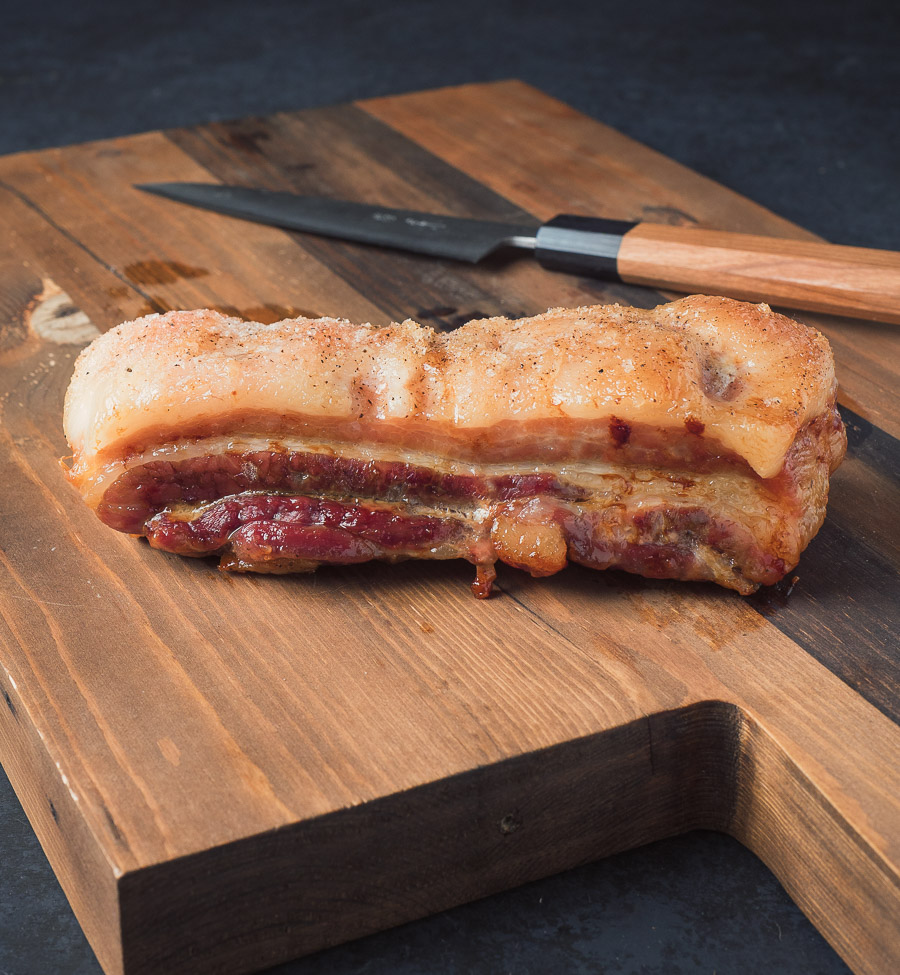
Momofuku pork belly is so good a restaurant empire was built on it. Melting tender and deeply flavoured. And this is how they do it. For real. I asked. At the restaurant.
I’ve seen a bunch of Momofuku pork belly recipes on the net. I’ve looked at the book. And I’m telling you it’s all wrong. All the recipes are the same. Cure it up to 24 hours. Blast it at 450 for an hour.
Drop the temperature to 250F and then cook it to 165F. That’s a recipe for tasty but tough pork belly. Chewy. Not the Momofuku pork belly magic. No way. Not close.
My lesson on Momofuku pork belly – in the kitchen at Momofuku
Don’t write me off here. I was at Momofuku. I asked the waiter how they make the pork belly.
It went like this…
“How do they cook the pork belly?”
“They cure it and roast it.”
“What temperature?”
“I’ll be right back.”
Different guy shows up at the table.
“They cook it at 290F.”
“Thanks. For how long?
“Please come with me sir”
No secrets anymore
Off I went to the kitchen. That’s how I got my lesson. I spoke to the chef. Not David Chang though. That would have blown my mind. But still, good enough.
This is the lesson I got for the Momofuku pork belly. Just as I was told. And I believe it because it’s just how I remember the pork belly.