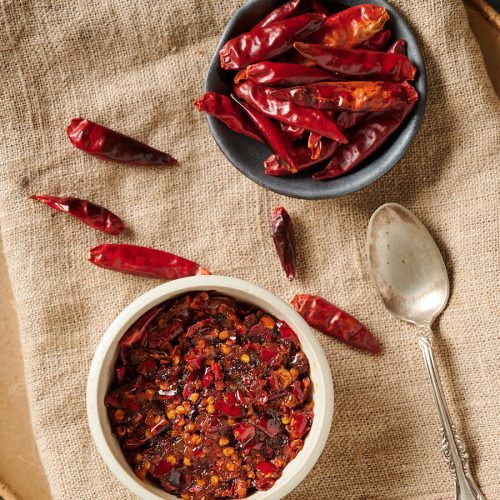
Nam prik pao is that wonderful, earthy chili sauce that you see on the table of just about every Thai restaurant.
It is not crazy hot. Just has that magical blend of onion, garlic, chili and fish sauce. Perfect for adding a little zing to so many dishes.
Use it with rice. With rice noodle dishes. In soups. Thai chili paste brings a little something to whatever you use it with.
Finding the right chilies for nam prik pao
Lots of Thai recipes call for dried red chilies. Go to your local Asian market and look for the bag that says “dried Thai chilies”. I bet you look for a long time. I did the first time I went looking for them.
That’s the thing about Asian grocery stores. They really don’t cater to people who don’t know what they are looking for. It’s a learning curve. I’m still learning. But I’m getting better. It comes with practice.
Here’s a tip. Google what you are looking for on your phone. Show that to the guy at the store. Or search the shelves yourself. Look for a match. I do it. I see people doing it all the time.
Flavour over fire for me
I like depth of flavour more than absolute fire. So I don’t always use Thai chilies. Maybe that makes me less authentic. But I don’t live in Thailand. And I don’t always want the top of my head blown off.
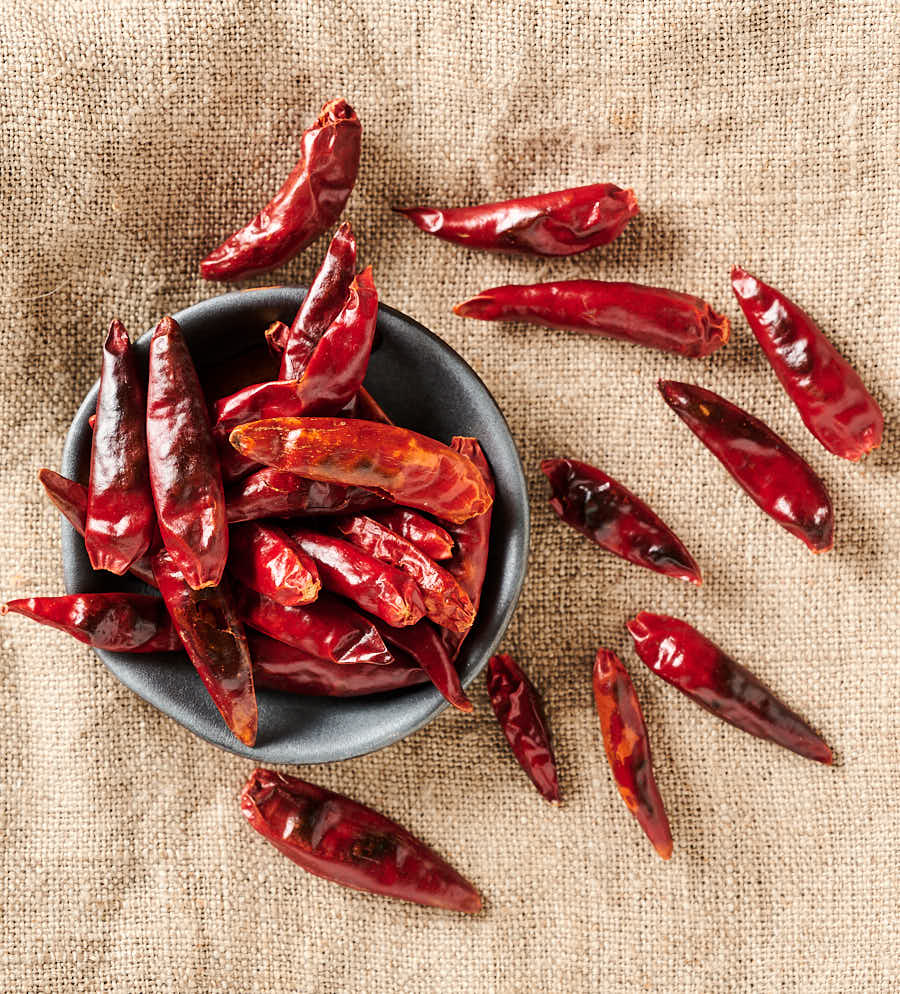
So I make nam prik pao with chau tian chilies. They’re about the size of Thai birds eye chilies. Nowhere near as hot though. Nice chili flavour. Not stupidly hot.
If you can find Thai dried red chilies, use them if you like a bit more heat. They are the real deal for nam prik pao. Both ways are good. Or mix them until you get the heat you want.
nam prik pao
Ingredients
- 3/4 cup thai dried chilies or similar
- 8 cloves garlic unpeeled
- 2 large shallots unpeeled
- 1/4 cup vegetable oil
- 1 tsp fish sauce
- small drizzle sesame oil (optional)
Instructions
- Turn on your vent hood. This is going to get intense. Toss the chilies into a skillet and toast them over low heat. You don’t want them to burn so keep your heat fairly low. They should be done after about 4 or 5 minutes. Let them cool.
- Slice your shallots in half. Put them in a cast iron pan, cut side down, over medium heat. Add the garlic. Dry roast until the shallots start to char. While that’s happening flip the garlic every minute or so.
- When the shallots are charred (check them - there’s no other way) flip them over. Keep flipping your garlic. When it’s all soft remove from heat and let cool. Remove the peels on both the garlic and shallot.
- Combine all the ingredients except the oil.
- Now the fight starts. It is not easy to puree this stuff. You can use a small food processor. That works. Kind of. Or you can grind manually in a mortar and pestle. That works better.
- Sometimes, when I’m using a food processor I give up and add the oil into the mix. Technically you are supposed to fry the paste in oil. But I find when you start cooking it off some of the oil comes out. And your goal is to get the oil into the paste anyway.
- Once you have pureed it pour the oil (if you haven’t already added it to the paste) into a small frying pan and heat over medium low heat.
- When the oil starts to shimmer add the paste and fry, stirring regularly, for about 4-5 minutes. It will darken a bit and start to give off quite a rich aroma. When you get the aroma it’s done. You will get it when you get there.
- Alternately, If you added the oil to get the paste to puree transfer it to a dry pan and cook over medium low heat as above.
- Nam prik pao stores well in a small jar for weeks in the fridge.
Nutrition
South Indian style egg curry is one of those dishes you didn’t know you liked. Eggs, green chilies, spices and curry leaves in a rich, delicious coconut sauce.
If you’ve never had egg curry you owe it to yourself to try it. Unless you don’t like eggs. Can’t help you there. But if you like Indian. And you like eggs. Then this one will surprise you.
You never see this on Indian menus. And that’s a shame. Because there’s more to Indian cooking than the same 10 dishes on every menu.
I like a good jalfrezi. And who doesn’t love tandoori chicken. But there’s more. Much more. Like this south Indian egg curry.
I really don’t get why Indian restaurants stick to the same old same old when they have a wonderland of food to draw on. Crazy.