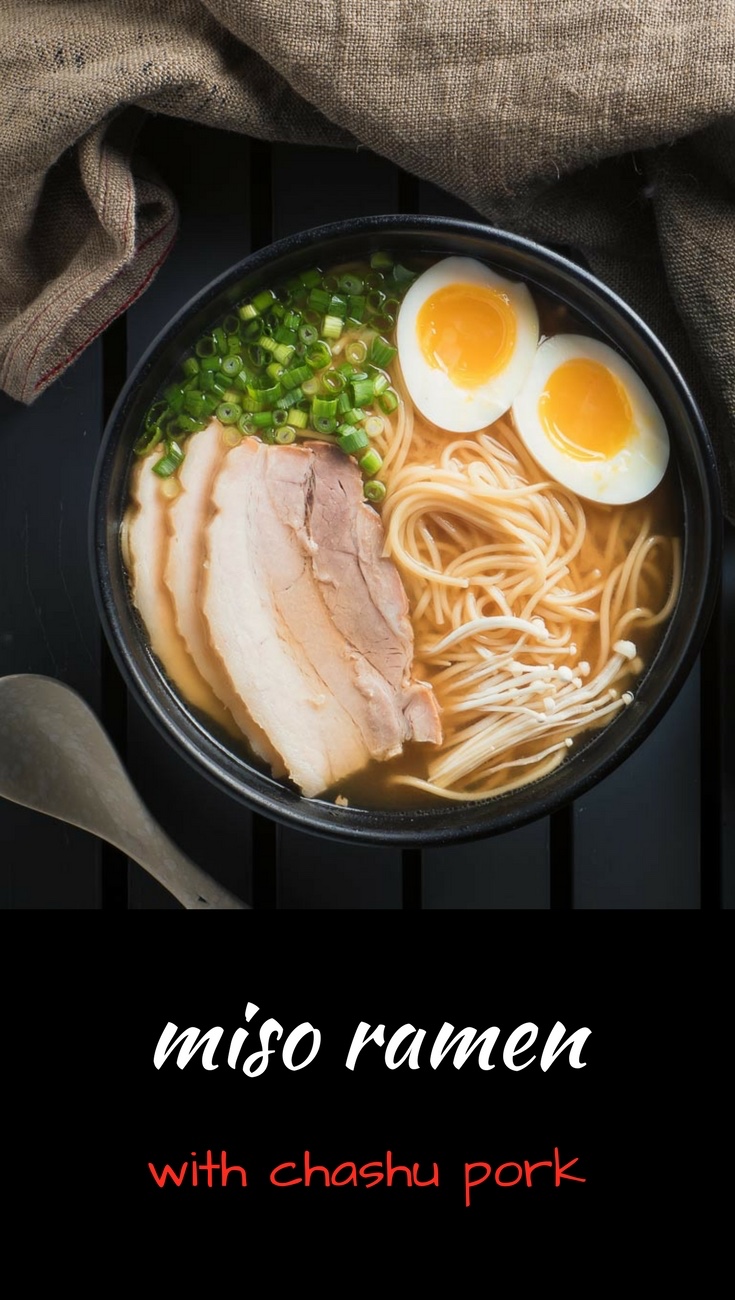
Miso ramen with chashu pork is one of the world’s great noodle dishes. Up there with pad thai, laksa, and pho. And this is an easier way to make it. Big pork broth flavour without the big pork broth effort.
This is more approachable version of miso ramen. One anyone can make. And it doesn’t take 2 days. Sometimes you just can’t wait 2 days for soup.
Miso ramen is one serious bowl of soup
The Japanese have taken miso ramen to almost mythical status. Real miso ramen is an incredible experience. If you ever get to Japan, seek it out. On the surface it seems so simple. Noodle soup. A little pork belly. An egg.
But as with many things Japanese, it is not easy. Every ingredient is perfect going in. And when it all comes together. Wow.
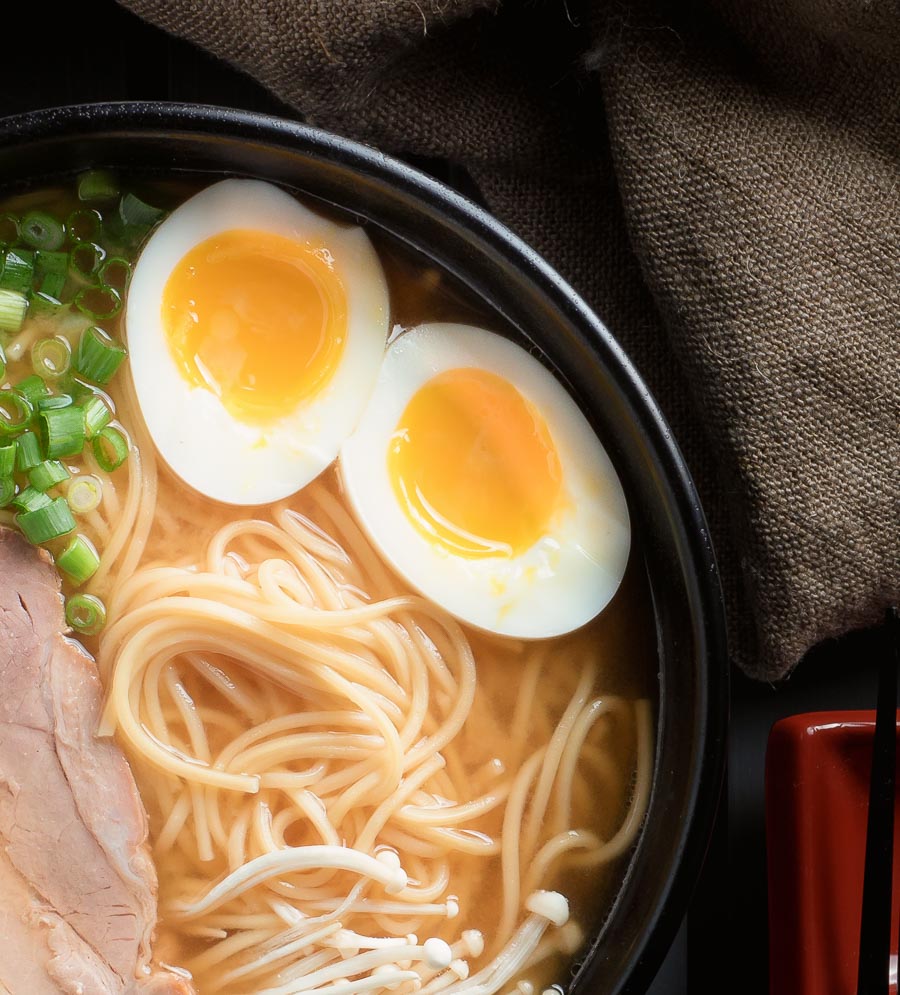
I like perfect. Who doesn’t? But perfect is hard. I don’t always have time for perfect. And that’s what this miso ramen recipe is about.
It’s way closer than the run of the mill recipes out there. Way better. It’s really good. But it’s not quite the “I’m pulling out all the stops and spending the whole weekend making a bowl of soup” perfect.
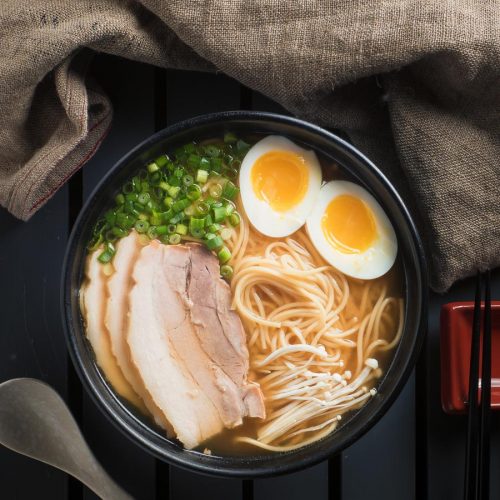
miso ramen with chashu pork
Ingredients
Chashu pork
- 2 lb pork belly in one piece, skin removed
- 1/4 cup Japanese soy sauce low sodium or regular
- 1/4 cup mirin
- 3/4 cup sake
- 2 tbsp sugar
Miso ramen
- 4 large eggs
- 1 cup chashu braising liquid
- 2 slices bacon
- 1/2 cup shiro miso
- 8 cups chicken stock - no sodium or homemade
- 12 oz dried ramen noodles - not the ones from the instant soup
- 2-3 oz enoki mushrooms
- 4 green onions finely chopped
Instructions
Chashu pork
- Pre-heat your oven to 290F.
- Combine the soy, mirin, sake and sugar.
- Place the pork belly in a baking dish that’s not too much bigger than the pork belly. I use a loaf pan.
- Pour the soy mixture over the pork and cover the baking dish with tin foil. You want to get it fairly well sealed.
- Place the pork in the pre-heated oven and cook, turning the dish occasionally to ensure even cooking. You are going for an internal temperature of 195F. This will take about 2 hours.
- When you hit 195F remove the pork from the marinade and chill. Cool the marinade down and skim and discard the fat from the surface. This chashu braising liquid is going to be the base of your ramen broth flavouring.
Medium boiled eggs
- In a medium saucepan, bring water to a boil. Boil large eggs for 6 minutes 30 seconds. If using extra large eggs boil them for 7 minutes 30 seconds. You may have to adjust your times slightly depending on the exact size of your eggs but this should get you pretty close.
- Submerge the eggs in really cold or ice water to chill. This stops the egg yolks from continuing to set up. Peel and set aside. They will warm up in the broth.
Miso tare - the flavouring
- Combine the chashu braising liquid with 1/2 cup shiro miso in a small sauce pan over medium low heat.
- Warm the chashu miso mixture, mixing the miso gently. It will go in as a 1/2 cup lump so you are trying to get it to gradually dissolve.
- Add the bacon and simmer, covered, over the lowest heat for 1 hour. Keep an eye on it. You may need to add a bit of chicken stock to thin it out a bit. You want to wind up with about the same amount of miso tare that you started with. Remove and discard the bacon.
Miso ramen
- Cook the noodles per the instructions on the package. If the instructions are in Japanese 4 minutes is about right for the thin ramen noodles. Drain and set aside. Don’t let them sit too long. Try to time it so the noodles are ready when you are ready to assemble the ramen bowls.
- Heat the chicken broth to a simmer.
- Using your sharpest thin knife cut the eggs in half lengthwise. They will be a bit runny inside so be ready.
- Slice the pork belly. You want it about 3/16 inches thick. Warm it in the chicken broth briefly.
- Add about 4 Tbsp miso tare to each of 4 pre-warmed bowls. Then add 2 cups of chicken stock to each bowl. Stir and taste. You will want to add a bit more tare. You are going for the point where you are not quite sure if it’s too salty. That’s when it’s perfect. This should be around 5 Tbsp but really this is up to your taste. It will probably be less if you used regular sodium soy sauce or there was sodium in your chicken broth.
- Add the noodles, then add the pork belly, egg, and enoki mushrooms. Garnish with green onions and serve.
Notes
Nutrition
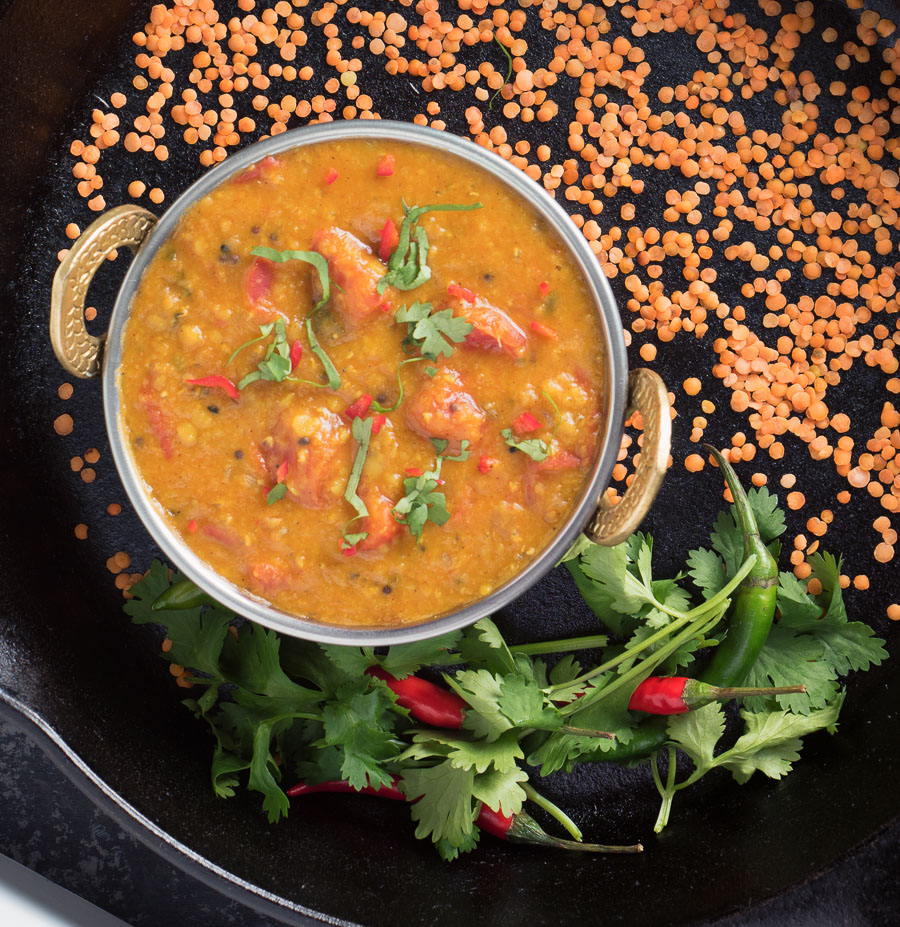
If you like lentils this is a dish for you. Bengali masoor dal belongs on the menu whenever you are cooking Indian for dinner. Creamy texture. Bold flavours. Who cares that it’s healthy? It’s just delicious.
The Bengali in this dish comes from panch phoran. That’s a spice mix that figures highly in Bengali cooking. Mustard seeds are big in Bengali cooking too. Double blast.
If you can’t get panch phoran you can make this a half and half mix of mustard seeds and cumin seeds. It will still be tasty stuff.
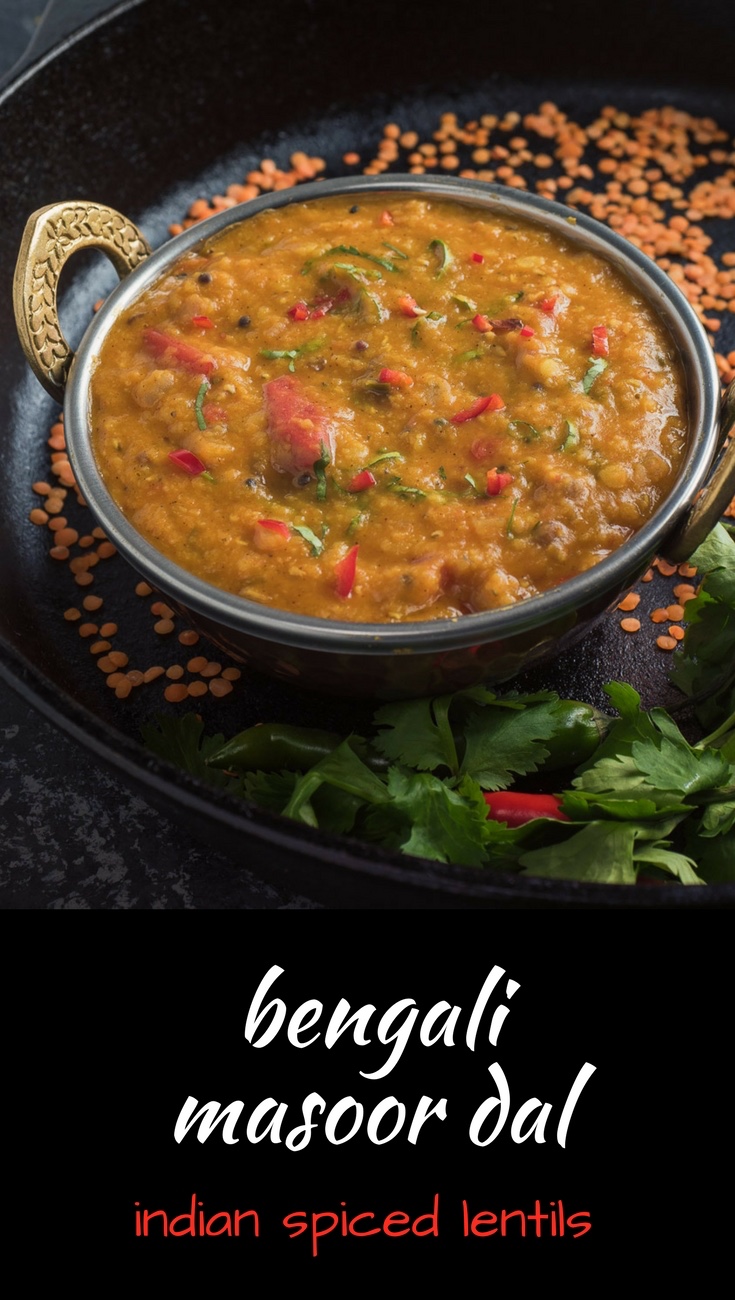
Indians have pretty much mastered the art of cooking lentils. Just visit an Indian grocery sometime. There’s must be 20 different types of lentils. Maybe more.
There’s a lot of vegetarians in India and they have been cooking for thousands of years. No wonder they are so good at it.
The key to a good masoor dal is the tarka
They have an interesting way of approaching it too. A lot of western recipes cook the beans along with the aromatics. Basically chuck everything into a pot and simmer. Think vegetarian chili.
Indians do it differently. The lentils cook with a minimum of other ingredients. They fry up the rest of the ingredients separately.
They call that a tarka. At the last minute everything gets mixed together in a big jumble of delicious.