Mexican pork and black bean stew. This is one of those crazy satisfying recipes that insinuates itself into your list of favourites.
This is not just another chili recipe. It’s different. Really good in that sneak up on you sort of way.
This is old school Mexican cooking
I learned to cook Mexican reading Diana Kennedy. She unlocked Mexican cooking for me in her “Cuisines of Mexico” way back when nobody had a clue. Kind of the Julia Child of Mexican back in the day.
She taught me about getting away from that nasty grocery store chili powder. The differences between different types of chilies. That Mexican oregano is not the same as European oregano. When to use epazote.
I learned chipotles are the thing of absolute wonder (this was a long time ago – way before there were restaurants called Chipotle). Fundamentals of Mexican cooking. It was completely mind blowing for this Northern boy.
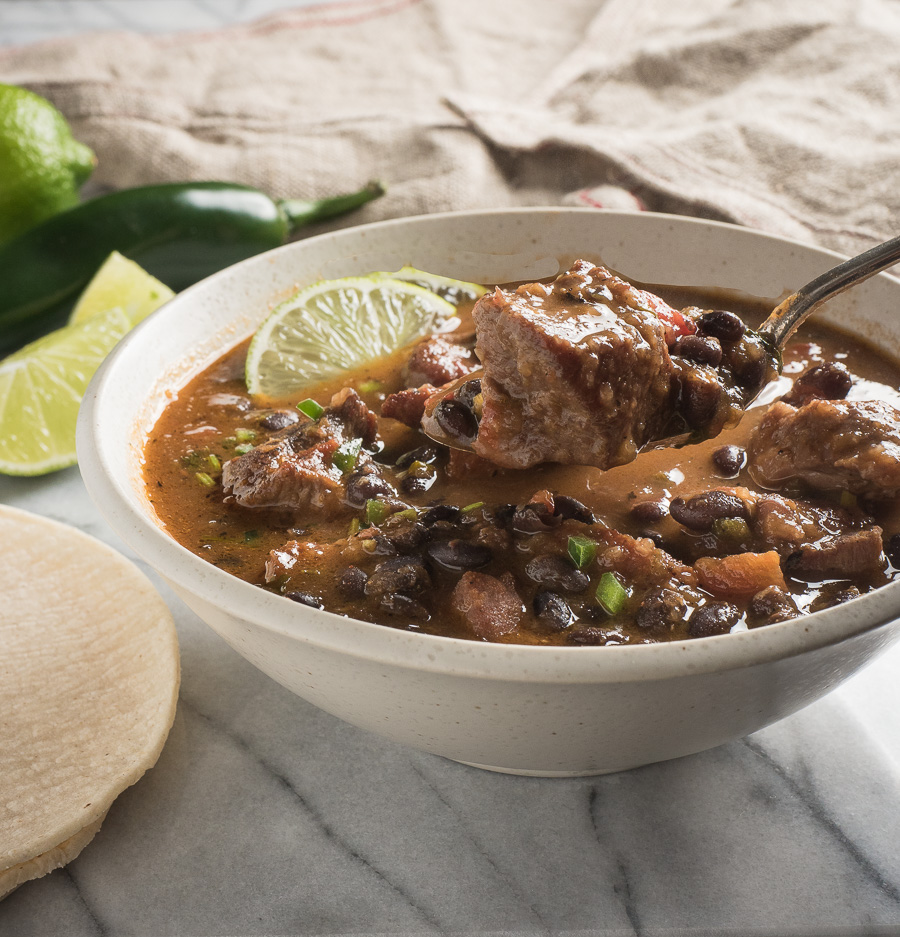
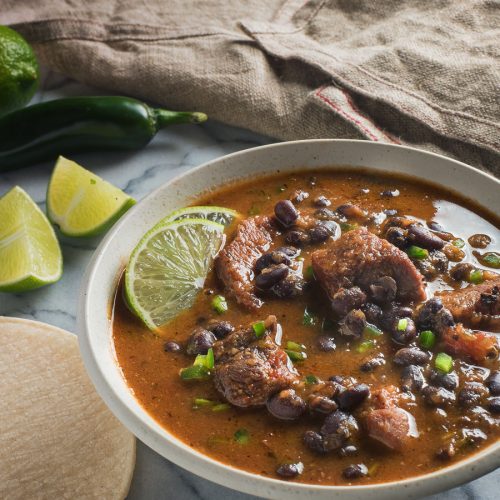
mexican pork and black bean stew
Ingredients
- 4 lbs boneless pork shoulder cut into one inch cubes
- 2 1/4 cups dried black beans or 3 15 ounce cans, drained
- 2 large white onions sliced into one inch thick slices
- 8 cloves garlic
- 1 28 ounce can fire roasted tomatoes - I like Muir Glen if you can get them
- 2 tsp cumin
- 2 tsp New Mexican red chili powder - any mild pure chili powder works. Cayenne is not mild!
- 2 tsp salt (plus more at the end to season to taste)
- 1/2 cup diced jalapeno - seeded with all membranes removed
- 4 tbsp vegetable oil - any neutral oil will do
- 1/2 tsp Mexican oregano - don’t substitute Italian oregano. If you don’t have it, leave it out.
- 4 cups low sodium chicken stock
- 1/2 lime, juiced
- 1 handful chopped cilantro
Instructions
- If using dried black beans cook until tender. I use a pressure cooker with lots of water for 22 minutes. After they pressure cook I let them simmer another 15-20 minutes until just tender. You can cook them any way you like or just use canned.
- If you think of it, salt the pork liberally the night before. If not, no big deal. But it’s a nice touch if you do.
- Heat the oil in a large (like 6-7 quart) pot or dutch oven. Brown the pork in batches. It will take 3 or 4 batches to get through all of them. Don’t crowd your pork. Add more oil as required. Remove the pork and set aside.
- While the pork is browning, heat a comal or cast iron frying pan over medium heat. Dry roast the onion slices and garlic. You want them to be a bit charred. Not full on burned. Just a bit of dark brown and softened through. This adds a nice depth of flavour.
- Coarsely chop the onion. Add the onion, garlic, cumin, chili powder, Mexican oregano, salt and half the tomatoes with half the juices to a blender. Puree until smooth. Put the tomatoes and their juices in the bottom. This will make it easier on the blender. Add a bit of water if it won’t go.
- Add enough oil to get to about 4 Tbsp if needed. You should already have enough but if you don’t top it up a bit. Add the jalapeño and fry gently until softened, about 1 minute. Add the onion mixture, turn the heat up to medium and fry for 6-7 minutes, stirring occasionally.
- Return the pork to the pot along with any accumulated juices. Add the chicken stock. Dice the remaining tomatoes and add them to the pot. Don’t add the remaining tomato juice in the can. Reduce the heat to low and simmer until the pork is tender, about an hour to 70 minutes.
- Add the black beans and simmer 10 minutes.
- Add a squeeze of lime and the cilantro and simmer another 5 minutes. Adjust salt. You will probably need to add somewhere around another tsp or so.
- Serve with additional lime wedges, a bit of finely diced jalapeño and corn tortillas.
Notes
Nutrition
Korean bulgogi sauce is a great marinade for grilled beef. It’s also absolutely awesome brushed on burgers, on chops or as a stir fry sauce. Or even just drizzled on rice.
Beef bulgogi is probably the most famous Korean meal. Before you say it – bibimbap is arguably the other. But bibimbap just means stuff on rice. Bulgogi counts as stuff so bulgogi on rice is bibimbap as far as I can tell.
Bulgogi sauce is easy to make
Best thing about this recipe is you can get all the at the grocery store. That’s unusual for this blog. I know. I am a pain. But for once that’s true.
There is really nothing to this recipe. Mix some soy, apple juice and sugar in a sauce pan. Heat until the sugar melts. Mix in some ginger, garlic, green onions and sesame oil. Literally that’s it.
Slice some beef, toss it with bulgogi sauce and grill. Or stir fry the beef and stir the sauce in at the end. Either way, it makes a great topping for bibimbap.
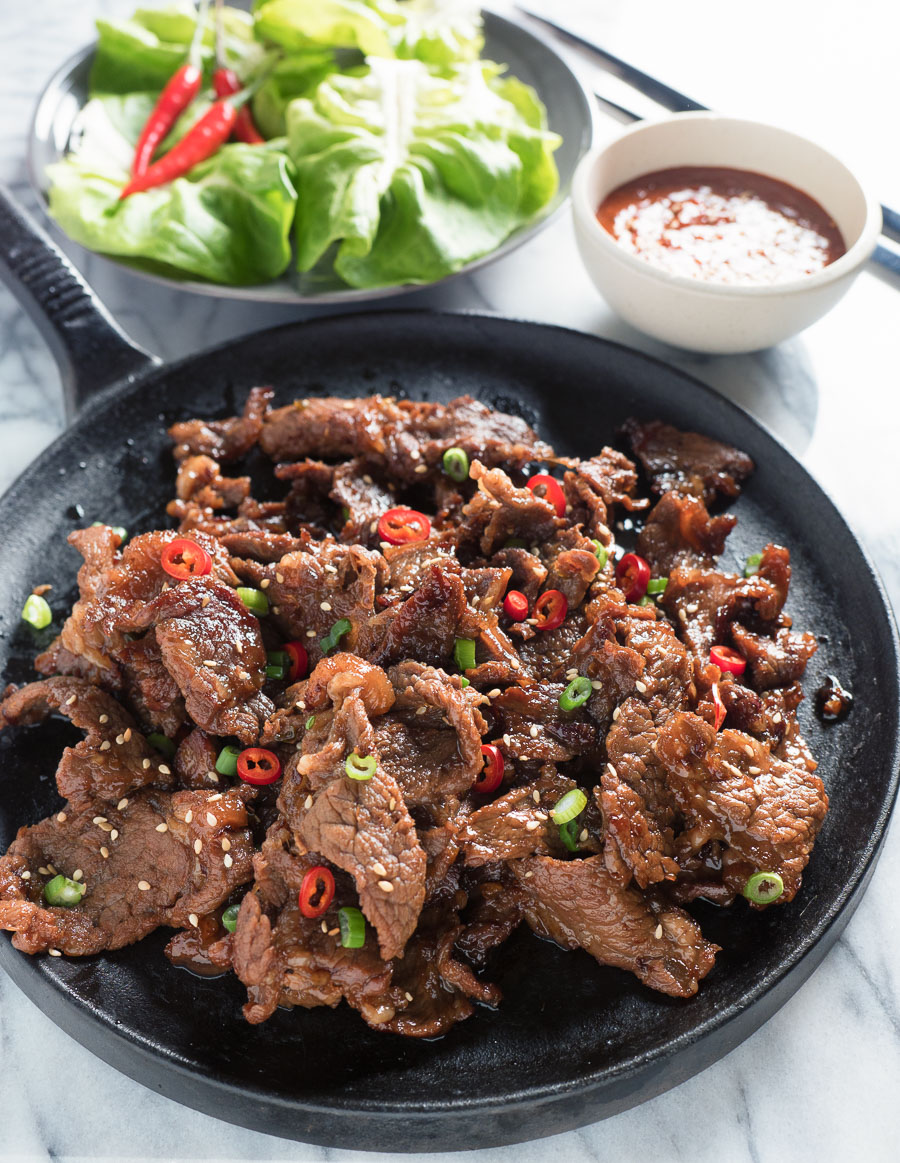
Use it in burgers too
Burgers is another place this bulgogi sauce shines. Bulgogi burgers – what could possibly be better than that. Mix 2/3 ground beef, 1/3 ground pork. Mix in a bit of gochujang for the ultimate umami bomb. Grill, brushing with bulgogi sauce. Toss that on a brioche bun with some gochu mayo and maybe some pickled onions.
Or how about a Korean cheesesteak. Move over Philly. Here comes Seoul. Stir fry your beef bulgogi with some sliced onions. Load it up on a hoagie. Top with some grated mozzarella and broil quickly. How good would that be?
Or maybe go in another direction. Bulgogi sauce with a little bit of gochujang. Add a bit of kick. Use sliced pork shoulder instead of beef. Korean spicy pork bulgogi. If that doesn’t exist it really should.
I’m drooling into my keyboard here…
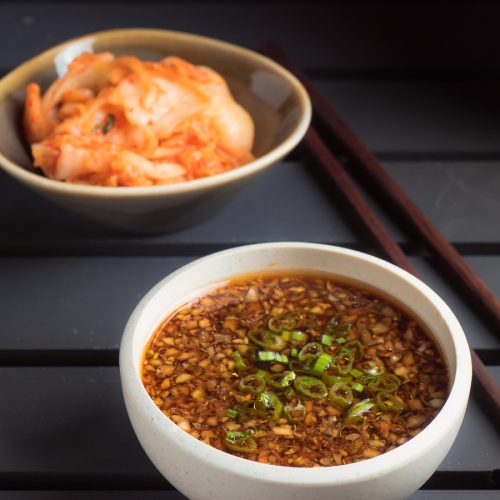
Korean bulgogi sauce
Ingredients
simple bulgogi style sauce
- 3/4 cup soy sauce
- 3/4 cup brown sugar
- 5 cloves garlic crushed
- 1 inch piece of fresh ginger grated on a microplane
- 1 Tbsp sesame oil
- 3/4 cup apple juice or pear juice
- 2 green onions finely chopped
Instructions
- Mix the soy, brown sugar and apple or pear juice in a small sauce pan. Warm over low heat until the sugar melts. Allow to cool and stir in the remaining ingredients.
