Masala chilli chicken is loaded with big chilli flavours. Green chillies, chilli powder and masala chilli sauce make this chicken curry one you will not forget.
This is not the same thing as the Indo-Chinese version of chilli chicken. It is pure Indian. If that sounds good to you read on.
Restaurant style chilli chicken
This isn’t on any Indian restaurant menus that I know about. But it should be. It’s really tasty. A little different than the run of the mill classics. But every bit as good.
Chilli chicken curry has all the goodness you expect from your favourite Indian restaurant.
Bites of boneless chicken. And that luscious sauce. The one that makes you want to mop it up with naan or chapatis. Nothing not to love.
It’s made the same way as restaurant curries. Uses all the techniques. In fact, I wouldn’t be surprised if someone puts this on their menu. Why not?
The world needs variety. Someday you’ll go to an Indian restaurant and be able to order something besides a tikka masala or a jalfrezi.
And that will be OK with me. I will raise a glass. Hope it’s OK with you too.
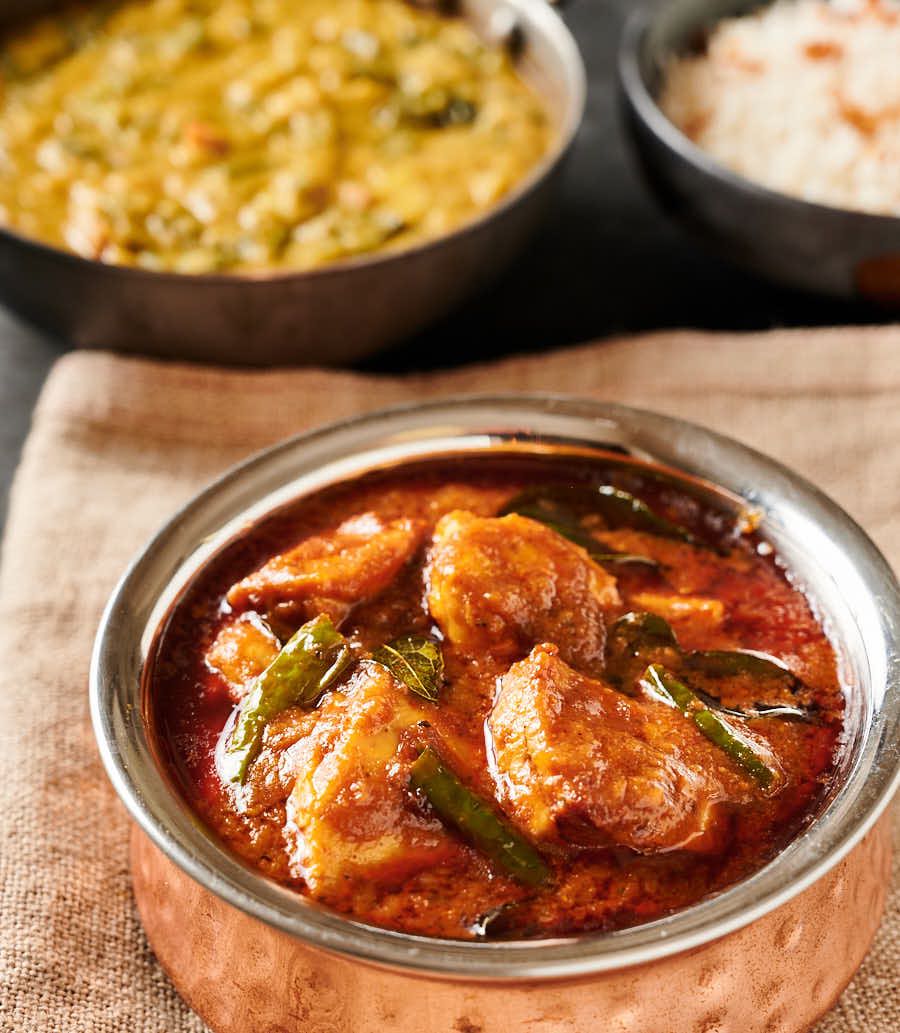
masala chilli chicken - restaurant style
Ingredients
The spice mix
- 1 tsp indian restaurant spice mix or curry powder - recipe link below
- 1 1/2 tsp hot madras curry powder or use more indian restaurant mix powder if you don’t have any madras curry powder
- 1/2 tsp kashmiri chili powder optional - there’s a fair bit of fire in the masala chilli sauce
- 1/2 tsp kasoor methi - dried fenugreek leaves
- 1/2 tsp kosher salt
The curry ingredients
- 4 Tbsp oil
- 1 Tbsp garlic/ginger paste - recipe link below
- 1/4 cup chilli sauce There are a few varieties available where I shop. The one I use is Maggi masala chilli sauce but there are others. The ones from Sri Lanka are good too.
- 15 oz curry base - recipe link below
- 10-12 oz pre-cooked chicken
- 2-3 green chilies finger hot or jwala green chillies
- 10 fresh curry leaves optional
Instructions
- Make the spice mix.
- Measure out your masala chilli sauce.
- Heat your frying pan (don’t use non-stick) briefly over medium heat. Add the oil.
- Now add the garlic ginger paste. Add it into the pan and cook it, stirring constantly, until it stops sputtering.
- Turn down the heat. Add the chillies and curry leaves if using. Cook for 30 seconds or so.
- Now add the spice mix. This is the critical step. Stir it constantly for 30 seconds. If it starts to darken lift the pan off the heat. You want the spice mix to cook in the oil but not burn.
- Turn the heat up to medium high. This is important. The heat is what gives the curry its Indian restaurant flavour. As you become more comfortable with this technique push harder. I run my stove near flat out. Add the masala chilli sauce and stir until bubbles form (the oil will likely separate). This takes around 30 seconds to one minute depending on the heat.
- Add 3 oz of curry base. Stir until bubbles form (little craters really), around 30 seconds. Think lively boil. Watch the edges of the pan. The curry can stick here. Sticking is OK. Just scrape it back into the base. Burning is bad.
- Now add 6 oz of curry base and stir briefly. Let it cook until the bubbles form again. This takes 1-2 minutes.
- Add the rest of the curry base and let cook until the bubbles form. Turn the heat down to low and add the pre-cooked chicken.
- Let the curry simmer for about 5 minutes. If it gets too thick add a bit more curry base. Don’t add water.
- Garnish with a bit of chopped fresh cilantro and serve.
Notes
Nutrition
Nam prik pao is that wonderful, earthy chili sauce that you see on the table of just about every Thai restaurant.
It is not crazy hot. Just has that magical blend of onion, garlic, chili and fish sauce. Perfect for adding a little zing to so many dishes.
Use it with rice. With rice noodle dishes. In soups. Thai chili paste brings a little something to whatever you use it with.
Finding the right chilies for nam prik pao
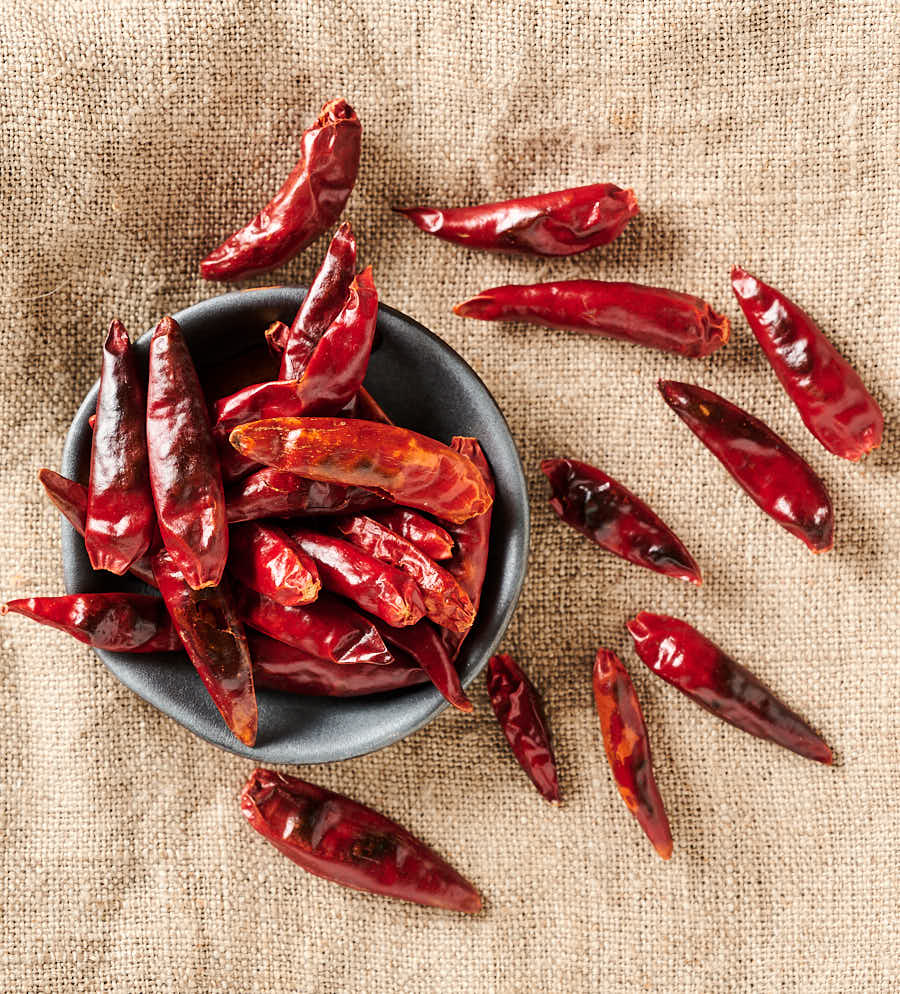
Lots of Thai recipes call for dried red chilies. Go to your local Asian market and look for the bag that says “dried Thai chilies”. I bet you look for a long time. I did the first time I went looking for them.
That’s the thing about Asian grocery stores. They really don’t cater to people who don’t know what they are looking for. It’s a learning curve. I’m still learning. But I’m getting better. It comes with practice.
Here’s a tip. Google what you are looking for on your phone. Show that to the guy at the store. Or search the shelves yourself. Look for a match. I do it. I see people doing it all the time.
Flavour over fire for me
I like depth of flavour more than absolute fire. So I don’t always use Thai chilies. Maybe that makes me less authentic. But I don’t live in Thailand. And I don’t always want the top of my head blown off.
So I make nam prik pao with chau tian chilies. They’re about the size of Thai birds eye chilies. Nowhere near as hot though. Nice chili flavour. Not stupidly hot.
If you can find Thai dried red chilies, use them if you like a bit more heat. They are the real deal for nam prik pao. Both ways are good. Or mix them until you get the heat you want.