Lamb madras. Done Indian hotel style. It’s one of the big ones. Truly great. At least for me. Madras is king to jalfrezi’s queen.
So I had to get this one right. And I think I did. Bold claim. I know. But it’s good. Try it for yourself.
It’s glebekitchen style though. No pre-conceptions. Just make it the best I can. So maybe a little different than what you’re used to. Not a lot different. But different. In a good way.
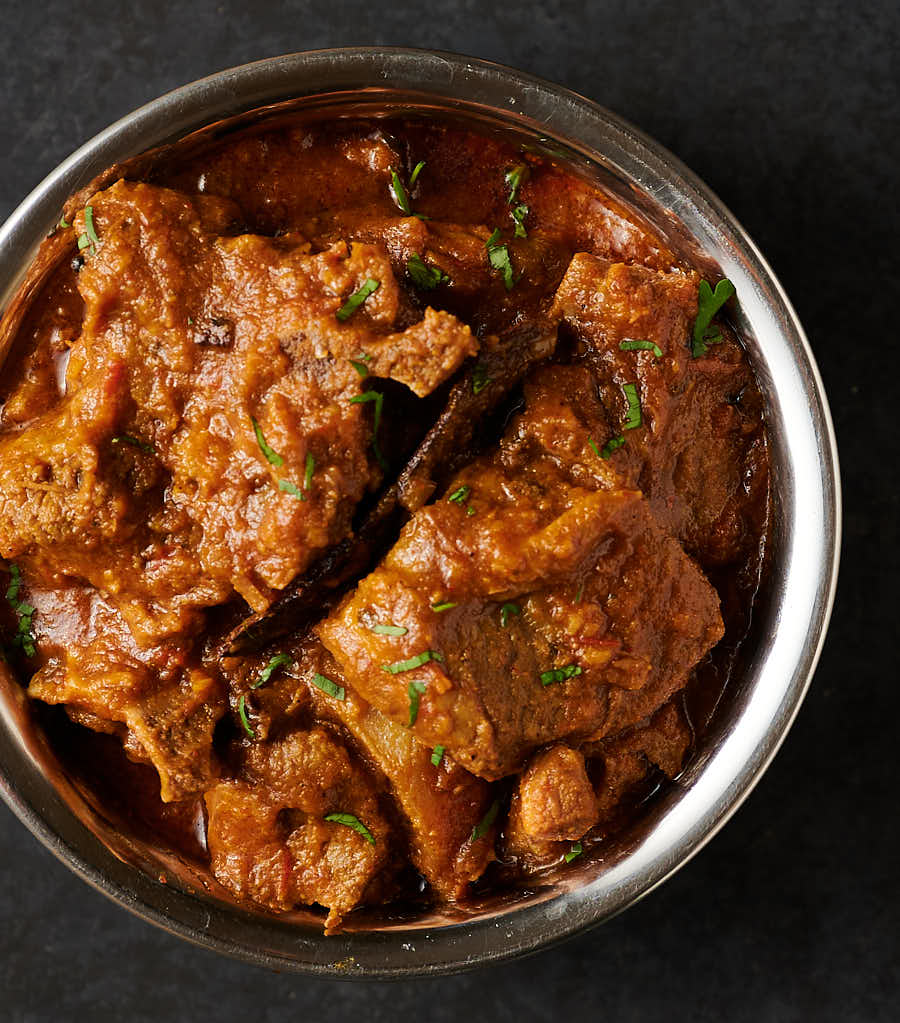
Madras was in South India
I know. Lamb madras isn’t a real Indian dish. Madras isn’t even a place anymore. It’s Chennai now.
Nobody makes it in India. It’s a British invention. Like chicken tikka masala. That’s OK. Cooking evolves. Crosses borders.
It’s actually better than OK. It’s progress. Without progress we’d all still be eating what our grandparents ate. I’ve seen pictures. It wasn’t pretty.
There’s a story here. Or a legend. Not sure which. Not important really. It’s fun either way. The story goes like this.
About a hundred years ago some enterprising soul had an idea. A semi-random mix of Indian spices. Called it Madras curry powder.
They put it up for sale in a shop on Leicester Square. It sparked a revolution. The UK curry revolution.
I’m putting the south Indian back into lamb madras. Why not? I like coconut oil. So a bit of that goes into this version.
And tamarind. For that hint of sour. Instead of lemon juice. Not conventional. But tasty. So I’m good with it.
And I’m serving it with parathas. A bite of this madras curry wrapped up in a bit of paratha? Heaven.
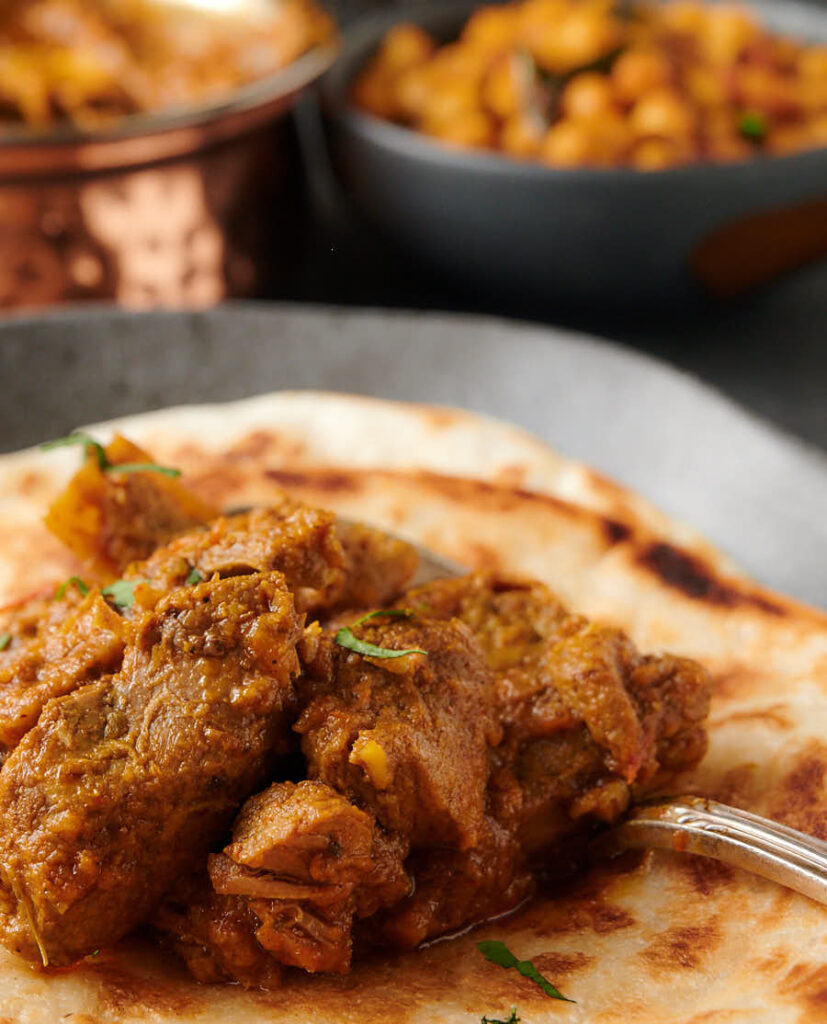
Chili pickle gives this lamb madras something special
Lagniappe. That’s a Louisiana French term. It means a little something extra. I love that word. It defines glebekitchen. What I’m always looking for.
Chili pickle is the lagniappe in this lamb madras. It’s a small thing. But a big thing.
Indian chili pickle is magic in a jar. It is very hard to go wrong adding it to any curry. And it works well here.
You can pick just about any chili pickle here. It’s a flavour boost. Not the star. This isn’t naga chili madras curry. You want that wonderful pickle flavour. But not too much of it.
Full disclosure. It can get spicy. Use naga pickle and it could get really spicy. Crazy tasty. But spicy.
If it gets out of control add more coconut milk. That should help tame the fire. A bit anyway.
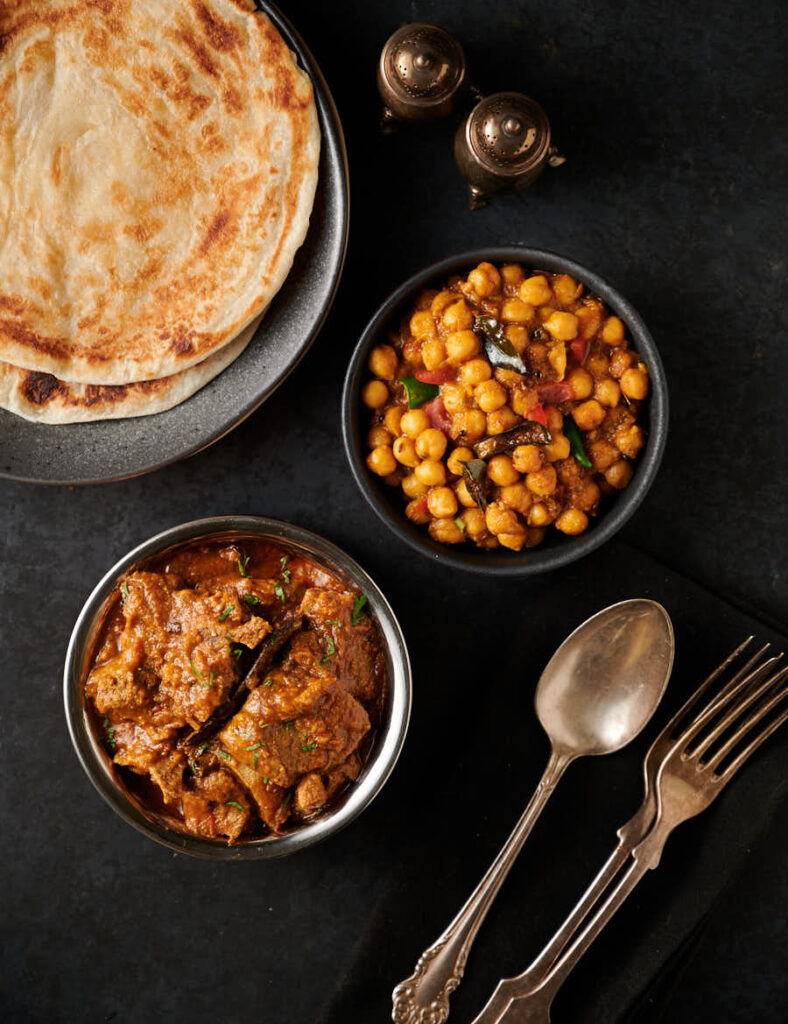
This is hotel style lamb madras
This is a different take on restaurant style cooking. It’s not what you know. There is no curry base. Not the way you think about it anyway.
This is hotel style. Based on Indian hotel curry gravy. Think Indian haute cuisine. Mother sauces. The way it used to be. The way it probably still is at the best Indian restaurants.
I’m going back to fundamentals here. Pulling out all the stops. And I’m hoping you will follow.
This is not your local takeaway lamb madras. This is madras done to the max. May seem crazy to you. But sometimes you just need to make a leap of faith. It is so worth it.
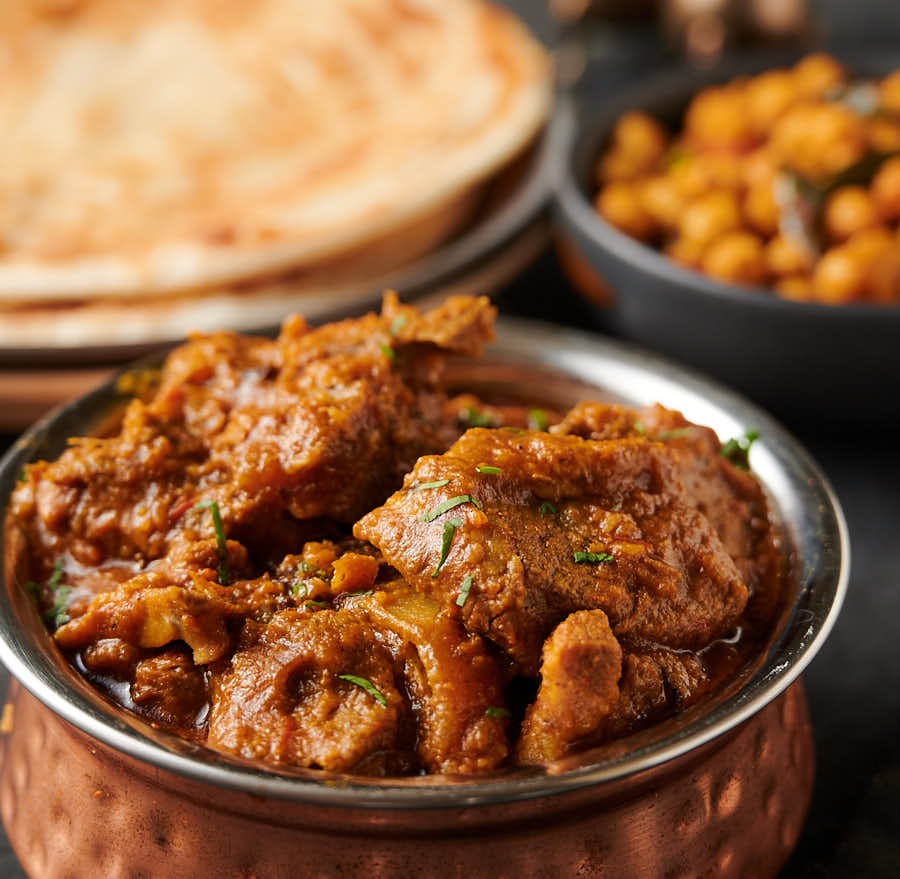

Lamb madras – Indian hotel style
Ingredients
Pre-cook your lamb
- 12 oz lamb I like shoulder best. Cut into 1 to 1 1/2 inch pieces.
- 1 tsp curry powder or mix powder if you prefer
- 1 tsp kosher salt – you want fairly salty to season the lamb. You will be discarding the cooking liquid.
- 1 cup chicken stock – enough to cover
The spice mix
- 1 tsp Indian restaurant spice mix – recipe link below
- 2 tsp madras curry powder – you can get this at your Indian grocer
- 1 tsp kashmiri chili powder
- 1 tsp kasoor methi – dried fenugreek leaves
- 1/2 tsp kosher salt
lamb madras
- 3 tbsp vegetable oil – any neutral oil is fine. I actually like a mix of conconut oil and vegetable oil (50/50) for this curry. Up to you!
- 1 2 inch cassia bark
- 2 tbsp minced shallot or red onion
- 1 tbsp garlic ginger paste – recipe link below
- the spice mix from above
- 1 cup Indian hotel curry gravy – diluted with 1/4 cup of water – recipe link below.
- the pre-cooked lamb
- 3 tbsp coconut milk
- 1 tsp tamarind paste – or tamarind pulp if you make it yourself. 1/3 tsp is using tamarind concentrate.
- 1/4-1/2 tsp chili pickle – depending on which pickle you use this can make it quite hot. But the pickle really adds the final bit of wow.
Instructions
Do your prep
- Make your spice mix. Pre-cook the lamb.
- DIlute your curry gravy with 1/4 cup of water (the same 1/4 as in the ingredient list – don’t dilute it twice). You need to dilute it because the lamb is going in pre-cooked. That probably doesn’t make sense to you if you haven’t made a chicken hotel curry yet. Just do it. It will work out.
Pre-cook the lamb
- Add the lamb, curry powder, salt and chicken stock to a saucepan. You want enough stock to fully cover the lamb. 1 cup is a guess. I don’t know how big your sauce pan is. Try to pick one that isn’t way too big.
- Bring to a simmer. Cook until the lamb is tender. This should take somewhere around an hour for lamb shoulder. Depends on how big your lamb chunks are. Also depends on the lamb. You are making stew. It’s done when it’s done I’m afraid.
- Drain. Discard the stock (it will be very salty) and set the lamb aside. You can do this the day before if you’d like.
Make the lamb madras
- Heat the oil in a medium sized frying pan until the oil just starts to shimmer.
- Add the cassia bark. You should see little bubbles forming around it. Cook for about 30 seconds.
- Add the diced shallots. Cook until they just start to colour up.
- Stir in the garlic ginger paste. Gently fry until the garlic ginger paste stops sputtering. This is the only messy step.
- Turn your heat down to medium low and add your spice mix. This is why you added 3 tablespoons of oil. You really want to fry your spices in the oil. Skimp on the oil and you risk your spices sticking or worse, burning. If your spices burn here you are starting over. No way around this.
- Add the Indian hotel curry gravy. Stir it really well to get the oil to combine with the curry gravy. You want everything mixed together at this point. Bring to a simmer.
- Add the tamarind paste, the cconut milk and the lamb.
- Cover loosely and cook for about 5 minutes.
- Taste the curry. If you can take the heat, add the chili pickle. A little goes a long way but it really makes a difference in flavour too.
- If the sauce looks a little thick at this point add a bit of water and bring back to a gentle simmer. Cook for another two or three minutes. You want some of the lamb flavour to infuse the sauce.
- Serve with rice or Indian flatbread. I like a tarka dal or chana masala on the side. But I always like a tarka dal or a chana masala on the side so I am hopelessly biased here.
Notes
Nutrition
Lamb madras - Indian hotel style
Ingredients
Pre-cook your lamb
- 12 oz lamb I like shoulder best. Cut into 1 to 1 1/2 inch pieces.
- 1 tsp curry powder or mix powder if you prefer
- 1 tsp kosher salt - you want fairly salty to season the lamb. You will be discarding the cooking liquid.
- 1 cup chicken stock - enough to cover
The spice mix
- 1 tsp Indian restaurant spice mix - recipe link below
- 2 tsp madras curry powder - you can get this at your Indian grocer
- 1 tsp kashmiri chili powder
- 1 tsp kasoor methi - dried fenugreek leaves
- 1/2 tsp kosher salt
lamb madras
- 3 tbsp vegetable oil - any neutral oil is fine. I actually like a mix of conconut oil and vegetable oil (50/50) for this curry. Up to you!
- 1 2 inch cassia bark
- 2 tbsp minced shallot or red onion
- 1 tbsp garlic ginger paste - recipe link below
- the spice mix from above
- 1 cup Indian hotel curry gravy - diluted with 1/4 cup of water - recipe link below.
- the pre-cooked lamb
- 3 tbsp coconut milk
- 1 tsp tamarind paste - or tamarind pulp if you make it yourself. 1/3 tsp is using tamarind concentrate.
- 1/4-1/2 tsp chili pickle - depending on which pickle you use this can make it quite hot. But the pickle really adds the final bit of wow.
Instructions
Do your prep
- Make your spice mix. Pre-cook the lamb.
- DIlute your curry gravy with 1/4 cup of water (the same 1/4 as in the ingredient list - don’t dilute it twice). You need to dilute it because the lamb is going in pre-cooked. That probably doesn’t make sense to you if you haven’t made a chicken hotel curry yet. Just do it. It will work out.
Pre-cook the lamb
- Add the lamb, curry powder, salt and chicken stock to a saucepan. You want enough stock to fully cover the lamb. 1 cup is a guess. I don’t know how big your sauce pan is. Try to pick one that isn’t way too big.
- Bring to a simmer. Cook until the lamb is tender. This should take somewhere around an hour for lamb shoulder. Depends on how big your lamb chunks are. Also depends on the lamb. You are making stew. It’s done when it’s done I’m afraid.
- Drain. Discard the stock (it will be very salty) and set the lamb aside. You can do this the day before if you’d like.
Make the lamb madras
- Heat the oil in a medium sized frying pan until the oil just starts to shimmer.
- Add the cassia bark. You should see little bubbles forming around it. Cook for about 30 seconds.
- Add the diced shallots. Cook until they just start to colour up.
- Stir in the garlic ginger paste. Gently fry until the garlic ginger paste stops sputtering. This is the only messy step.
- Turn your heat down to medium low and add your spice mix. This is why you added 3 tablespoons of oil. You really want to fry your spices in the oil. Skimp on the oil and you risk your spices sticking or worse, burning. If your spices burn here you are starting over. No way around this.
- Add the Indian hotel curry gravy. Stir it really well to get the oil to combine with the curry gravy. You want everything mixed together at this point. Bring to a simmer.
- Add the tamarind paste, the cconut milk and the lamb.
- Cover loosely and cook for about 5 minutes.
- Taste the curry. If you can take the heat, add the chili pickle. A little goes a long way but it really makes a difference in flavour too.
- If the sauce looks a little thick at this point add a bit of water and bring back to a gentle simmer. Cook for another two or three minutes. You want some of the lamb flavour to infuse the sauce.
- Serve with rice or Indian flatbread. I like a tarka dal or chana masala on the side. But I always like a tarka dal or a chana masala on the side so I am hopelessly biased here.
Notes
Nutrition
Think about beef and broccoli. Now think about what would happen if you took a classic and moved it to Thailand. That’s what this is about.
Not the usual run of the mill beef and broccoli. Not the one you grew up on. Spicier. A little less “formula” tasting.
Not that different. But not the same either. If you are looking for Chinese Canadian (or American) beef and broccoli this is not the recipe for you.
If you are looking for something delicious with big South East Asian flavours keep reading.
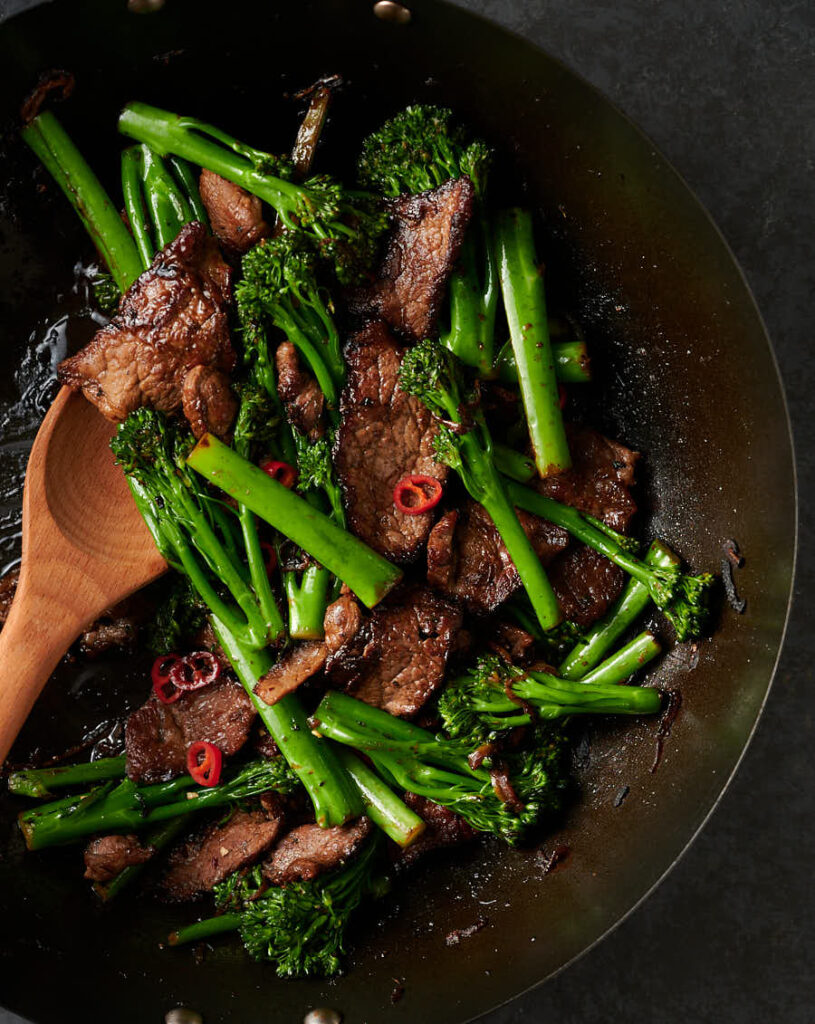
Beef and broccoli didn’t start out with broccoli
I don’t know if this story is true. So don’t hold me to it. It is believable though. At least to me.
It goes like this. Immigrants arrived in North America. They missed the tastes of home. So they did what they could with what they could find.
They wanted to make beef and gai lan. Broccoli was the closest thing they could find. And so beef and broccoli was born.
That story has been told a thousand times through history. People come. People adapt. Good things happen. New classics are born. Culinary evolution.
I make this dish with gai lan. But I also make it with broccolini. I like the gai lan version a little better. But I can get broccolini anywhere.
So I did it here with broccolini. Because I’m guessing you can get it anywhere too. Works pretty much the same either way.
If you can get gai lan, go for it. If not, don’t worry too much. All good.
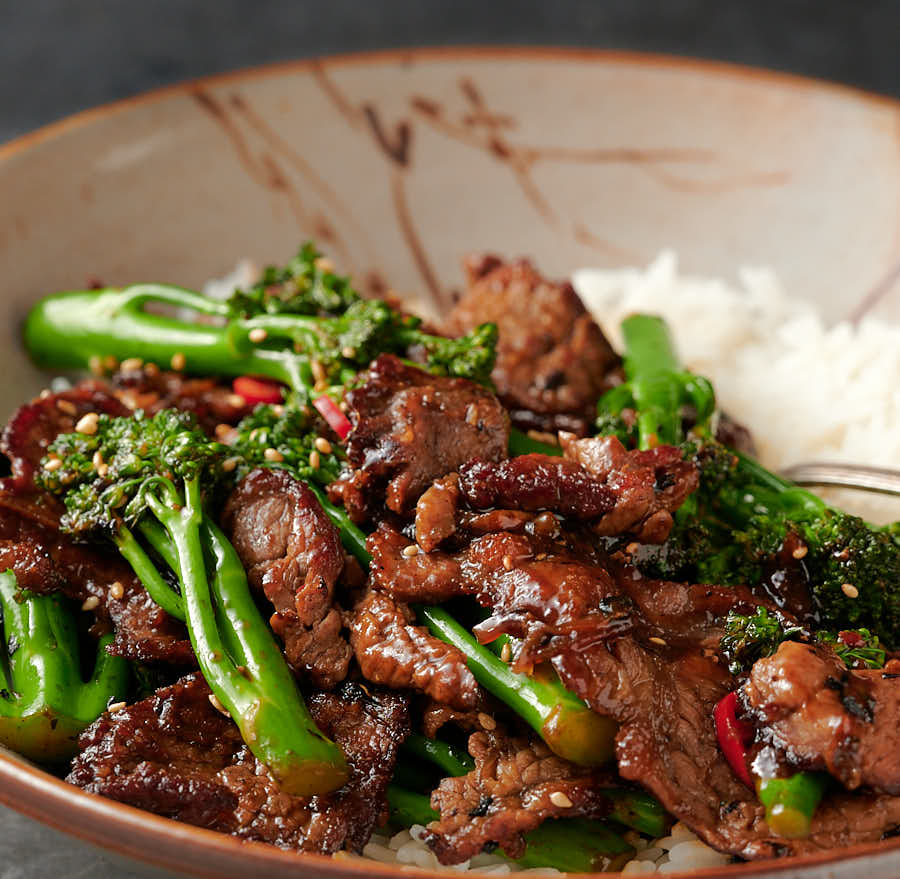
Don’t overload your wok
You don’t have the firepower that restaurants have. So there isn’t much point trying to cook this the way they do.
If you put too much stuff in the pan it’s going to steam. Your beef won’t brown. Your broccolini won’t get that wonderful smoky char. It just won’t be as good.
So stir fry in phases. Cook half the beef. Then the other half. Beef releases water as it cooks. Water is the enemy of brown. It will take you an extra 90 seconds to do this. That’s time well spent.
Then cook the onions and broccolini. Really crank the heat. Make sure you have enough oil in the wok. Push it. Hard. You want a bit of char on the broccolini.
Then bring everything together. Add the sauce and serve. It’s more work but it works.
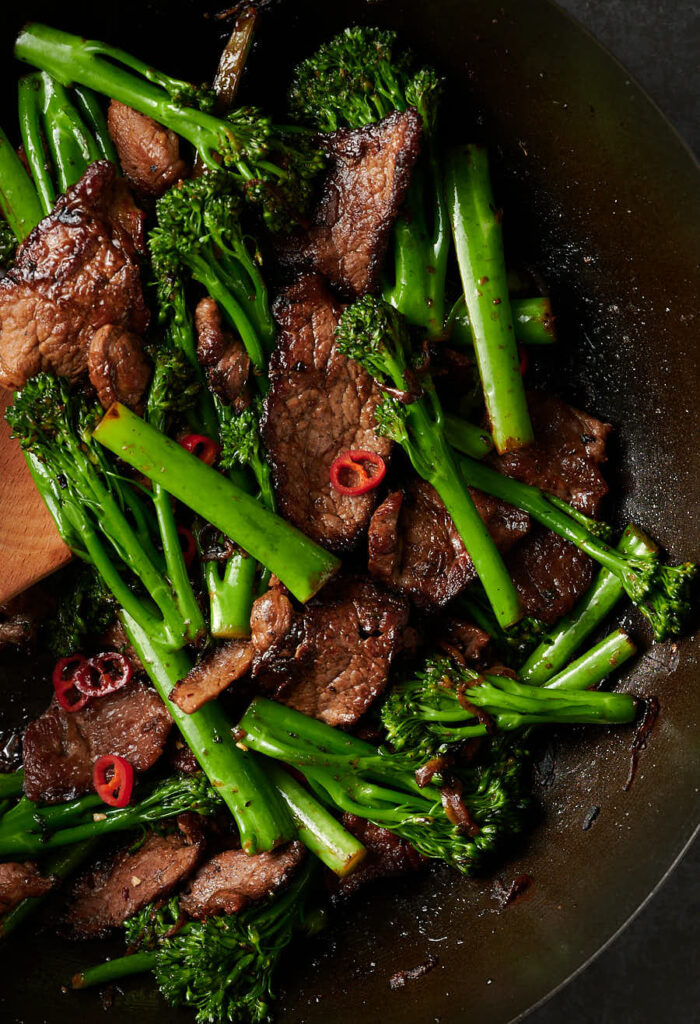
Think pad see ew without the noodles
This version of beef and broccoli is like Pad see ew. Without the noodles. And with beef instead of chicken or pork. OK – it’s not that close.
But the underlying flavours are similar. Thai flavours. Chinese concept. It works.
Which is why ingredients matter so much here. Make this with Chinese soy and Chinese oyster sauce and it’s pretty much Chinese.
Thai soy is different. Thai oyster sauce is different. These things matter. You’d be amazed how much these things matter.
Of course, adding fish sauce is really different. That’s the sledge hammer here. I love sledge hammers. Mixes things up.
But if you like pad see ew think about making this. It’s beef and broccoli. But different. I surprised myself with this one. Try it and see for yourself.
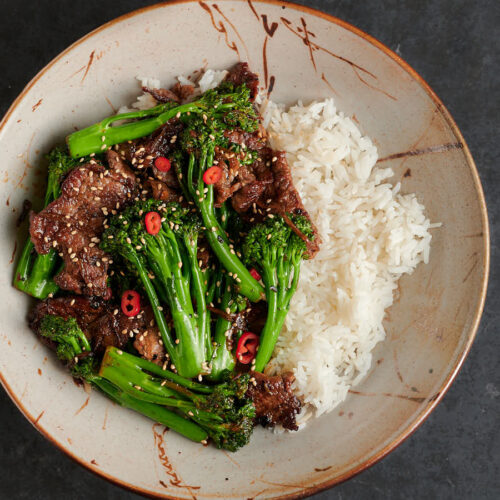
beef and broccoli – thai style
Ingredients
The sauce
- 1 tbsp soy sauce – Thai light soy sauce or Golden Mountain sauce
- 1 tbsp fish sauce
- 2 tsp oyster sauce – Thai oyster sauce
- 1 tsp dark soy – Thai sweet soy (or substitute a big pinch of sugar)
- 1 tsp sambal oelek or garlic chili sauce
- 3 tbsp water
beef and broccoli
- 12 oz beef sirloin sliced thinly across the grain. Alternately, you can slice up a flank or skirt steak.
- 12 oz broccolini or gai lan if you can get it, cut into large pieces
- 1 medium onion thinly sliced (optional but tasty)
- 2 tsp garlic ginger paste
- 1/2 tsp cornstarch
- 2 tsp water mixed with the 1/2 tsp cornstarch
- 3 tbsp neutral oil you might need a bit more. Don’t skimp. Saving a few calories is not worth it here.
- 1-2 red chilies thinly sliced (optional)
- sesame seeds to garnish
Instructions
- This is an attempt to emulate the high heat stir fry techniques restaurants achieve with burners that are just slightly cooler than the sun. You don’t have this (I don’t think) so a bit of extra work is a necessary evil here.
- Combine all the sauce ingredients in a small bowl. Set aside.
- Prep your beef. If using sirloin a small roast (or baseball steak) works well. Put the sirloin in the freezer for about 20 minutes and then slice about as think as you can get (1/8") across the grain. If you are using flank or skirt slice on the vertical bias (so the slice is bigger than the steak is high).
- Use a wok for this if you can. It’s just easier. A big frying pan will do as well. Pre-heat it over medium high heat. Add 2 tablespoon of the oil.
- Turn the heat up to high. Crank it. When the oil starts to shimmer (that should happen fast) add half of the beef. Half is important. You don’t want to overload your pan. You’ll get steam if you do that and your beef won’t brown. Cook, tossing frequently, until it gets some colour. Remove.
- Add the remaining tablespoon of oil. Add the remaining beef and cook you did with the first half. Set aside.
- Turn the heat down to medium. If your wok looks dry at this point add a bit more oil. Add the onions and cook until they are well softened.
- Turn up the heat. Add the broccolini and stir fry until it starts to soften. Be vigorous. Toss stuff around. Like you were on TV. Have fun with it. This takes a couple minutes or more depending on how high your heat is.
- You want to try to get a bit of that charred flavour on the broccolini. Push it hard. Your onions will start to really shrink and darken. Like fried shallots. That’s good. After about two minutes if the onions are getting too dark add a couple tablespoons of water to the wok to cook things down a bit.
- Turn the heat down to medium and add the garlic ginger paste. Cook for about 30 seconds, then add the beef back into the wok.
- Add the sauce and toss until everything is warmed through. Add the cornstarch-water mixture and simmer until the sauce just starts to cling to the broccolini. Taste. If you think it isn’t salty enough let it cook another minute to concentrate the flavours a bit. Remove from heat. Add the red chilies if using.
- Garnish with sesame seeds and serve with jasmine rice.
