Lamb keema papadum is appetizer you need to put into your arsenal. For when you just don’t want the same old same old. It’s sure to be a huge hit.
And why not? There’s nothing here not to like. Flavourful lamb. Spicy garnish. On a piece of that crispy delicious they call papadum.
Don’t think anyone else is doing this. I’m calling a glebekitchen original on this one. Tell me if I’m wrong.
Lamb keema papadum is a twist on a Mexican tostada
This is a riff on Mexican tostada. That’s exactly what I was thinking when I came up with it. Papadum stands in for a tostada. Kachumber salsa instead of pico. And lamb keema in between.
The flavours are pure Indian though. Nothing Mexican here. Other than the inspiration.
It’s about as hard to eat as a tostada. At least how it’s pictured here. Full disclosure. I was having fun taking pictures. Nobody can eat this as shown. Don’t try. It won’t work.
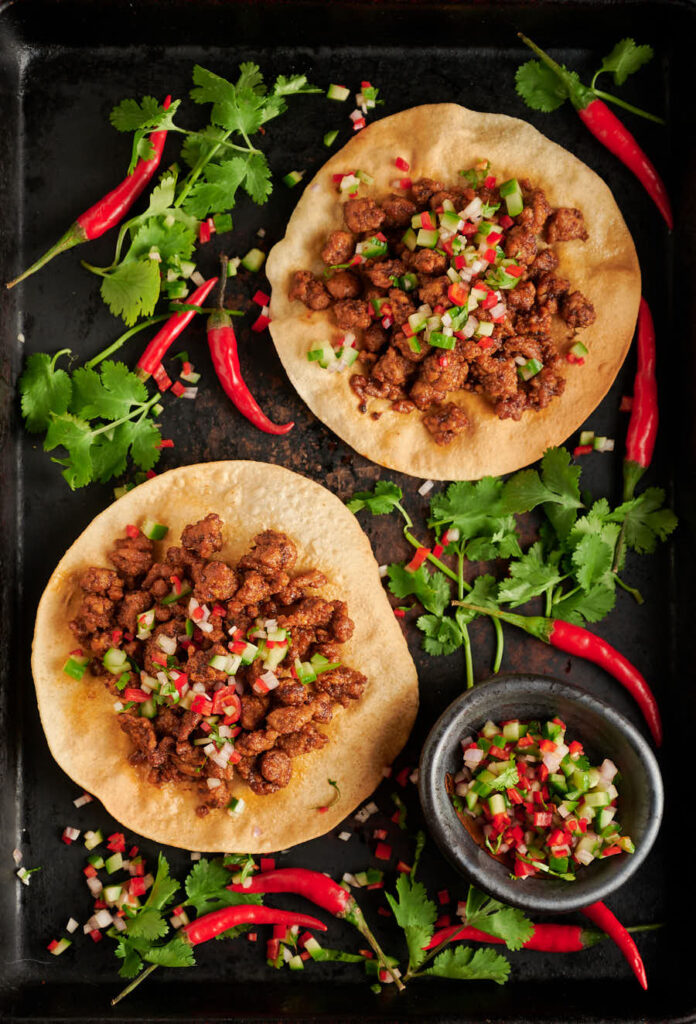
Let everyone build their own
Think of this like nachos. Not a plate of nachos. Like building individual nachos.
That’s how you should serve lamb keema papadum. Put out a bowl of keema. Another bowl of kachumber salad. And a stack of papadum.
Let everyone assemble their own bites. A piece of papadum. A spoonful of keema. Some kachumber salsa on top.
It’s a bit messy. So don’t serve this over a white table cloth. Or a black tie event. This is casual food. Fun food. Food to serve your family. Or maybe your closest friends.
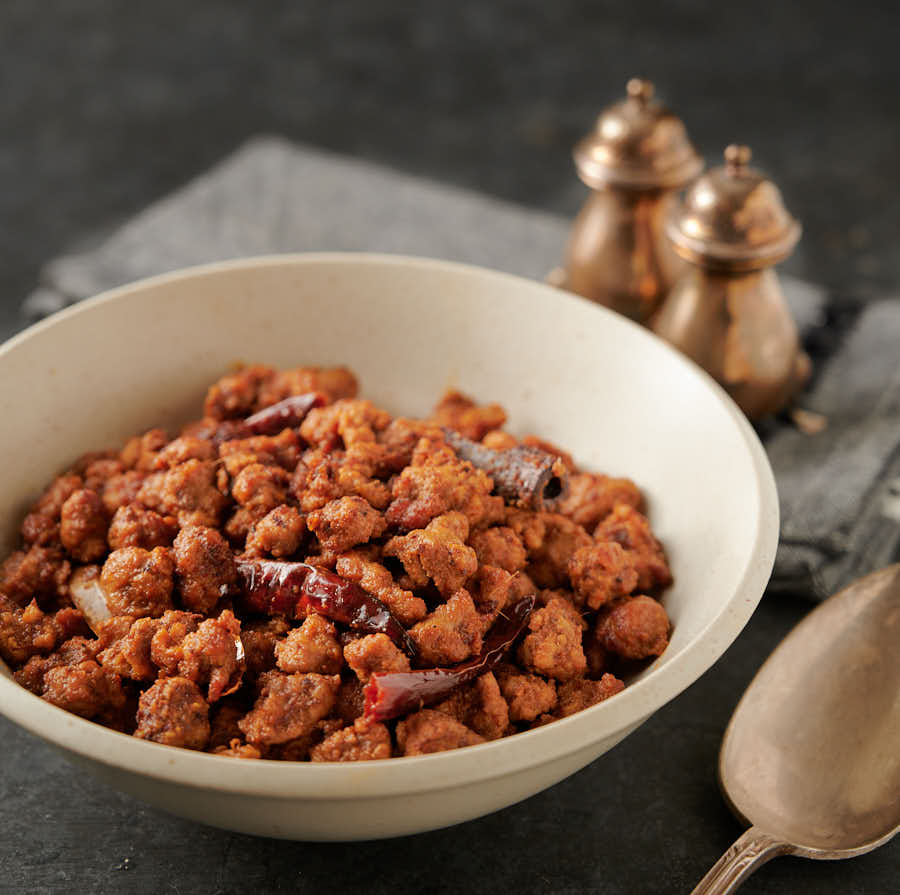
The world needs more lamb keema
I have a thing for lamb keema. It’s just tasty stuff. Don’t know why it isn’t more popular. That’s just a mystery to me.
If you like Indian and you like lamb there’s nothing not to like. Keema matar . Aloo keema. Those are the big ones.
But there’s no reason not to use it in other curries. Madras is good. Dhansak is really good.
Mmmm… Keema dhansak. Lamb and lentils is just good living.
As long as I’m waxing poetic on lamb keema why don’t people serve lamb samosas. Where I live there’s chicken or beef. Or vegetarian. No lamb? Why?
It feels like I’m getting fed on an airplane.
“Chicken or beef?”
“Neither. I’d like lamb please.”
Next time you order samosas, ask for lamb. Time lamb lovers of the world stood up together. Demand better!
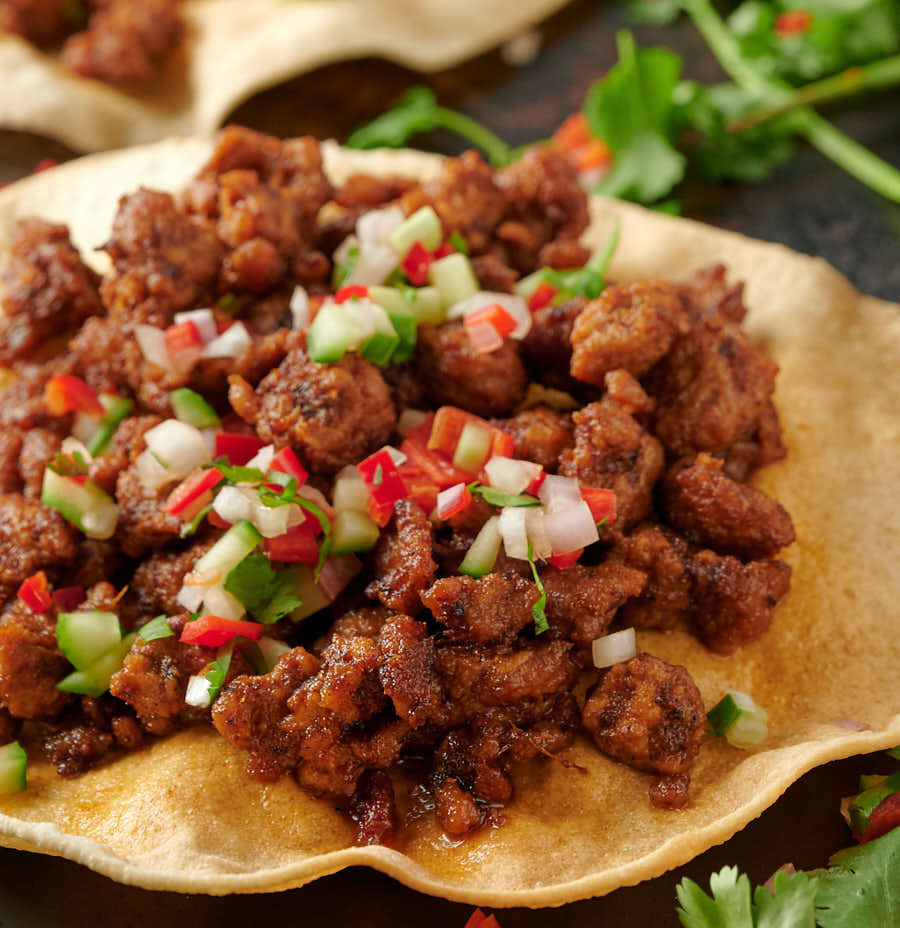
Lamb keema papadum is easy make ahead food
Lamb keema papadum is perfect when you don’t want to fuss too much at the last minute.
Make the keema ahead of time. The day before even. The kachumber salsa will keep a few hours anyway.
So all you have to do is fry up some papadum. Heat up the keema. Put it on the table. And listen to everyone rave.
Lamb keema papadum is party food. With cocktails. Good friends and family. And good conversation. The way it should be around your table. The way it will be around your table again.
It’s a little different. Out of the ordinary. Something new. But I wouldn’t have it any other way. Would you?
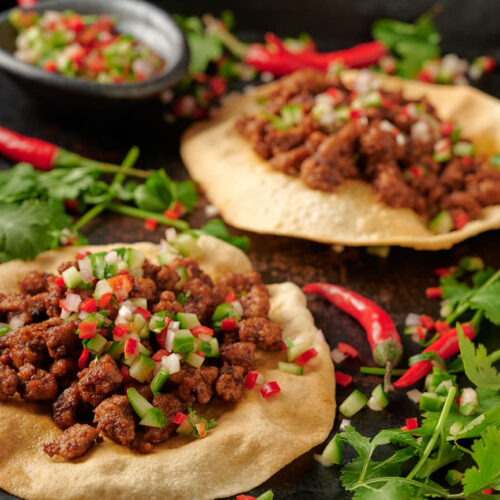
lamb keema papadum
Ingredients
lamb keema
- 1 lb minced lamb
- 2 Tbsp oil
- 1 bay leaf – Indian tej patta if you can get it
- 1 black cardamom – whole, split
- 2-3 kashmiri chilies
- 2 inch piece cassia bark – cinnamon stick
- 2 tsp garlic ginger paste – recipe link below
- 1/2 tsp kasoor methi – fenugreek leaves
- 1 Tbsp madras curry powder e.g Lalah’s brand
- 1/2 tsp kashmiri chili powder
- 1/2 tsp salt
- 2 tsp tomato paste – diluted with water to the consistency of pasatta
- 2/3 cup water
kachumber salsa
- 1/2 small cucumber finely diced. When I say small, I mean a little lebanese cucumber.
- 1 shallot finely diced
- 2 red finger hot chilies finely diced. Use finger hots. Do not use the little Thai chilies I used in the pictures unless you are a serious chili head.
- 1 Tbsp cilantro finely diced.
- salt and lemon juice to taste
Papadum
- 6 papadum
- oil to shallow fry
Instructions
Make the lamb keema
- Pre-heat your skillet over medium heat.
- Add the oil. It should shimmer slightly. Add the cardamom, bay, kashmiri chilies and cassia bark. Cook the whole spices until little bubbles form around the spices – about 30 seconds.
- Add the garlic ginger paste. Stir. Cook until the sizzling subsides.
- Reduce heat to medium low and stir in the kashmiri chili powder, kasoor methi, madras curry powder and salt. You are blooming the spices here. Absolute magic. It really makes a difference.
- Cook, stirring constantly for about 30 seconds.
- Add the tomato paste. Stir to combine and cook about 30 seconds.
- Add the minced lamb. Break up any big chunks. Cook until all the meat is brown. You don’t want to break the pieces up too small. It will be hard to eat.
- Add the water. Simmer, uncovered until the water evaporates. This should take 5-10 minutes. Depends on the heat. Keep an eye on it.
- Use a slotted spoon to remove the keema from the pan. This is much easier than trying to spoon fat out of the pan with keema in the way. Discard the fat.
- Taste and adjust for salt if needed. Keep warm.
Make the kachumber
- Combine the shallot, chili, cucumber and cilantro.
- Season with salt and lemon juice to taste.
Cook the papadum
- Heat the oil over medium heat. You want the oil around 325F.
- Slip the papadum into the oil.
- It will puff up in a second or two. Flip it, using tongs, and cook a few seconds more.
- Remove from the oil. Place on a couple sheets of paper towel. Press the papadum flat with a spatula while it is still hot and pliable. Repeat 5 more times.
Serve
- Put out the papadums alongside a bowl containing the keema and another containing the kachumber. Break the papadum into bite side pieces. Spoon a little keema onto the papadum. Top with a little kachumber. Enjoy!
Notes
Nutrition
lamb keema papadum
Ingredients
lamb keema
- 1 lb minced lamb
- 2 Tbsp oil
- 1 bay leaf - Indian tej patta if you can get it
- 1 black cardamom - whole, split
- 2-3 kashmiri chilies
- 2 inch piece cassia bark - cinnamon stick
- 2 tsp garlic ginger paste - recipe link below
- 1/2 tsp kasoor methi - fenugreek leaves
- 1 Tbsp madras curry powder e.g Lalah’s brand
- 1/2 tsp kashmiri chili powder
- 1/2 tsp salt
- 2 tsp tomato paste - diluted with water to the consistency of pasatta
- 2/3 cup water
kachumber salsa
- 1/2 small cucumber finely diced. When I say small, I mean a little lebanese cucumber.
- 1 shallot finely diced
- 2 red finger hot chilies finely diced. Use finger hots. Do not use the little Thai chilies I used in the pictures unless you are a serious chili head.
- 1 Tbsp cilantro finely diced.
- salt and lemon juice to taste
Papadum
- 6 papadum
- oil to shallow fry
Instructions
Make the lamb keema
- Pre-heat your skillet over medium heat.
- Add the oil. It should shimmer slightly. Add the cardamom, bay, kashmiri chilies and cassia bark. Cook the whole spices until little bubbles form around the spices - about 30 seconds.
- Add the garlic ginger paste. Stir. Cook until the sizzling subsides.
- Reduce heat to medium low and stir in the kashmiri chili powder, kasoor methi, madras curry powder and salt. You are blooming the spices here. Absolute magic. It really makes a difference.
- Cook, stirring constantly for about 30 seconds.
- Add the tomato paste. Stir to combine and cook about 30 seconds.
- Add the minced lamb. Break up any big chunks. Cook until all the meat is brown. You don’t want to break the pieces up too small. It will be hard to eat.
- Add the water. Simmer, uncovered until the water evaporates. This should take 5-10 minutes. Depends on the heat. Keep an eye on it.
- Use a slotted spoon to remove the keema from the pan. This is much easier than trying to spoon fat out of the pan with keema in the way. Discard the fat.
- Taste and adjust for salt if needed. Keep warm.
Make the kachumber
- Combine the shallot, chili, cucumber and cilantro.
- Season with salt and lemon juice to taste.
Cook the papadum
- Heat the oil over medium heat. You want the oil around 325F.
- Slip the papadum into the oil.
- It will puff up in a second or two. Flip it, using tongs, and cook a few seconds more.
- Remove from the oil. Place on a couple sheets of paper towel. Press the papadum flat with a spatula while it is still hot and pliable. Repeat 5 more times.
Serve
- Put out the papadums alongside a bowl containing the keema and another containing the kachumber. Break the papadum into bite side pieces. Spoon a little keema onto the papadum. Top with a little kachumber. Enjoy!
Notes
Nutrition
Shaking beef – bo luc lac – is one seriously tasty composed salad. Think super-flavourful sauteed beef on fresh greens, onions and tomatoes.
Wonderfully browned bits of beef in a peppery, salty sweet sauce. That’s what this is. The sauce wilts the greens a bit and the whole thing just explodes delicious in your mouth.
If you are a fan of the whole warm/cold composed salad thing this could become your new go to dish.
Shaking beef doesn’t shake on the plate. That just sounds unappetizing when I write it down. It’s called shaking beef because of the way it’s cooked. Traditionally anyway.
You’re supposed to shake the pan as the beef cooks. To make sure each little bit of meat gets evenly browned. Which is great in theory. But I don’t think that’s the best way to cook it.
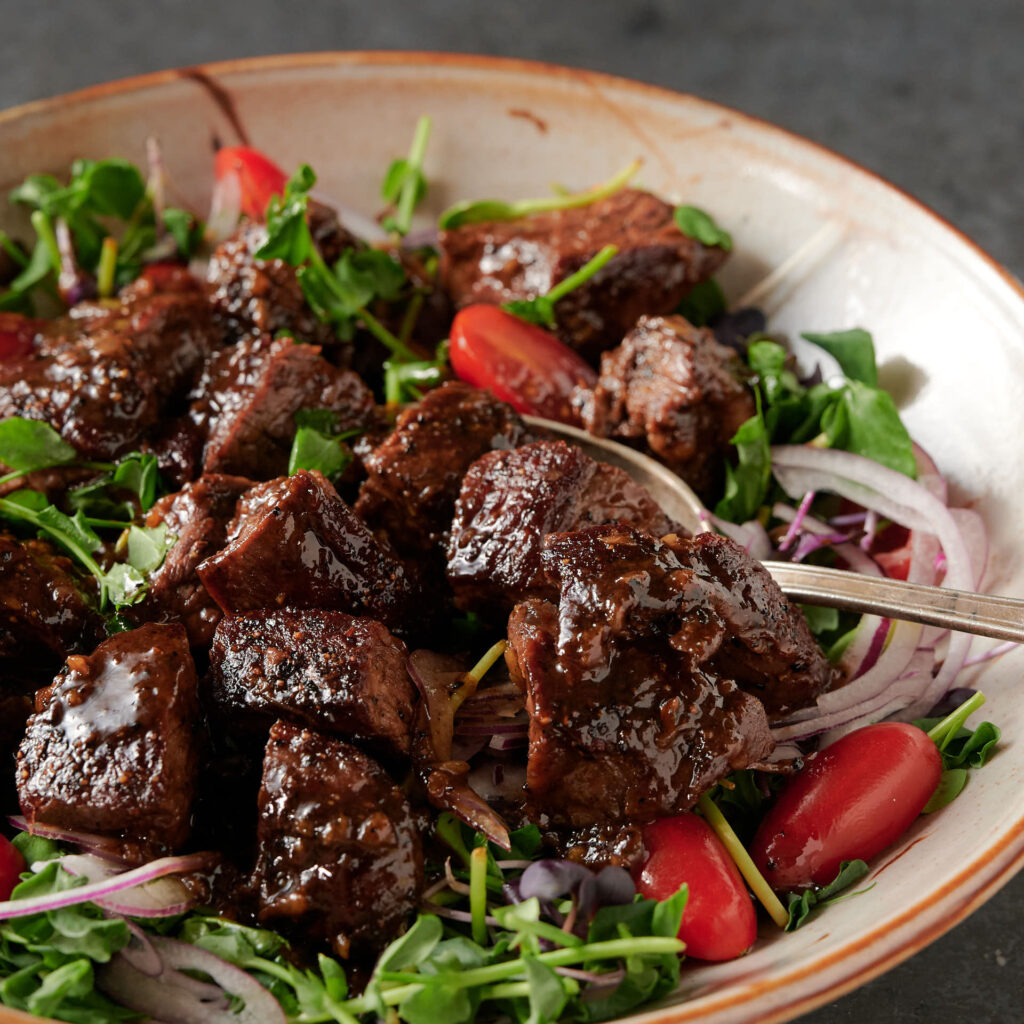
Shaking beef needs to be browned
That browning that you get when you fry beef? That has a name. It’s called the Maillard reaction. And that reaction is a wonderful, wonderful thing.
It’s food science. Chemistry. Amino acids and reducing sugars hit heat. And magic happens. Millions of new flavour compounds are created.
You don’t need to understand it. But you do need to believe in it. And you need to make sure it happens in your pan.
Which is why I don’t get a lot of recipes for shaking beef. I see marinate cubes of beef. Get them good and wet. Then dump it in a pan.
When I try that I get steamed beef. Grey beef with maybe a little browning If I cook the beef to death. Not what I’m after at all.
Wet, cubed beef is not good for Maillard. Think about overcrowding a pan when you are browning beef for stew.
You get browning. Eventually. Once all the liquid that’s been released from the beef evaporates. Not great. But you can get by because it doesn’t matter how long you have the beef in the pot. It’s stew.
The beef is going to get braised for hours. So you don’t have to worry about overcooking it in the pot. Thing is, it does matter for shaking beef.
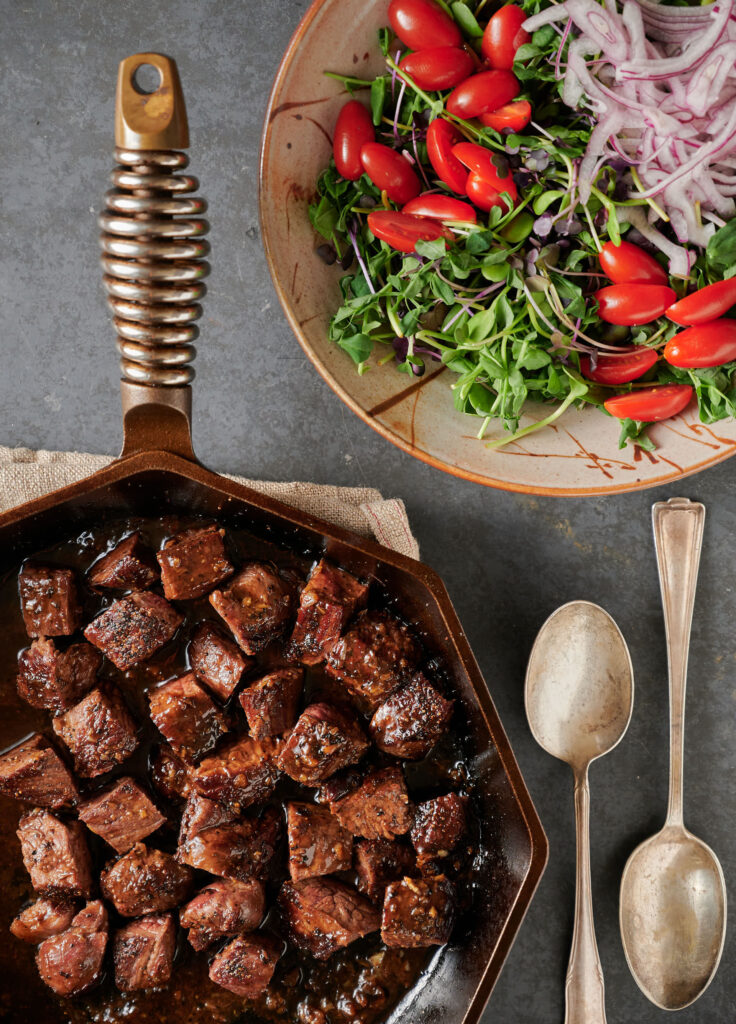
Cook a steak – then make bo luc lac
When I want maximum Maillard I keep the beef in 8-10 oz size pieces. Steaks. And I salt at the last possible minute. Right before it goes into the pan.
Salting at the last minute is important. Think dry brining. As soon as you salt water is drawn out onto the surface of the meat.
That’s osmosis. More food science. The process reverses after a while. That’s how dry brining works. But you don’t want it in the pan while it’s wet. So salt at the last minute. You want as dry as you can get here.
You won’t get browning on all sides like you would with cubes here. That’s true. My thinking is that two sides done right is better than six sides of mediocre.
Plus you control how done the beef gets. Want medium rare? Stop at just before medium rare. Just remember an instant read thermometer is your friend here.
Once your steak is done to your taste, cut it into bite size chunks. You want comfortable bites here. Not big chunks. Unless you really want to practice your Heimlich manoeuvre I guess.
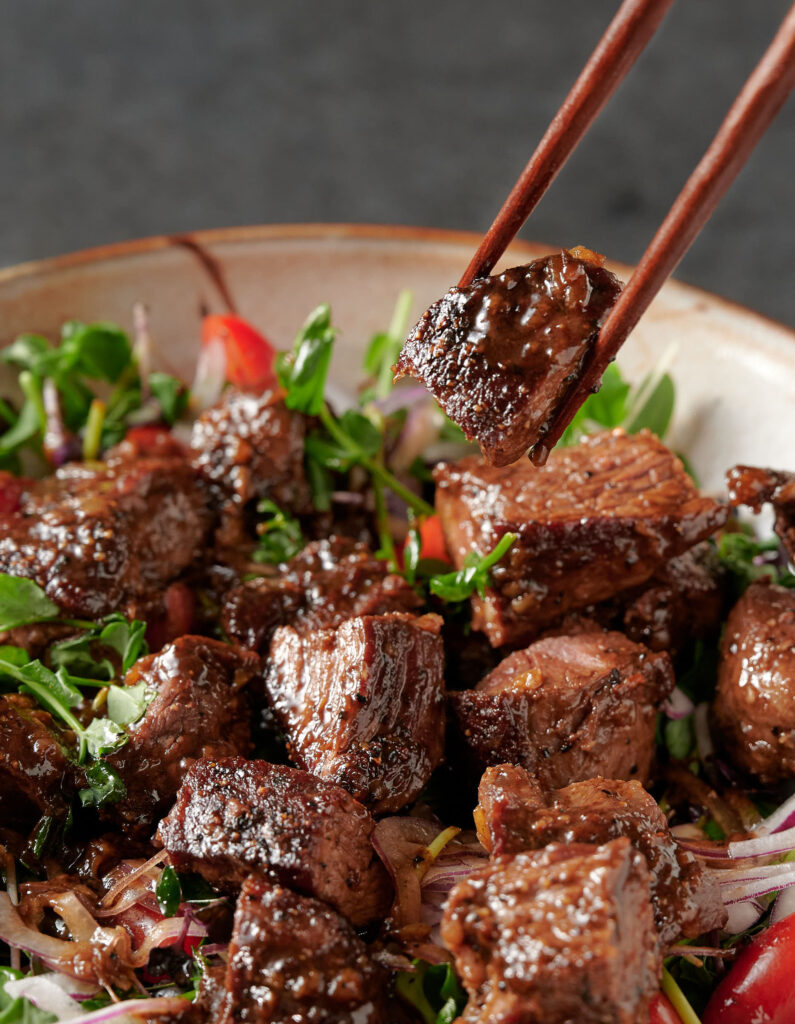
Add the sauce to the cooked beef
Even if you do decide to cut up your beef before you cook it please save the sauce for the end. Follow the recipe with a steak (better) or cubes (if you must) to maximize browning.
There’s another benefit to doing this way. When you cook beef in hot oil you get a fond. That brown stuff in the bottom of the pan? It’s gold. There’s all sorts of flavour there.
Cook the beef. Add the garlic and sweat it a bit. And then deglaze with the sauce. Scrape up that gold. Don’t leave it behind. Get that flavour into your dish.
Choice of oyster sauce matters for shaking beef
I may not be popular for saying this. But I really prefer Thai oyster sauce. For any recipe that isn’t Chinese anyway.
The flavour profile is different. I find it less salty. Less in your face. It doesn’t overpower. Just complements the dishes you use it in.
I couldn’t stand oyster sauce for years. Didn’t even stock it in my fridge. Until I discovered Thai oyster sauce. Now I always have it on hand.
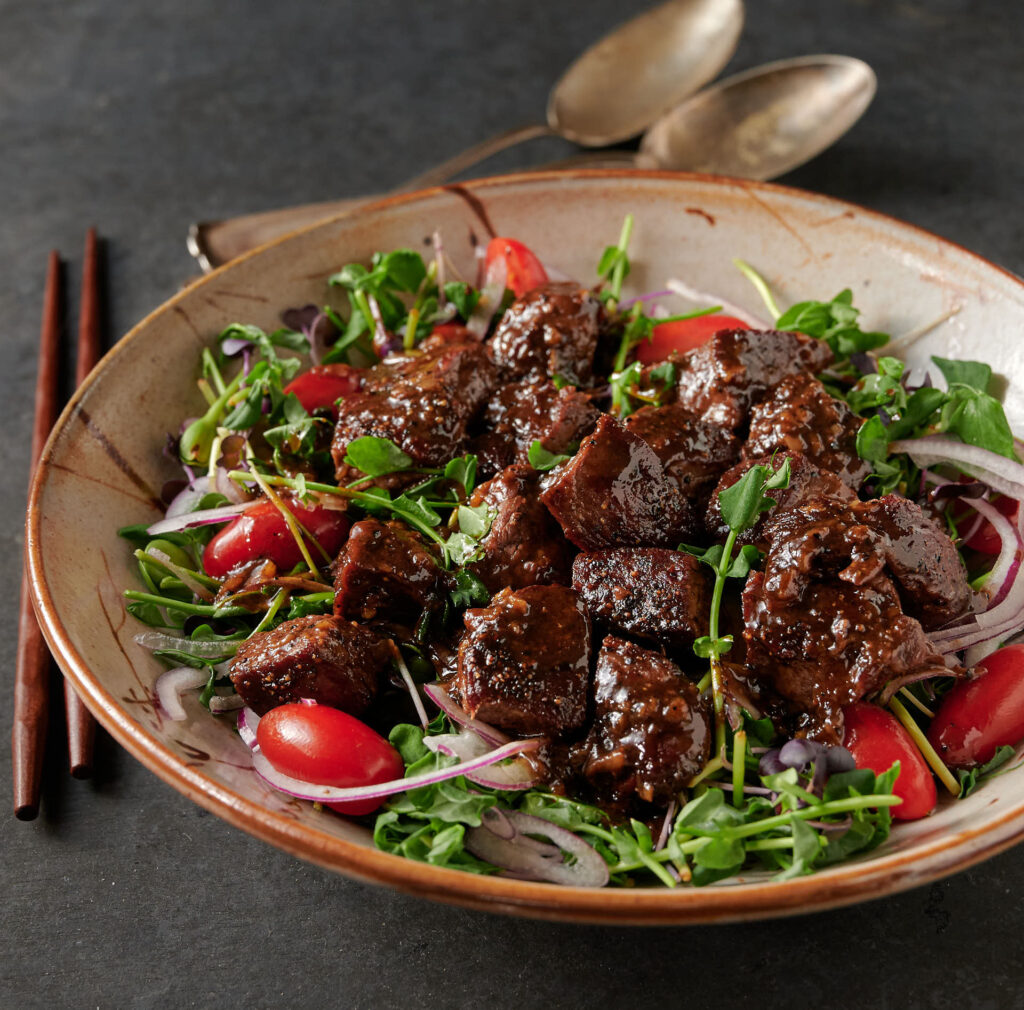
Bo luc lac meets food science
This is shaking beef with a little food science thrown in. It’s a different approach for sure. Not your mom’s bo luc lac.
It’s how I like it though. I’m always after big, bold flavours. Try it. If you like it, let your mom know.
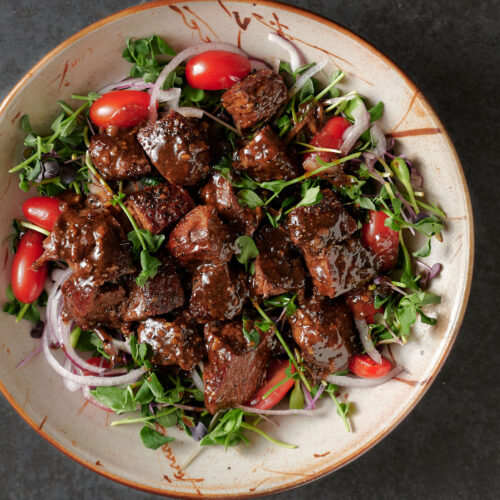
shaking beef – Vietnamese thit bo luc lac
Ingredients
The beef
- 1 lb beef ribeye or New York or filet mignon You want whole steak size pieces. Don’t cut it into cubes yet.
- salt to season the beef
- 1 tsp black pepper you want to give the beef a liberal coating of semi-coarsely ground pepper (think butcher’s blend)
- 3 cloves garlic – minced
- 2 tbsp vegetable oil plus a little more if the pan is dry when you add the garlic.
The sauce
- 2 tsp dark soy Thai sweet soy preferably
- 1 1/2 tbsp oyster sauce Thai preferably (strongly recommended really)
- 1 tbsp fish sauce
- 2 tbsp mirin
- 1-2 tsp sugar Or even more if you like things a bit sweet.
- 2 tsp sesame oil
The salad
- 1 tbsp rice vinegar to taste – this will be mixed with the hot sauce after you deglaze your pan.
- 3 cups watercress or baby greens of your choice.
- 1/4 cup red onion thinly sliced
- 1/2 cup cherry tomatoes cut in half (grape tomatoes are fine and so are thinly sliced regular tomatoes) – go with the best you can get
- a little drizzle of vegetable oil
Instructions
Do your prep
- Prepare your greens, red onion and tomatoes. Set aside.
- Combine the all sauce ingredients in a small bowl. You will be deglazing your pan with this sauce.
Cook the beef
- Pre-heat a heavy frying pan that will hold the steaks in a single layer over medium to medium high heat. Add the oil. Right before you start frying the steaks, season liberally with salt and pepper.
- Turn on your ventilation fan. This is going to smoke.
- Place the beef in the pan and fry around 3-4 minutes. You want a nice crust on the beef. This should get you to about medium rare. Depends on how thick your steaks are and how hot your pan is. I can’t be more precise because I just don’t know your specific details.
- Flip the steak and cook it another 3 minutes. Remove and let rest around 10 minutes. Check your internal temperature. 125F is rare. 130 is medium rare. Remove the pan from the heat.
- After the steak has rested for 10 minutes cut the beef into big bite size chunks.
- Return the pan to medium low heat. Keep an eye on it. You don’t want your fond to burn. Once it is heated add the garlic and cook around 30 seconds.
- Turn the heat up and deglaze the pan with the sauce. Scrape up all that delicious brown gold and stir to get it to dissolve into the sauce.
- As soon as you have finished deglazing the pan turn down the heat to low. Taste it. Now start adding the rice wine vinegar. You are looking for a nice balance of acid and savoury. Creep up on it.
- When you get to the point you are happy with your sauce (now your vinaigrette really) return the beef to the pan. Heat through gently. You don’t want it to cook more. Just warm it up.
- To serve spread your greens out on a plate. Top with onions and tomatoes. Drizzle with a bit of vegetable oil. Spoon the beef onto this mixture and drizzle with the sauce. Serve with lime wedges. Plate individually or as a communal appetizer.
