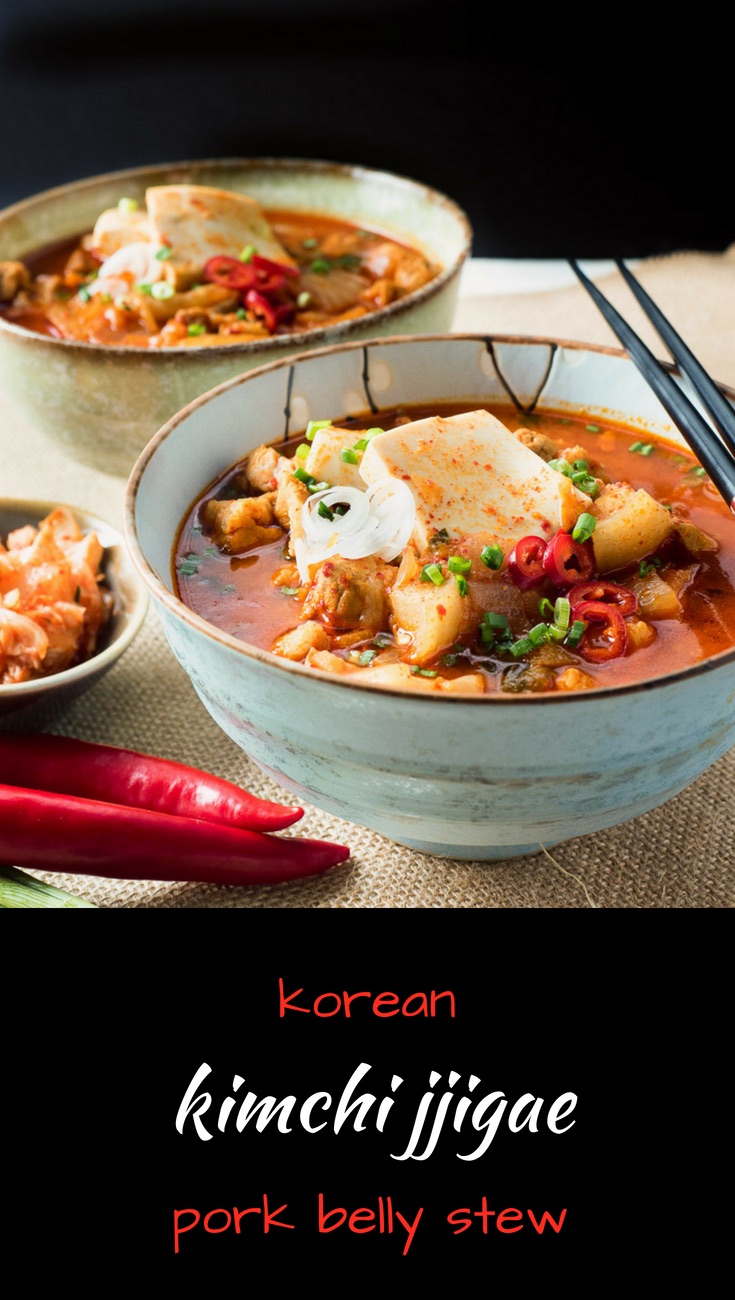
This is my riff on kimchi jjigae. It’s a salty, spicy, porky bowl of cabbage and broth goodness. Korean pork stew really. Easier and a bit more approachable than absolutely authentic kimchi jjigae.
I took the Korean fish stock out of the recipe. No pulling the guts out of dried anchovies here. Just some simple chicken stock instead. Pork belly I kept. The world needs more pork belly. It’s a bit fatty so it adds a wonderful richness to the stew.
Tofu is a traditional ingredient. I like it because it adds another texture. Don’t like tofu? Just leave it out.
Kimchi jjigae is a little bit spicy
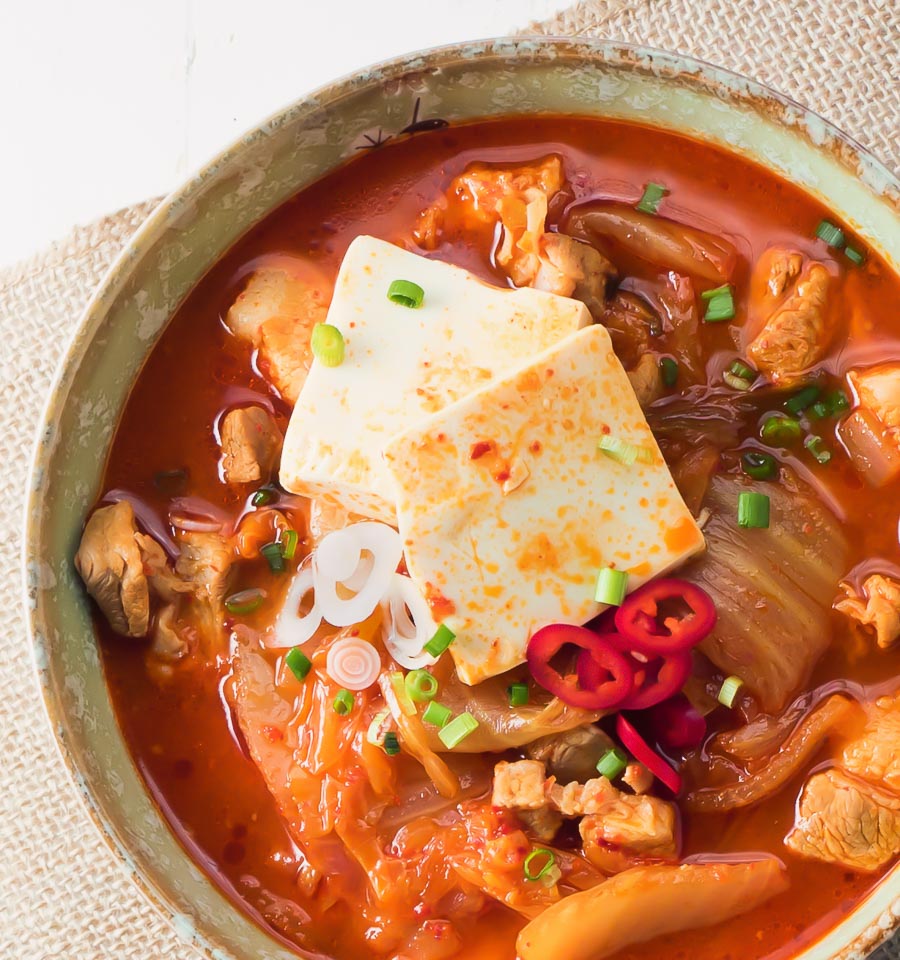
This recipe is a bit spicier than traditional kimchi jjigae. It doesn’t have to be. Stick with the lower quantities of Korean chili powder (gochugaru) and chili paste (gochujang) and it’s zingy.
Go at the high end of the recommendation and it’s into Thai or Indian curry heat. The heat builds so don’t base it entirely on one little taste as you are cooking it.
korean pork stew - kimchi jjigae
Ingredients
- 1 1/2 lbs pork belly - skin removed, cut into 1/2"x1/2"x1" pieces (you can use shoulder instead)
- 1 large onion - coarsely chopped
- 2 cups kimchi
- 3/4 to 1 1/2 Tbsp gochugaru
- 3/4 to 1 1/2 Tbsp gochujang
- 2 tsp sesame oil
- 3 1/2 cups chicken stock
- 12 oz firm tofu - cut into slices
- a bit of white vinegar to taste
- salt to taste
- Chives or green onions to garnish
Instructions
- Heat the sesame oil in a large pot. A dutch oven works here.
- Add the onion and sweat until slightly softened (2-3 minutes).
- Add the pork, kimchi, gochugaru and gochujang. Stir well and cook for a minute or two more.
- Add the stock and bring to a gentle simmer.
- Taste and adjust the salt. It will take a tsp or so.
- Simmer, covered for 30 minutes then check again for salt. If you want it a bit more sour add a little bit of vinegar at this point.
- Gently add the tofu to the pot (rest it on the pork) and simmer, covered for an additional 5-10 minutes.
- Garnish with green onion.
- Serve with rice or rice noodles or just eat it out of the pot when nobody is looking.
Notes
Nutrition
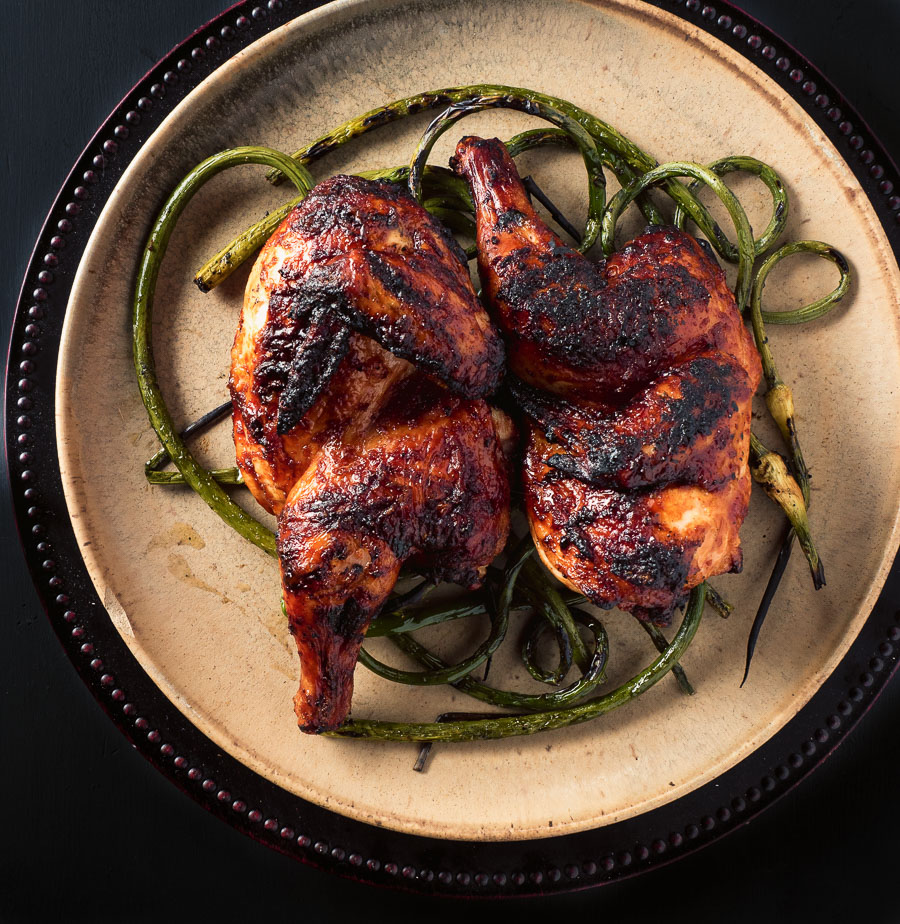
Japanese garlic ginger grilled chicken brings the clean flavours of soy, sake and sugar to a backyard classic. A little bit of chili sauce adds a bit of bite to what should become a backyard classic.
There’s just something about grilled chicken that makes me smile. Not really sure why but I love it. I’m always looking for new ways to spice up the blank canvas that is chicken. Garlic ginger grilled chicken is the latest addition to my palette.
Garlic ginger grilled chicken is wonderful in it’s simplicity
This is a simple recipe. But sometimes simple is great. Japanese cooking in general is all about relatively simple ingredients and incredible attention to detail.
This is no different. There’s nowhere to hide. No sticky barbecue sauce to hide the fact you burned your chicken.
There’s nothing to it except your grilling skills. Mix up a marinade. Grill. Baste. Eat. But the flavours are anything but simple. Savoury, assertive, salty, delicious.
A few grilling tricks for success
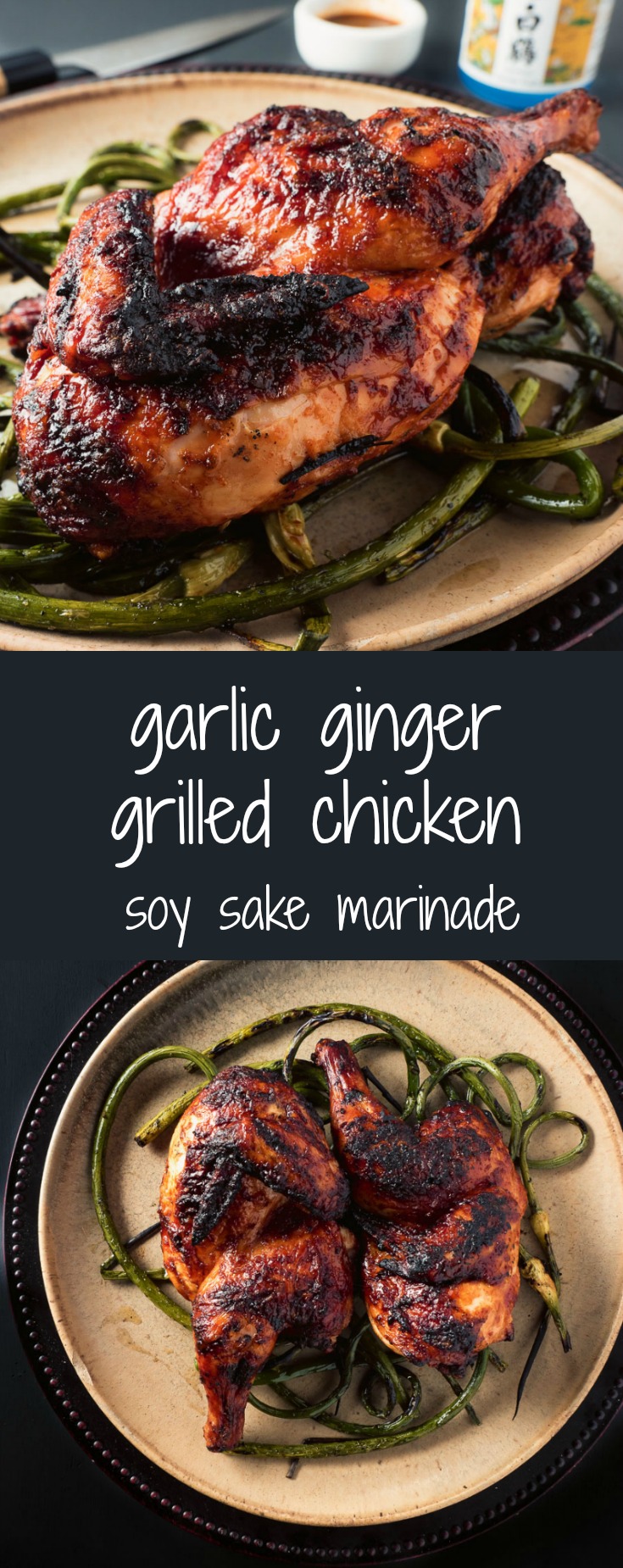
There’s sugar in the marinade. Sugar burns. That’s why putting barbecue sauce on early is pretty much a guarantee of golden black chicken. Add a few flare-ups and it’s cinder chicken. Nobody wants that.
Medium heat. Giving yourself a cooler safety zone to move the chicken out of harms way. Close attention to what you are doing. These are the keys to success every time. Set things up so you have a medium zone and low zone.
Start the chicken skin side down over direct heat for the first two minutes to get a bit of colour and some grill marks. Then move it to the safe zone and cook it there. Maybe bring it back over the medium zone a couple times along the way but don’t leave it there to burn. Vigilance is key.
Garlic ginger grilled chicken is an easy way to bring the flavours of Japan to your backyard.