Sometimes I do blog posts just for me. This is one of those times. This is my go to coleslaw. Posted so I have always have it handy.
This isn’t even my recipe. It’s from The New York Cookbook by Molly O’Neill. That book has about a million recipes in it. I have no idea how I found this one.
But I did. About 300 years ago. And I’ve been making it ever since.
You’d think I would have it memorized by now. I almost do. But somehow I’m never 100 percent sure. The quantities are close. 1 cup vs 3/4 cup. Which is which?
So I’m writing it down. So I can always find it. Seriously. This one is for me. I’m not joking…
But you can make it too. I hope you do. It’s definitely worth making. I think anyway.
I wasn’t planning to post this. The notion just popped into my head as I was making it. I’m not even at home.
Grabbed the pics with my phone. I promise I’ll try harder next time…
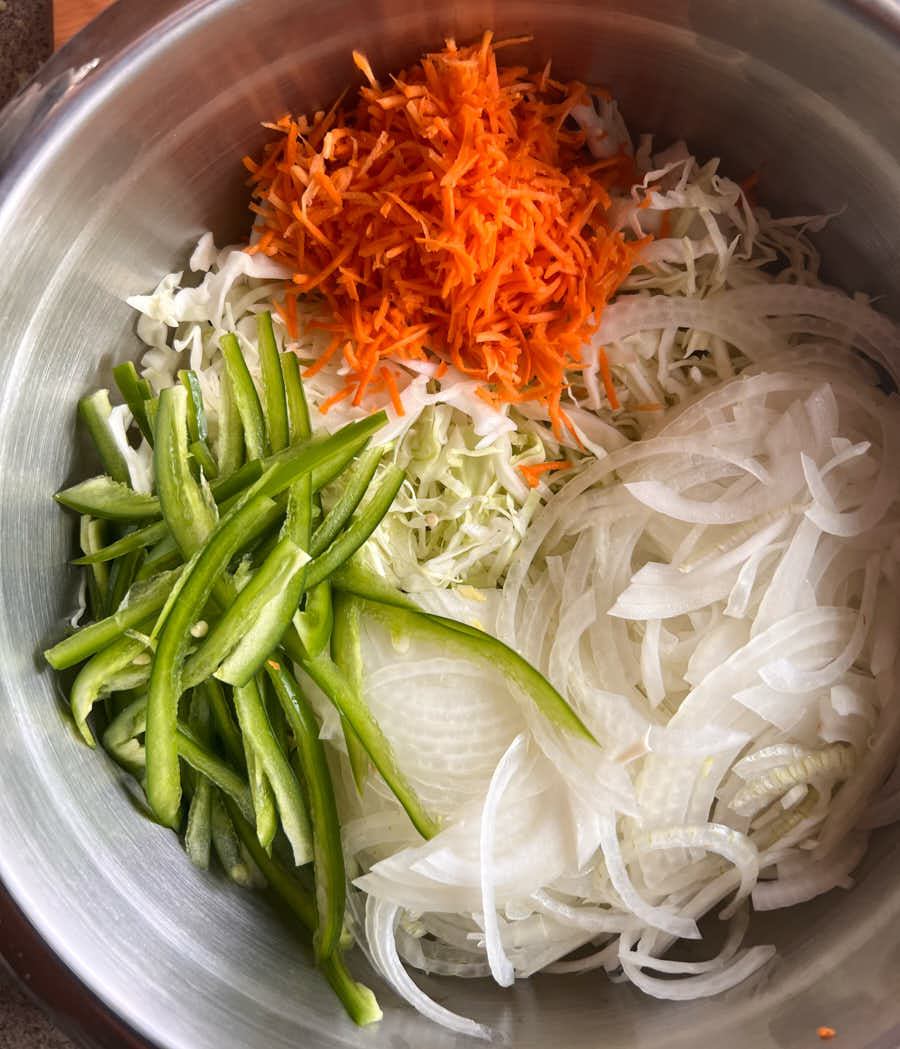
Coleslaw with a tangy bite
I love this coleslaw. Because it is the perfect counterpoint to big barbecue. I serve it with ribs. With brisket. Pulled pork. Anything fatty. If it doesn’t fly. Or swim. Then this is the one.
It works because it’s not creamy. It’s a little tart. And a little sweet. Has just the right amount of crunch.
Creamy coleslaws have their place. Creamy coleslaw is great with grilled chicken. Or turkey. A hamburger even. Kind of somewhere between salad and potato salad.
But for pork and brisket and beef ribs I always, always, always turn to this one.
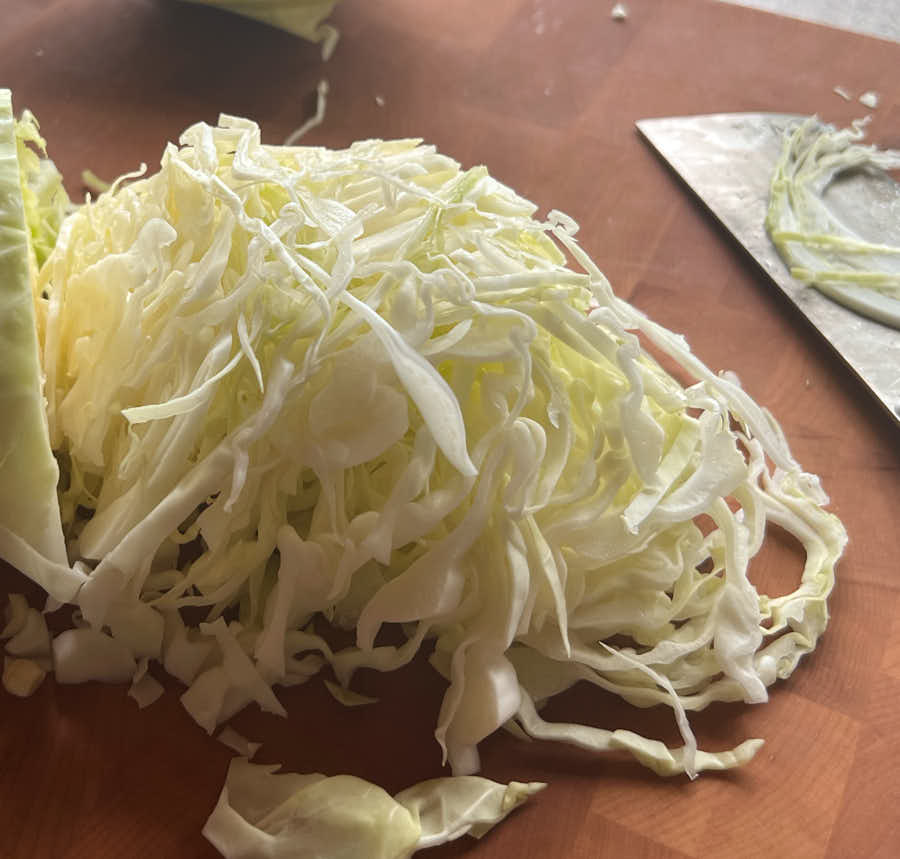
There are no secret ingredients in this slaw
This slaw is about cabbage. And Spanish onion. There’s a little green pepper. For a hint of flavour. And some carrot for colour.
I do swap in jalapeños for green peppers. Adds a nice bite. That’s my only twist on the original.
Nothing too unusual about the dressing either. A bit low brow. But it works. Somehow. Candidate for Ripley’s museum maybe?
Vinegar. Nasty white vinegar. The stuff you use to clean with. I’ve finally found a second use for it. Pickling. That’s a given. And this killer coleslaw.
Sugar. Plain white sugar. Refined sugar. Just sweet. Nothing fancy here.
Oil. Vegetable oil. Or canola. A neutral oil. The less flavour the better. Not olive oil. Absolutely not olive oil. That would suck. A lot.
Salt and mustard powder round out the list. Super simple. Crazy delicious. Not sure exactly why it works. But it does.
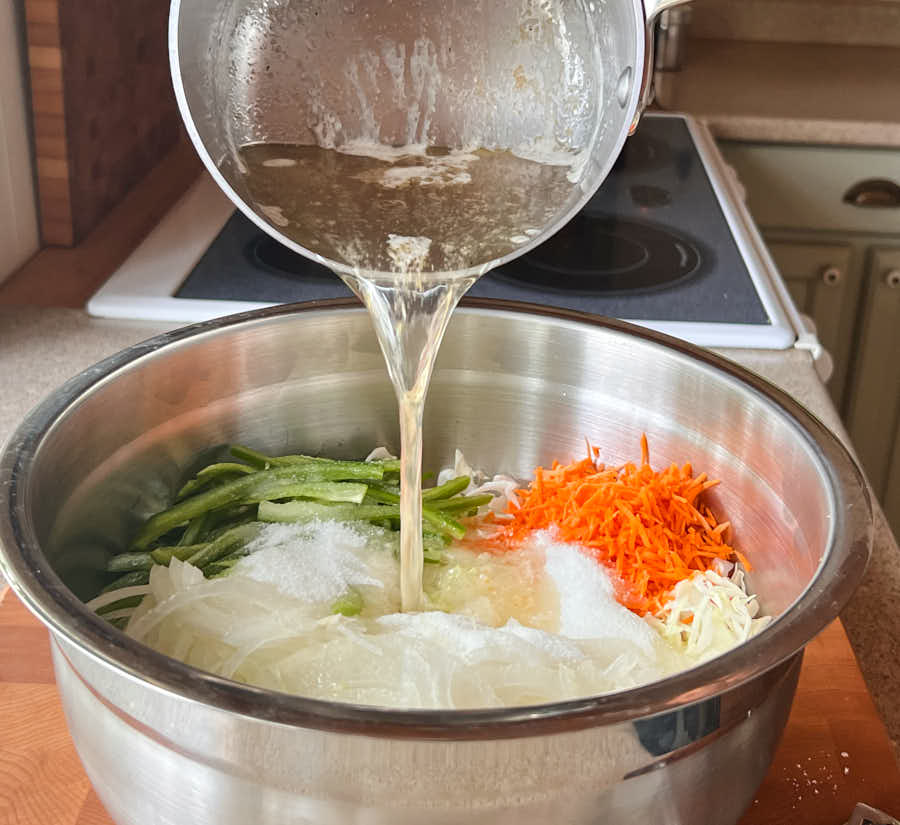
Hot dressing hits cool cabbage and magic happens
What makes this one a little different is how the ingredients come together.
Cabbage. Onion. Green pepper. Carrot. That’s every coleslaw ever.
The gee whiz here is the dressing. A hot dressing. Boiling hot in fact. Sounds crazy. But that little bit of insanity is what makes this coleslaw great.
Hot dressing wilts cabbage. A bit. Softens everything. Just enough. Pour it on and stir. Really stir. Toss it into the fridge and wait. 4 hours is good. Overnight is better.
And somehow, inexplicably, everything just comes together nicely. The whole is greater than the sum of the parts. Cliche. But true.
You won’t believe. Until you try it for yourself. And then you will be converted.
I don’t know when I became a coleslaw evangelist. But it seems it happened. When I wasn’t looking.
It’s healthier than you think
There’s a lot of sugar in this recipe. And a lot of oil. Might seem alarming at first. But it’s necessary. Part of the technique. But it isn’t part of what you actually eat.
The key to this coleslaw is moving the cabbage mixture through the hot dressing. To get the wilting action. So you need enough hot dressing. It won’t work otherwise.
Most of that dressing is going to wind up in the bottom of the bowl. You’ll see. It’s not going in anyone’s mouth.
It’s a bit wasteful I suppose. But it’s also way less calories than the nutritional calculator spits out.
Unless you drink the dressing I guess. You do you though. It’s a free culinary universe. FWIW – I don’t drink it.
This is my one true coleslaw
I am always experimenting. Can’t help myself. Tinkering. Trying new things. That’s who I am. I can never leave well enough alone.
There’s always something I want to change. Evolve. Refresh. Renew. Or even just throw everything I think I know out the window. And try something completely different.
Which is why this coleslaw is special to me. I don’t mess with it. I just make it. Over. And over. And over.
I know I’m in a rut. There’s no doubt about it. But the wonderful thing is I just don’t care.
Because it’s part of who I am. This one stays forever.
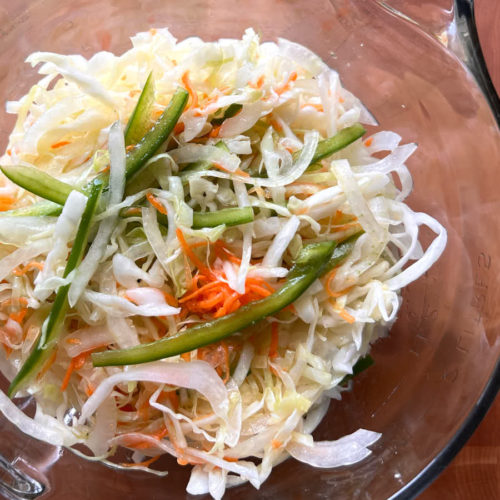
Killer coleslaw
Ingredients
The dressing
- 1 cup white vinegar – yes, the super nasty stuff. It works.
- 1/4 cup white sugar
- 3/4 cup neutral oil
- 1 tbsp kosher salt – plus maybe a bit more to taste once it’s cooled
- 1 tsp mustard powder – I use Keen’s brand but any powdered mustard will do.
The coleslaw
- 1 small green cabbage – sliced as thin as you can
- 1 large spanish onion – sliced as thin as you can
- 1 green pepper – julienned. If you like a little bite a couple large, seeded jalapeños are a nice touch.
- 1 large carrot – shredded
- 3/4 cup white sugar – in addition to the sugar in the dressing
Instructions
Prep the vegetables
- You want thin. As thin as you can. Grab a sharp knife. Core the cabbage. Set the flat side down and start shaving.
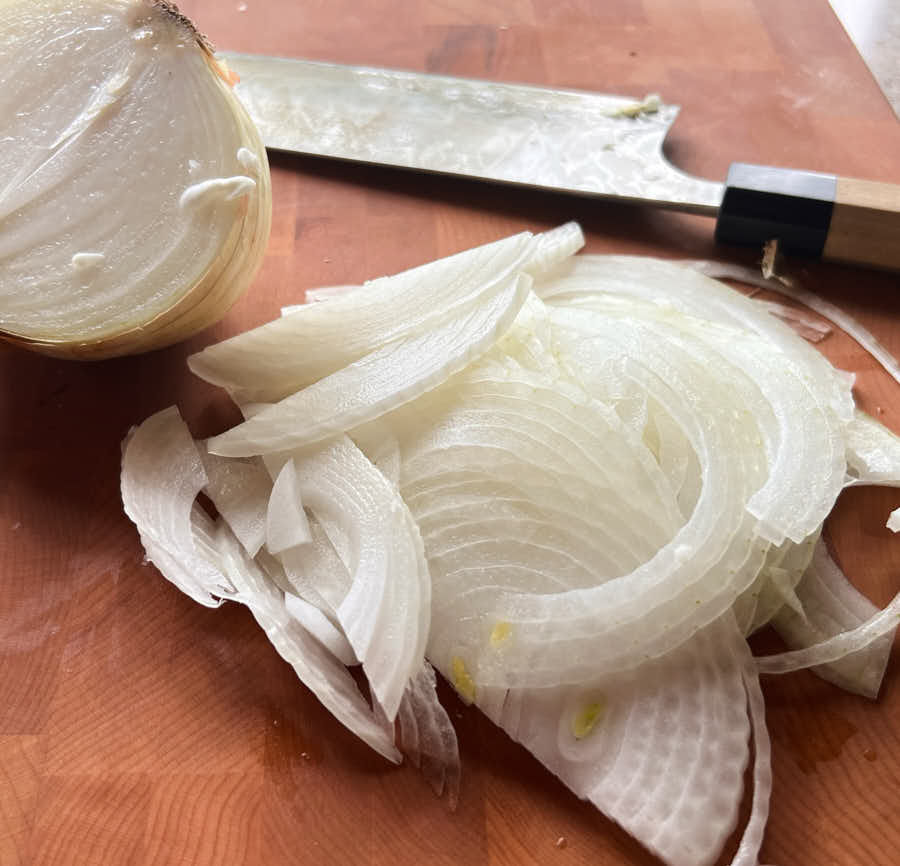
- Same story for the onion. Except you don’t need to core it.
- Julienne the pepper and shred the carrots.
- Put everything including 3/4 cup sugar into a heat proof bowl and make the dressing.
Make the dressing
- Combine the oil, vinegar, 1/4 cup of white sugar, salt and mustard powder in a small saucepan.
- Bring to a gentle simmer. Make sure the sugar has dissolved.
Assemble the coleslaw
- Pour the hot dressing over the vegetables.
- Grab a set of tongs and mix everything together. Really mix. Keep the vegetables moving through the hot dressing for a minute or two.
- Cover and refrigerate 4 hours. I like this slaw best the next day but it’s nearly as good after 4 hours.
- To serve use tongs to pull the coleslaw from the bowl. You’ll leave all the excess dressing behind this way.
Nutrition
Killer coleslaw
Ingredients
The dressing
- 1 cup white vinegar - yes, the super nasty stuff. It works.
- 1/4 cup white sugar
- 3/4 cup neutral oil
- 1 tbsp kosher salt - plus maybe a bit more to taste once it’s cooled
- 1 tsp mustard powder - I use Keen’s brand but any powdered mustard will do.
The coleslaw
- 1 small green cabbage - sliced as thin as you can
- 1 large spanish onion - sliced as thin as you can
- 1 green pepper - julienned. If you like a little bite a couple large, seeded jalapeños are a nice touch.
- 1 large carrot - shredded
- 3/4 cup white sugar - in addition to the sugar in the dressing
Instructions
Prep the vegetables
- You want thin. As thin as you can. Grab a sharp knife. Core the cabbage. Set the flat side down and start shaving.
- Same story for the onion. Except you don’t need to core it.
- Julienne the pepper and shred the carrots.
- Put everything including 3/4 cup sugar into a heat proof bowl and make the dressing.
Make the dressing
- Combine the oil, vinegar, 1/4 cup of white sugar, salt and mustard powder in a small saucepan.
- Bring to a gentle simmer. Make sure the sugar has dissolved.
Assemble the coleslaw
- Pour the hot dressing over the vegetables.
- Grab a set of tongs and mix everything together. Really mix. Keep the vegetables moving through the hot dressing for a minute or two.
- Cover and refrigerate 4 hours. I like this slaw best the next day but it’s nearly as good after 4 hours.
- To serve use tongs to pull the coleslaw from the bowl. You’ll leave all the excess dressing behind this way.
Nutrition
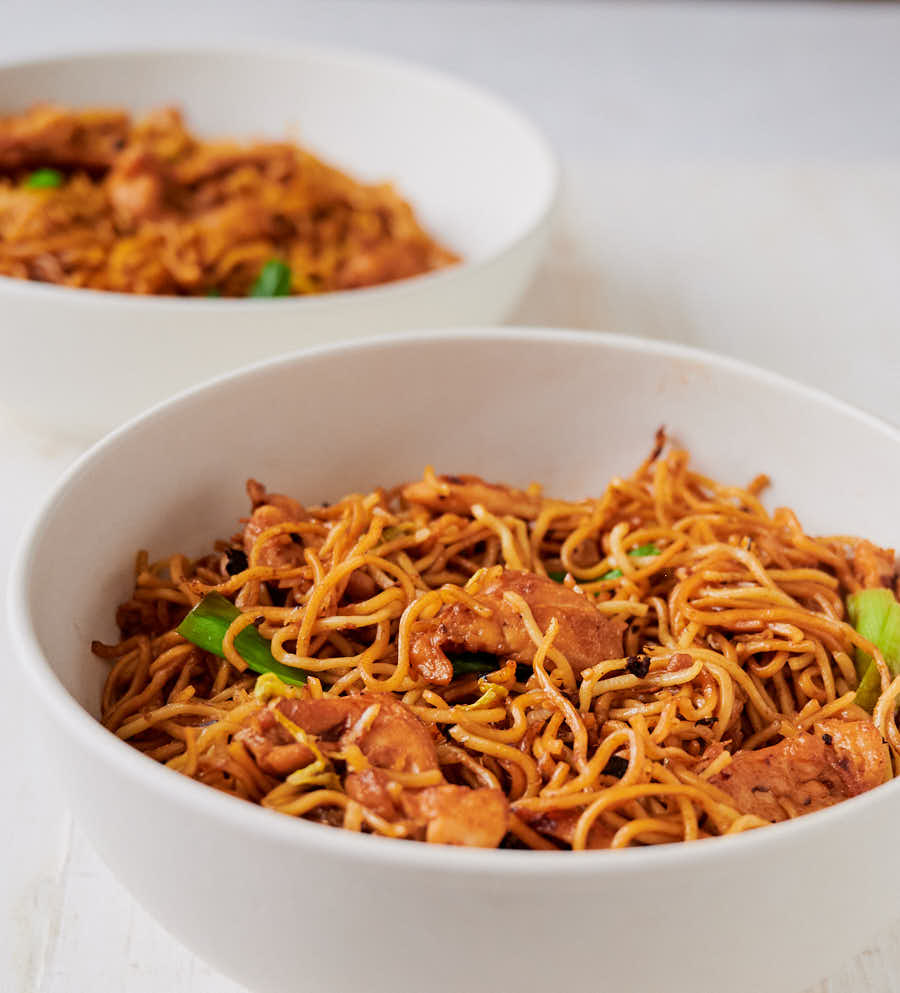
Sometimes dinner can be fast. And delicious. This is one of those times. Chicken chow mein with black beans.
A little spicy. A lot savoury. And loaded with umami flavour. Deceptively simple. Seriously tasty. This is not your run of the mill chow mein.
And the best part? 30 minutes start to finish. Who says you can’t have great food on Tuesday? I love great food on Tuesday.
Chow mein is a noodle dish
Full disclosure. Up front. This chicken chow mein is not a bowl full of stuff with a bit of noodles. This is a bowl of noodles with just the right amount of stuff.
A dish for Asian noodle lovers. Like me. If I wanted a plate of stuff I’d make a plate of stuff.
It is in the name. So I don’t think I’m way out there with this. Chow mein translated is stir-fried noodles. Noodles. Not stuff.
The noodles are the thing
It’s amazing how much information there can be in a name. Stir-fried noodles. That an unsubtle hint. Means the noodles are going to get stir-fried. Cooked in a wok.
Fully cooked noodles plus more heat equals mush. And nobody likes mush. There’s a reason you never see mush on a restaurant menu.
So the noodles need to be a little underdone when they hit the wok. That’s the goal. The thing you need to do. To make everything come out perfect.
Problem here is I can’t tell you exactly how long to cook your noodles. I’m not there in the kitchen with you. I don’t have your exact brand of noodles. What I can do is offer guidelines.
I usually cut back the cooking time by about a quarter. Three minutes for a four minute noodle. 45-50 seconds for a one minute noodle.
It’s a kind of sort of calculation. And it depends on the noodle. This one you have to figure out on your own.
I get that it’s a bit of a pain. But once you do figure it out you’ll be golden forever. Pay attention to your noodles and everything else will fall into place.
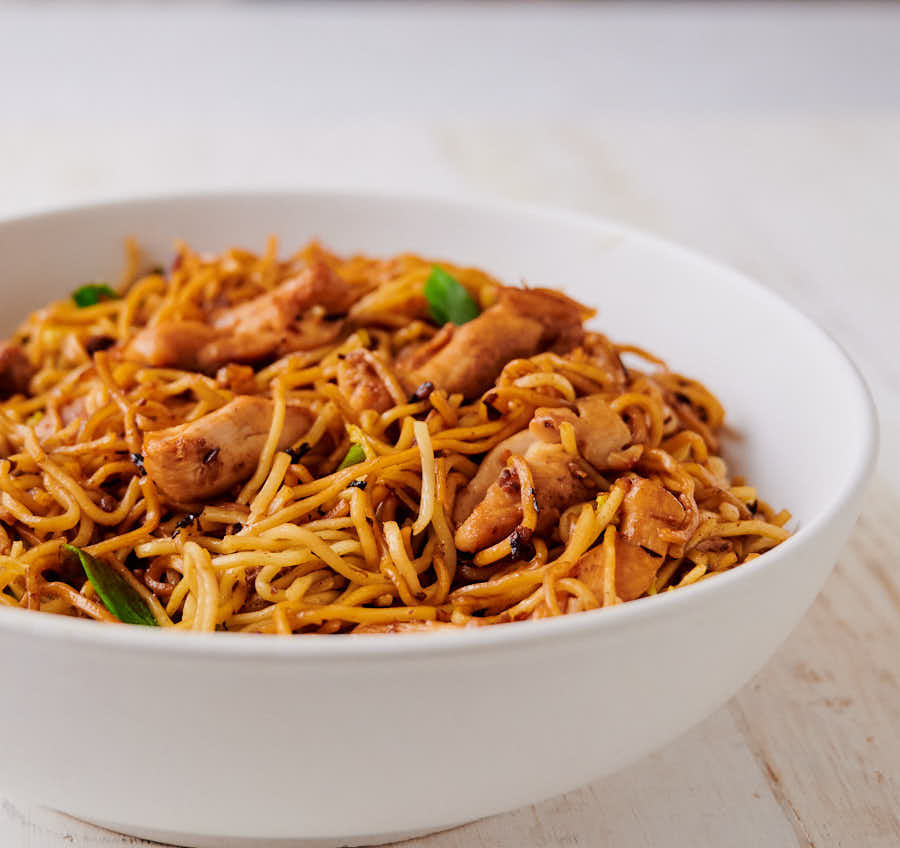
You need to get to know fermented black beans
This dish begins and ends with fermented black beans. They are the backbone. There’s a reason they are in the title.
They sound scary. A bit nasty even. The packaging isn’t particularly inspiring either. I can get why you might be leaning towards giving them a pass.
But that would be a mistake. They aren’t scary. Or nasty. They are really, really good.
And not in a weird “you’ll acquire a taste for them” either. They are just good. And you probably know the flavour.
Anything you’ve ever seen on a Chinese menu that says black bean? Like beef in black bean sauce? That just exactly what these are.
Fermented black beans smell good. And if you can handle the salt they taste great straight up.
If these were called black bean umami flavour bombs you’d already be using them. You know you would. Great ingredient. Terrible marketing…
There is no reason not to try them. Seriously. Pretty much everyone likes them. They just might not know it. Yet.
Velveting chicken is key for black bean chicken chow mein
Never heard of velveting? You’re in for a treat. It’s huge in Chinese cooking. This is a technique you absolutely need to learn.
Those unbelievably tender bits of beef in your local beef and broccoli?
That’s not beef tenderloin. Not even top sirloin. It’s inside round. Also known as topside beef. It’s cheap beef that’s been through the velvet experience.
Works with chicken too. Just not quite the same way. Beef velveting typically relies on baking soda. That stuff is a tenderizing sledgehammer.
Chicken isn’t as problematic. It’s already pretty tender. Just needs a little extra magic to push it over the edge. And to make sure it browns up.
It’s a simple thing. And it makes a big difference. Slice the chicken. Toss it into a bowl. A splash of shaoxing wine. A little light soy. And cornstarch.
Let that sit for 30 minutes. Fry it up and enjoy tender, tender chicken. It’s not absolutely necessary. But it is a very nice to have.
If you’re really jammed for time cut the marination time to 10 minutes. Let it sit while you do the rest of your prep.
Or learn to plan just a little bit better. I did. And I am really not good at planning. Some things are just worth it.
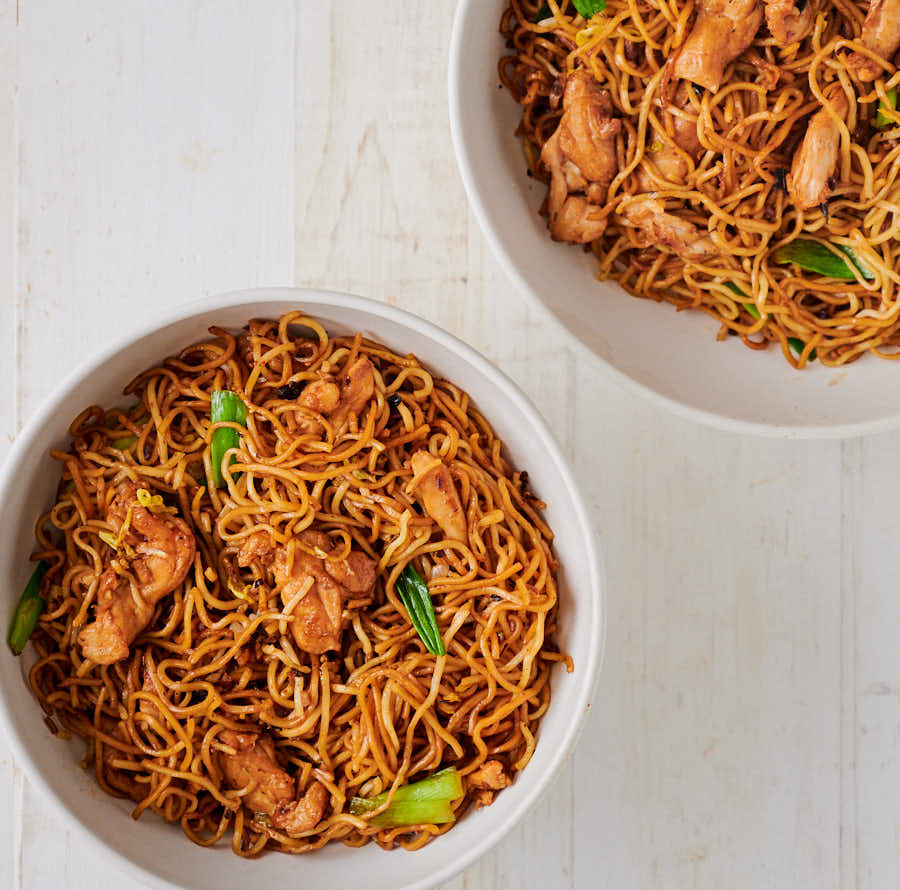
All soy sauces are not created equal
I have seven different soy sauces in my fridge. Insane? Maybe. But I have them because all soy sauces are not the same. Not even close.
Thai is nothing like Japanese is nothing like Chinese. Factor in dark, light, low sodium and all-purpose and you get to seven different soy sauces.
Thai is a bit restrained. Balanced. Works incredibly well for Thai and Vietnamese.
Japanese is smooth. Mild. Subtle. Complex. All the words you’d expect to associate with Japanese cuisine come through.
Chinese soy is exuberant. Assertive. A little bit in your face. And it’s absolutely the perfect soy for Chinese cooking. Bet you didn’t see that coming.
Having trouble with the math? Japanese regular and low sodium. Thai dark and light. Chinese light, dark and all-purpose.
I could lose the low sodium and all-purpose. I suppose. But when you get to five what’s two more?
This is not a run of the mill chicken chow mein
I’m not crazy about the status quo. I get that there are things that are just right. And I respect that. I cook it. But I don’t blog about it. Somebody else has already done it.
This time I’m playing it fast and loose. Going for flavour. And bending the rules to get there. If you’re looking for Panda Express I’m pretty sure this one isn’t for you.
Chow mein translates to stir fried noodles. I’m good with that rule. This is a noodle dish. And I have a wok.
But there’s no oyster sauce in this chicken chow mein. Sorry. No sugar either. And I’m using dark soy because I want the colour. And the complexity.
Fermented black beans don’t really belong in chow mein. But I’m adding them.
Because they’re a bit of magic. Bring an amazing depth of flavour to just about anything.
And an ingredient I don’t think anyone puts into chicken chow mein. Garlic chili paste. Unconventional. But delicious. Did I mention I don’t colour inside the lines?
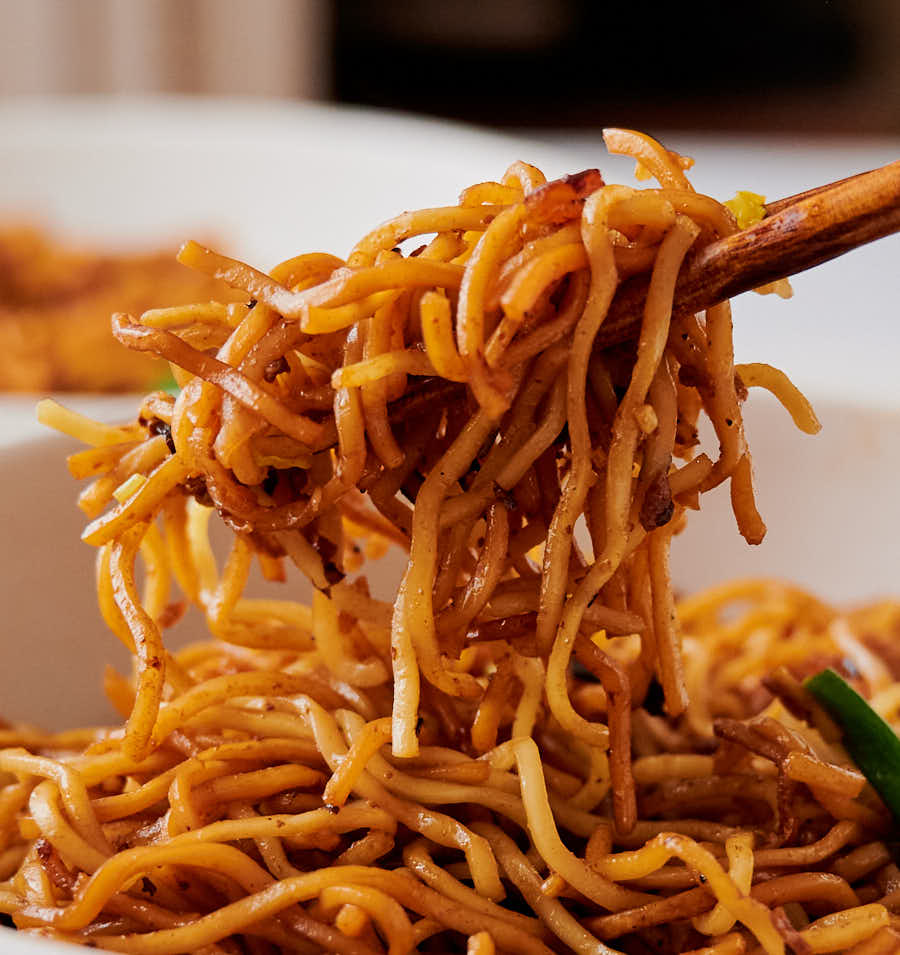
Thick or thin noodles
Some like their noodles thin. Some like them thick. I love all Asian noodles so I’m easy. But for chow mein I fall in the thin noodle camp.
The balance of flavour seems better to me with a thin noodle. Chow mein is not a saucy dish. It’s dry. Thick noodles in a dry dish is too much noodle for me.
I like thick noodles in saucier dishes. In soups. With peanut sauce. Thin noodles for chow mein. That’s how I roll.
But it’s your mouth. And you should always put what you like best in your mouth.
So use the noodles you like. What makes you smile is all that matters. Nobody should judge what goes on in your kitchen. And if they do who cares about them?
A little glebekitchen trick
I have a dirty secret. It’s not right. It’s not Chinese. Don’t flame me. I already know I’m a heretic.
I use garlic ginger paste to make my life easier. There. Now you know.
I always have homemade garlic ginger paste in my fridge. Because I cook a lot of Indian. I use it for Vietnamese. For when I’m just free-styling in the kitchen.
And it works great in a lot of Chinese dishes too. May not be a thing. But it should be. Just makes life so much easier. So you can make great food on a weeknight.
Use it anywhere you need roughly equal parts of finely chopped garlic and ginger. Crushing garlic is pretty easy. Chopping ginger super fine is real work.
It saves time. And it works well. The key is homemade though. Store bought just isn’t all that good.
Pretty bad actually. I’ve been known to compare it to wet cardboard. And that’s when I’m in a charitable mood.
Garlic ginger paste takes a not insignificant time suck out of Chinese cooking. Perfect for when you want something special on a Tuesday night.
Get to know your Asian grocer
I’m super annoying. I know. I’m always asking for ingredients you don’t already have.
If you’re new here you have a choice to make. You can just leave now. Avoid going down rabbit hole after rabbit hole.
That’s the easy choice. But it’s also the boring choice. I think anyway.
Or you can get into it. Learn something maybe. Have fun. Eat great food. That you cooked.
There aren’t that many ingredients in this dish. And every one of them will be really useful if you want to cook Chinese at home.
Make black bean chicken chow mein
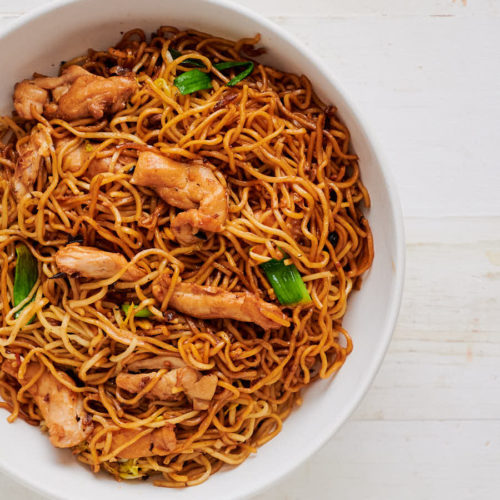
This one isn’t conventional. Bends the rules a bit. This is not the same old same old takeaway chow mein.
If you’re even the slightest bit adventurous. And you like chicken chow mein. Then this one is for you.
Come colour outside the lines. It’s fun. And it’s tasty. Did I mention you can make this on a Tuesday?
black bean chicken noodles
Ingredients
Velvet the chicken
- 1 tbsp shaoxing wine
- 2 tsp light soy
- 1 tbsp corn starch
- 10 oz chicken thighs 3 boneless, skinless and cut into thin slices. About 3/16 of an inch if you can pull it off.
“The sauce”
- 1 tbsp shaoxing wine
- 1 tbsp dark soy
- 1 tbsp light soy
- 2 tsp chili garlic sauce – I don’t like to do product endorsements but I use Huy Fong chili garlic sauce (the green lid).
The noodles
- 1 lb fresh chow mein noodles cooked just under the directions on the package. Mine take one minute to slightly toothy.
- 3 tbsp fermented black beans – available at Chinese/Asian markets
- 1 cup napa cabbage – thinly sliced and fairly tightly packed
- 4 green onions aka scallions
- 2 tsp minced garlic – see note
- 1 tsp minced ginger – see note
- 3 tbsp neutral oil – divided (2 tbsp and then 1 additional tbsp)
Instructions
Do your prep
- Velvet the chicken. Slice the chicken as close to 3/16 inch as you can get it. Put it into a bowl big enough to comfortably mix (restaurant tongs are perfect for this) and add the shaoxing and light soy. Sprinkle a half tablespoon of cornstarch overtop and mix. Now sprinkle the remaining half tablespoon and stir again. Set aside for 30 minutes.
- Soak your fermented black beans in cool water for at about five minutes. Rinse and smush with the flat side of a spoon. You want the black beans crushed but not obliterated. Little chunks is fine.
- Combine the dark soy, light soy, shaoxing wine and chili garlic paste. This is “the sauce”.
- Chop the scallion whites into a small dice. Chop the green into one inch pieces.
- Slice the cabbage thinly.
- Mince the garlic and ginger. Or pull out your jar of homemade garlic ginger paste.
- Be ready. This goes really, really fast.
Get your noodles ready
- Put a pot of water on to boil.
- When you are ready to start making dinner boil your noodles following the instructions specific to the noodles you have but remember to cut back the cooking time 20-25 percent. Mine (thin) take one minute to get to an ever so slightly toothy texture that will wind up perfect in the final dish. I can’t tell you exactly how long. I’m not there in the kitchen with you. I don’t know what noodles you are using. Sorry.
- I have a pasta pot so I can pull the noodles out of the hot water. This works great because I can leave the hot noodle water (noodle water is like pasta water except it’s more exotic. No not really) in the pot and just sit the noodles in the strainer. When I’m about to add the noodles I just dunk them in the hot water to loosen them up.
Make the black bean chicken chow main
- Heat your wok over medium high heat until it just starts to smoke. I’m assuming you have a wok and you oiled it before you put it away here. Heat it until it’s hot but not crazy, melting hot is really what I’m suggesting here.
- Add two tablespoons of oil. Splash it around the sides of the wok and then add the chicken. Spread it around so it’s not all piled up and wait. Yes. Wait. The antithesis of stir frying.
- After about 45 seconds to a minute start to stir fry. The chicken should be nicely browned on one side. Assuming you pulled off the 3/16th recommendation the chicken will be done as soon as you can’t see anything obviously underdone.
- Turn the heat down to low. Use a slotted spoon to remove the chicken and set aside.
- Turn the heat back up to medium high and add the third tablespoon of oil.
- Add the scallion whites, cabbage, garlic and ginger (or garlic ginger paste) and stir fry for about 30 seconds then add the crushed fermented black beans. Stir fry for another 30 seconds.
- Dunk the noodles into the reserved hot water if that’s how you set things up, drain (shake and drain again) and add them to the wok.
- Toss the noodles to get them coated with the oil and grab up the black bean garlic.
- Add the green onion pieces and reserved chicken. Give everything a lively stir to combine.
- Add “the sauce” you prepared above and stir to combine.
