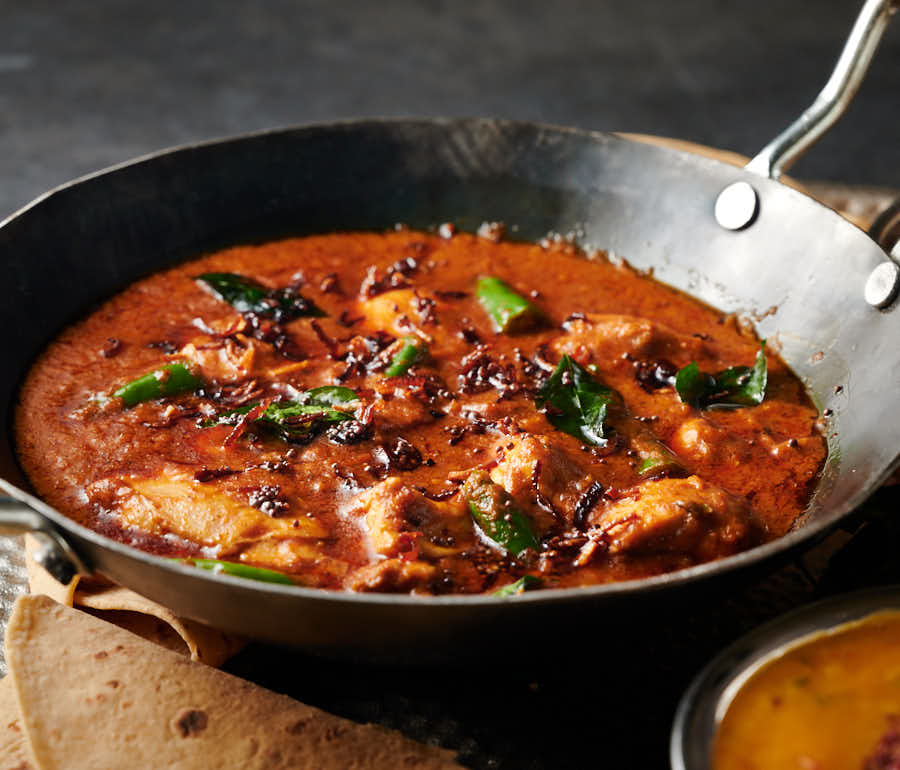
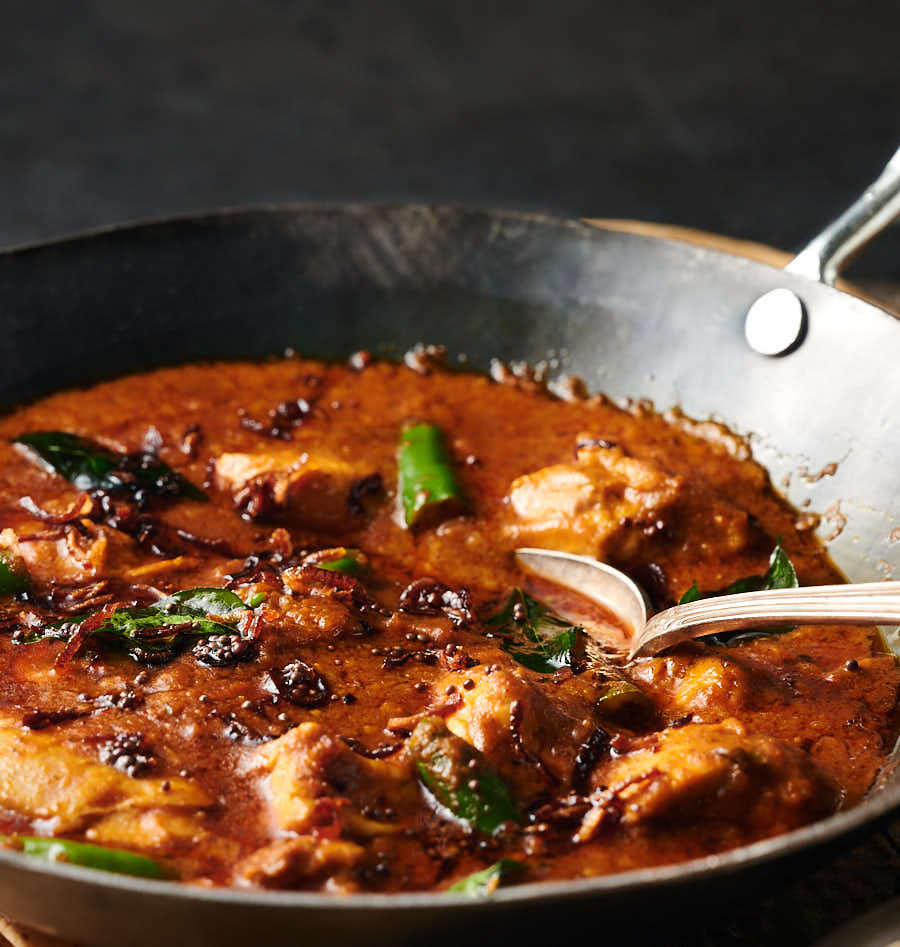
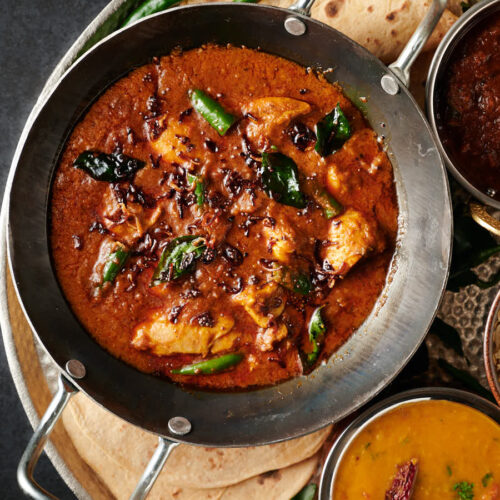
Kerala chicken curry. Nadan kohzi. Never heard of it? Too bad. You are missing out.
Curry leaves. Green chilies. Tamarind. Coconut. And a bold spice mix. Kerala masala is what makes this one special.
Big flavours. If you are looking to give your tastebuds a kick nadan chicken curry is a good place to start.
Black pepper is the backbone of Kerala chicken curry
This isn’t a run of the mill curry. And the spicing isn’t run of the mill either. Kerala chicken curry is a little different.
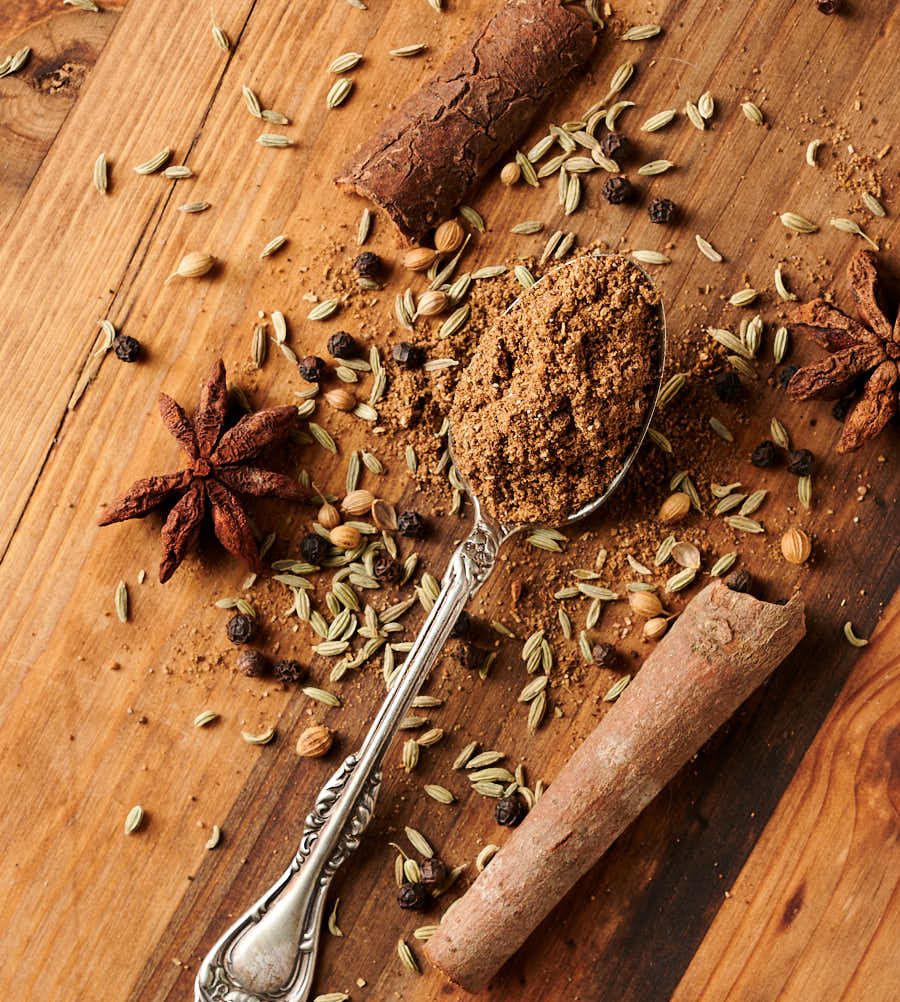
It’s the pepper that does it. Think garam masala. Now think garam masala with bite. Wonderful, peppery bite. That’s what’s going on here.
This is a complex mix. Haunting flavours. Cardamom. Cinnamon. Star anise. Fennel seed. Warm spices. But with attitude. Black pepper attitude.
Toasting and grinding spices makes a difference
If you usually use pre-ground spices you are in for a treat. There’s a world of difference here.
Dry roasted whole spices. Freshly ground. That’s a whole different league of tasty.
Normally I’d tell you to toast up a batch of spices and grind to order. That’s usually good advice.
But this time it doesn’t work. It’s a small batch. There’s only one star anise and one piece of cinnamon. So you need to grind it all up to make sure you get the balance right.
Roasted and fresh ground spices. You’ve heard about it. Now try it. It’s amazing. More work. Sure. But this blog isn’t ever about easy. It’s about going for gold.
I can smell my spice mix from across the kitchen as I write this. When was the last time that happened to you?
Fresh curry leaves matter
I put curry leaves first up above. There’s a reason. Fresh curry leaves are pretty important in this dish. Really important actually.
Most herbs work dried. Different. But they still offer something. Curry leaves are not like that. Think of dried cilantro. There’s no taste at all. Dust.
Dried curry leaves are a bit better. Maybe a 1 out of 10 on the flavour scale. If I’m feeling generous.
Just can’t get fresh? Don’t let that stop you. It will still be good. Just won’t be the same. The spice mix is amazing. It will totally carry the dish. Not exactly what I intended. But tasty.
If you want the real deal though try to find fresh. Where I am it’s not that hard. You do have to work a bit. But they are around. Just have to hunt.
If you live in a town with a South Indian restaurant go ask them. They will have them. Tell them you are making nadan kohzi. They will be impressed. Beg. It’s worth it.
And when you get them, they freeze pretty well. Way better than dried…
Hotel style kerala chicken curry
Hotel style curry gravy is the other thing that’s different about this curry. You probably know traditional Indian cooking. That’s pretty much everything out there. All the books. The whole internet.
Traditional is fantastic. I love it. Grew up eating it. My comfort food is Bengali chicken curry and dal.
This is different. But similar. It’s a way to prep a foundational base gravy that lets you make curries on demand. You make a bunch of the hotel base gravy and portion it out. You can freeze it for later. Hotel style on demand.
Regular restaurant technique is conceptually similar. But it comes at it a totally different way. It’s good. It’s easy. And it works.
Hotel style is about taking it up another level. Restaurant style is what they serve in your local Indian joint. Hotel style is what they serve at the Indian restaurants you can’t get a reservation at.
You get all the depth of flavour from slowly browned onions like traditional Indian cooking. But with the lush sauce of restaurant style. The best of both worlds.
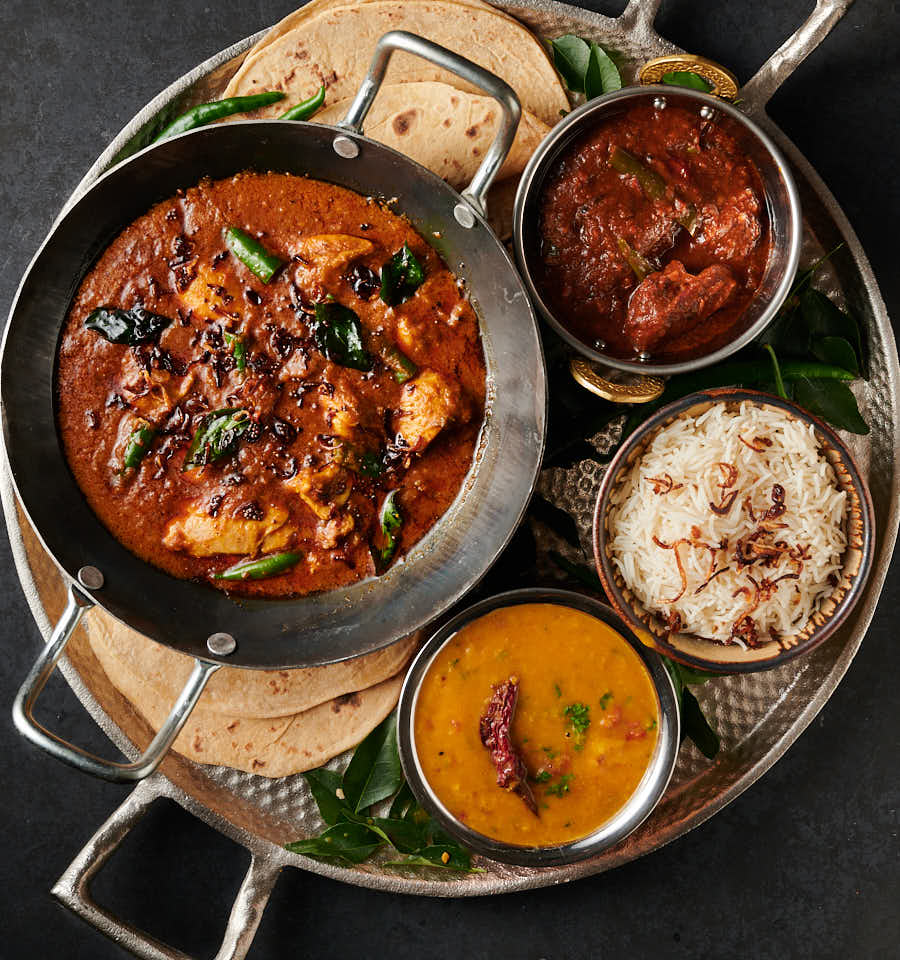
Hotel style Kerala chicken curry. Nadan kohzi. Doesn’t matter what you call it.
What matters is now you’ve heard of it. Try making it. I think you’ll like it. A lot.
kerala chicken curry – Indian hotel style
Ingredients
kerala masala
- 1 1/2 tbsp black peppercorns
- 1/2 tsp cumin seed
- 2 tbsp coriander seed
- 1 tsp fennel seed
- 1 inch cinnamon bark also known as cassia
- 1 star anise
- 8 cloves
- 8 green cardamom pods
The spice mix
- 2 1/2 tsp kerala masala – the ground spice. See above
- 1 1/2 tsp kashmiri chili powder
- 1/2 tsp kasoor methi – dried fenugreek leaves
- 1/4 tsp turmeric
- 1/2 tsp kosher salt
kerala chicken curry
- 3 tbsp coconut oil – any neutral oil will also work or even 1/2 and 1/2 coconut and neutral oil
- 1 tbsp garlic ginger paste – recipe link below
- the spice mix from above
- 2-3 finger hot (jwala) green chilies cut into 1 inch pieces
- 5 fresh curry leaves
- 1 cup Indian hotel curry gravy – recipe link below. Don’t worry if it seems too thick. The juices from the chicken will thin it out.
- 1/2 tsp tamarind paste – or tamarind pulp if you make it yourself. Tamarind concentrate is not the same thing as tamarind paste. Watch out for that.
- 3 boneless, skinless chicken thighs cut into 4 pieces each
- 3 tbsp coconut milk
Tempering
- 1 tbsp coconut oil
- 1/2 tsp mustard seeds
- 10 fresh curry leaves
- 1/2 shallot thinly sliced
Instructions
Make the kerala masala
- Pre-heat a small skillet over medium-low heat.
- Add the spices to the skillet.
- Toast, shaking the pan, until they start to get fragrant. This should take a two or three minutes.
- Let cool and grind to a fine powder. I like a coffee grinder for this. The old ones with the blade work well. Bad for coffee. Great for spices.
- You won’t need anywhere near all of it so transfer it to a jar with a tight fitting lid and store in a cool, dark place. Use it as a funky peppery garam masala if you like.
Do your prep
- Measure out your spice mix. Stem your curry leaves. Prep your chicken. Measure out a cup (237 ml) of Indian hotel curry gravy. Cut up your green chilies. Slice your shallot.
- Have your garlic ginger paste, tamarind and coconut milk handy. You’re good to go now.
Make your tempering
- Heat 1 tbsp of coconut oil over medium low heat in the same little pan you used to toast the spices.
- Add the shallots and cook until the shallots start to brown.
- Add the mustard seed and about 10 curry leaves and cook until the shallots are nicely brown. Set aside.
Make the kerala chicken curry
- Heat the oil in a medium sized frying pan until the oil just starts to shimmer.
- Stir in the garlic ginger paste. Gently fry until the garlic ginger paste stops sputtering. This can get a little messy.
- Turn your heat down to medium low and add your spice mix and the remaining 5 curry leaves. Cook for about 30 seconds. You want to fry your spices in the oil. Don’t skimp on the oil. Bad things happen if the spices stick and burn.
- Add the green chilies. Cook another 30 seconds or so.
- Add the Indian hotel curry gravy. Stir it really well to get the oil to combine with the curry gravy. You want everything mixed together at this point. Bring to a simmer.
- Add the chicken thigh pieces in a single layer. Nestle them down into the sauce. Cover and cook about 5 minutes. Remove the cover, flip the chicken and recover. Cook until the chicken is done. Use an instant read thermometer if you have one. You are shooting for an internal temperature of 160F. It will get to 170F as the curry finishes cooking.
- Add the tamarind paste and coconut milk. Stir well to combine.
- Look at the consistency. If you are happy with it, cover and simmer for 2 minutes. If it’s too thick, add a bit of water and stir to combine. If it’s too thin don’t cover it to let it reduce.
- While the curry is in it’s final simmer, warm up the tempering over low heat.
- Transfer the kerala chicken curry to a serving dish and drizzle/sprinkle it with the tempering.
- Kerala chicken curry is great with rice and chapatis or parathas.
Notes
Nutrition
kerala chicken curry - Indian hotel style
Ingredients
kerala masala
- 1 1/2 tbsp black peppercorns
- 1/2 tsp cumin seed
- 2 tbsp coriander seed
- 1 tsp fennel seed
- 1 inch cinnamon bark also known as cassia
- 1 star anise
- 8 cloves
- 8 green cardamom pods
The spice mix
- 2 1/2 tsp kerala masala - the ground spice. See above
- 1 1/2 tsp kashmiri chili powder
- 1/2 tsp kasoor methi - dried fenugreek leaves
- 1/4 tsp turmeric
- 1/2 tsp kosher salt
kerala chicken curry
- 3 tbsp coconut oil - any neutral oil will also work or even 1/2 and 1/2 coconut and neutral oil
- 1 tbsp garlic ginger paste - recipe link below
- the spice mix from above
- 2-3 finger hot (jwala) green chilies cut into 1 inch pieces
- 5 fresh curry leaves
- 1 cup Indian hotel curry gravy - recipe link below. Don’t worry if it seems too thick. The juices from the chicken will thin it out.
- 1/2 tsp tamarind paste - or tamarind pulp if you make it yourself. Tamarind concentrate is not the same thing as tamarind paste. Watch out for that.
- 3 boneless, skinless chicken thighs cut into 4 pieces each
- 3 tbsp coconut milk
Tempering
- 1 tbsp coconut oil
- 1/2 tsp mustard seeds
- 10 fresh curry leaves
- 1/2 shallot thinly sliced
Instructions
Make the kerala masala
- Pre-heat a small skillet over medium-low heat.
- Add the spices to the skillet.
- Toast, shaking the pan, until they start to get fragrant. This should take a two or three minutes.
- Let cool and grind to a fine powder. I like a coffee grinder for this. The old ones with the blade work well. Bad for coffee. Great for spices.
- You won’t need anywhere near all of it so transfer it to a jar with a tight fitting lid and store in a cool, dark place. Use it as a funky peppery garam masala if you like.
Do your prep
- Measure out your spice mix. Stem your curry leaves. Prep your chicken. Measure out a cup (237 ml) of Indian hotel curry gravy. Cut up your green chilies. Slice your shallot.
- Have your garlic ginger paste, tamarind and coconut milk handy. You’re good to go now.
Make your tempering
- Heat 1 tbsp of coconut oil over medium low heat in the same little pan you used to toast the spices.
- Add the shallots and cook until the shallots start to brown.
- Add the mustard seed and about 10 curry leaves and cook until the shallots are nicely brown. Set aside.
Make the kerala chicken curry
- Heat the oil in a medium sized frying pan until the oil just starts to shimmer.
- Stir in the garlic ginger paste. Gently fry until the garlic ginger paste stops sputtering. This can get a little messy.
- Turn your heat down to medium low and add your spice mix and the remaining 5 curry leaves. Cook for about 30 seconds. You want to fry your spices in the oil. Don’t skimp on the oil. Bad things happen if the spices stick and burn.
- Add the green chilies. Cook another 30 seconds or so.
- Add the Indian hotel curry gravy. Stir it really well to get the oil to combine with the curry gravy. You want everything mixed together at this point. Bring to a simmer.
- Add the chicken thigh pieces in a single layer. Nestle them down into the sauce. Cover and cook about 5 minutes. Remove the cover, flip the chicken and recover. Cook until the chicken is done. Use an instant read thermometer if you have one. You are shooting for an internal temperature of 160F. It will get to 170F as the curry finishes cooking.
- Add the tamarind paste and coconut milk. Stir well to combine.
- Look at the consistency. If you are happy with it, cover and simmer for 2 minutes. If it’s too thick, add a bit of water and stir to combine. If it’s too thin don’t cover it to let it reduce.
- While the curry is in it’s final simmer, warm up the tempering over low heat.
- Transfer the kerala chicken curry to a serving dish and drizzle/sprinkle it with the tempering.
- Kerala chicken curry is great with rice and chapatis or parathas.
Notes
Nutrition
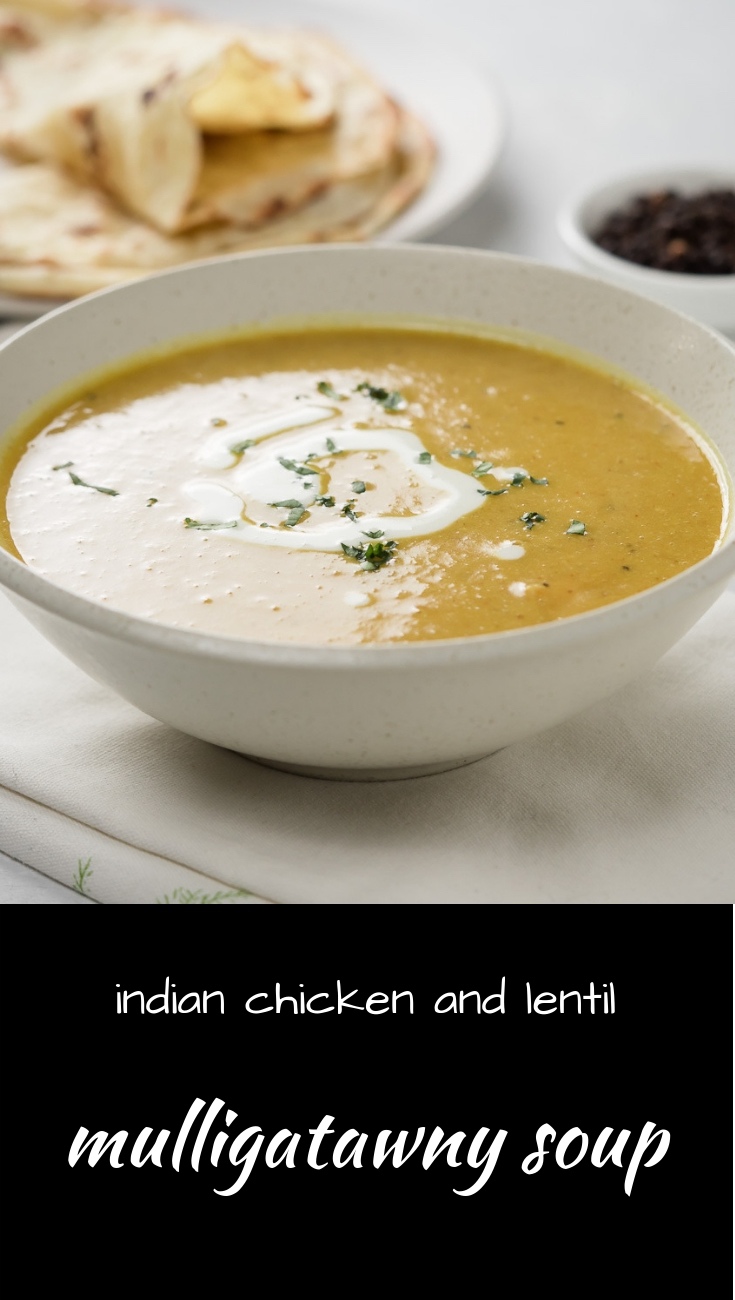
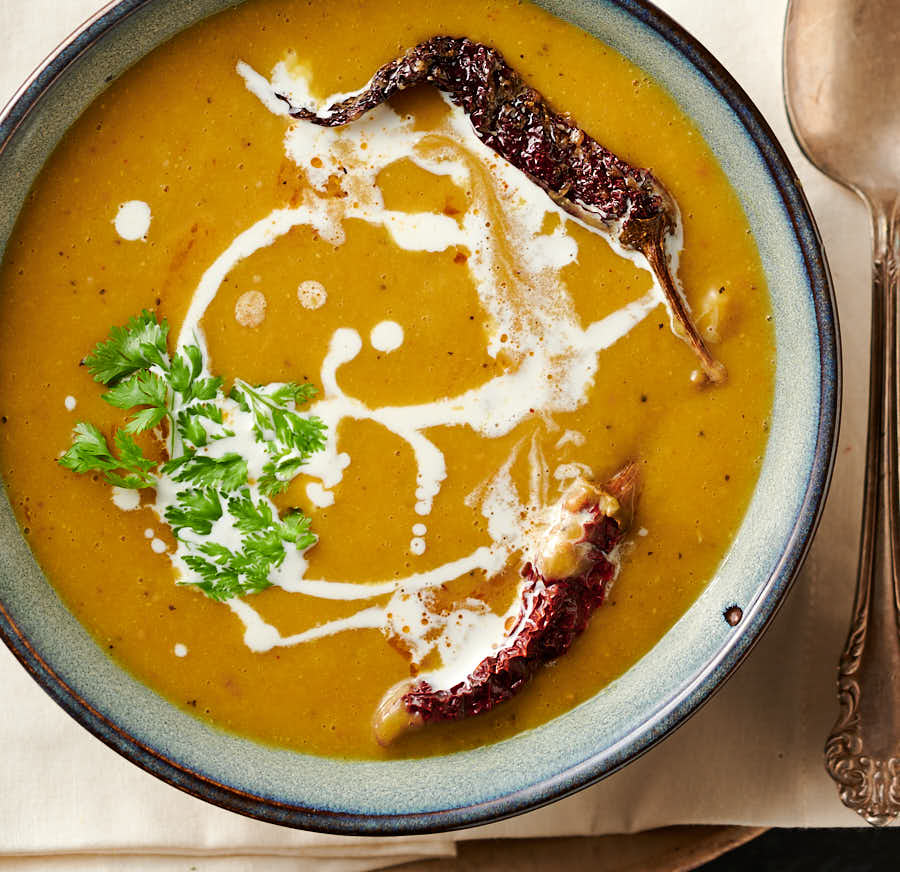
Mulligatawny soup. Savoury lentils. Chicken. Indian spices. Ginger. Garlic. And lemon. How can you go wrong?
Make this when you want something different. Comforting. Deeply satisfying. And so tasty. If you like dal, you are going to love mulligatawny soup.
It can be what’s for dinner. With a paratha or naan. Little green salad on the side. It’s that satisfying. Soup that eats like a meal.
Leave the chicken out and you have a nice “cream of” style soup without the cream. Very posh. Perfect for a dinner party. Just keep the portions small.
Or go with vegetable stock instead of chicken stock, leave out the garnish and it’s vegan. It’s gluten free too. Lentils are environmentally friendly.
Healthy. Good for the planet. Sometimes delicious can be good for you. It happens. It’s rare. But it happens. This is one of those times. I love these times.
Mulligatawny soup – English or Indian?
Mulligatawny soup comes from Colonial India. Time of the British Raj. Back in the late 1800s. It’s an English recipe really.
Roots in Indian cooking for sure. But British. It’s like a tame sambar . Or a pureed rasam. A western take on Indian flavours. East meets west. Kipling stands corrected…
Depending on who you believe it is named for the Tamil words for pepper and water. This recipe does have a good amount of black pepper in it.
Roll back on it if you’re not a big pepper fan. Use a bit of white pepper instead if you are doing this for a dinner party. No little black flecks that way.
Or embrace those black flecks. Feature them. That’s what I do. It’s pepper water. It should have pepper. I think anyway.
Pepper water. It’s funny. This has nothing to do with pepper water. And everything to do with bold flavours and creamy texture. Have I mentioned I love mulligatawny soup?
Mulligatawny soup is lentil soup
This is a creamy lentil soup without the cream. Masoor dal or red split lentils to be exact. Great thing about masoor dal. Cook it long enough and it disintegrates. Just perfect for soup.
Like any pureed lentil soup it has good body. Texture. Mouthfeel. The spice mix adds a warming heat. The lemon brings a bit of acidity to cut through it all. Wakes every thing up nicely.
I’ve seen a lot of mulligatawny recipes out there that have a ton of stuff in them. Vegetables. Rice. Coconut milk. Like a stew really. Or a vegetable curry.
I’ve even seen recipes without lentils. That just makes no sense to me. Just strange. I can see the coconut milk. Maybe. I might try that some time.
Mulligatawny over rice. Makes sense. But rice and no lentils? Not for me. You might disagree. I’m good with that. But give this version a try before you write me off…
Make it ahead of time
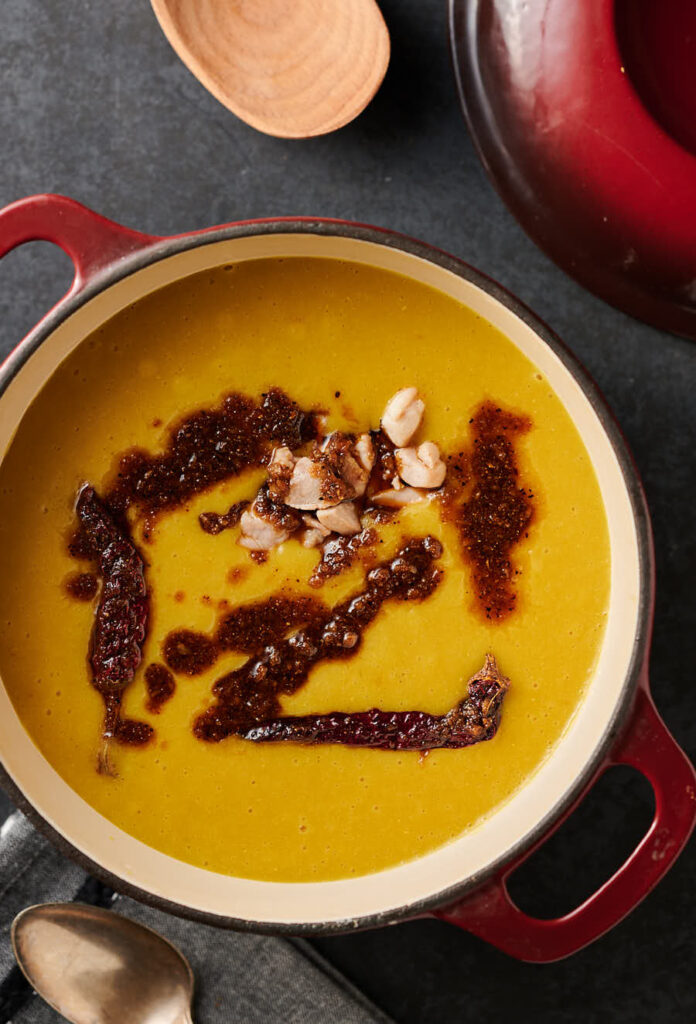
The great thing about mulligatawny soup is it reheats really well. It’s a lentil dish so there’s nothing to get overcooked really.
You can just warm it up gently before you serve. If you are adding cream do that after you warm it up. It’s bullet proof. Perfect for dinner parties.
Makes a great lunch too. Something to bring to work. It’s even microwave friendly.
And it’s a snap to make. Cook some lentils and potatoes in stock. Puree it. A blender works best.
Fry up some spices with some garlic ginger paste. Cook the chicken. It’s cut into small pieces so that takes no time. Toss it all together. Add a bit of fresh lemon juice to brighten things up and serve. This is really dead easy.
This recipe is loosely based on a recipe in Madhur Jaffrey’s Illustrated Indian Cookery. I don’t usually do tribute recipes. Try to stick to my own stuff.
But we are talking about Madhur here. And I owe her. Lots of people owe her.
She started me off. My very first Indian cookbook. Should have paid more attention to what my parents were cooking.
Whether it’s Indian or English, mulligatawny soup is a great addition to any menu. Try it.
If you like lentils. And you like Indian flavours. Then you are just going to love this. I know I do. Seriously good.
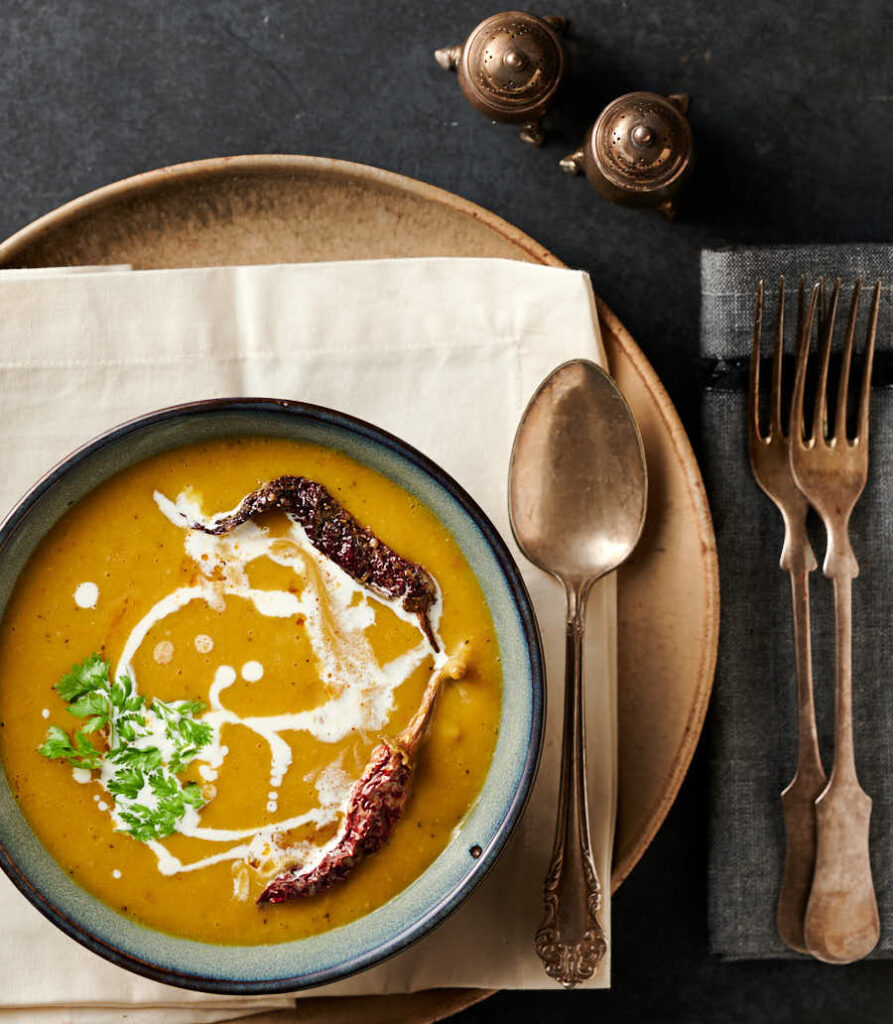
mulligatawny soup
Ingredients
- 2 cups red split lentils – also known as masoor dahl
- 8 cups low or no-sodium chicken stock
- 1 tsp turmeric
- 8 oz potatoes cubed in 1/2 inch dice (see note).
- 4 Tbsp garlic/ginger paste – recipe link below
- 3 kashmiri chilies – optional
- 4 Tbsp vegetable oil
- Juice of a lemon
- 1 1/4 lb boneless skinless chicken thighs or boneless skinless chicken breasts if you prefer. I like thighs for this.
Spice Mix
- 2 tsp ground cumin
- 2 tsp ground coriander
- 1 tsp mild kashmiri chili powder or 1/4 tsp cayenne
- 1 tsp course ground black pepper or 1/4 tsp white pepper
- 2 tsp kosher salt plus more to taste
Instructions
Prepare the lentils
- Combine lentils, chicken stock and turmeric. Bring to a simmer. Then cover. That’s important. Lentils boil over. Big mess. Cook, covered for 30 minutes.
- Add potatoes. Simmer another 30 minutes.
- Let the soup cool a bit. Then puree the lentil mixture in batches. Your blender works best. Return soup to pot. Be careful here. Make sure you are set up to release steam. You don’t want to get burned. That would suck.
Make the mulligatawny soup
- Trim visible fat from the chicken. Cut into 1/3 inch chunks. Little bites really.
- Add the oil to a clean frying pan. Heat over medium heat.
- Pay attention at this point. Add the garlic ginger paste and fry, stirring constantly until the splattering stops.
- Reduce the heat to medium low. Add the spice mix and continue to stir constantly for another 30 seconds. Regulate your heat. Don’t let the spices burn! You are blooming spices here. This is where the magic happens.
- Toss in the whole kashmiri chilies. Cook them around 15 seconds. Flip them. Cook another 15 seconds or so.
- Turn the heat back up to medium. Add the chicken and continue to stir. Cook chicken until almost done – about 3 minutes. Stir the whole time. It may take a little longer. I don’t know your stove or your pan so it’s a little hard to be precise.
- Transfer the chicken mixture to soup pot and stir it in. Simmer 3 minutes. Add lemon juice. Let it simmer another 2 minutes.
- It will probably be too thick at this point. Thin it out with some stock. You want a texture somewhere around a full-bodied cream of soup.
- Adjust seasoning (salt) to taste. To my taste another teaspoon or a bit more works. But everyone is different. Creep up on it. You can always add more salt. That’s easy. Taking it away is pretty much impossible.
- Serve with a spoonful of raita or drizzle with a bit of heavy cream.
Notes
Nutrition