Indian restaurant bhuna curry is a recipe that shows up all on menus all over the place. It’s typically a thick, well spiced, medium hot dish. It’s really tasty. This bhuna is just that.
There’s no real guideline other than that. That’s why it’s so different from restaurant to restaurant. Kind of like balti in the UK.
Bhuna is the mystery curry
I think bhuna varies so much in restaurants because technically it’s not a dish. It’s a way of cooking. By definition spices are gently fried and then meat is added.
The whole thing is left to stew in it’s own juices. At the end, you wind up really big flavours and not a lot of sauce. Super concentrated curry.
I’ve looked at quite a few definitions of bhuna and it seems to come down to a curry with onions, garlic, tomatoes, chilies and spices.
That’s what this Indian restaurant bhuna curry recipe is all about.
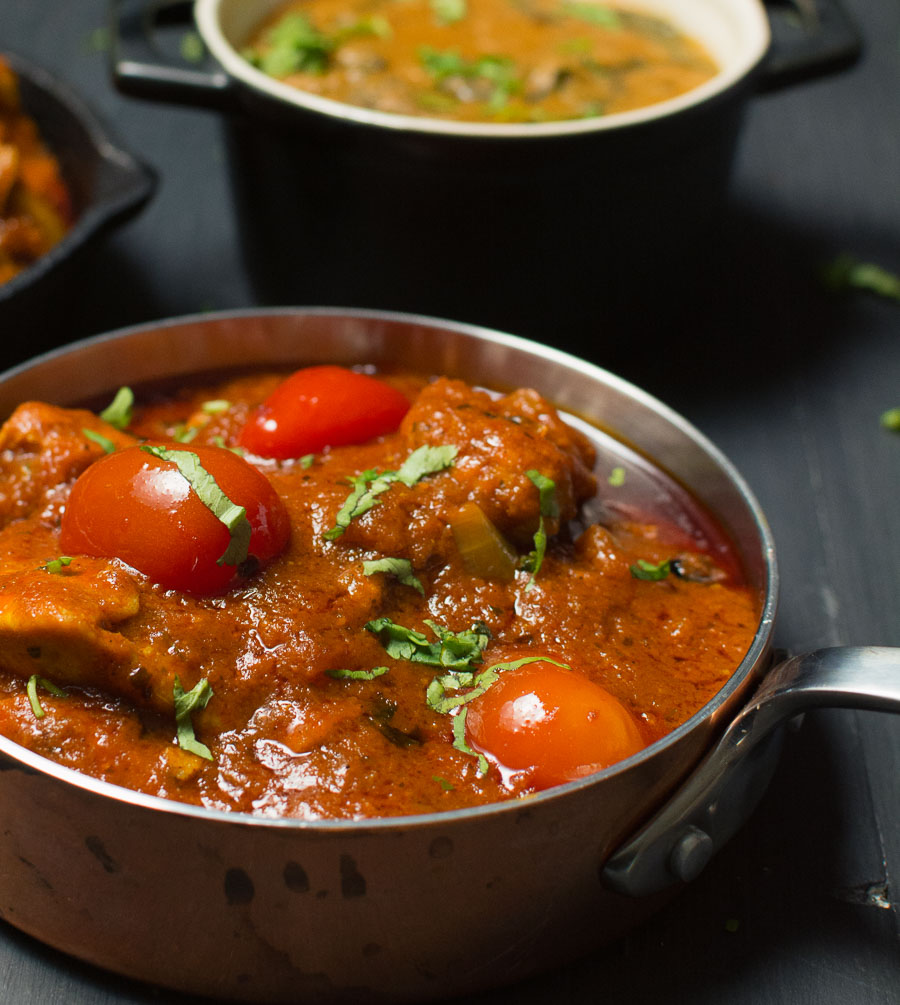
indian restaurant bhuna curry
Ingredients
The spice mix
- 2 tsp indian restaurant spice mix or curry powder - recipe link below
- 1 tsp kashmiri chili powder or 1/4 tsp cayenne mixed with 3/4 tsp paprika
- 1 tsp paprika
- 1 tsp kasoor methi
- 1/2 tsp kosher salt
The curry ingredients
- 3 Tbsp oil
- 1/2 onion coarsely chopped
- 2 green chilies seeded and diced (or thinly sliced if you want a bit of extra heat from the ribs)
- 1 Tbsp cilantro stems minced
- 1 Tbsp garlic/ginger paste - recipe link below
- 2 Tbsp tomato paste with enough water to dilute to the consistency of pasatta
- 15 oz curry base - recipe link below
- 10-12 oz pre-cooked chicken or lamb
- 1 Tbsp tamarind sauce - I use Maggi brand
- 3-4 cherry tomatoes - cut in half
Instructions
- Make the spice mix.
- Dilute the tomato paste with enough water to get to the consistency of passata.
- Heat your frying pan (don’t use non-stick) briefly over medium heat. Add the oil.
- When the oil starts to shimmer add the onions and stir constantly until the edges of the onions start to brown. This takes about a minute.
- Next comes the garlic ginger paste. Add it into the pan and cook it, stirring constantly, until it stops sputtering.
- Add the green chilies and cilantro stems. Cook about 15-20 seconds.
- Turn down the heat and add the spice mix. This is the critical step. Stir it constantly for 30 seconds. If it starts to darken lift the pan off the heat. You want the spice mix to cook in the oil but not burn.
- Turn the heat up to medium high. Add the diluted tomato paste and stir until bubbles form (the oil will likely separate). This takes around 30 seconds to one minute depending on the heat.
- Add 3 oz of curry base. Stir until bubbles form (little craters really), around 30 seconds. Watch the edges of the pan. The curry can stick here.
- Now add 6 oz of curry base and stir briefly. Let it cook until the bubbles form again. This takes 1-2 minutes.
- Add the rest of the curry base and let cook until the bubbles form. Add the tamarind sauce. Turn the heat down to low and add the pre-cooked lamb, beef, chicken, tofu or vegetables.
- Let the curry simmer for about 5 minutes. If it gets too thick add a bit more curry base. Don’t add water. Add the cherry tomatoes for the final 2-3 minutes of cooking.
- Garnish with a bit of chopped fresh cilantro and serve.
Notes
Nutrition
Lemon rosemary chicken with roasted potatoes. This is Italian comfort food. It’s easy enough to make during the week but good enough to share with friends. With foodie friends.
It’s adapted from the lemon rosemary chicken in Michael Chiarello’s Tra Vigne Cookbook. I’ve cut back on the lemon and added a sprig of rosemary when roasting the chicken. I’ve also added a swirl of butter at the end to enrich the sauce. If you have some concentrated chicken stock it adds a nice touch too. Just add in a few tablespoons worth to put it right over the top.
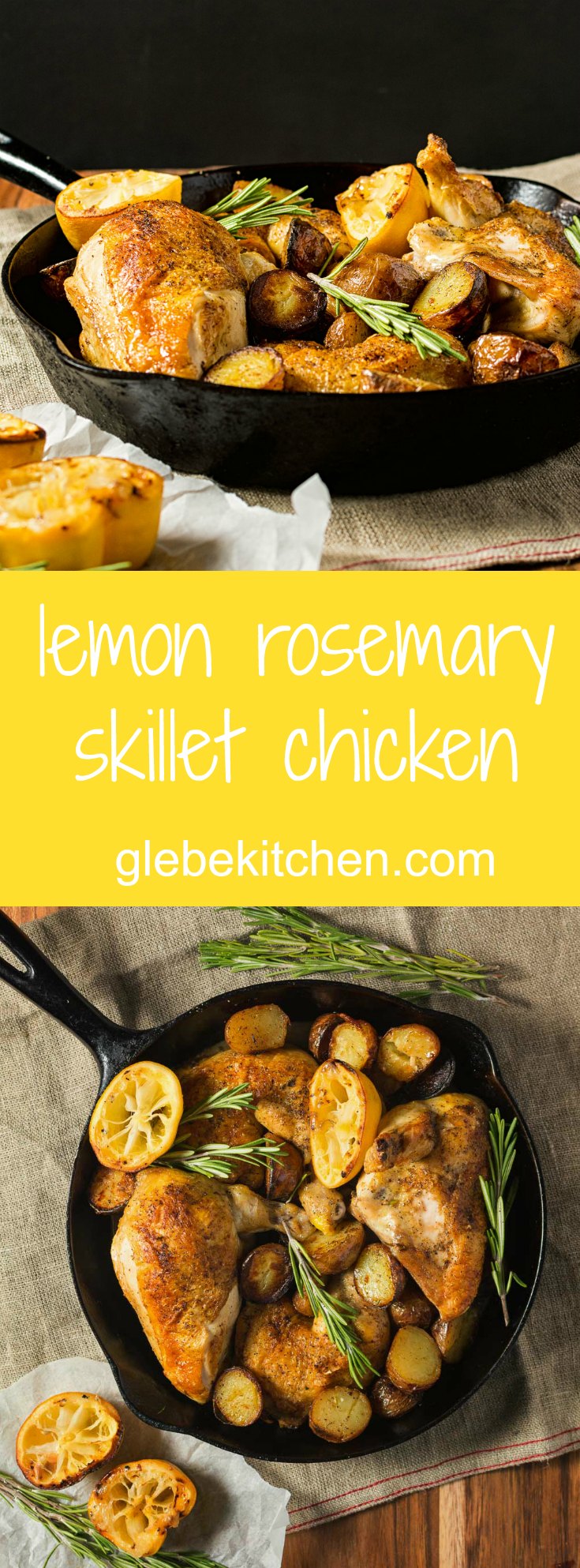
Broiling the lemons mellows their bite. It’s not essential – but nice to have. If you skip this step, cut back the lemon. Maybe half a lemon. Maybe a bit more. Depends how lemony you like it. Cut the ends off the lemon if you do broil it. This gives it a “stand” on which to balance. Makes broiling lemons way easier.