Indian curry gravy, hotel style. This is something new. But something old. Probably really old. And the start of something new. And wonderful. For me. And hopefully for you.
If you like big, bold curries. If you want curries with a lush sauce that makes your mouth dance. Then this might just be the thing you didn’t know you were looking for.
I didn’t know I was looking for it. Until I found out about it. Then I knew I had to have it. And I can’t believe how good it is.
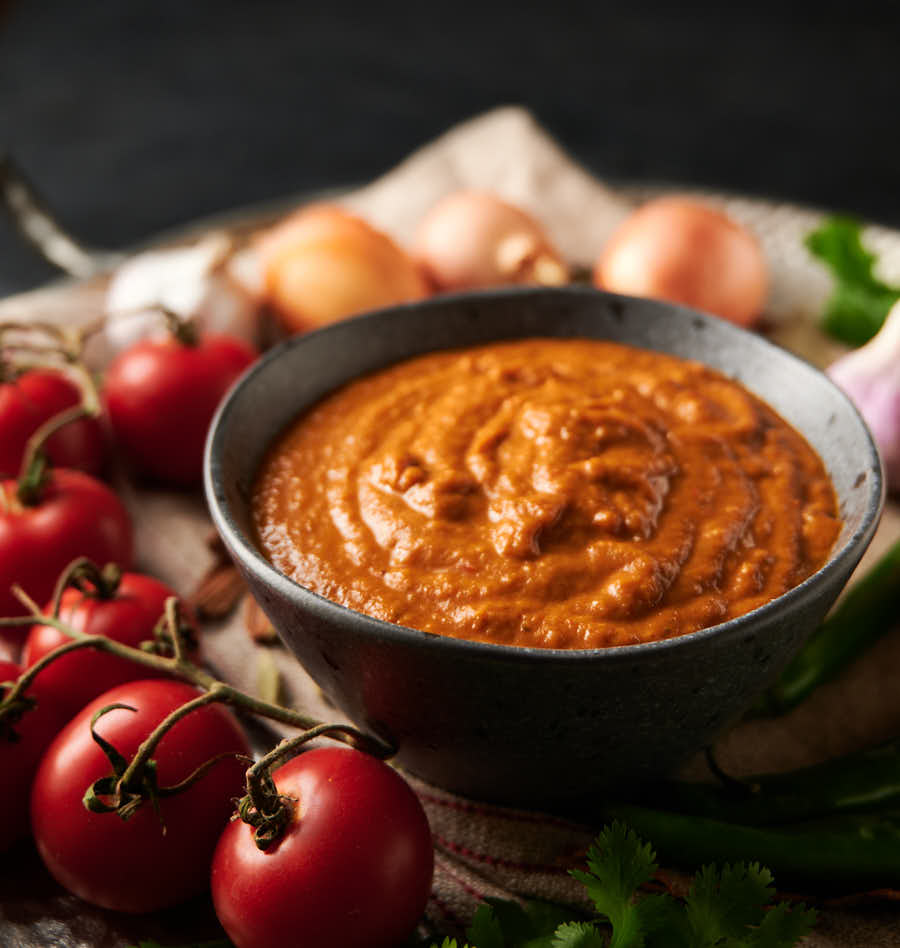
Not your everyday restaurant style curry gravy
This is not how they make curries in restaurants outside India. This is how they do it in India. And it’s incredible.
Want to make curries like you get at your local takeaway? Like they do at every day Indian restaurants around the world? Then there are many, many recipes on glebekitchen. I call those restaurant style.
This is something different. My guess is this is how they do it at posh restaurants. The best of the best.
I’m just getting started with this. And I’m truly excited. Inspired even. On a mission. This needs to be a thing. My thing. Your thing.
What’s old is new
I have a theory. It’s just a theory. So if you’re going to shoot me down be nice. Or don’t. I can take it. But do try to be constructive at least.
I think this is how it’s been done in India for a million years. Well, maybe not a million. But a very, very long time. It’s closer to traditional technique. But adapted for restaurant style cooking.
Indian restaurant style cooking has it’s roots in the UK. At least the style I write about. Indians came to the UK working on ships back in the day.
Apparently they weren’t fans of life on the open sea. Because once they got to the UK they decided to stay rather than face the voyage home.
They needed work. And a lot of them wound up working in restaurants. Those sailors turned cooks became the architects of what is now mainstream Indian restaurant cooking in the UK.
Mainstream has its roots in hotel style
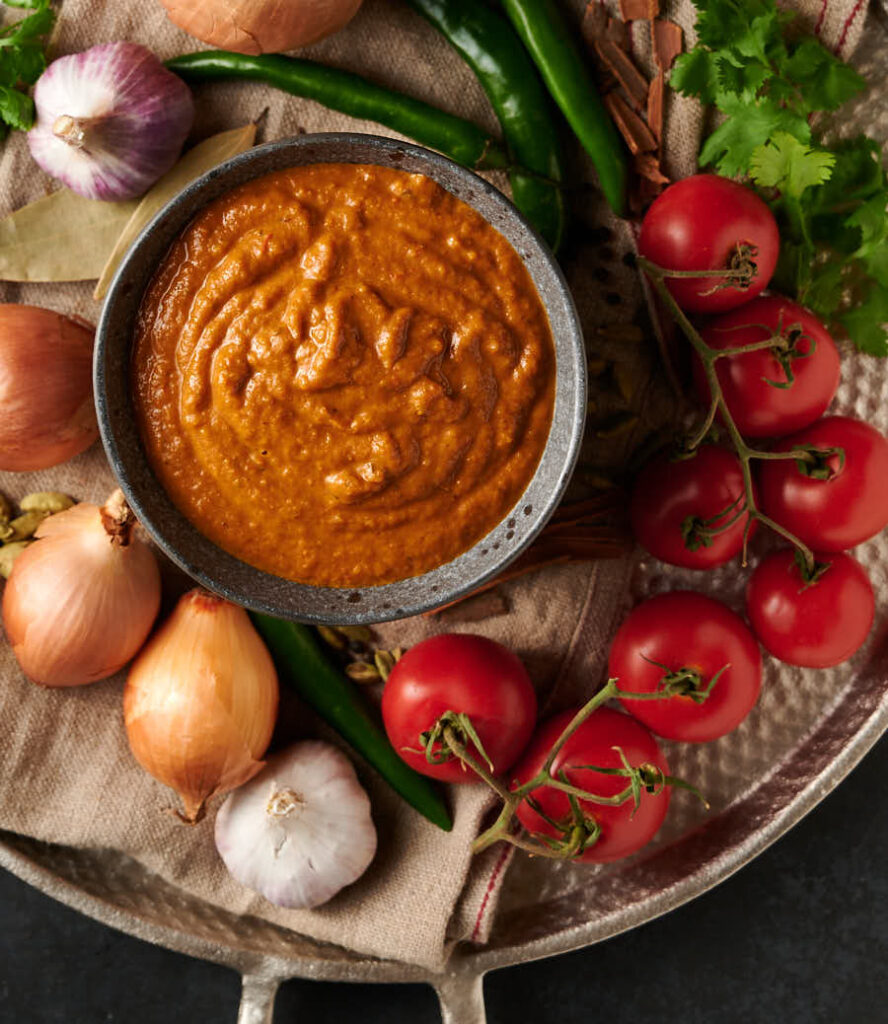
The sailors started with what they knew. That’s only natural. And I’m guessing what they knew was curry gravy – hotel style.
As with all things, it evolved. The thick curry gravy became a thinner version. What’s now called base gravy. They dropped the deep browning of the onions. Because it was easier. Simpler. Less work. And it worked well. Everybody loved it.
It became mainstream. Global. People worked in Indian restaurants in the UK. They migrated around the world. And they took the technique with them. Everywhere.
Except for the mothership. They stuck to their roots. Kept the faith. And somehow nobody is blogging about it. Nothing on YouTube. In English anyway.
Until now. I’m picking up the torch. Because I believe. And like any zealot, I’m hoping I can convince you.
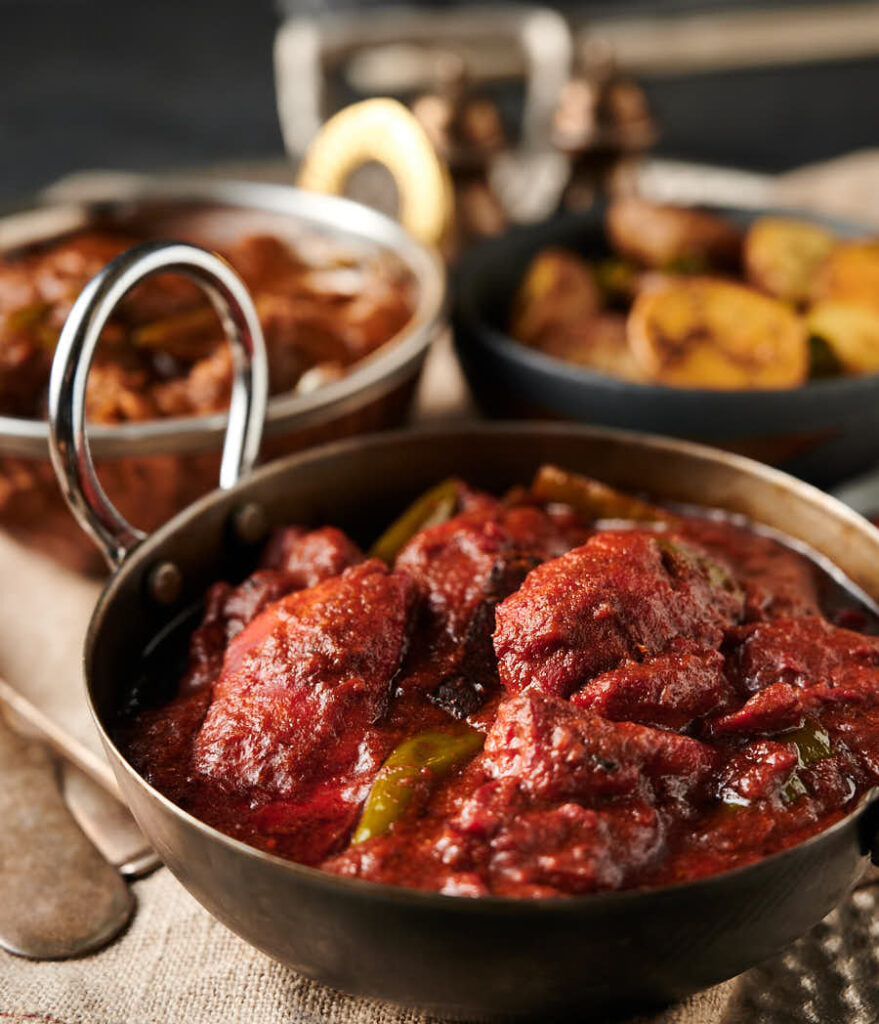
This is curry gravy for bold curries
The nice thing about UK style Indian restaurant cooking is there’s only one curry base. It’s bland by design. One size fits all.
I’m a huge proponent of that. I like to let my curries speak for themselves. One base. Many curries. Easy. Simple. Just like those cooks in the UK figured out.
And I love what you can do with those techniques. Don’t get me wrong. It’s amazing. Seriously amazing. This intro to Indian restaurant curries is a great place to start.
But if you want to take it to the next level? Want to follow me down the rabbit hole? This is how. Curry gravy built for specific curries. Genius.
Not quite bespoke. But not off the rack either. The right tool for the job. How can that not make things better?
This is the bold version. It’s for madras . Garlic chilli chicken. Jalfrezi . Ceylon . For the curries where flavours are applied with a sledge hammer.
It is not for chicken tikka masala. Not by itself anyway. Or korma. Or butter chicken.
It is not delicate. That’s a different curry gravy. I’ll get to that. I’m just starting with the version that goes with my favourite curries.
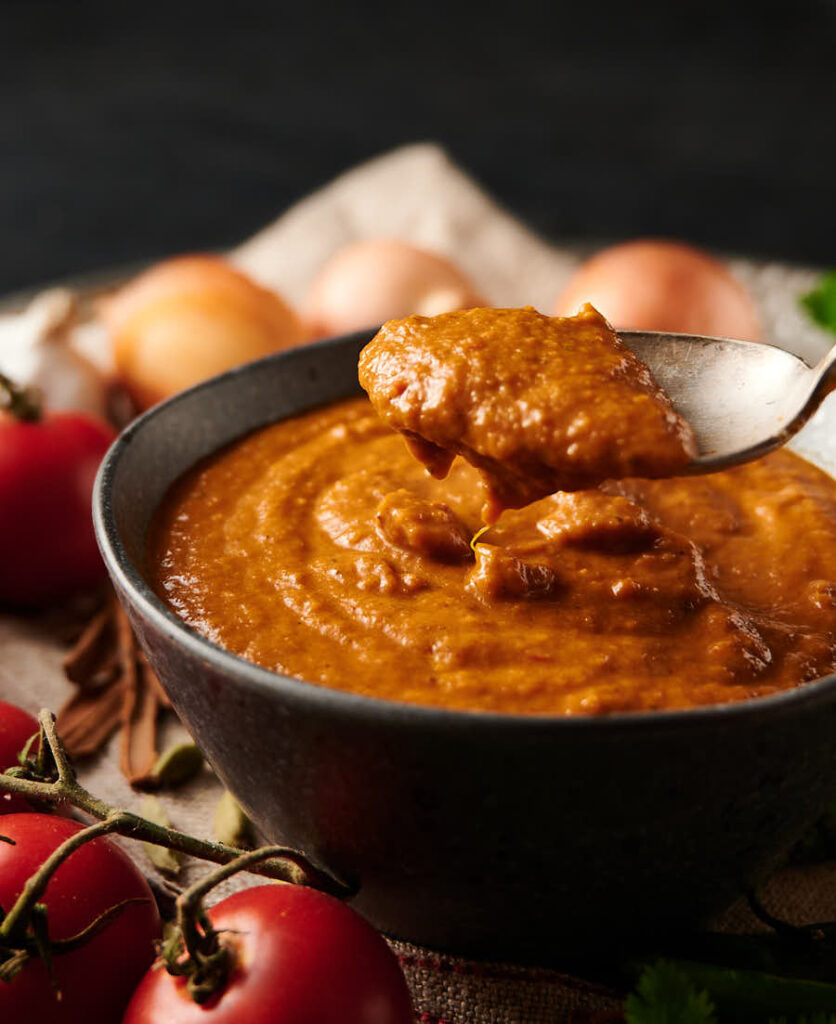
This is a game changer
This is a whole different approach. And right now I’m think I’m probably the only one talking about it. So you are probably thinking this is crazy.
And it is crazy. Crazy good. If you want to push it. If you want to take it to the next level. Then think about trying this. It’s a whole new way of making restaurant style curries.
Except that it’s about as old as the hills. Doesn’t matter though. What matters is this curry gravy makes amazing curries. I’m not saying this way is better. But I am thinking it…
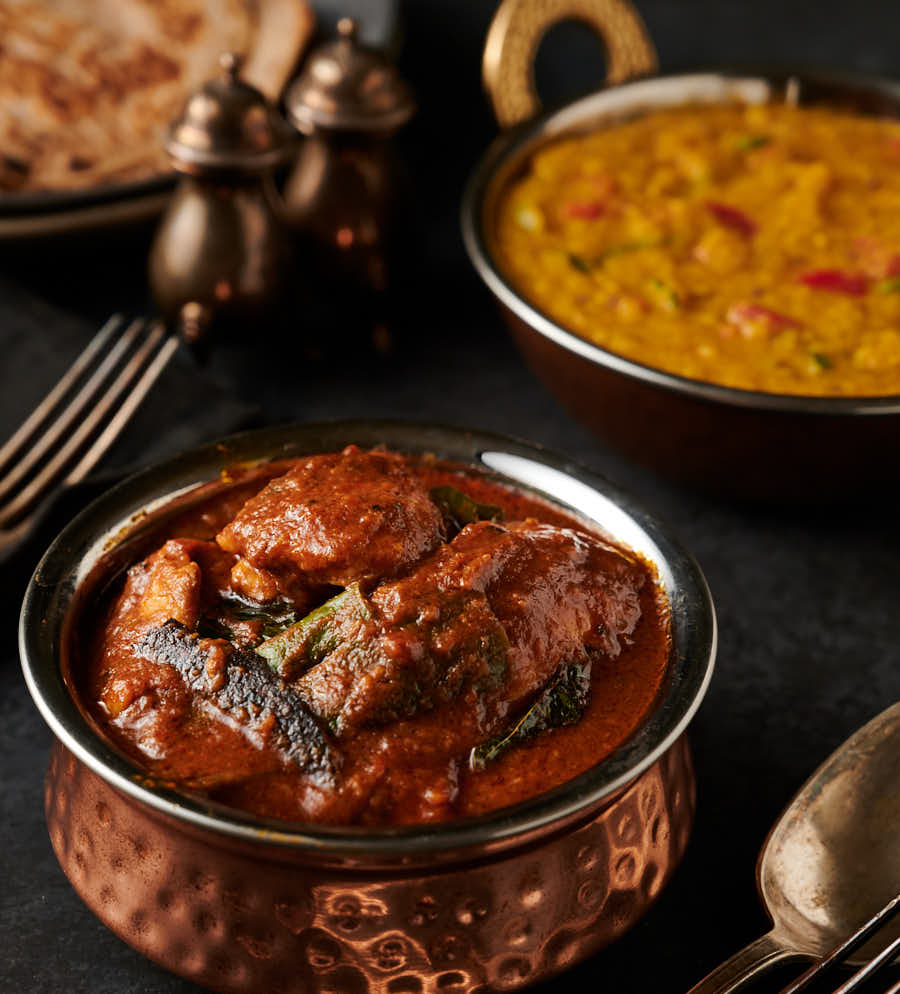
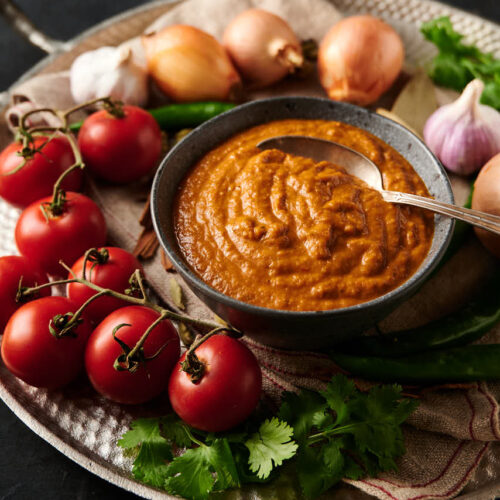
Indian curry gravy – hotel style
Ingredients
- 1 cup neutral oil (e.g. canola)
- 3 lbs onions chopped – use a food processor
- 2 lbs fresh tomatoes chopped (or substitute plain canned tomatoes)
- 5 green cardamom pods
- 10 black peppercorns
- 3 cloves
- 1 tej patta Indian bay leaf (optional)
- 2 inch cinnamon stick or cassia bark
- 1/4 cup garlic ginger paste
- 2 tsp turmeric
- 1 tbsp kashmiri chili powder
- 1 tbsp cumin powder
- 2 tbsp coriander powder
- 1 tbsp kosher salt
- 4 green chilies seeded
- handful of cilantro
- 1 cup water
Instructions
- You need a lot of chopped onions for this. Do yourself a favour and use a food processor if you have one. Peel and half the onions. Cut each half into six pieces. Fill your food processor about 2/3 full and pulse around 5-8 times. You should have diced onions. Repeat until you have chopped all the onions.
- As long as your food processor is out use it to chop the tomatoes (if using fresh). Easy.
- Heat the oil in a pot large enough to hold all the ingredients.
- Add the oil and heat over medium heat.
- Once the oil starts to shimmer add the cardamom, black peppercorns, cloves, cinnamon and optional Indian bay leaf.
- Let the spices bubble for about 20 seconds and then add the onions.
- This takes some time and attention. Cook the onions over medium heat. Stir every minute of so. You want them brown. Nice and brown. Not tan. Brown. Think French onion soup. This is going to take you around 30-40 minutes and maybe more. But you are doing it once. For 8 restaurant portions of curry. So it’s under 5 minutes a curry. Totally worth it.
- While the onions cook do the rest of your prep. Make sure the tomatoes are chopped. Cut your green chilies in half and seed them (use a spoon).
- Add the turmeric, cumin, coriander and kashmiri chili powder in a bowl. Add about a 1/2 cup of water and stir to make a slurry. You may need to add a bit more water. Doesn’t matter.
- Once the onions are this nice creamy brown mess add the garlic ginger paste. Stir to combine and continue to cook for about two minutes.
- Add the powdered spice slurry and the salt. Cook another 3 minutes.
- Add the chopped tomatoes, green chilies and cilantro. Simmer until the tomatoes are broken down. This takes about 10 minutes. The oil may have separated at this point. If it did, do NOT remove it. It’s pure flavour.
- Add a cup of water. Let it cool a bit. Puree the hotel style curry gravy, whole spices and all. Yes. Whole spices get pureed. Use a blender. If it’s too thick to puree add a bit more water. Make sure you vent your blender. Steam needs to escape or you’ll be off to the hospital burn unit. Not good. Safety first.
- You should now have about 8 cups of magic curry gravy to use in all sorts of curries.
Notes
Nutrition
Indian curry gravy - hotel style
Ingredients
- 1 cup neutral oil (e.g. canola)
- 3 lbs onions chopped - use a food processor
- 2 lbs fresh tomatoes chopped (or substitute plain canned tomatoes)
- 5 green cardamom pods
- 10 black peppercorns
- 3 cloves
- 1 tej patta Indian bay leaf (optional)
- 2 inch cinnamon stick or cassia bark
- 1/4 cup garlic ginger paste
- 2 tsp turmeric
- 1 tbsp kashmiri chili powder
- 1 tbsp cumin powder
- 2 tbsp coriander powder
- 1 tbsp kosher salt
- 4 green chilies seeded
- handful of cilantro
- 1 cup water
Instructions
- You need a lot of chopped onions for this. Do yourself a favour and use a food processor if you have one. Peel and half the onions. Cut each half into six pieces. Fill your food processor about 2/3 full and pulse around 5-8 times. You should have diced onions. Repeat until you have chopped all the onions.
- As long as your food processor is out use it to chop the tomatoes (if using fresh). Easy.
- Heat the oil in a pot large enough to hold all the ingredients.
- Add the oil and heat over medium heat.
- Once the oil starts to shimmer add the cardamom, black peppercorns, cloves, cinnamon and optional Indian bay leaf.
- Let the spices bubble for about 20 seconds and then add the onions.
- This takes some time and attention. Cook the onions over medium heat. Stir every minute of so. You want them brown. Nice and brown. Not tan. Brown. Think French onion soup. This is going to take you around 30-40 minutes and maybe more. But you are doing it once. For 8 restaurant portions of curry. So it’s under 5 minutes a curry. Totally worth it.
- While the onions cook do the rest of your prep. Make sure the tomatoes are chopped. Cut your green chilies in half and seed them (use a spoon).
- Add the turmeric, cumin, coriander and kashmiri chili powder in a bowl. Add about a 1/2 cup of water and stir to make a slurry. You may need to add a bit more water. Doesn’t matter.
- Once the onions are this nice creamy brown mess add the garlic ginger paste. Stir to combine and continue to cook for about two minutes.
- Add the powdered spice slurry and the salt. Cook another 3 minutes.
- Add the chopped tomatoes, green chilies and cilantro. Simmer until the tomatoes are broken down. This takes about 10 minutes. The oil may have separated at this point. If it did, do NOT remove it. It’s pure flavour.
- Add a cup of water. Let it cool a bit. Puree the hotel style curry gravy, whole spices and all. Yes. Whole spices get pureed. Use a blender. If it’s too thick to puree add a bit more water. Make sure you vent your blender. Steam needs to escape or you’ll be off to the hospital burn unit. Not good. Safety first.
- You should now have about 8 cups of magic curry gravy to use in all sorts of curries.
Notes
Nutrition
Welcome to crazy tasty land. Indian hotel style Ceylon chicken curry. For when you feel the need for something that really slams your tastebuds with flavour.
Think Sri Lankan spices. Green chilies. Curry leaves. Coconut. A whole lot of South Indian goodness going on here.
This is restaurant style cooking. Not like your neighbourhood restaurant though. This is posh. High-end. What happens when Indian chefs go looking for a Michelin star.
OK – maybe not a Michelin star. That’s over the top. But I’m betting this is what goes on in serious Indian restaurant kitchens. The ones people line up for. And what goes on in the fanciest restaurants in India.
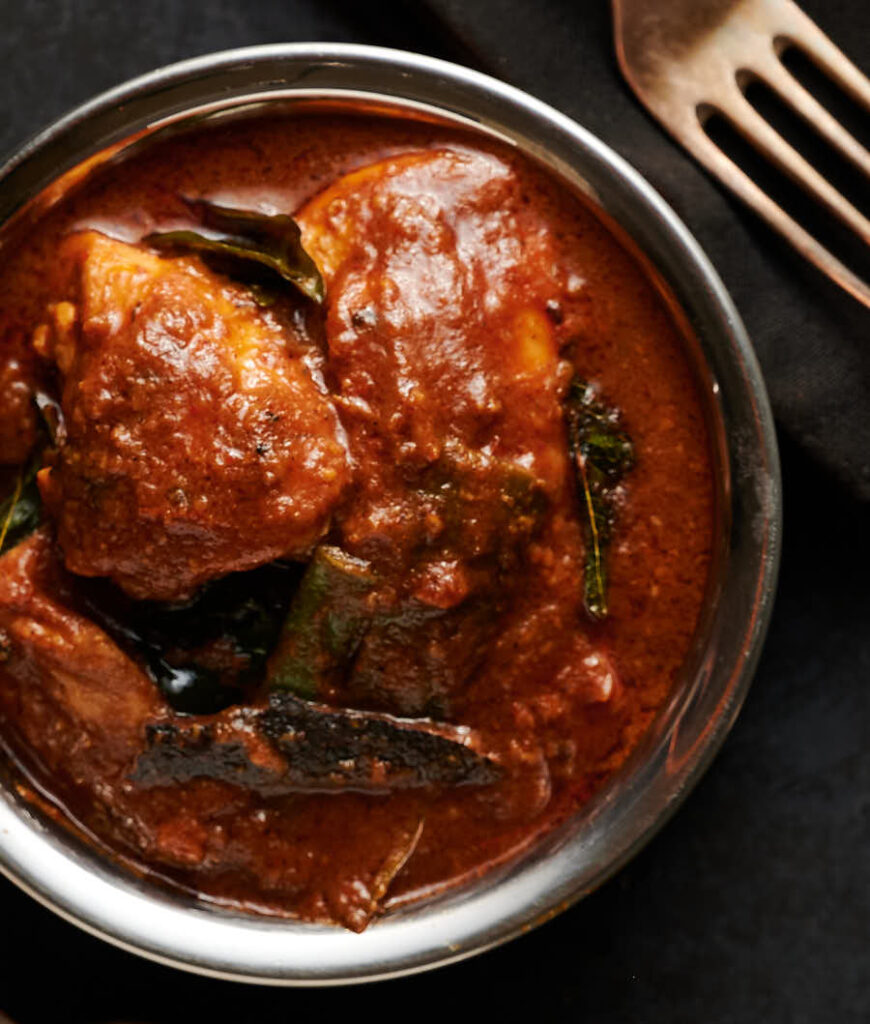
Indian hotel might not be a style you know
This is a little different. Don’t jump into this recipe assuming you can just use your regular Indian restaurant curry base.
This is not one of those recipes. And for the record. I still love my regular curry base. But I’m really impressed with the results I’m getting with hotel style. With this sledgehammer curry gravy.
This is a new approach. A whole different take on how to cook Indian restaurant style.
Don’t write me off. Don’t run back to what you know. What you believe. Indian hotel curry gravy is a bit of a game changer.
It’s not a lot of boiled onions. It’s a lot of deeply browned onions. And that gets you somewhere completely different. A whole new depth of flavour.
This style is more work up front. But it’s easier to make at dinner time. And it’s way less messy. Some of the techniques are the same. It’s about identical until you get to the curry gravy.
Then it changes completely. You don’t need to add it in batches. It all goes in at once. And you don’t need to fry it hard. It’s already got the Maillard reaction magic built in.
I’d say it’s actually easier. Safer. You are going to get it right the first time. And then every time.
Bottom line. Do this and you will make a delicious Ceylon chicken curry. Seriously tasty.
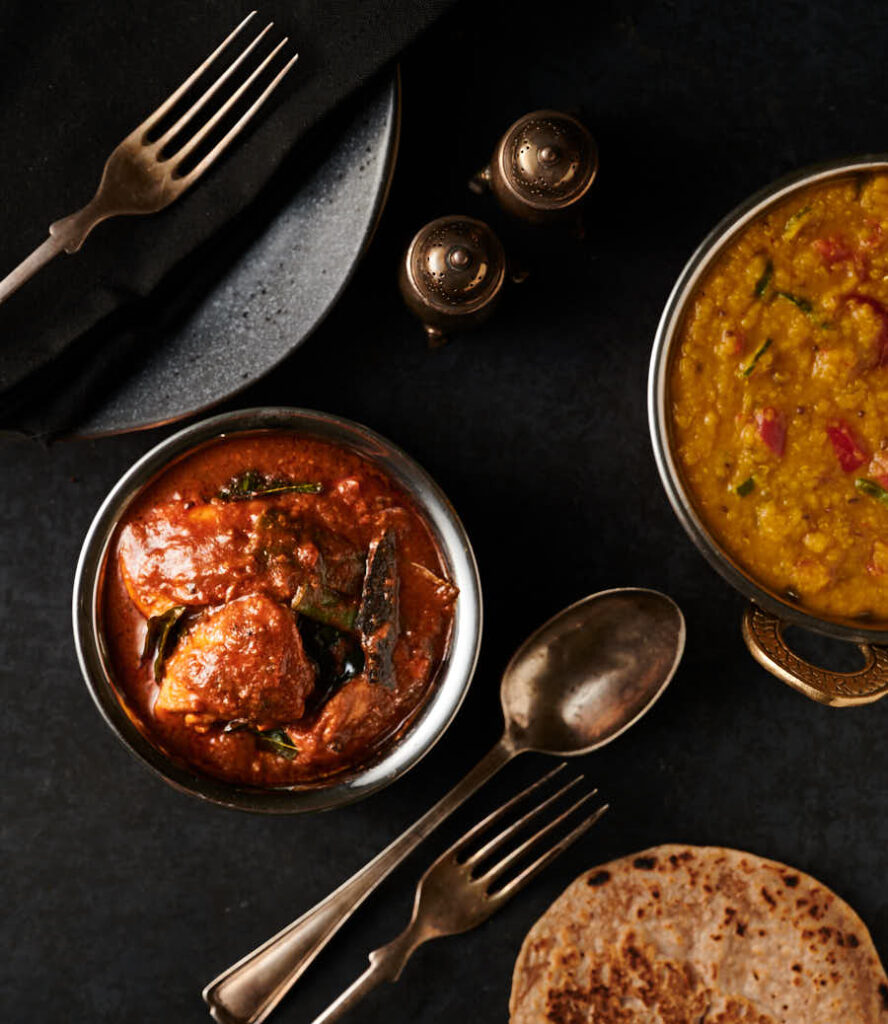
No need to pre-cook chicken when cooking Indian hotel style
This is my favourite thing about cooking Ceylon chicken curry hotel style. Any chicken curry really done hotel style. You don’t need to pre-cook the chicken. That’s incredible.
I’m not saying that because pre-cooking chicken is extra work. Look around. Glebekitchen is not about cutting corners. It’s about doing what it takes. Always.
I’m talking about not dumping great chicken flavour down the drain. Because that’s what happens when you pre-cook chicken. All those juices are lost. I have always had a big problem with that.
Not any more. The chicken poaches in the curry. The way it was meant to be. All those delicious juices in the sauce.
And in my mouth. Where they belong. Balance in the universe has been restored. I can sleep at night again.
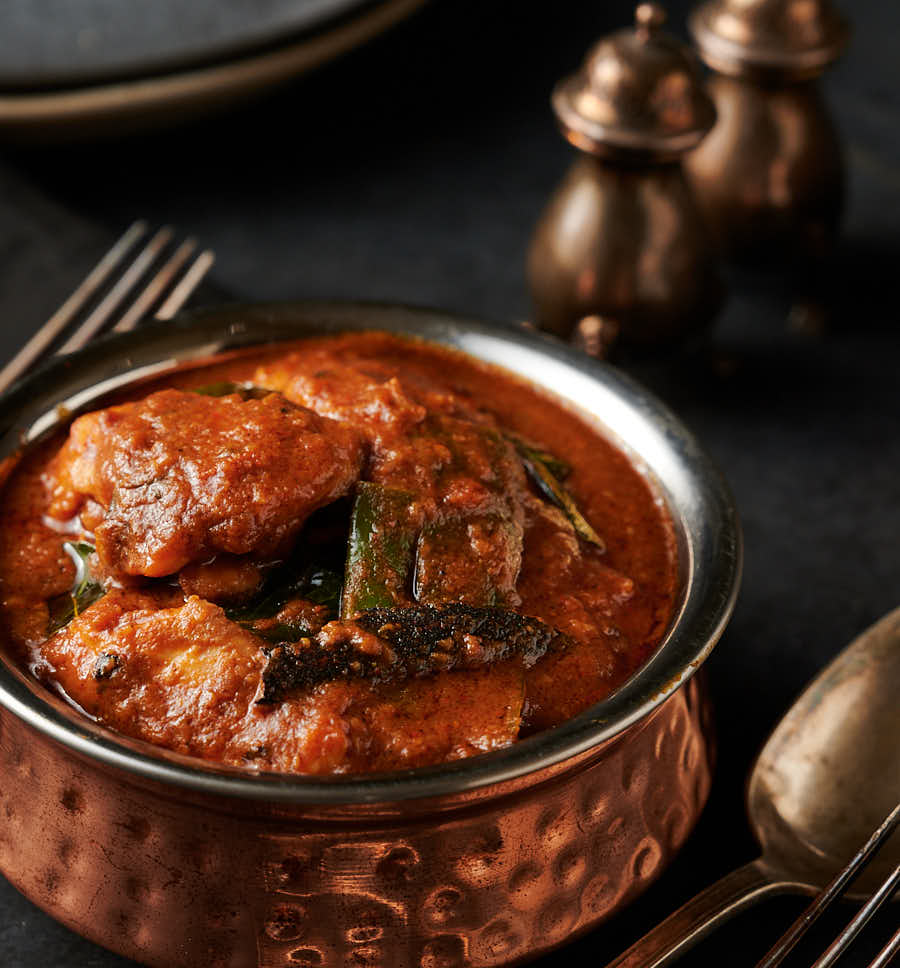
Ceylon chicken curry Indian hotel style
This is my inaugural hotel style recipe here at glebekitchen. The very first one. So I had to go for broke. I wanted wow. Serious wow.
So I’m going with Ceylon chicken curry. I’ve been meaning to make something like this for a long time. And I’m really glad I waited.
Because hotel style drives it completely over the top. It’s different. But if you like South Indian this one is for you.
One thing is certain. This is the first of many.
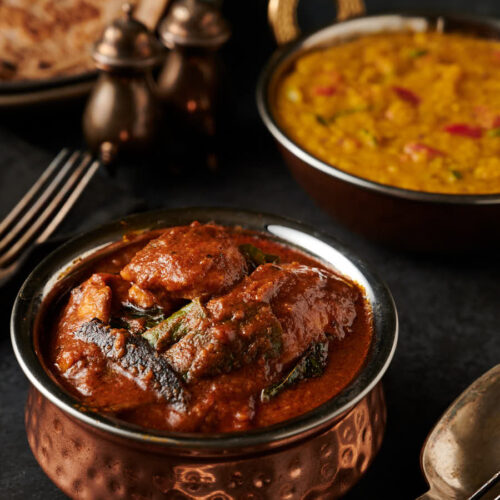
ceylon chicken curry
Ingredients
The spice mix
- 2 tsp Sri Lankan roasted curry powder – Madras curry powder isn’t the same but it will do in a pinch.
- 1 1/2 tsp kashmiri chili powder
- 1/2 tsp kasoor methi
- 1/2 tsp kosher salt – a bit less if you use regular table salt
Ceylon chicken curry
- 3 tbsp vegetable oil – any neutral oil works
- 1 2" piece cinnamon bark – also called cassia bark
- 3 green cardamom pods
- 10 curry leaves – no you don’t have to count them. Around 10 is fine.
- 1 tbsp garlic ginger paste
- 2 green chilies – jwala type finger hot green chilies cut in half lengthwise, seeded and into 1 inch pieces
- 1 cup Indian hotel curry gravy – recipe link below
- 3 boneless, skinless chicken thighs – cut into 3-4 pieces each
- 3 tbsp coconut milk
- 1 tsp tamarind paste Pure tamarind paste – not tamarind sauce
- 1 tsp brown sugar or jaggery (optional)
Instructions
Do your prep
- This goes fast. Be ready. Make your spice mix. Get your ingredients out and close to the stove.
Make the Ceylon chicken curry
- Heat the oil in a medium frying pan until it just starts to shimmer.
- Add the green cardamom, cassia bark and curry leaves. Cook about 30 seconds. You want to see little bubbles forming around your whole spices. It you don’t get them right from the start heat your oil a little more next time. What you don’t want to do is panic and crank the heat. You will just wind up burning things in the next step.
- Stir in the garlic ginger paste and green chilies. Cook until the garlic ginger paste stops sputtering.
- Turn your heat to medium low and add your spice mix. This is why you added a full 3 tablespoons of oil at the beginning. You want your spices to fry in the oil. Too little oil and the spices will stick or burn and you will be starting over.
- Gently fry the spices in the oil, stirring constantly, for about 30 seconds. This is where magic happens. Volatile compounds in the spices will be released into the oil. And that is big flavour.
- Turn the heat up to medium. Add the Indian hotel curry gravy. Bring to a simmer. Really stir it to get the oil to combine and cook for about a minute. You don’t need it to fry hard like a regular restaurant curry. That’s the beauty of hotel style. You already have that done. No need to make a mess of your stove.
- Add the chicken in an even layer and cover the pan. After about 5 minutes flip the chicken pieces. Tongs are good for this. Can’t beat a good set of restaurant tongs in the kitchen. Cook until the chicken is just done.
- The chicken should take around 8-12 minutes to cook through. It really depends on how large the chicken thigh pieces are. Best bet is to use an instant read thermometer and go for 170F.
- Once the chicken is done, stir in the coconut milk and tamarind paste. Simmer for one minute.
- The texture should be about right at this point. If it’s too thick add a bit of water or chicken stock Not a lot. Probably a couple tablespoons max.
- If it is too thin (chicken throws a fair bit of liquid as it cooks) just let the curry simmer uncovered for a minute or two.
- Taste and decide if you fall in the slightly sweet camp. If you do add the sugar and stir. It will open up the flavours a bit. I like it.
- Serve with rice or Indian flatbread. Or both!
