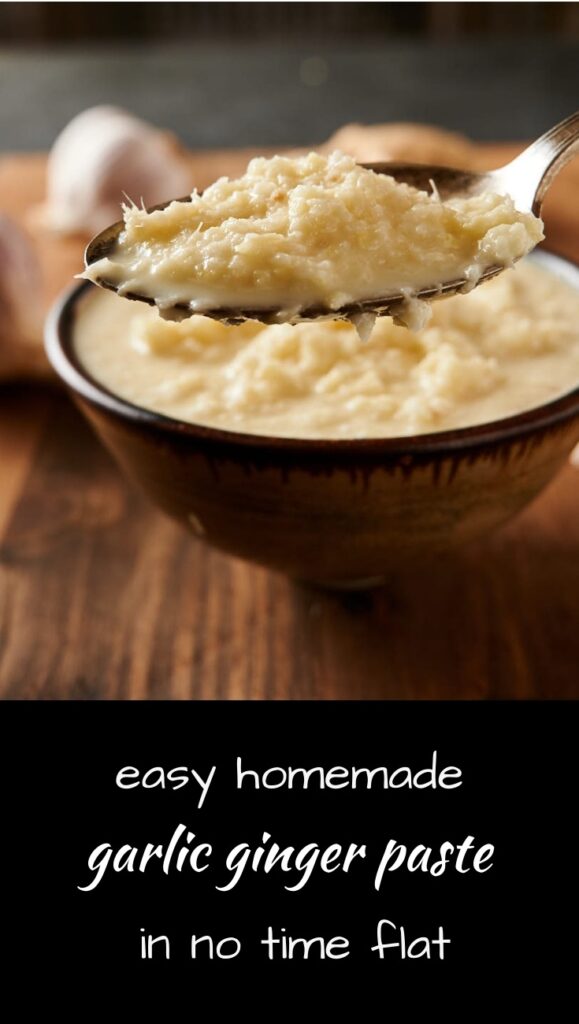
Garlic ginger paste is easy to make at home. And it is way tastier than anything that comes in a jar. Seriously. If you are looking to turn up your Indian cooking you need to start making your own.
Garlic ginger paste speeds up Indian cooking
Indian cooking is not trivial. Not easy. Real work. Those incredible flavours don’t come for free. There’s a big difference between opening up a jar of pre-fab chicken tikka masala curry mix and making it yourself.
If you want to start getting serious about cooking Indian making garlic ginger paste from scratch is a good first step. It keeps in the fridge so you can pull it out when you need it. And you’ll need it a lot if you are cooking lots of Indian.
Watch for it. There are lots of Indian recipes out there that have garlic and ginger as ingredients. Lots. Which means you need to crush a bunch of garlic and grate ginger. Every time.
That’s OK if you cook Indian once a month or less. But if you like Indian. If you cook it often. Then garlic ginger paste from scratch is something you need to make. I reach for it all the time.
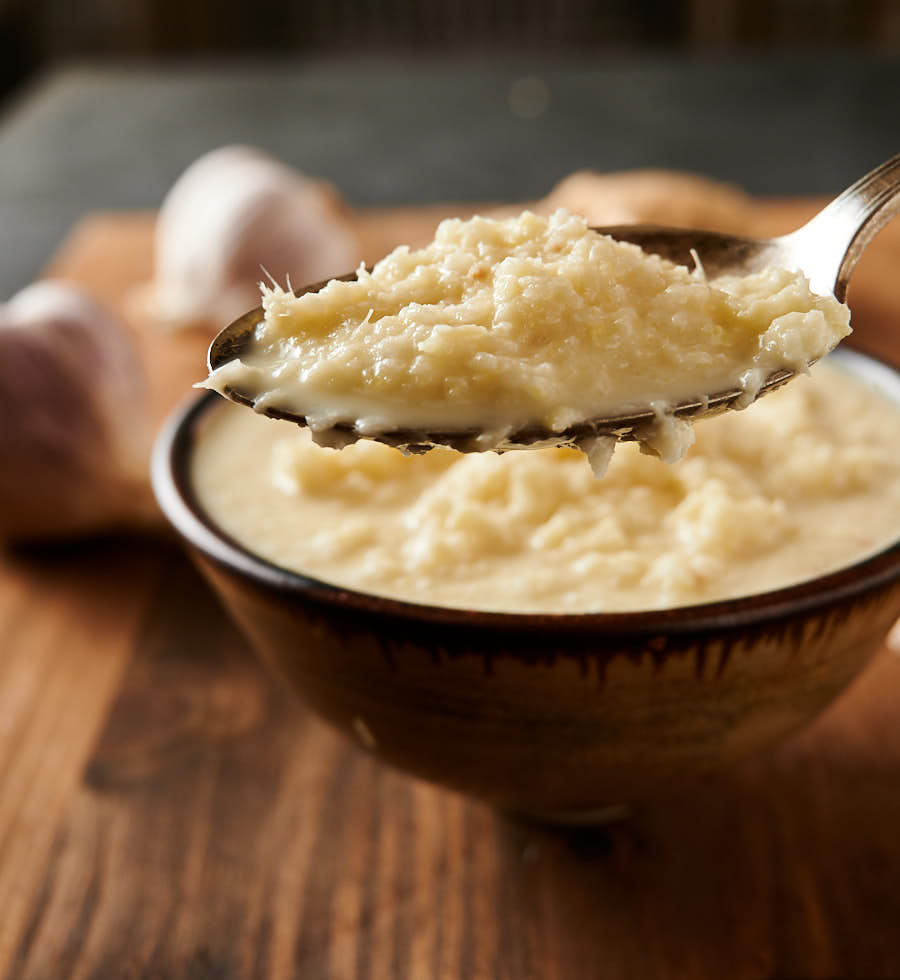
Fresh garlic ginger paste is just better
You can buy garlic ginger paste. I used to do just that. Then I tried making it fresh. I couldn’t believe the difference. Like wow. That’s crazy better!
You can eat store bought paste. A big spoonful straight from the jar. When you make it yourself though. There’s no way you can eat it straight when you make it fresh. It will blow your head off if you try.
I threw out my jar of store-bought and have never used pre-fab since. And I never will again. Seriously. It’s that big a difference.
It’s easy and it keeps for weeks or even a couple months in a container in the fridge. It takes minutes to make. It makes all the difference in the world. There is nothing going for pre-fab except it is convenient. Bad. But convenient.
Use a spoon to peel ginger
I love this trick. Every time I need to peel ginger I grab a spoon. Makes peeling it easy. A snap really. Just drag the spoon across the ginger skin. Move towards you. That’s it. It is easy to follow the nooks and crannies with a spoon.
Make garlic ginger paste from scratch. Do it. You will never look back. The first step towards better tasting curries. And better tasting is what it’s all about.
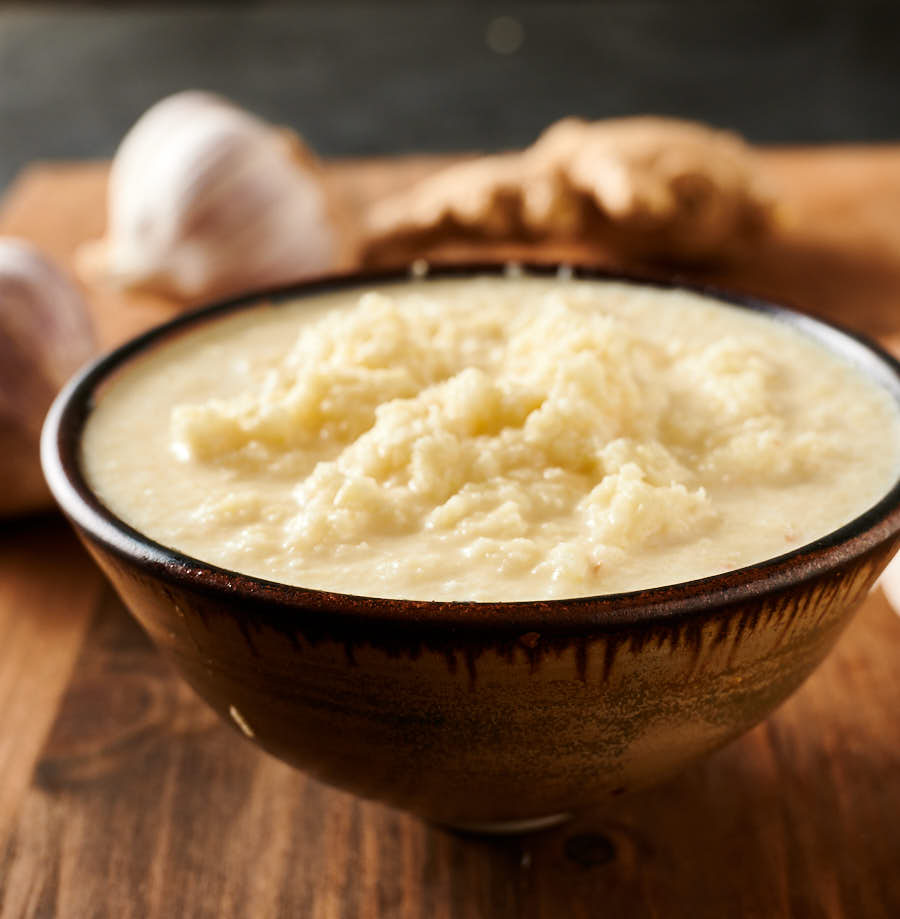
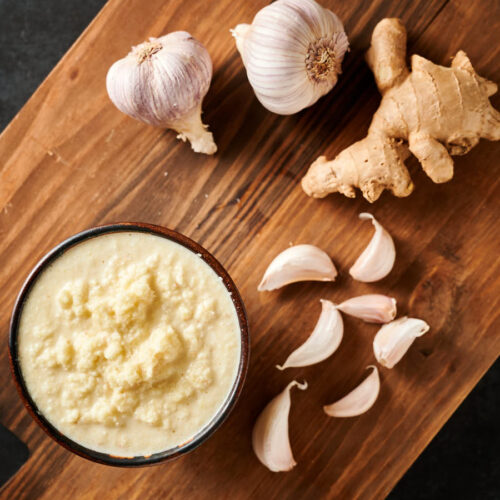
garlic ginger paste
Ingredients
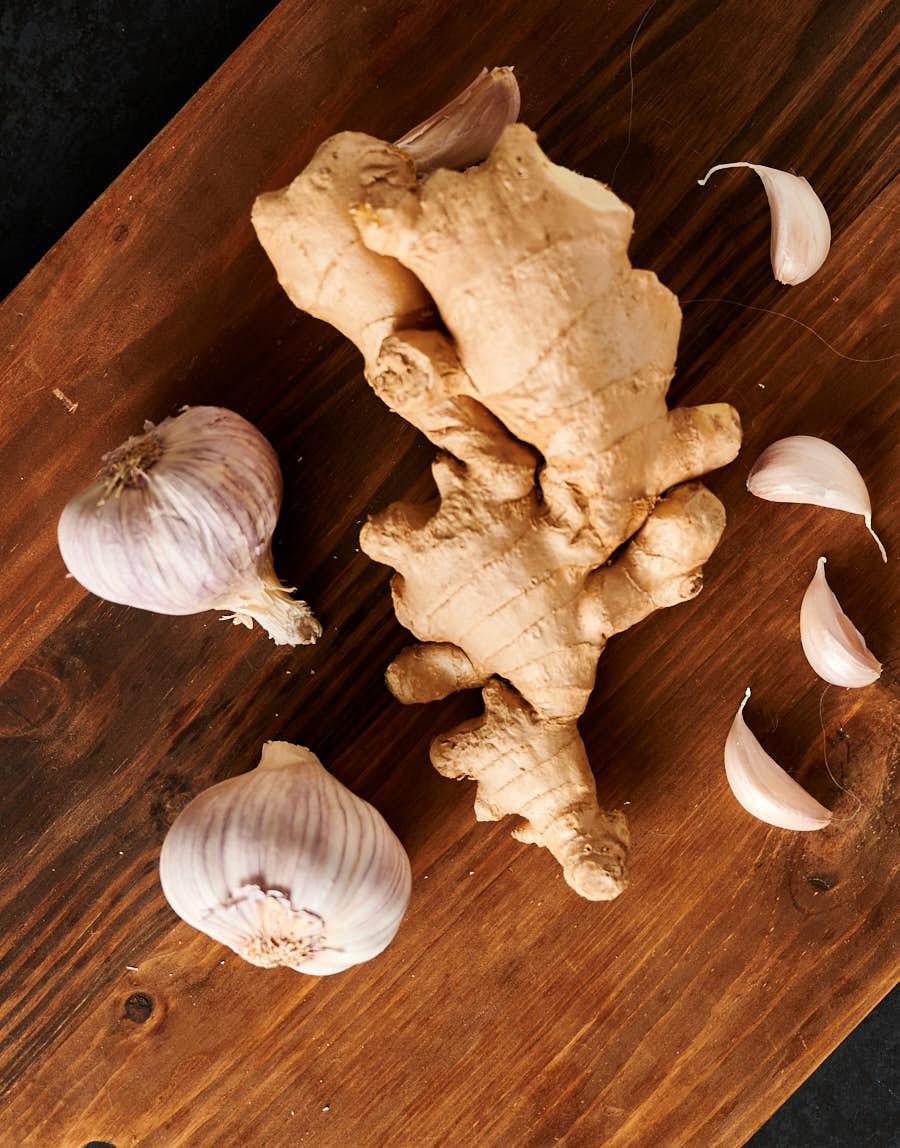
- 6 oz fresh garlic cloves peeled – by weight
- 6 oz fresh ginger peeled – by weight
- 1/3 cup of vegetable oil
- 1 tsp salt
- enough water to get it to all puree. – with my blender it takes about 1/3 of a cup.
Instructions
- Combine garlic, ginger, oil and salt in a blender.
- Puree, adding water as needed to get the mixture to blend thoroughly.
- Store in the fridge. Discard when the flavours fade.
Nutrition
garlic ginger paste
Ingredients
- 6 oz fresh garlic cloves peeled - by weight
- 6 oz fresh ginger peeled - by weight
- 1/3 cup of vegetable oil
- 1 tsp salt
- enough water to get it to all puree. - with my blender it takes about 1/3 of a cup.
Instructions
- Combine garlic, ginger, oil and salt in a blender.
- Puree, adding water as needed to get the mixture to blend thoroughly.
- Store in the fridge. Discard when the flavours fade.
Nutrition
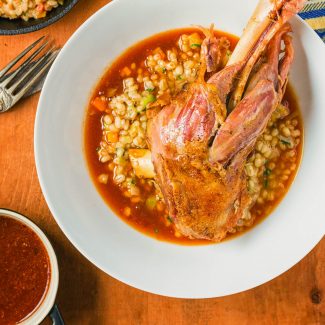
Braised lamb shanks. Meltingly tender, rich, delicious. And hard to mess up. Browned meat, aromatics and stock. Simmer gently for a couple hours and you have a meal worthy of a special occasion. Slow food is good food.
This recipe is from a PBS show from the dark ages before the internet. Used to be if you wanted to learn about cooking you either bought books or watched TV. PBS was the best back then. Still is if you really want to learn about food. The show was “In Julia’s Kitchen with Masterchefs” and it was a revelation back then. This recipe belongs to Joachim Splichal – now famous for Patina in Los Angeles.
25 years later I still have my dog-eared scrap of paper – repeatedly stained – from which I make this recipe. I’ve never found a better recipe in all these years. Serve it with barley risotto (as pictured), mashed potatoes, pureed white beans with garlic – just about anything. Braised carrots make a nice side.
Veal stock really adds richness and depth to this dish but chicken stock will work in a pinch.
braised lamb shanks
Ingredients
- 4 lamb shanks - about 1 lb each
- 1 yellow onion diced
- 1 leek white and light green parts only, diced
- 2 carrots diced
- 3-4 shallots halved
- 4 cloves garlic smashed
- 5 plum tomatoes seeded and diced
- 2-3 sprigs fresh thyme
- 1/2 cup white wine
- 2 cups veal stock
- 3 cups chicken stock enough to cover the lamb
- salt to season the shanks plus to taste
- pepper to season the shanks
- 3-4 Tbsp olive oil
- 2 Tbsp butter
Instructions
Brown the lamb shanks
- Heat the oil in a large, heavy pot.
- Season the lamb with salt and pepper.
- Brown the lamb shanks on all sides. This can take 10-15 minutes.
- Remove and set aside.
Sweat the aromatics
- Add more oil if needed.
- Cook the onion, leek, carrot, shallot, and garlic until onion is translucent.
- Add tomato, white wine, thyme and about a teaspoon of salt and cook another 3-4 minutes.
- Return the lamb to the pot, add the veal stock and enough chicken stock to just cover the lamb.
- Cover and simmer for about 2 hours, until the lamb is tender.
- Remove lamb from pot and tent with foil.
- Strain the sauce through a sieve, pressing down on the aromatics to extract as much flavour (and maybe a bit of texture) as possible.
- Wipe out the pot and return the strained sauce to it. Reduce liquid, over moderately high heat, to about 2 cups. Taste and adjust salt as needed.
- Off heat, stir in 2 Tbsp butter.
- Serve lamb over barley risotto, pureed white beans, mashed potatoes or other “starch” and ladle sauce into the dish.
