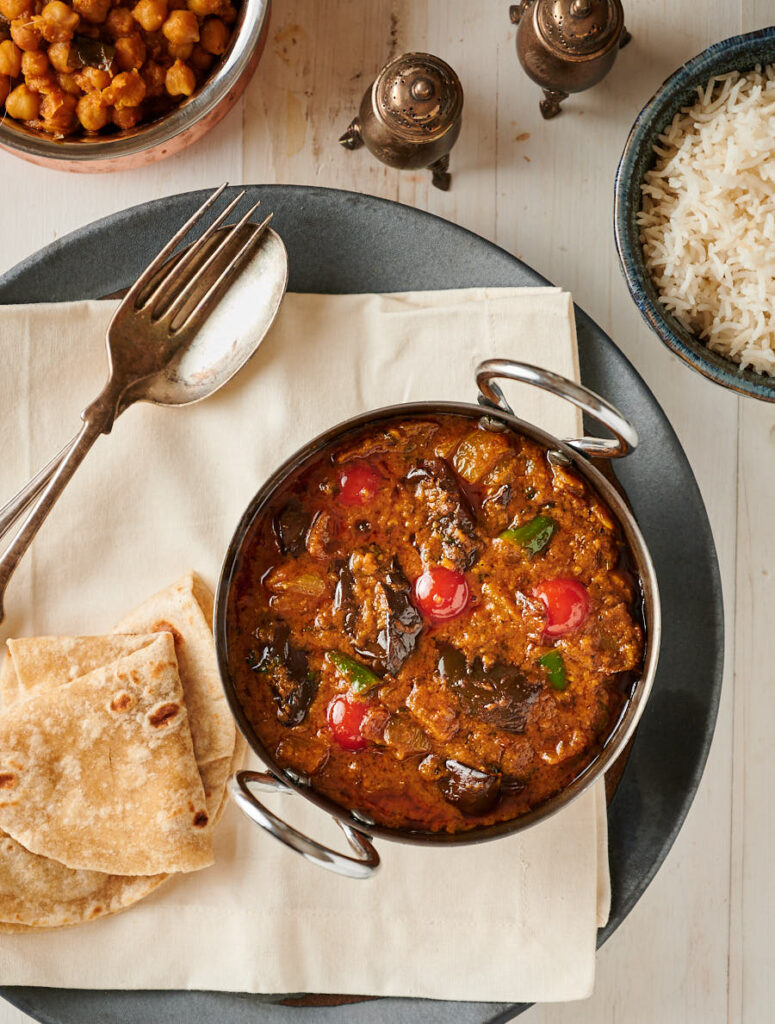
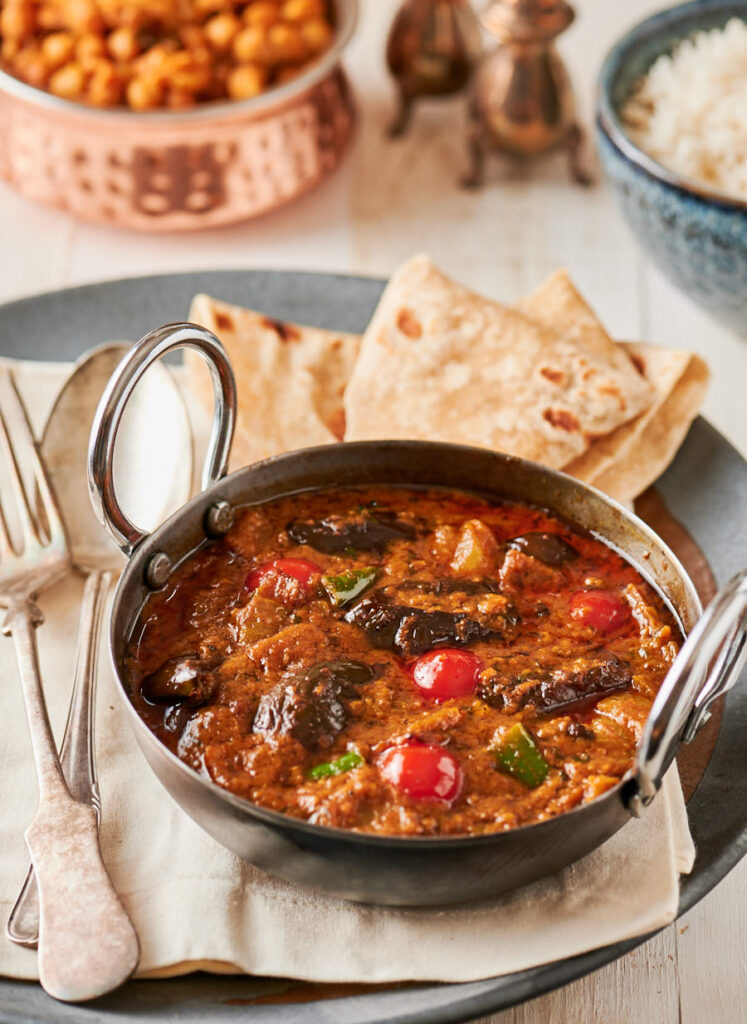
Eggplant curry makes an awesome vegetarian main course or side dish for any Indian meal. Big flavours of onion, garlic, ginger and spice. And that lush restaurant style sauce. This is one seriously tasty vegetable curry.
Baingan masala. Eggplant curry. Brinjal bhaji. Aubergine curry. It goes by many names. Doesn’t matter what you call it. It’s sure to satisfy.
I worked hard coming up with this one. Took me forever. They make it at my local Indian restaurant. But they wouldn’t give me any tips. Not a single one. So I kept tinkering. And I finally got it.
Baingan masala not baingan bhaji
That was my problem. My local restaurant calls it baingan bhaji. But it’s not. I looked at recipe after recipe. Couldn’t find anything close. Every recipe was mush. Like cream of eggplant. Not right. Tasty. But not what I was looking for.
The version I was after had pieces of eggplant. And skin. Texture. And taste that just was not like any recipe I tried.
It’s tough to figure things out when you have barely any clues. I ordered it again. And again. Poke at it. Test a theory. Then another. Slow going. My friends thought I was a bit mad. I am a bit mad actually. They weren’t surprised. Not really.
But finally I figured it out. And now I can make it any time I want. I’m tempted to go back to that restaurant and tell them I don’t need them anymore.
Eggplant matters when you make eggplant curry
That should not be a surprise. It’s eggplant curry. Or aubergine curry if that’s what you call it. Either way the eggplant you choose is important.
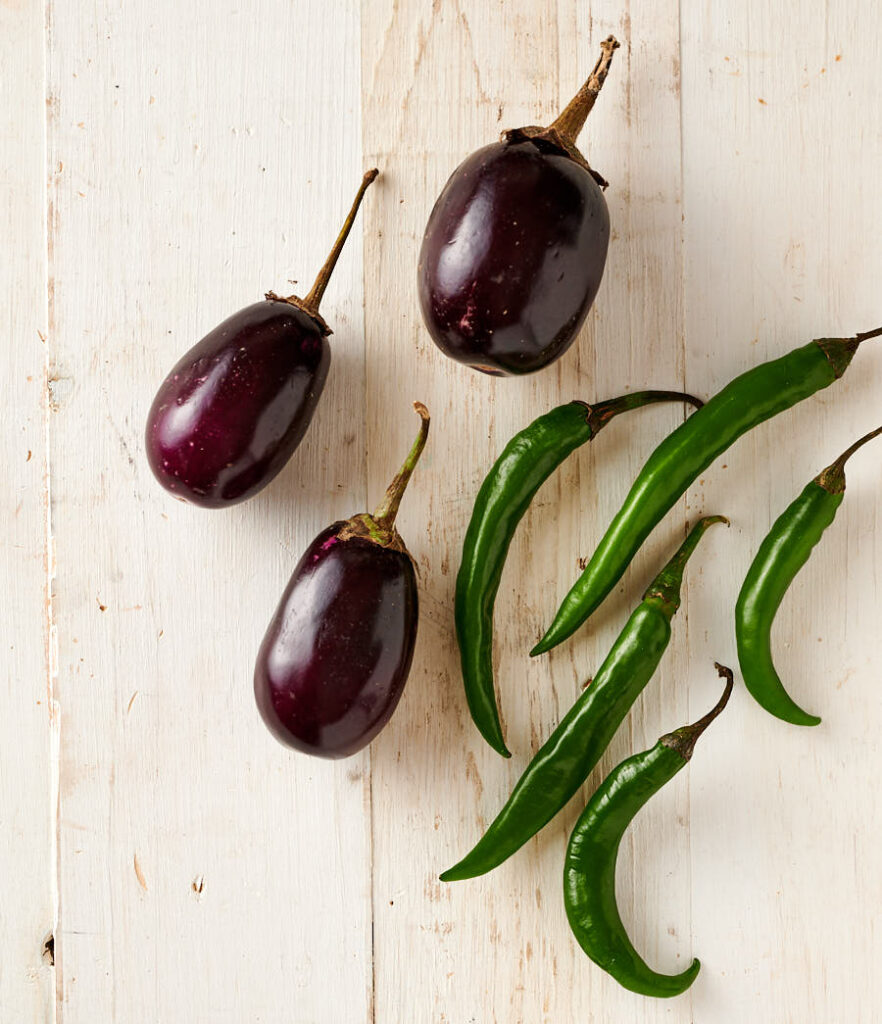
For Indian eggplant curry you need to use Indian eggplant. Those big Italian eggplants are just not right. Good for parm. Not so good for eggplant curry.
I get them at my local Indian grocer. The sign above them says brinjal. But they are also known as ratna. They are small. Like a big egg. Purple. Usually beat up. In a box in the back. Shopping at Indian grocers is a whole experience where I live.
I’m picky about this because you get a good mix of eggplant to skin. And the skin matters in this recipe.
Roasted works for eggplant curry
Eggplant is a sponge for oil And it’s really good when it soaks up a bunch of oil. But deep frying is a pain. Stinks up the whole house.
I do deep fry. Because sometimes you just have to. But for this dish you don’t. So I don’t. You can if you want to. Free country. If you don’t mind your house smelling like a deep fryer have at it.
I roast the eggplant for this curry. It works. Just coat the cut up eggplant with vegetable oil. And roast. Easy. And it doesn’t smell.
The one problem is the skin gets tough. But there’s a trick. Pull the eggplant from the oven. And put it into a tupperware. Seal the tupperware. And let it sit on the counter.
The eggplant steams a bit in the tupperware. The skin softens up. It softens up some more in the curry. So you get a mix of textures. The creamy eggplant. Up against an ever so slightly toothy skin. It works.
This is Indian restaurant style cooking
To get the restaurant flavours you can’t just talk the talk. You need to walk the walk. So you need to cook the same way they do in restaurants.
That means using curry base. And restaurant style spice mix. And high heat. Lots of prep. Everything ready to go.
Then it’s about technique. And timing. It’s not hard. I’ve written a whole primer on Indian restaurant technique . Read that and you’ll be good to go. Ready to tackle any Indian restaurant style recipe.
There are lots of recipes out there that say “restaurant style”. A lot of them aren’t even close. You need to walk the walk.
And wear old clothes. This is messy stuff. Splatter. Turmeric. Clothing destruction cooking. But it’s fun. And it works.
Eggplant curry. Baingan masala. Brinjal bhaji. Whatever you want to call it, it was a tough one for me to figure out.
But now I know. And so do you. Try it. You won’t be disappointed.
eggplant curry – baingan masala
Ingredients
Spice mix
- 2 tsp Indian restaurant spice mix – recipe link below
- 1 tsp kasoor methi – fenugreek leaves
- 1 tsp kashmiri chili powder
- 1/2 tsp amchoor powder – dried mango powder
- 1/2 tsp kosher salt
Eggplant curry
- 3-4 Indian eggplants aka ratna or brinjal
- 3 tbsp vegetable oil
- 1/2 tsp cumin seed
- 1/2 onion coarsely chopped
- 1 tbsp garlic ginger paste
- 1 green chili sliced lengthwise and cut into 3/4 inch pieces
- 15 oz curry base – recipe link below
- 1 tbsp cilantro stems finely chopped
- 5-6 cherry tomatoes sliced in half
- vegetable oil to coat the eggplant
Instructions
Roast the eggplant
- Pre-heat your oven to 350 degrees
- Remove the stem from the Indian eggplant. Cut each eggplant into 4 wedges lengthwise. Think of cutting an egg in half for deviled eggs and then half again. Cut it that way.
- Toss the eggplant in a little vegetable oil. You don’t want to drown it but make sure every piece is coated.
- Place on a cookie sheet or pizza pan, skin side down. Sprinkle with salt.
- Roast in the oven until the eggplant is soft and just starting to colour. This should take about 25 minutes.
- When the eggplant comes out of the oven the skin will be hard. You don’t want that. Place the hot eggplant in a small tupperware and cover. Set aside on the counter for 30 minutes. The skin will soften.
Make the baingan masala
- Pick a skillet that can take heat. Something with an insulated handle is good. Put on some shabby clothes. Cooking Indian restaurant style is messy stuff.
- Place the skillet over medium low heat.
- Add 3 Tbsp of oil. When it starts to shimmer add the onions and cook until the edges of the onions start to colour. This should take 3-4 minutes. Add the cumin seed and green chilies and cook another 30 seconds or so.
- Move the onions to one side. There should be a fair bit of oil in the bottom of the pan. Add the spice mix and stir to thoroughly coat the spices in oil. It should start to bubble a bit. Cook the spices for about 30 seconds. Watch your pan carefully. You don’t want to let your spices burn.
- Add the garlic ginger paste and chopped cilantro stems and stir the spices, garlic ginger paste and onions to combine. Cook about 30-45 seconds.
- Turn the heat up to medium high. Add 3 oz of curry base. Stir to combine. Let cook about a minute. You should see craters forming and a bit of oil separating out.
- Now add 6 oz of curry base. Stir to combine and cook about 90 seconds. You want to see the same little craters.
- Add the remaining curry base. Stir to combine. Reduce the heat to medium low.
- Add the eggplant, stir to combine and let simmer about 3 minutes. Then add the cherry tomatoes and let simmer another minute or two.
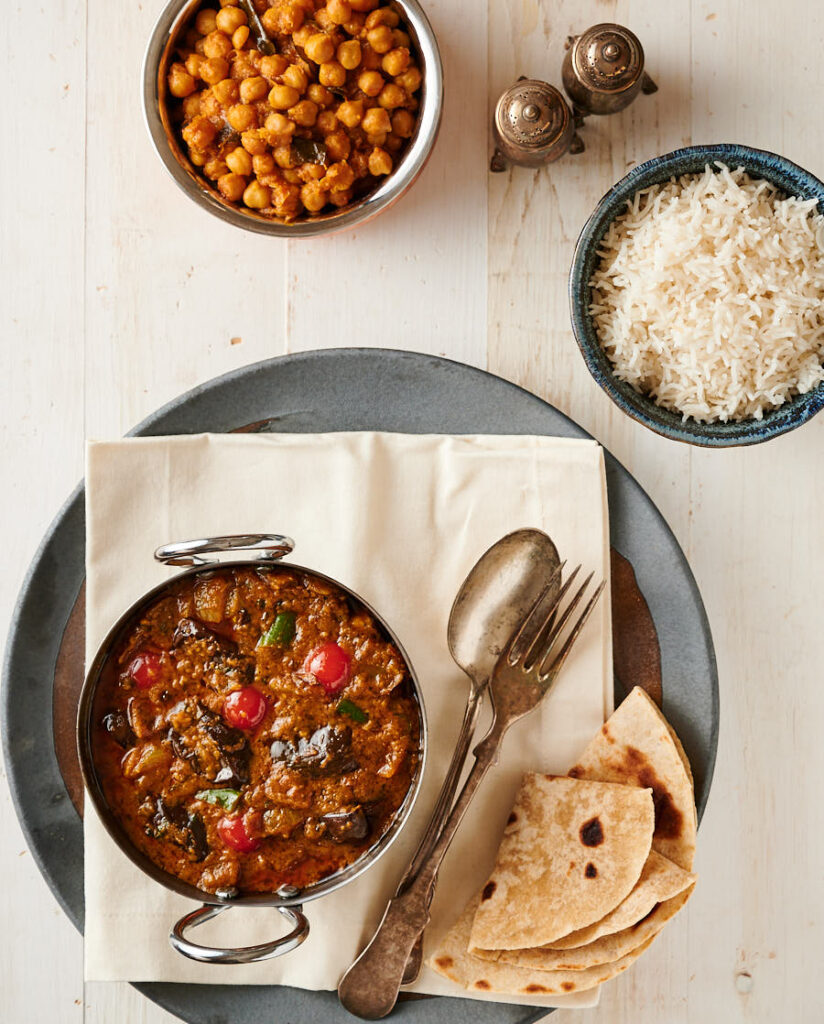
- Garnish with a bit of chopped cilantro if desired. Serve with rice or Indian flatbreads. This makes a great vegetable side dish or vegetarian main course.
Notes
Nutrition
eggplant curry - baingan masala
Ingredients
Spice mix
- 2 tsp Indian restaurant spice mix - recipe link below
- 1 tsp kasoor methi - fenugreek leaves
- 1 tsp kashmiri chili powder
- 1/2 tsp amchoor powder - dried mango powder
- 1/2 tsp kosher salt
Eggplant curry
- 3-4 Indian eggplants aka ratna or brinjal
- 3 tbsp vegetable oil
- 1/2 tsp cumin seed
- 1/2 onion coarsely chopped
- 1 tbsp garlic ginger paste
- 1 green chili sliced lengthwise and cut into 3/4 inch pieces
- 15 oz curry base - recipe link below
- 1 tbsp cilantro stems finely chopped
- 5-6 cherry tomatoes sliced in half
- vegetable oil to coat the eggplant
Instructions
Roast the eggplant
- Pre-heat your oven to 350 degrees
- Remove the stem from the Indian eggplant. Cut each eggplant into 4 wedges lengthwise. Think of cutting an egg in half for deviled eggs and then half again. Cut it that way.
- Toss the eggplant in a little vegetable oil. You don’t want to drown it but make sure every piece is coated.
- Place on a cookie sheet or pizza pan, skin side down. Sprinkle with salt.
- Roast in the oven until the eggplant is soft and just starting to colour. This should take about 25 minutes.
- When the eggplant comes out of the oven the skin will be hard. You don’t want that. Place the hot eggplant in a small tupperware and cover. Set aside on the counter for 30 minutes. The skin will soften.
Make the baingan masala
- Pick a skillet that can take heat. Something with an insulated handle is good. Put on some shabby clothes. Cooking Indian restaurant style is messy stuff.
- Place the skillet over medium low heat.
- Add 3 Tbsp of oil. When it starts to shimmer add the onions and cook until the edges of the onions start to colour. This should take 3-4 minutes. Add the cumin seed and green chilies and cook another 30 seconds or so.
- Move the onions to one side. There should be a fair bit of oil in the bottom of the pan. Add the spice mix and stir to thoroughly coat the spices in oil. It should start to bubble a bit. Cook the spices for about 30 seconds. Watch your pan carefully. You don’t want to let your spices burn.
- Add the garlic ginger paste and chopped cilantro stems and stir the spices, garlic ginger paste and onions to combine. Cook about 30-45 seconds.
- Turn the heat up to medium high. Add 3 oz of curry base. Stir to combine. Let cook about a minute. You should see craters forming and a bit of oil separating out.
- Now add 6 oz of curry base. Stir to combine and cook about 90 seconds. You want to see the same little craters.
- Add the remaining curry base. Stir to combine. Reduce the heat to medium low.
- Add the eggplant, stir to combine and let simmer about 3 minutes. Then add the cherry tomatoes and let simmer another minute or two.
- Garnish with a bit of chopped cilantro if desired. Serve with rice or Indian flatbreads. This makes a great vegetable side dish or vegetarian main course.
Notes
Nutrition
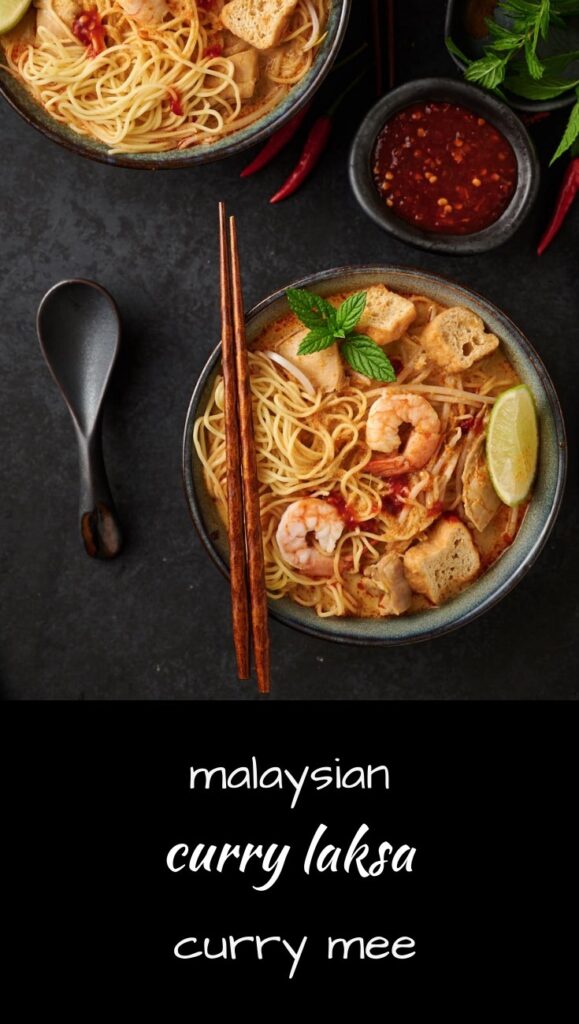
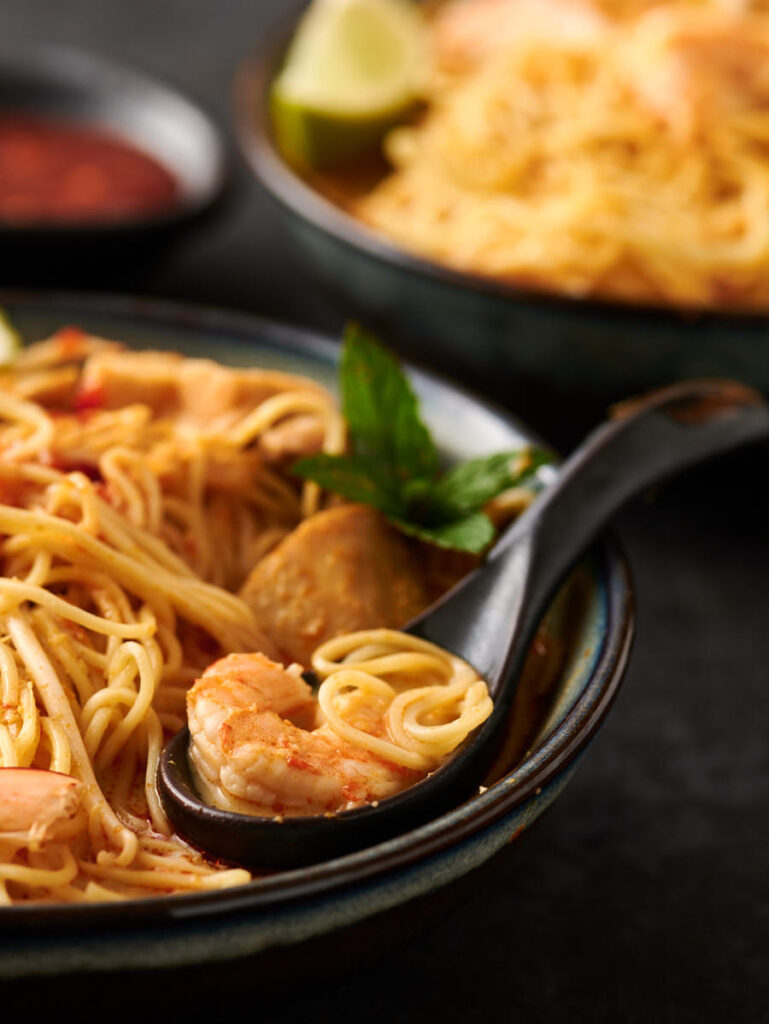
Malaysian curry laksa or curry mee is one seriously tasty meal in a bowl. Big curry flavours. Coconut milk. Lemongrass. Chicken. Or shrimp. Or both. And noodles. There’s nothing here not to love.
It’s spicy. Creamy. Deeply satisfying. It’s soup that eats like a meal. One big bowl of delicious. Call it what you want. It’s just good eating.
Curry mee please
I love everything about curry laksa. Even the name is perfect. Curry mee.
Walk into a Malaysian restaurant and say “curry me”. This is what you’ll get. And you’ll leave happy.
You could also ask for laksa lemak. That’s another name for it. I think it depends on where the cook is from. Different names. Same great dish.
It’s taken me too long to do this recipe. My bad. I’m an Asian soup addict. I’m a curry addict. This is all of that rolled into one. I should have shared it years ago.
Curry laksa is what happens when India visits Malaysia
I’m not a historian. And I’m probably wrong about this. But to me curry laksa tastes like Indian slammed up against south east Asian flavours. With some Chinese noodles tossed in for good measure.
So I approach curry mee a little different than most. I put some Indian technique into the mix. Not a lot. Just one little trick.
When I cook Indian I bloom the spices in oil. Right at the start. And there’s a reason. I cannot stand raw spice flavour. Even a hint of it. Blooming the spices takes care of this. It’s a small thing but it makes a big difference.
Plus I find it amps up the flavour. The oil soluble compounds in the spice create a crazy delicious spiced oil. More flavour is always better in my books.
I add the paste to the oil and bloomed spices. Fry that up. Just like an Indian masala. Then add some liquid. Cook the chicken in the mix. It’s Indian with lemongrass.
If you left the lemongrass out and added some green chilies at this point you’d have a simple Indian chicken curry. See what I mean? India comes to Malaysia. A star is born.
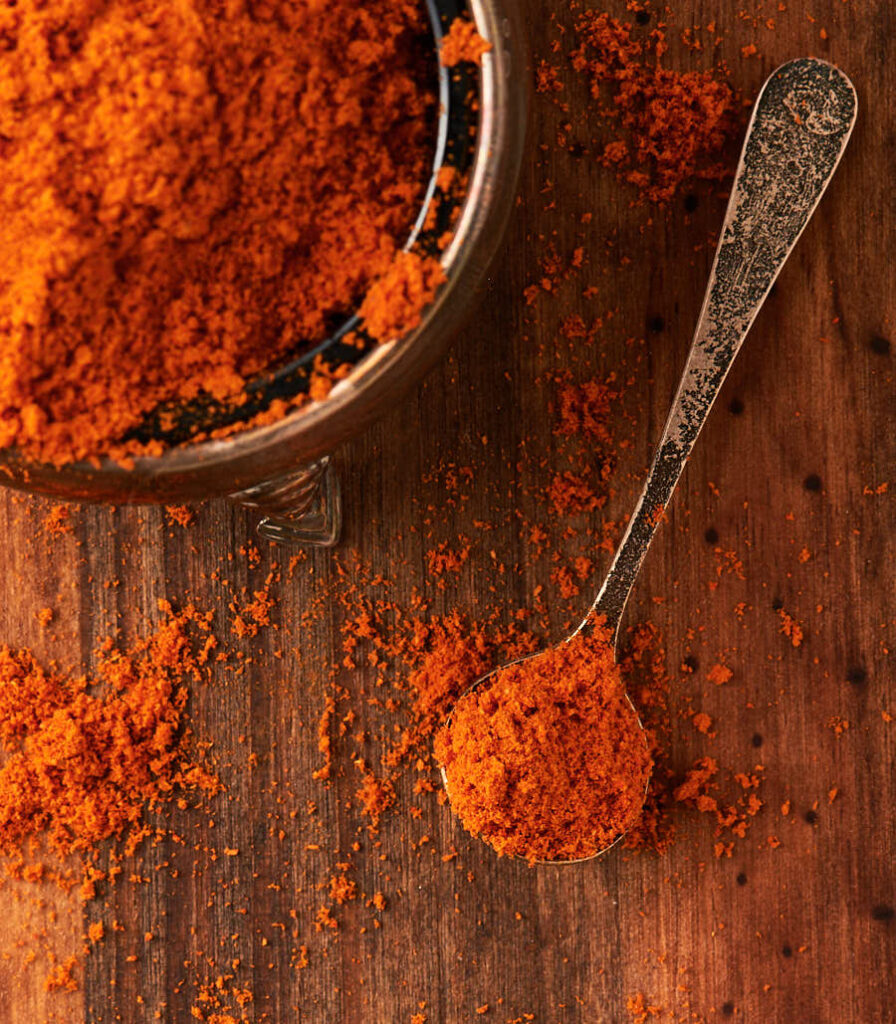
All curry powders are not the same
Indians love to say there’s no such thing as curry powder. Maybe it’s because there’s no such thing as a curry in Indian cooking. That’s a western generalization of Indian cuisine. No such thing as curry. So no such thing as curry powder? I really don’t know.
What I do know is there are tons of specific spice mixes or masalas in Indian cooking. Garam masala is the most famous. But there’s one for just about everything. Chaat masala. Chana masala. Nihiri masala. The list goes on and on.
There are Malaysian curry powders too. And that’s the stuff you want for curry laksa. Malaysian meat curry powder. Says so right on the bag. Just another spice mix. A really good one.
Get the Malaysian meat curry powder. It’s the right blend for curry laksa. While you are there check out all the other masalas they stock. Take a picture.
And the next time an Indian tells you there’s no such thing as curry powder show them the picture and ask them to explain.
Before I get blasted. I am half Indian. Been eating Indian my whole life. Just having some fun here…
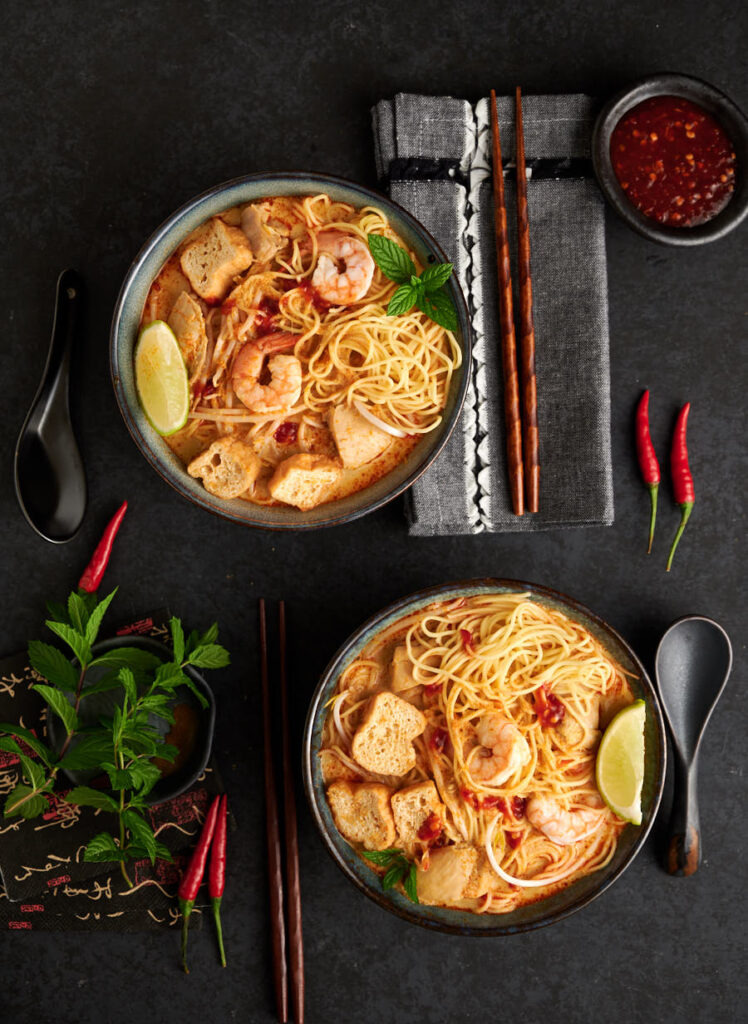
Egg noodles for curry laksa
All noodles are not created equal either. You want egg noodles for laksa. Not the broad egg noodles at the supermarket. Chinese egg noodles. Fresh ones.
Be careful. You would think yellow noodles are all egg noodles. But they’re not. Some are yellow because they have eggs. Some are yellow because they have food colouring.
So read the ingredients. If they say they contain eggs you have the right ones.
They come in all different shapes and sizes too. Some like vermicelli for curry laksa. Others like larger noodles. Or flat ones. I mix it up. Sometimes vermicelli. Sometimes not. Up to you. Go with what you like.
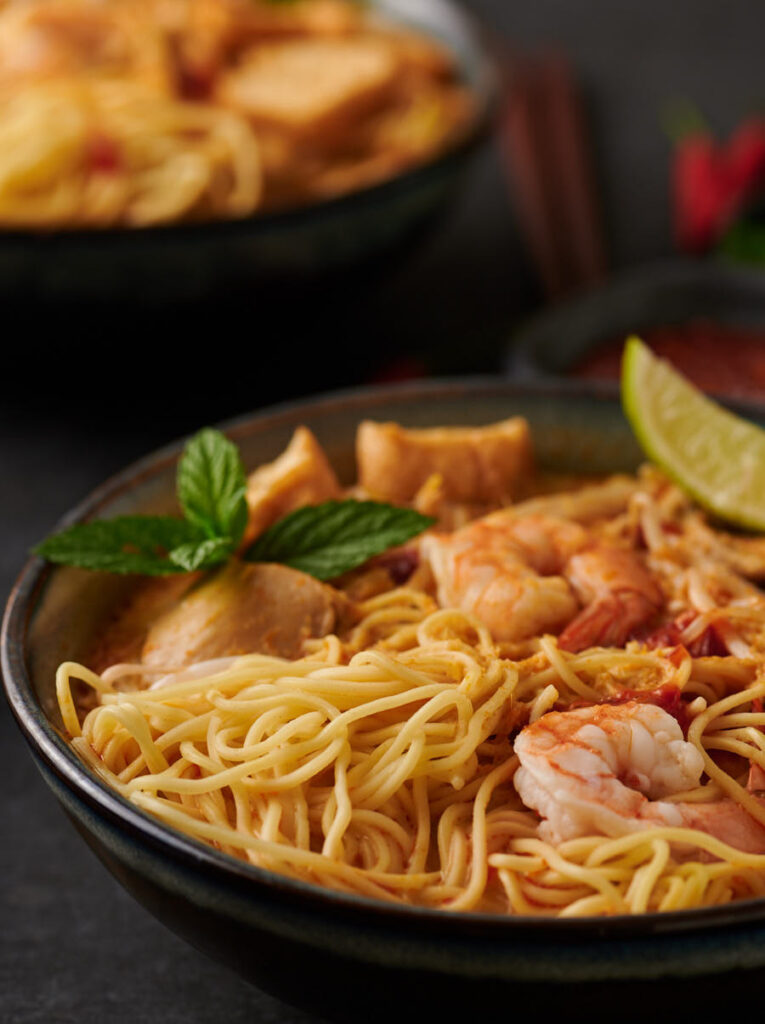
Just a whole lot of goodness in a bowl
Call it curry laksa. Or curry mee. Or even laksa lemak. Call it what you want. Doesn’t matter. What matters is that it’s laksa delicious.
If you like Indian. And Asian soups. And coconut. Then you will love curry laksa.
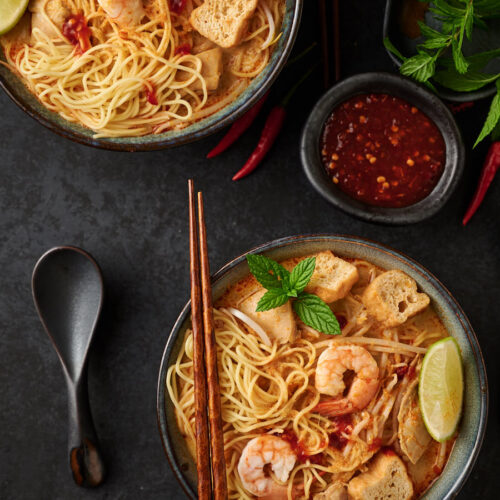
Malaysian curry laksa – curry mee
Ingredients
Shallot lemongrass paste
- 1 cup shallots chopped
- 1 stalk lemongrass – outer leaves discarded. Chopped.
- 2 tbsp garlic ginger paste or 3 cloves of garlic and a 3/4 inch piece of ginger, chopped
- enough water to puree
curry laksa
- 1/4 cup vegetable oil
- 4 tbsp malaysian meat curry powder – yes seriously, get the right curry powder. It’s important.
- 1/2-2 tsp kashmiri chili powder 1/2 tsp is nicely spiced. 2 tsp is pretty hot.
- 6 chicken thighs boneless, skinless. Cut into 3/4 inch pieces.
- 12 oz shrimp pre-cooked for perfect shrimp (see note)
- 5 cups chicken stock
- 4 cups coconut milk 2 15 ounce cans is close enough
- 4 tbsp fish sauce
- 2 cups bean sprouts
- 1 lb Chinese egg noodles cooked per package instructions.
- sambal and fresh lime to garnish
Instructions
Make the shallot lemongrass paste
- Combine the chopped shallots, chopped lemongrass and garlic ginger paste in your blender. Add a couple tablespoons of water. Try to puree. Keep adding water a tablespoon at a time until it goes. This really depends on your blender. I can’t tell you what’s right for yours.
- Once it is pureed scrape it out into a bowl.
Cook your noodles
- Follow the instructions on the package. When done drain them through a colander and then rinse in cold water. Set aside.
Make the curry laksa
- Pick a pot big enough to hold all the ingredients. A dutch oven is a good choice here.
- Add the oil to the pot and heat the oil over medium low heat.
- Add the Malaysian meat curry powder and kashmiri chili powder. Stir constantly for about 30-45 seconds. You need to be careful here. You don’t want to burn your spices but you do want to cook them out. This is called blooming the spices and it’s where magic happens.
- Add the shallot lemongrass paste. Stir to combine. Continue cooking for 5-7 minutes, stirring regularly.
- Add the chicken stock. Bring to a simmer and add the chicken. Cook for about 5-8 minutes until almost done. If you didn’t pre-cook the shrimp (see note) add them now. Cook until they just turn pink.
- Add the coconut milk and fish sauce. Stir to combine. Bring back to a simmer.
- Divide the cooked noodles into 4 bowls. Toss in some bean sprouts. Add pre-cooked shrimp if you are going the pre-cooked shrimp route. Ladle the hot curry laksa soup overtop. Garnish with sambal and lime wedges. Enjoy.
Notes
Nutrition