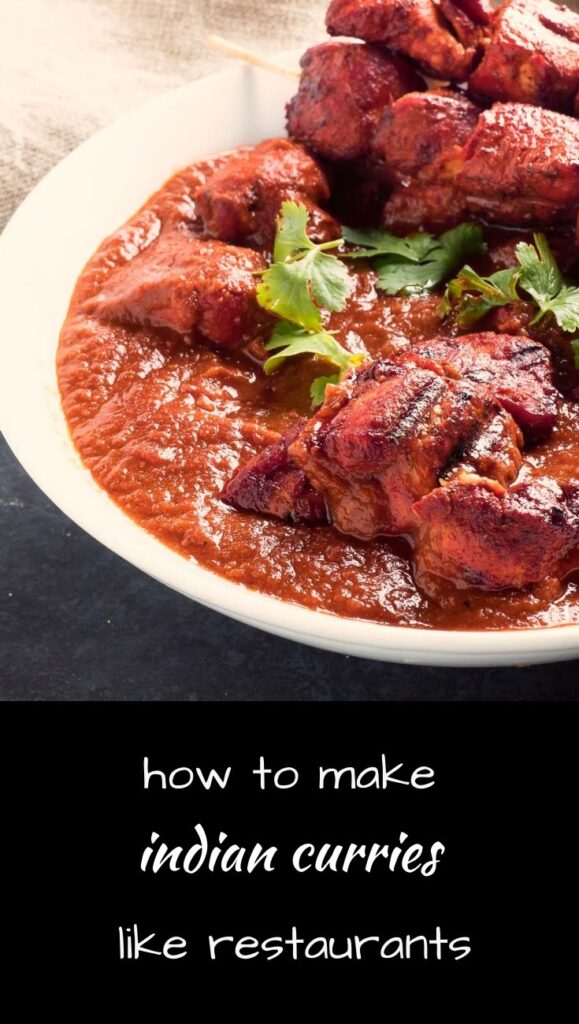
If you want to make restaurant style curry but don’t want to spend all day prepping for it then this easy curry recipe technique is for you.
You will impress yourself. And your friends. Family too. It’s a different way to get to the same place. If you’ve ever wondered why your curries don’t come out like restaurant dishes read on.
This easy curry recipe is all about onions
Just about every Indian curry is about onions. They are the foundation. The spices make a curry sing but the onions are the heart. The soul. There’s no way to get around this. At least not that I’ve ever found.
I love homestyle curry. I grew up eating it. Homestyle recipes are about finely chopped onions. Slowly browned. For a long time. Like 20-30 minutes or more. Slow food.
Restaurants do it different. They use a thing called curry base. Or base gravy. Basically you boil a lot of onions to death. Add a few other ingredients. And puree. Like a watery onion soup that tastes vaguely of curry. And yet somehow that works.
They can crank out curries in under 10 minutes using this stuff. Worth looking into. But there’s a bit of a learning curve. This is how it’s done in restaurants.
In the middle there’s this easy curry recipe technique. A different way of doing it. Not one you’re likely to see anywhere else. I’m pretty sure I came up with it. A new take.
You may think I’m crazy. A lot of people do. But this works. And it works well. Before you write me off give it a go. Just once. Then decide.
I like making curries restaurant style. I go the distance. Often. But I like this easy curry recipe approach too. It’s easier. And it scales better than restaurant style cooking. It’s nearly restaurant cooking. Nearly restaurant style. That’s what I’m calling this.
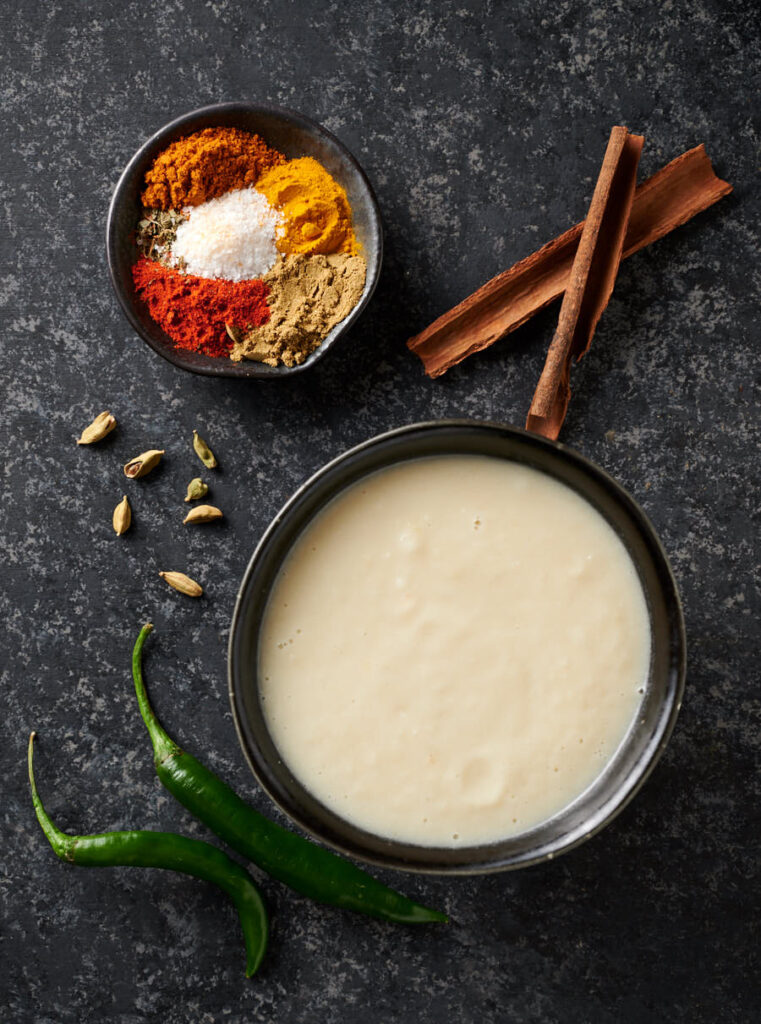
Onion puree is the key
It’s not rocket science. I’m actually amazed nobody has come up with this before. It’s sort of like curry base. Except it takes around 15 minutes to make. Instead of a couple hours.
The onions need to cook down. For Indian that’s key. But how they get cooked matters a bit less. At least initially. You just want them cooked through.
So for this easy curry recipe I say nuke the onions. Yes, you heard me. Microwave them. For real.
It’s funny. To me anyway. I can’t stand my microwave. It’s a bad way of heating up food. And that’s its best feature as far as I can tell. Just not a fan.
For this it works. It’s actually the right tool for the job. Chop up the onions and toss them in the microwave. Until they are really soft. Around 10 minutes at about 70 percent power.
Let them cool a bit and toss them into the blender with some oil and water. Puree. And you have the base of nearly restaurant style cooking. In way less time than restaurant style curry base takes.
From here it’s pretty much restaurant style cooking technique
I have a few things I always do when I cook Indian. I want some oil in the pan. It’s really hard to cook Indian without it. You can spoon it off at the end if you want. But you need it along the way.
The order in which you add things is important. The oil goes in first. Get it to the point it shimmers. Then add any whole spices you may be using. Things like cloves or cardamom or cinnamon stick. Cook that until they crackle.
Larger bits of peppers, onions or chilies go in next. Toss them around in the oil until the onions soften or the peppers blister a bit. Just follow the recipes.
Bloom your ground spices in oil
Blooming your spices in oil is critical. Seriously. I question any Indian recipe that doesn’t include this step. It is fundamental. Blooming spices means cooking spices in oil. So simple. But so important.
Blooming gets rid of any raw spice flavours. Worth doing just for that. But it also gets all the oil soluble flavour compounds into the oil. And those compounds get spread around the dish. It’s just better.
Don’t take my word for it. Please. Google it. Check out Serious Eats. Or Cooks Illustrated. Or whatever other quality site you trust. I didn’t make this up. It’s food science.
It’s also why you need to have enough oil. If you don’t the spices will stick. Or worse. They will burn. Burn your spices and you will have to start again. No coming back from burnt spices.
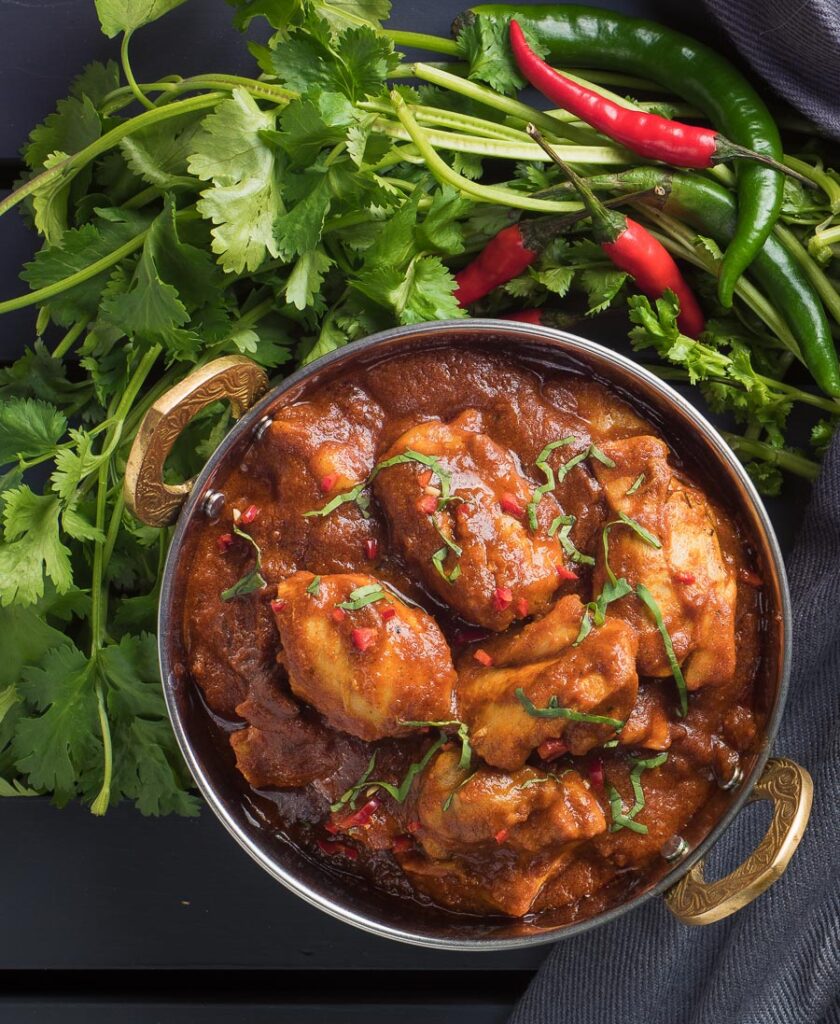
Next add your wet ingredients
You need to stop the spices from over-cooking somehow. And adding wet ingredients is how. This is where the onion puree comes in.
There should be a fair bit of free oil in your pan. Which is good. Critical really. You want to fry the onion puree. Just microwaving onions isn’t good enough. Not by a long shot.
This is where something else you should Google comes in. The Maillard reaction. More food science. Probably one of the most important bits of food science. This is the magic of browning. All sorts of wonderful flavours get created.
You don’t need to understand it. Just believe. It’s the magic that happens when heat hits sugars and amino acids. Onions, meat, mushrooms, bread. It’s all the Maillard reaction.
Add the chicken or lamb or beef
Nearly restaurant recipes are easiest with chicken. Chicken thighs in particular. You can chuck them in raw if you want. They will cook in the sauce.
Keep things a bit on the dry side to start though. Chicken throws a fair bit of liquid as it cooks. Tasty liquid. A little more flavour. Adjust for consistency at the end. Or cook your chicken first. Then it’s really restaurant style.
Shrimp – or prawns – work too. Just be very, very careful not to overcook them. It only takes a few short minutes to cook shrimp perfectly. A few minutes more and they are little shrimp shaped pencil erasers. Not so good.
If you are doing a lamb or beef it’s a little different. You are cooking almost to order here. Braising beef or lamb for a couple hours isn’t to order.
I tend to pre-cook my lamb and beef in a salty curried broth. Batch cook it and use my food saver to portion off enough for a curry. It freezes well. And it doesn’t take up a lot of room in the freezer.
I should really try this technique but cook the lamb or beef the whole way in the sauce. I will report back. It should work but until I try it there’s no guarantee.
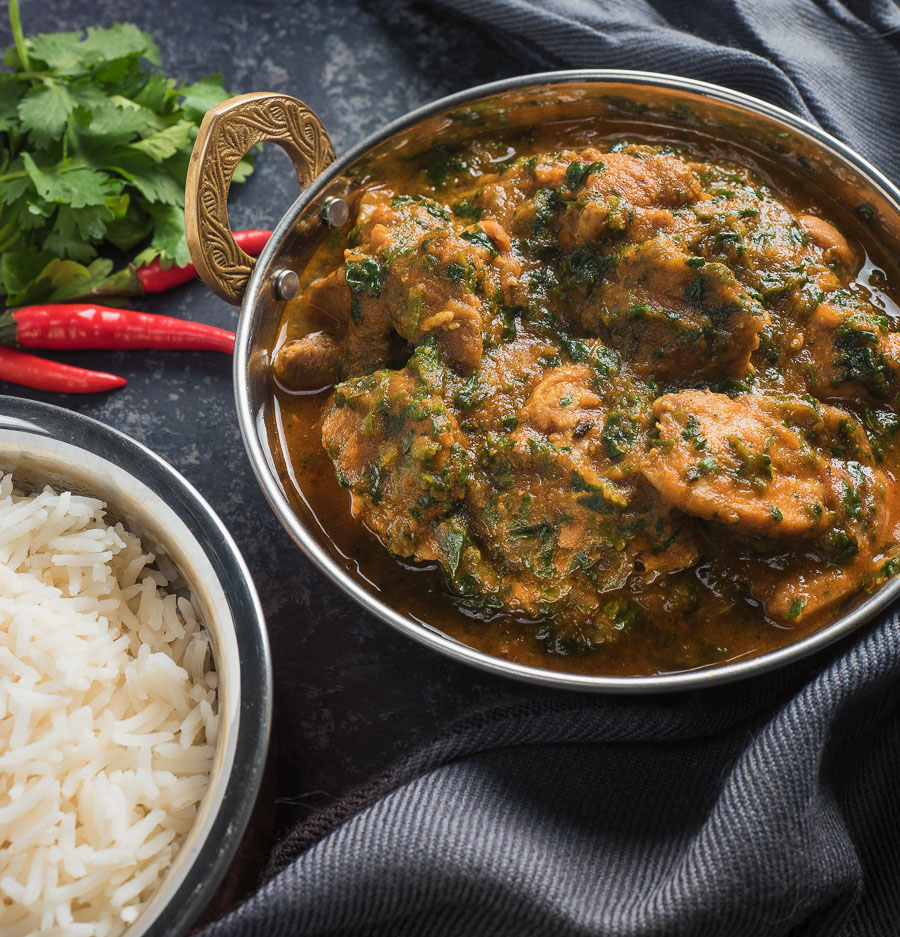
Easy curry recipe finishing touches
The finishing touches come last. Lemon. Tamarind. Cilantro. Cream. Fresh tomato. Whatever little tweaks the recipe calls for. The tastes you don’t want to disappear into the dish.
A little garnish if you’d like and you’re done. Nearly restaurant style. From a standing start to the table in under an hour.
It’s not exactly the same as restaurant style cooking. And it’s not like homestyle curry either. It’s somewhere in between. Easy. And fairly fast.
It’s every bit as delicious though. Try it. You will be surprised. Especially if you’ve been wondering why your curries don’t taste like the ones they serve at your favourite Indian restaurant.
Who doesn’t want an easy curry recipe? With nearly restaurant results. It’s not a thing yet. But it will be. Try it.
Make the curries
Chettinad chicken
Chicken jalfrezi
Chicken masala
Chicken tikka masala
Chicken madras
Chicken saag
More coming all the time.
Thai basil chicken is a delicious mix of spicy, salty and savoury. It’s no wonder it’s almost as popular as pad Thai.
It’s easy to make. Way easier than pad Thai. Or Thai curry. Almost nothing to it. Chilies. Garlic. Shallots. Chicken. Basil. A super easy sauce. A quick stir fry.
Fifteen minutes max and dinner’s on the table. Fast food can be really good food. Sometimes it can be easy and delicious. This is one of those times.
Pad kra pao is street food
Just like pad thai. Pad kra pao. Thai basil chicken is street food. Takes about 7-8 minutes to make once your prep is done. High heat. Good reflexes. Focus. That’s what you need to make Thai basil chicken at home.
Once you start there’s no stopping. You need to pay attention. Be in the moment. When it’s done you have one seriously tasty dinner. Like something you could get in an alley in Bangkok. But in your kitchen. Think of the airfare you just saved…
You need to approach it like street food. Everything needs to be prepped. Ready to go.
Think about street food vendors. They have everything on hand. Close by. Toss in some of this. A bit of that. Stir fry. Serve. That’s what you need to do too.
Be ready. Thai basil chicken takes no time to make. You do not have time to screw around trying to chop shallots. Prep. Then cook. Or fail. Sad. But true. Don’t say I didn’t warn you.
Holy basil is not the same as regular Thai basil
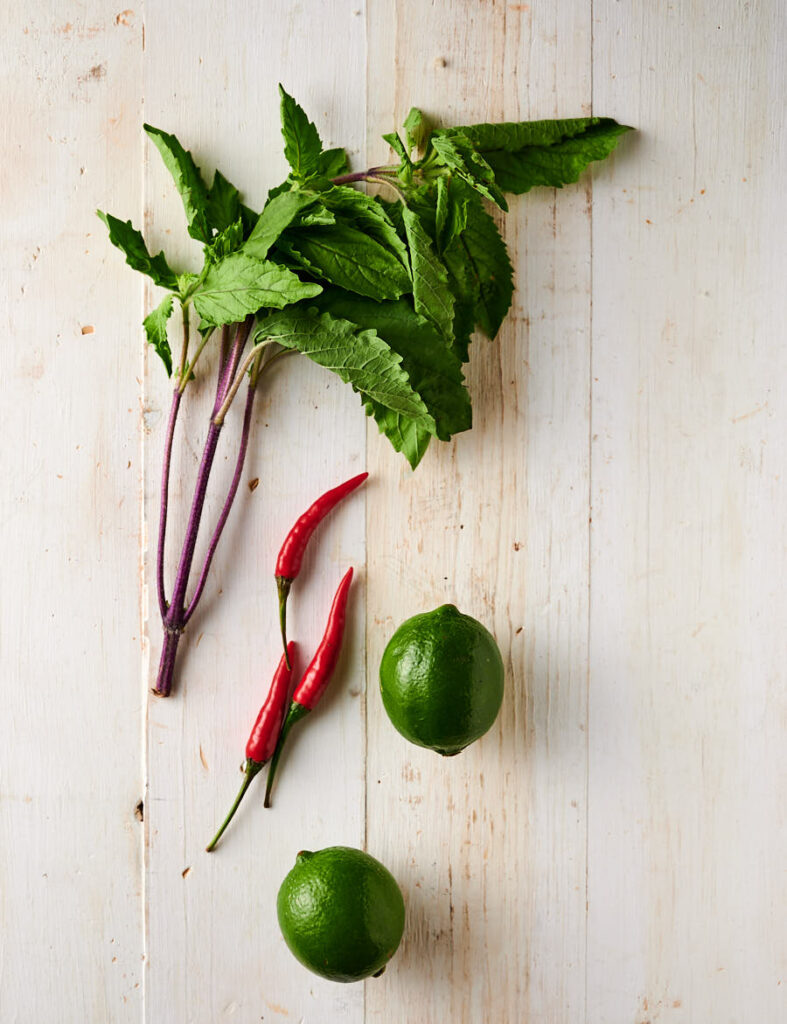
Holy basil is a thing. It is not some fancy name for Thai purple basil. And it’s not the same as Italian basil. Not even close.
It’s worth seeking out. It is somewhere between a green and an herb. It’s milder than other basils. A bit more peppery. Really good in this dish.
It’s not super easy to find where I live. Definitely Asian market territory. Don’t go looking for holy basil at a grocery store. Unless you live in Thailand I guess.
It’s a big part of Thai basil chicken. You can swap it out for Thai basil. That will still work. Different. But still tasty. Regular Italian basil though. Save that for your pesto.
Thai style fried egg
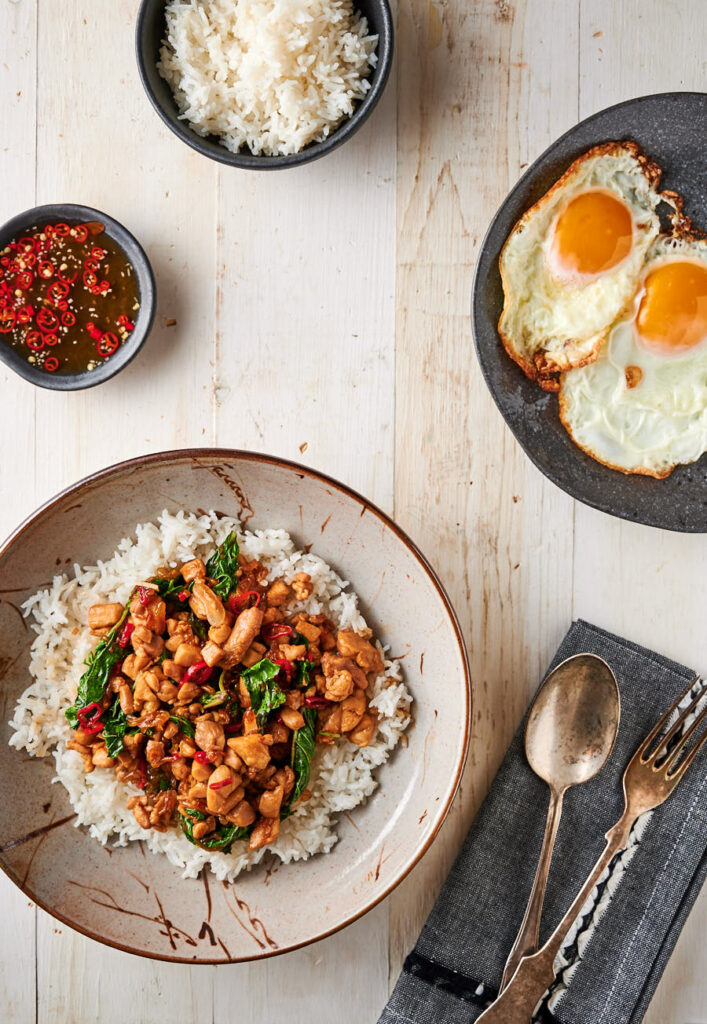
A fried egg is a classic topping for pad kra pao. But not just any fried egg. Thai style fried eggs are puffy, soft and crispy all at the same time.
Eggs are amazing things. You can do so many different things with them. If you’ve never tried frying eggs Thai style here’s one more for the list.
Lots of oil. High heat. A wok. And a spoon. That’s what you need. Heat a few tablespoons of oil in a wok. Until it shimmers. And you see wisps of smoke.
Then crack an egg into the wok. It will sputter. And sizzle. It may even scare you a bit. Be brave. It’s worth it.
Once the egg white is set up about half way through tilt the wok and spoon hot fat onto the top. Watch it puff up. It’s crazy.
As soon as the white is set remove the egg. Salt it. And eat the first one you make. So you know what it’s all about. Tasty stuff.
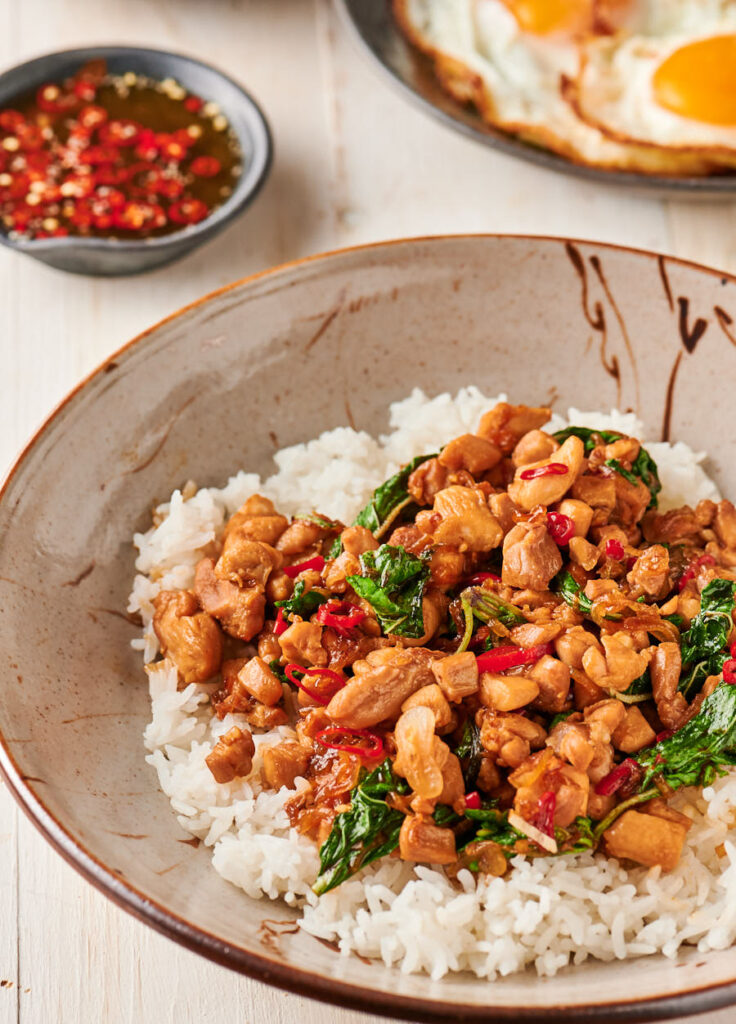
Leave the oyster sauce out for this Thai basil chicken
There are a lot of recipes for Thai basil chicken out there that include oyster sauce. This is not one of them.
I have nothing against oyster sauce. But I don’t like it here. From what I can tell oyster sauce is not authentic. Not that I care about authentic. I care about tasty. But in this case I think the more authentic approach is tastier.
Oyster sauce is salty. Fish sauce is salty. Dark soy is salty. Put all three things together and you get really salty. Or you don’t have enough fish sauce flavour. Either way it’s a step backwards.
Fish sauce is core to Thai cooking. So less of that doesn’t make sense. Dark soy is classic in this dish. Thai black soy in fact. Adds a little sweetness. And colour.
Something has to give. And for me oyster sauce doesn’t add much. Except salt. Too much salt. So I leave it out. I like it better that way.
If you really want oyster sauce I’d roll back on the soy before the fish sauce. But not one for one. Oyster sauce is way saltier than dark soy. Be careful.
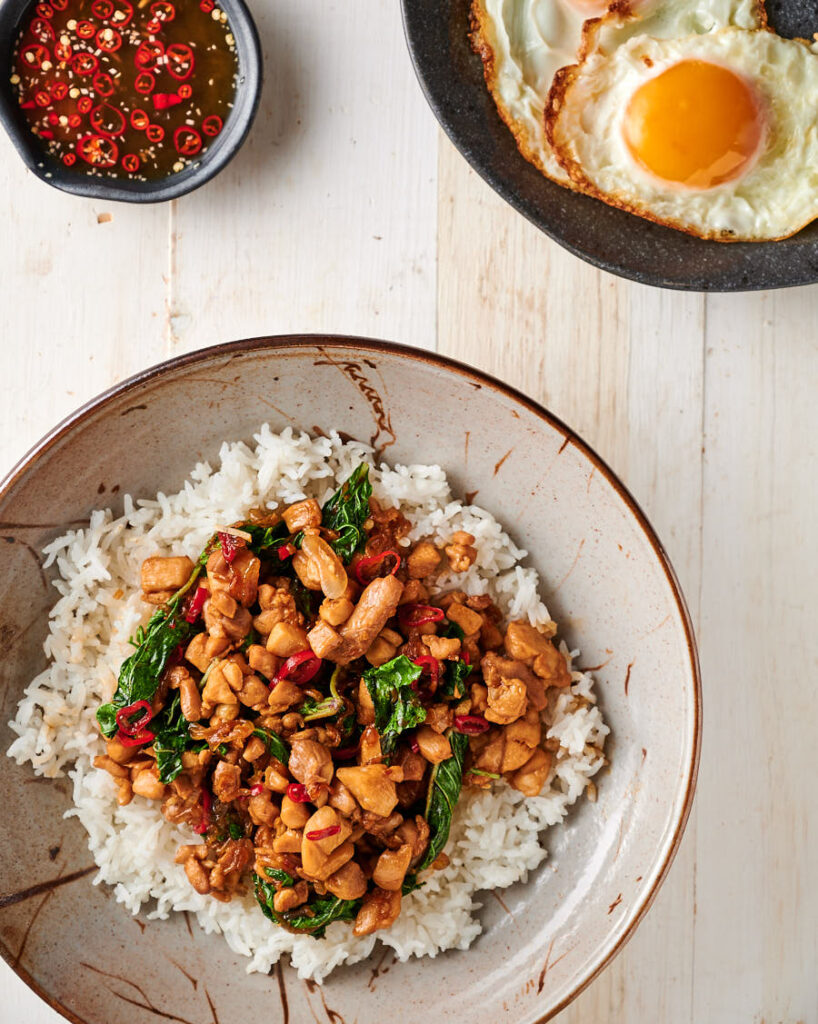
Pad kra pao is easy, fast and delicious
I love this type of recipe. Easy and delicious. Weeknight speed. Weekend taste. You need to be ready. But if you are it comes together in no time.
Not as easy as picking up the phone and ordering. But if you’re here you probably don’t care. A little work is worth it.
And it’s fun to cook. Especially the Thai style egg. You don’t get to do that everyday. Thai basil chicken. Pad kra pao. Call it what you want. But do try it if you like Thai flavours. It could become a house favourite.
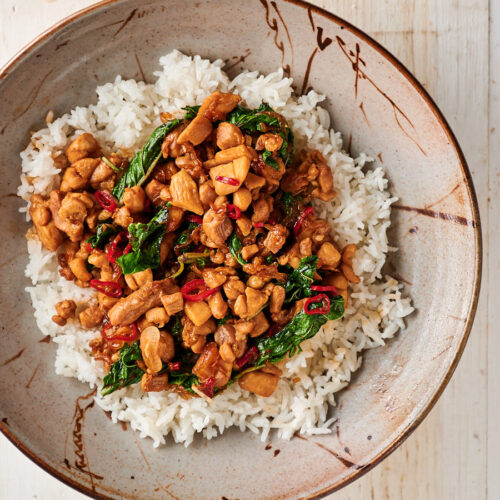
Thai basil chicken – pad kra pao
Ingredients
- 12 oz chicken thighs boneless, skinless and chopped into small pieces
- 1 cup shallots thinly sliced
- 1 tbsp garlic minced (chopped, not crushed)
- 2 tbsp fish sauce
- 1 tbsp dark soy – thai black soy is better here if you can get it.
- 2 thai red chilies thinly sliced
- 2 red finger hot chilies thinly sliced (or use more thai red chilies if you like really spicy)
- 1 tsp sugar
- 2 cups holy basil – you can use regular thai basil but it is not the same
- 3 tbsp vegetable oil
- 2 eggs
Instructions
Do your prep
- This is street food cooking. It goes fast. Really fast. Make the nam pla prik (see note) if you are serving it. Chop your chicken. Slice your shallots. Mince your garlic. Slice your chilies.
- Combine the fish sauce, sugar and dark soy. Set aside. If you are making more than 2 servings do all your prep. But don’t cook more than two servings (the whole recipe) at once. It won’t cook right if you try to double this recipe.
Fry your eggs Thai style
- Heat the 3 tbsp of oil in a wok over medium high heat.
- When the oil starts to shimmer add one egg. It should sputter and maybe puff up. Let it cook for until the whites are about half done. Now spoon a bit of the hot oil onto the egg white. It should puff up at this point. As soon as the white is set remove the egg from the wok. Repeat with the second egg. Set aside. You are going for eggs with a bit of crispy on the edges. Check out the pictures to get a feel.
Make your Thai basil chicken
- Turn your heat to medium. Add the garlic. Cook, stirring constantly, until the garlic just starts to colour up. If you burn the garlic start again.
- Add the chicken, chilies and shallots. Stir fry until the chicken is done. This takes around 4-5 minutes. But that depends on how big the chicken pieces are. And how powerful your stove is. Cook the chicken until it’s done.
- Add the soy fish sauce sugar mixture. Stir to combine. Add the basil and stir it into the chicken. As soon as the basil wilts it’s ready to serve.
- Thai basil chicken is great with rice and a bit of nam pla prik (see notes).
Notes
Nutrition

