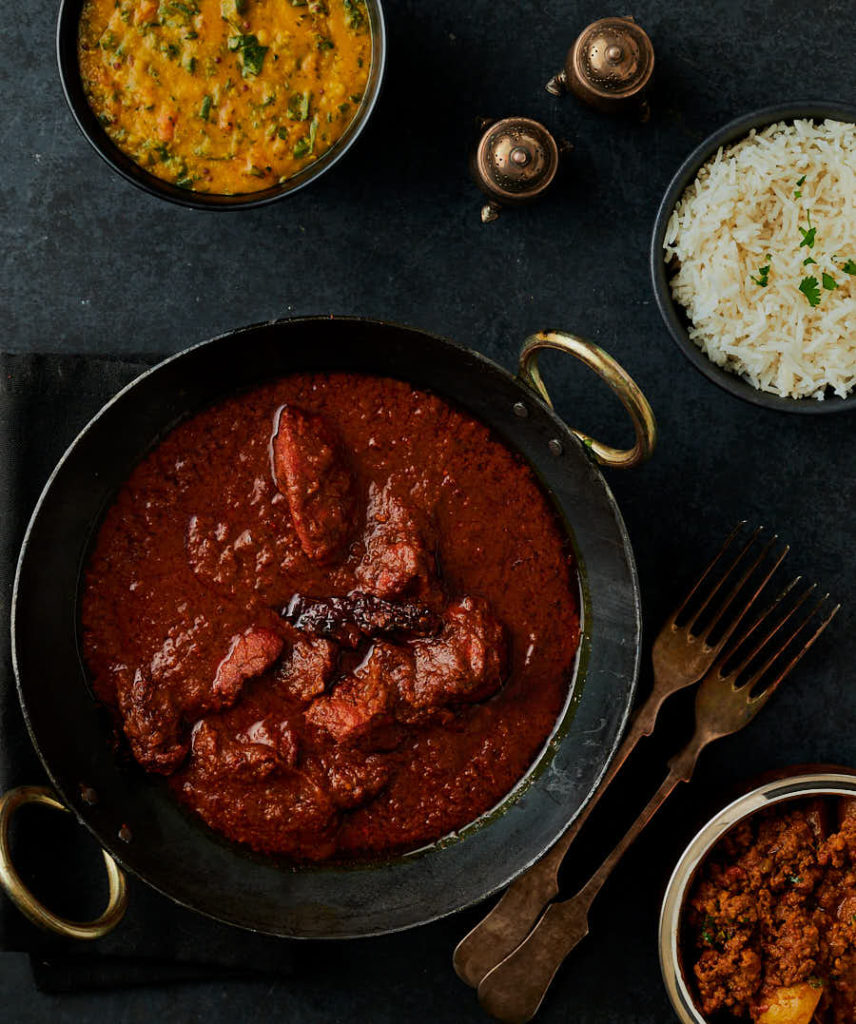
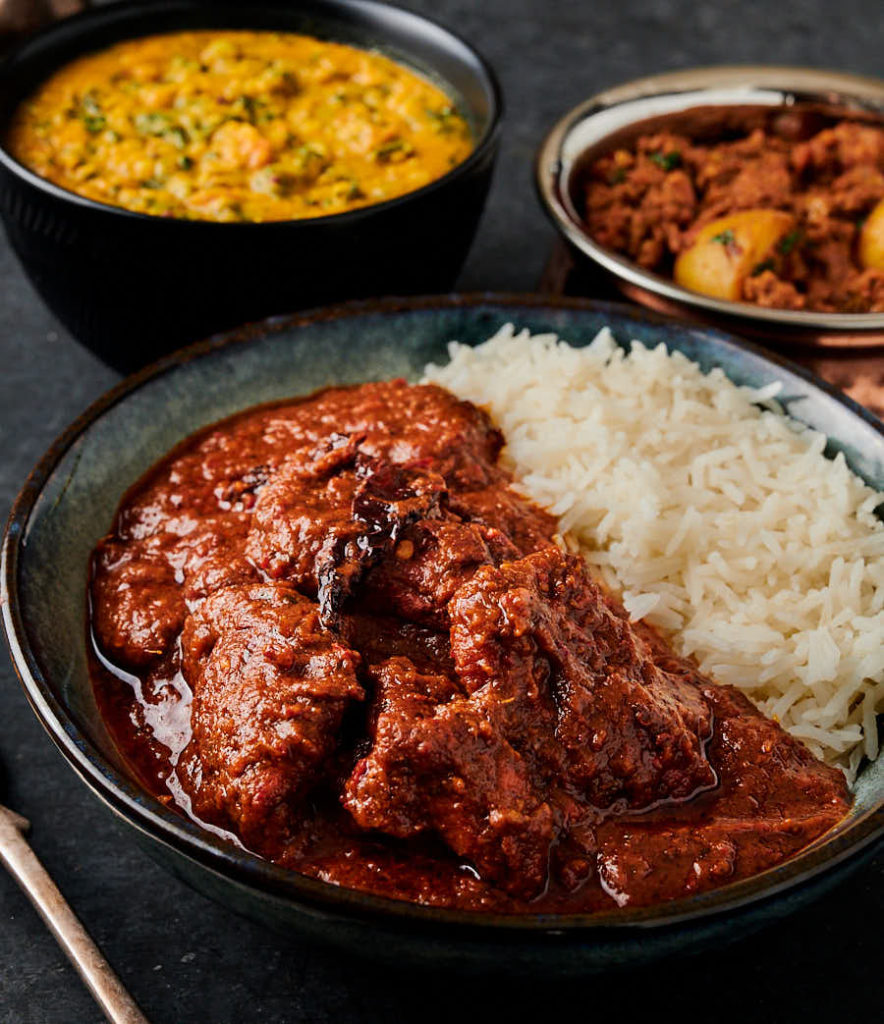
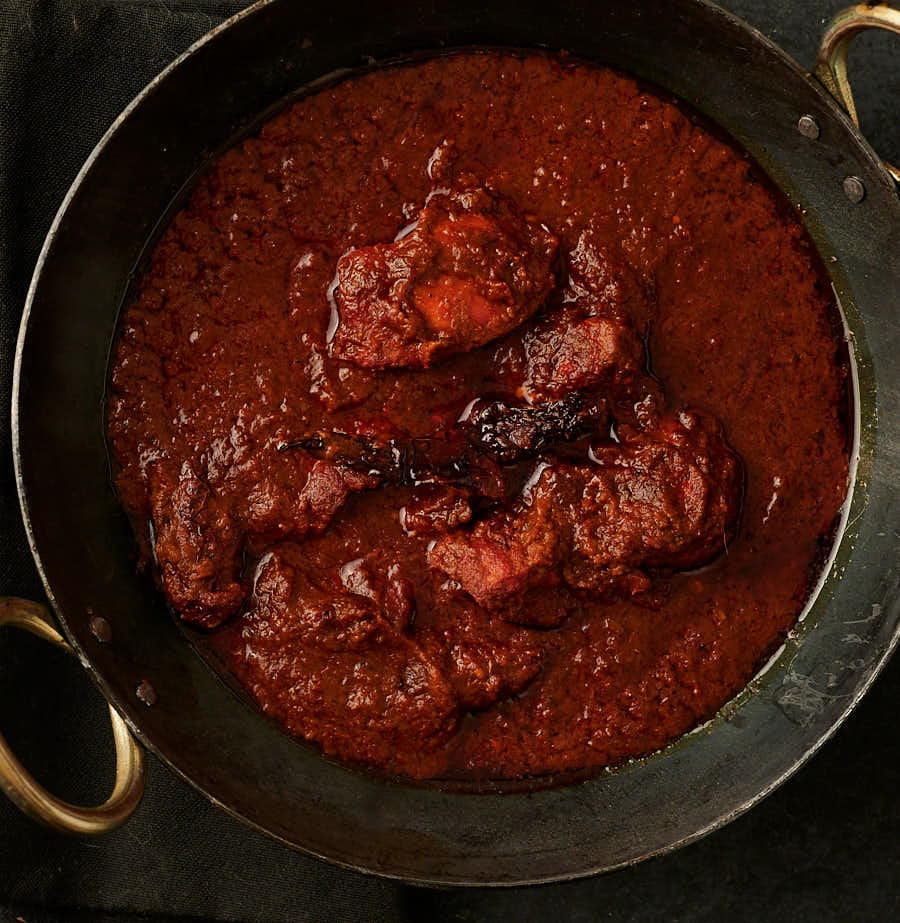
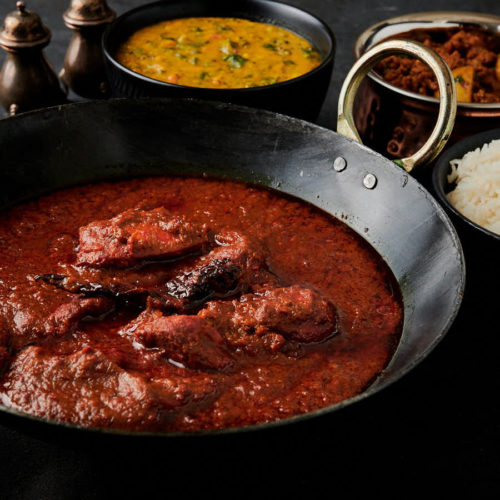
Hotel style chicken tikka vindaloo. It had to happen. Every huge flavour I could come up with. Thrown together in one crazy tasty curry.
Naga chicken tikka. Homemade vindaloo paste. And hotel gravy. Completely over the top.
This one has it all going on. A little spicy. A little sour. Real depth of flavour. I know I’m hyping it up. But I’m not worried. This is serious business. Master class time.
Homemade vindaloo paste
I used to wonder why my vindaloos weren’t awesome. Tried all sorts of things. Just could not get it. Truth be told – it made me a bit crazy.
Took me talking my way into one of the better Indian restaurant kitchens in town to figure it out. The chef said four words. Four simple words. Four magic words.
We use a paste.
There it was. A little insert pan on the line. A light came on in my head. The clouds parted. The sun shone down. Angels sang. Problem solved.
It isn’t hard to make. You can make batches of vindaloo paste and freeze it. Store it right next to your hotel gravy. So you’re ready to go any time.
The one tricky thing to find might be kashmiri chilies. But they are important. Don’t just randomly substitute another dried red chili.
Kashmiri chilies are big on flavour. Without the crazy heat. So you can use lots of them without blowing a hole in the back of your head.
Your Indian grocer will have them. Or get them online. Try hard. Did I mention it’s important?
There’s a lesson here as well. Restaurants respond to enthusiasm. If you are genuinely interested in something – just ask. It works.
Naga chicken tikka
I have a full on tandoori marinade recipe. It’s based on a lesson I got in a tikka restaurant in Bangalore. See? Enthusiasm works everywhere.
This is a simpler version. But one that works well for spicy curries. Naga pickle adds some fire. And some magic.
It’s fast. Easy. You can cook it in the oven. I still like it better over charcoal. No surprise. I like everything over charcoal. But it’s not critical. The naga adds enough flavour. Even for me.
The idea of making this dish with the naga tikka came from a long-time reader and very talented cook. He made it part of his curries. A lot of his curries. I’m just spreading the word. Andy and Hellen – thank you.
There’s a party appetizer here too
I’ve put in a little extra chicken in this recipe. Because I know you’ll want to snack. I do it. Can’t help myself. So I built buffer right into this recipe. Why fight it? Enjoy.
When you do try a piece or two think about how it could be an appetizer. With beer. Or drinks. Just take that chicken tikka. Drizzle the pan juices overtop. Put out some toothpicks or little skewers.
And let people graze. It’s a tasty little spice bomb. If your guests need something to cool things down again think about a dip to go with it.
Something creamy. Yoghurt based. I have some ideas. A little glebekitchen twist. Will do a post on this before long.
Hotel gravy – for the win
There are two popular approaches to cooking Indian at home. Traditional is the one you know. Pretty much every recipe on the internet is traditional.
Restaurant style is the other. It’s a little more esoteric. But it’s how they make curries in a restaurant environment. There are lots of those recipes here. Look for anything labelled restaurant on glebekitchen.
That’s how Indian restaurants cook. Not sort of. Not almost. For real. If you want what they are making in restaurants where you live this is how they do it.
And then there’s hotel style. That’s how they do it at the really posh restaurants. Bigger. Bolder. Deeper flavours.
If you cook traditional style there are things that will seem familiar. If you cook restaurant style you’ll feel at home too. This is somewhere in between.
It’s more work than regular restaurant style. Up front anyway. Which is why you don’t see it everywhere. More work means more labour. More labour means higher costs.
Restaurants work to price point. That’s business. But I don’t. And probably you don’t either. So go for it.
I’m pretty sure you won’t regret it. Hotel style chicken vindaloo is probably the most demanding curry on the blog to date. Not complicated.
But it will take real effort. Remember. Good things come to those that do. Really good things.
Chicken tikka vindaloo
If you want to make a great vindaloo use a homemade vindaloo paste. It makes a big difference. Do it restaurant style or hotel style or homestyle.
Doesn’t really matter. That paste is going to make a big difference. That is secret number one.
If you want to go the distance though. If you want to make the a truly memorable vindaloo. One that people talk about. For months. Try this one. Hotel style is secret number two. Naga chicken tikka? That’s just icing on the cake.
chicken tikka vindaloo
Ingredients
Quick naga chicken tikka
- 4 chicken thighs – boneless, skinless. Cut each thigh into 3 even pieces.
- 2 tbsp tandoori masala – available from any Indian grocer. Look for a brand that isn’t all salt.
- 1 tsp kasoor methi – dried fenugreek leaves, crumbled between your fingers
- 1/2 tsp kosher salt
- 1/4 tsp naga pickle – available from most Indian grocers. You can push this bit if you like the heat. Naga pickle is incredibly tasty and incredibly hot. Fine line to walk…
- 2 tbsp vegetable oil
Vindaloo paste
- 8 kashmiri chilies
- 1 large shallot chopped
- 2 tbsp garlic ginger paste
- 1 tsp kashmiri chili powder
- 1 tsp cumin powder
- 2 tsp malt vinegar
- 2 tbsp vegetable oil
- water to get it to puree if needed. Add a little bit at a time.
The spice mix
- 1 tsp Indian restaurant spice mix – recipe link below
- 1-2 tsp kashmiri chili powder
- 1 tsp paprika for colour more than anything else
- 1 tsp kasoor methi – dried fenugreek leaves
- 1/2 tsp kosher salt
tikka vindaloo curry
- 3 tbsp vegetable oil – any neutral oil is fine
- 2-3 kashmiri chilies – dried red chilies
- all the vindaloo paste from above
- 1 cup Indian hotel curry gravy – recipe link below. Dilute it with 3-4 tbsp of chicken stock. If you only have powder or cubes use water. That stuff is not stock.
- the naga chicken tikka or whatever tikka you feel like using
- 1 tsp tamarind paste – paste is not concentrate. They are very different. Don’t use concentrate.
- 1/2 tsp sugar – jaggery or brown sugar
Instructions
Do your prep
- Make your spice mix. Make your vindaloo paste. Make your naga chicken tikka.
- Note that the ingredients said dIlute your curry gravy with 3-4 tablespoons of water or chicken stock. You need to dilute it because the chicken is going in pre-cooked.
Make your quick naga chicken tikka
- Combine the tandoori masala, kasoor methi, salt, naga pickle and oil in a bowl large enough to hold all the chicken.
- Add the chicken and combine with the marinade. Use tongs. This stuff will stain your fingers. Nobody wants that.
- Marinate for about an hour if you have time. Pre-heat your oven to 400F while this is going on. Place a sturdy baking sheet in the oven to pre-heat. No skewers, aluminium foil or mess required here. Easy.
- Transfer the chicken (again, use tongs) to that pre-heated, sturdy baking sheet and place in the oven. Cook for about 6 minutes. Flip all the pieces and return to the oven. Cook until the internal temperature of the chicken reaches 165F. This should take another 4-8 minutes or so. Really depends on how big your chicken thigh pieces are. Set aside.
Make your vindaloo paste
- Stem and seed the kashmiri chilies (the ones for the paste – not the ones you will put in your curry).
- Soak the stemmed and seeded chilies in really hot water for a few minutes. Drain and do it again. You may need to do it a third time. At the end you want the chilies hydrated. That means soft. Take the time to get this right. It’s important.
- Combine all the paste ingredients in your blender. Add a bit of water and see if you can get it to puree. It will fight you. Add a little more water. Try again. You’ll probably need to scrape down the sides and fight back. Eventually you’ll get a paste. Keep going. You want the paste to be smooth. This is a good reason to make big batches. There’s a link in the notes below.
Make the tikka chicken vindaloo curry
- Heat the oil in a medium sized frying pan over medium heat until the oil just starts to shimmer.
- Add the remaining 2-3 kashmiri chilies. You should see little bubbles forming around them. Cook for about 30 seconds.
- Turn your heat down to medium low and add your spice mix. This is why you added 3 tablespoons of oil. You want to fry your spices in the oil. If you skimp on the oil you risk your spices sticking or burning. If your spices burn here you are starting over. Or eating terrible curry. Your choice. Personally, I would start over and try never to make the same mistake again.
- Cook the spices for about 30-45 seconds.
- Stir in the vindaloo paste. Fry, stirring constantly, until it starts to darken. This should take 2-3 minutes. Watch your heat. You don’t want it too hot.
- Add the Indian hotel curry gravy. Stir it really well. Get get the oil to combine with the curry gravy. You want everything mixed together at this point. Bring to a simmer and reduce the heat to maintain that simmer.
- Add the tamarind paste and stir.
- Cover loosely and keep simmering for about 5 minutes.
- At this point you need to decide whether you want the sugar or not. A little sweetness is a nice touch. I like it. And I don’t really like sugar in general. Notice there are exactly zero desserts on this blog. Should tell you something…
- You will also need to adjust the consistency of the sauce. It will be thick. The paste makes a difference. I like about 3 tablespoons of additional liquid at this point, maybe even a little more. This is personal preference. Go for what you like.
- Add the naga chicken tikka. Continue to cook for about 1 minute to warm the chicken through. When the chicken is warmed through dinner is ready.
- Serve with rice or parathas and a nice dal if you like. That’s an aloo keema in the pictures if you’re wondering. That was good too.
Notes
Nutrition
chicken tikka vindaloo
Ingredients
Quick naga chicken tikka
- 4 chicken thighs - boneless, skinless. Cut each thigh into 3 even pieces.
- 2 tbsp tandoori masala - available from any Indian grocer. Look for a brand that isn’t all salt.
- 1 tsp kasoor methi - dried fenugreek leaves, crumbled between your fingers
- 1/2 tsp kosher salt
- 1/4 tsp naga pickle - available from most Indian grocers. You can push this bit if you like the heat. Naga pickle is incredibly tasty and incredibly hot. Fine line to walk…
- 2 tbsp vegetable oil
Vindaloo paste
- 8 kashmiri chilies
- 1 large shallot chopped
- 2 tbsp garlic ginger paste
- 1 tsp kashmiri chili powder
- 1 tsp cumin powder
- 2 tsp malt vinegar
- 2 tbsp vegetable oil
- water to get it to puree if needed. Add a little bit at a time.
The spice mix
- 1 tsp Indian restaurant spice mix - recipe link below
- 1-2 tsp kashmiri chili powder
- 1 tsp paprika for colour more than anything else
- 1 tsp kasoor methi - dried fenugreek leaves
- 1/2 tsp kosher salt
tikka vindaloo curry
- 3 tbsp vegetable oil - any neutral oil is fine
- 2-3 kashmiri chilies - dried red chilies
- all the vindaloo paste from above
- 1 cup Indian hotel curry gravy - recipe link below. Dilute it with 3-4 tbsp of chicken stock. If you only have powder or cubes use water. That stuff is not stock.
- the naga chicken tikka or whatever tikka you feel like using
- 1 tsp tamarind paste - paste is not concentrate. They are very different. Don’t use concentrate.
- 1/2 tsp sugar - jaggery or brown sugar
Instructions
Do your prep
- Make your spice mix. Make your vindaloo paste. Make your naga chicken tikka.
- Note that the ingredients said dIlute your curry gravy with 3-4 tablespoons of water or chicken stock. You need to dilute it because the chicken is going in pre-cooked.
Make your quick naga chicken tikka
- Combine the tandoori masala, kasoor methi, salt, naga pickle and oil in a bowl large enough to hold all the chicken.
- Add the chicken and combine with the marinade. Use tongs. This stuff will stain your fingers. Nobody wants that.
- Marinate for about an hour if you have time. Pre-heat your oven to 400F while this is going on. Place a sturdy baking sheet in the oven to pre-heat. No skewers, aluminium foil or mess required here. Easy.
- Transfer the chicken (again, use tongs) to that pre-heated, sturdy baking sheet and place in the oven. Cook for about 6 minutes. Flip all the pieces and return to the oven. Cook until the internal temperature of the chicken reaches 165F. This should take another 4-8 minutes or so. Really depends on how big your chicken thigh pieces are. Set aside.
Make your vindaloo paste
- Stem and seed the kashmiri chilies (the ones for the paste - not the ones you will put in your curry).
- Soak the stemmed and seeded chilies in really hot water for a few minutes. Drain and do it again. You may need to do it a third time. At the end you want the chilies hydrated. That means soft. Take the time to get this right. It’s important.
- Combine all the paste ingredients in your blender. Add a bit of water and see if you can get it to puree. It will fight you. Add a little more water. Try again. You’ll probably need to scrape down the sides and fight back. Eventually you’ll get a paste. Keep going. You want the paste to be smooth. This is a good reason to make big batches. There’s a link in the notes below.
Make the tikka chicken vindaloo curry
- Heat the oil in a medium sized frying pan over medium heat until the oil just starts to shimmer.
- Add the remaining 2-3 kashmiri chilies. You should see little bubbles forming around them. Cook for about 30 seconds.
- Turn your heat down to medium low and add your spice mix. This is why you added 3 tablespoons of oil. You want to fry your spices in the oil. If you skimp on the oil you risk your spices sticking or burning. If your spices burn here you are starting over. Or eating terrible curry. Your choice. Personally, I would start over and try never to make the same mistake again.
- Cook the spices for about 30-45 seconds.
- Stir in the vindaloo paste. Fry, stirring constantly, until it starts to darken. This should take 2-3 minutes. Watch your heat. You don’t want it too hot.
- Add the Indian hotel curry gravy. Stir it really well. Get get the oil to combine with the curry gravy. You want everything mixed together at this point. Bring to a simmer and reduce the heat to maintain that simmer.
- Add the tamarind paste and stir.
- Cover loosely and keep simmering for about 5 minutes.
- At this point you need to decide whether you want the sugar or not. A little sweetness is a nice touch. I like it. And I don’t really like sugar in general. Notice there are exactly zero desserts on this blog. Should tell you something…
- You will also need to adjust the consistency of the sauce. It will be thick. The paste makes a difference. I like about 3 tablespoons of additional liquid at this point, maybe even a little more. This is personal preference. Go for what you like.
- Add the naga chicken tikka. Continue to cook for about 1 minute to warm the chicken through. When the chicken is warmed through dinner is ready.
- Serve with rice or parathas and a nice dal if you like. That’s an aloo keema in the pictures if you’re wondering. That was good too.
Notes
Nutrition
Hotel style makhani gravy. Want to make butter chicken like you dream about? This is the first step. The first step to other great dishes too.
Makhani gravy is a foundational sauce. Think French mother sauces. Just like hotel gravy. A step on the path to a finished dish. The right tool for the job.
This one is for butter chicken. Or anywhere you want to bring big, spiced tomato flavour to your dish.
Makhani gravy is the other gravy in just about every Indian restaurant
Here’s something I bet you didn’t know. Just about every Indian restaurant runs with two base gravies.
There’s one general purpose onion based gravy. It’s used in just about everything.
But there’s another one you never hear about. The butter chicken gravy. This is that gravy. There’s a little twist here though. It’s also an ingredient in other curries.
It’s another tool to the arsenal. For hotel style cooking. Think dal makhani, chicken tikka masala. Bhuna. Rajma. There’s curry magic to be had here.
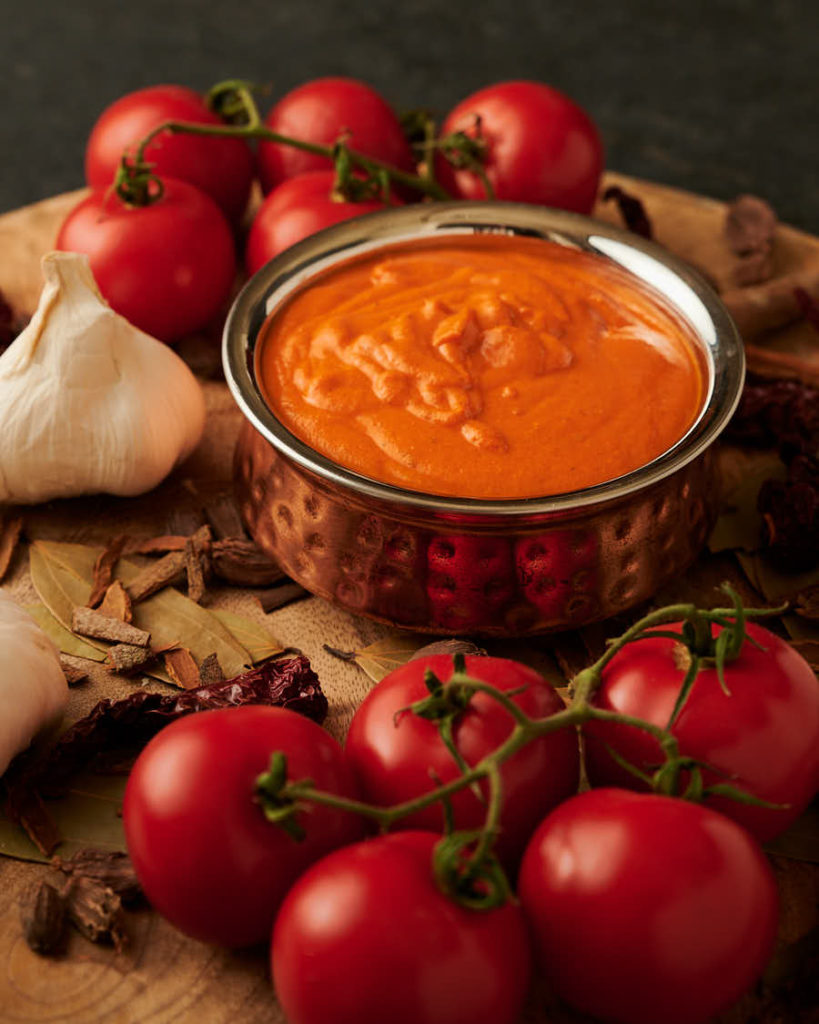
Hotel style is high end cooking
Pretty good chance you haven’t heard about hotel style. Unless you’re a regular around here. It’s not mainstream. Not yet.
But it’s really, really good. It’s restaurant style cooking. Just not in the way you might know.
Restaurant style is what you get pretty much anywhere you go. It’s good. I make it all the time. A lot of people do. There are lots of restaurant style recipes on glebekitchen. I’m a fan.
But when I want to pull out all the stops. When I want to totally crush it. That’s when I turn to hotel style.
It’s a little more refined. What’s going on in really good Indian restaurant kitchens. High end Indian restaurant cooking. High end cooking. Period.
Restaurant style is one style fits all. It’s fast. It’s relatively easy. And it’s tasty. People love it. I love it.
Hotel style is a more disciplined approach. There are multiple different base gravies.
Think about that for a second. It’s called base gravy for a reason.
Because it’s foundational. The base of what you are cooking. That’s classical cooking discipline. French cuisine has 5 mother sauces. Hotel style has more than 10.
Don’t freak out though. You don’t have to make 10 base gravies. One step at a time. You’re not running a kitchen in an Indian hotel. You’re allowed to just have fun. Between makhani and the hotel gravy you’re in good shape. I’ll probably roll out more in time though. At least one more. Two or three max.
For now you have the two big ones. And the combination of the two. So three variants. That’s already pretty good.
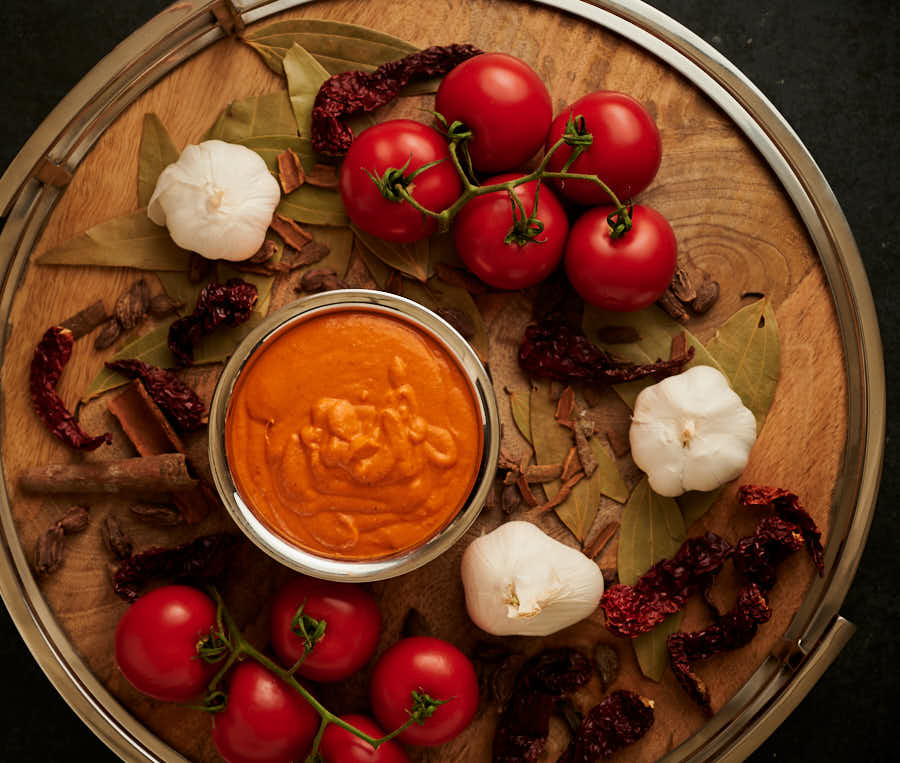
On the matter of cashews
Cashews are a pretty common ingredient in traditional Indian cooking. They add a wonderful richness to dishes. Without being cloying. Or so I’m told.
If you look around glebekitchen you’ll notice there are no cashews anywhere. There’s a reason.
I am allergic to cashews. So this one is tough for me. I developed and tested this recipe with cashews. I tasted it. It was perfect. And it made me unwell.
I also tested the hotel style butter chicken with with and without cashews. The cashew version won. It wasn’t even close.
But this is the last time I’m testing with cashews. All the other recipes I make with makhani gravy will be cashew free. Full disclosure. I’ll probably figure something out using macadamia nuts though.
The pictures are taken with cashews. So if you leave them out it will look different.
And the matter of onions
There are no onions in makhani gravy. Not a shallot. No scallions. There are zero onions here. Madness you say?
Nope. Not madness at all. Butter chicken is proof. Takeaway butter chicken may have onions. But that’s takeaway.
We aren’t talking takeaway here though. This is hotel style. And hotel style is upscale. It’s about going the distance.
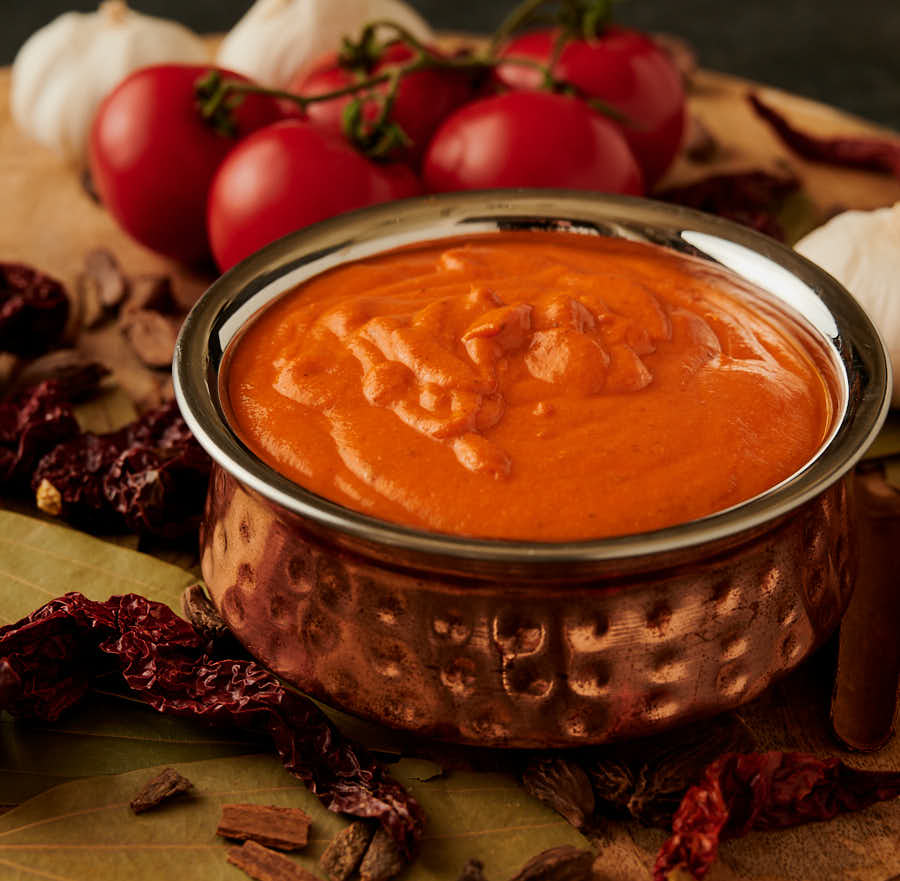
On butter and cream
If you are making makhani gravy it needs butter and cream. Makhani means butter. Hard to make it without the star ingredient.
But the timing doesn’t matter as much. You can add butter and cream when you make the gravy. Or you can add it into the final dish.
Technically, it isn’t makhani gravy until you add the butter and cream. But I’m using this gravy in other dishes. Where maybe butter isn’t necessarily right.
So I leave it out. Stop this recipe right before the last step. Add the butter and cream into the final dish. If I need it.
And if I don’t it’s good to go. Like a tomato gravy. Tomato masala. So this is two gravies in one.
Makhani gravy – it’s not just for the best butter chicken you can make
Makhani gravy is an ingredient. It can stand alone. In butter chicken. Dal makhani. Or it can be used together with the regular hotel gravy.
Makhani gravy and chicken tikka is pretty much butter chicken. Not quite. But pretty close.
It’s also a tomato flavour bomb. Perfect for upscale tikka masala. Bhuna. Rajma. That’s where the blend comes in.
A little hotel gravy. A little makhani gravy. And all of a sudden you are down the rabbit hole.
Hello Alice. So very glad to see you here.
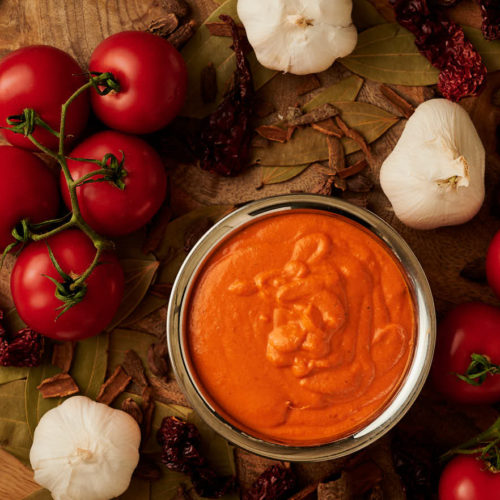
makhani gravy – hotel style
Ingredients
Step one ingredients
- 28 oz tomatoes – canned. Make sure there are no other flavours (basil etc). Just tomatoes, juices and salt.
- 2 tsp kashmiri chili powder – less if you want a milder gravy
- 1 tsp kosher salt 2/3 tsp table salt
- 1 small tej patta – Indian bay leaf
- 1 black cardamom whole. A small one. I hear people talk about monster black cardamom that are an inch long. I’m talking 1/2 inch here.
- 4 peppercorns
- 1 inch cassia stick
- 1 tbsp garlic ginger paste
- 1 green chili = jwala aka finger hot, cut in half lengthwise and seeded
- 3 tbsp neutral oil – vegetable, canola etc
- 1/2 cup whole cashews – optional. 1/2 cup is an approximate measure. Depends how much space there is between cashews. 80 grams is what I actually use.
Step two ingredients
- 1/2 cup heavy cream
- 3 tbsp butter
Instructions
Step one
- Put your tomatoes and the juices in the can through a food mill. If you don’t have a foodmill try crushing them with your hands. The goal is to get rid of the stem of each tomato and to get things pretty smushed up. Smushed is a highly technical cooking term. It means smushed. They don’t have to be completely pureed. Everything winds up in a blender later on.
- If you don’t want to smush, you can try cutting the cores out with a small knife and chopping the tomatoes. I’ve even heard a potato ricer works although I’ve never tried that myself.
- Heat the oil in a saucepan large enough to hold all the ingredients over medium low heat.
- Add the whole spices and let them crackle for about a minute. You want to see little bubbles forming around the spices.
- Add the garlic ginger paste and cook until it stops sputtering. This should take under a minute.
- Add the kashmiri chili and salt. Stir to combine and gently fry the chili powder/salt for 30-45 seconds. This is called blooming spices. It’s important. Don’t skip this step.
- Add the crushed tomatoes, the green chili and the cashews if using them. Bring to a simmer, cover loosely and cook for about 45 minutes.
- Let cool slightly and puree until smooth (whole spices and all) in a blender. Your blender can handle the whole spices. Don’t worry.
- At this point you can stop and portion your makhani gravy. Technically it’s not a makhani gravy at this point. It is a tomato masala. And that’s a useful thing for other recipes. That’s what I do. Portion it out in one cup (for butter chicken, dal makhani) or half cup portions (rajma, chicken tikka masala, bhuna etc) and freeze it. I turn it into makhani gravy when I cook the actual final curries. You can approach it either way. I just like the effect of fresh cream and butter on the final dish. If you do go the distance then just add a little extra cream and butter to taste when you make your curries.
Step two
- If you prefer to make the complete makhani gravy up front return the pureed gravy to the saucepan. Bring to a bare simmer. Remove from heat. Mix in your butter and cream.
- Done. Portion out as above or use immediately.
