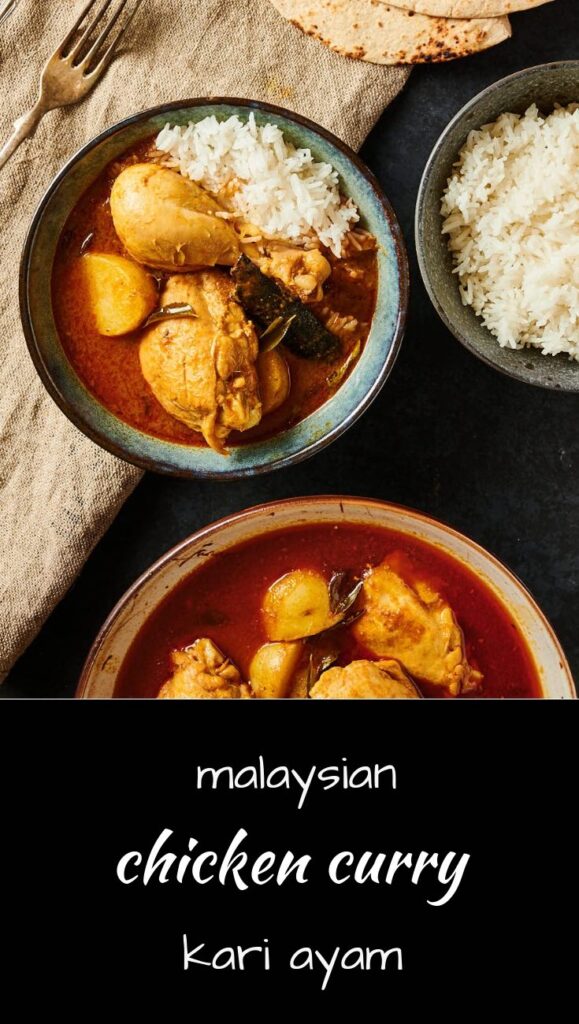
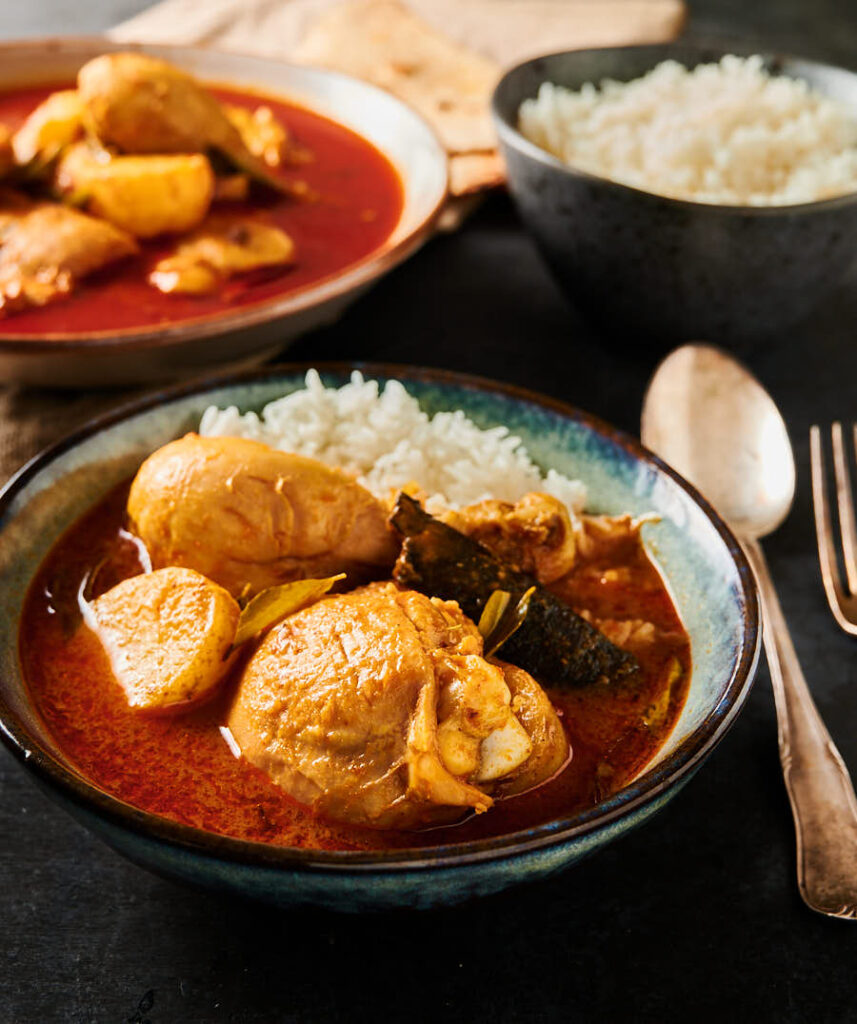
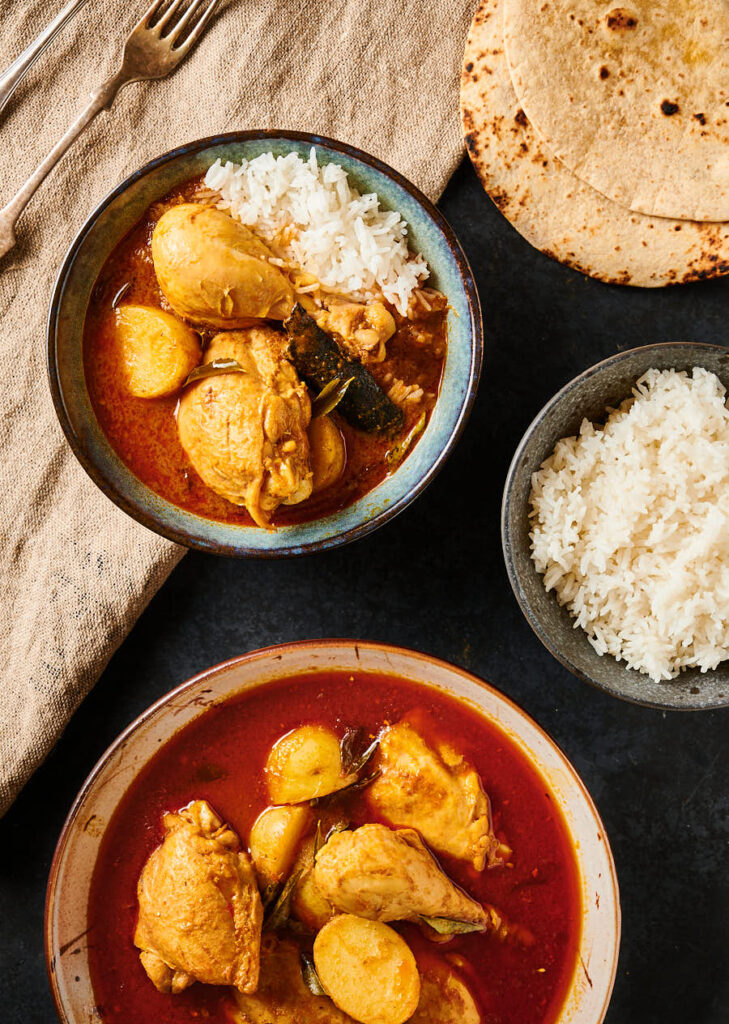
Bengali chicken curry done restaurant style brings home cooking to the next level. All the wonderful, authentic flavours. And an incredible, lush gravy. What’s not to love?
This isn’t on any restaurant menus. At least where I live. But it should be. It has all the big tastes you expect. But with a twist. Familiar but completely different. And really good.
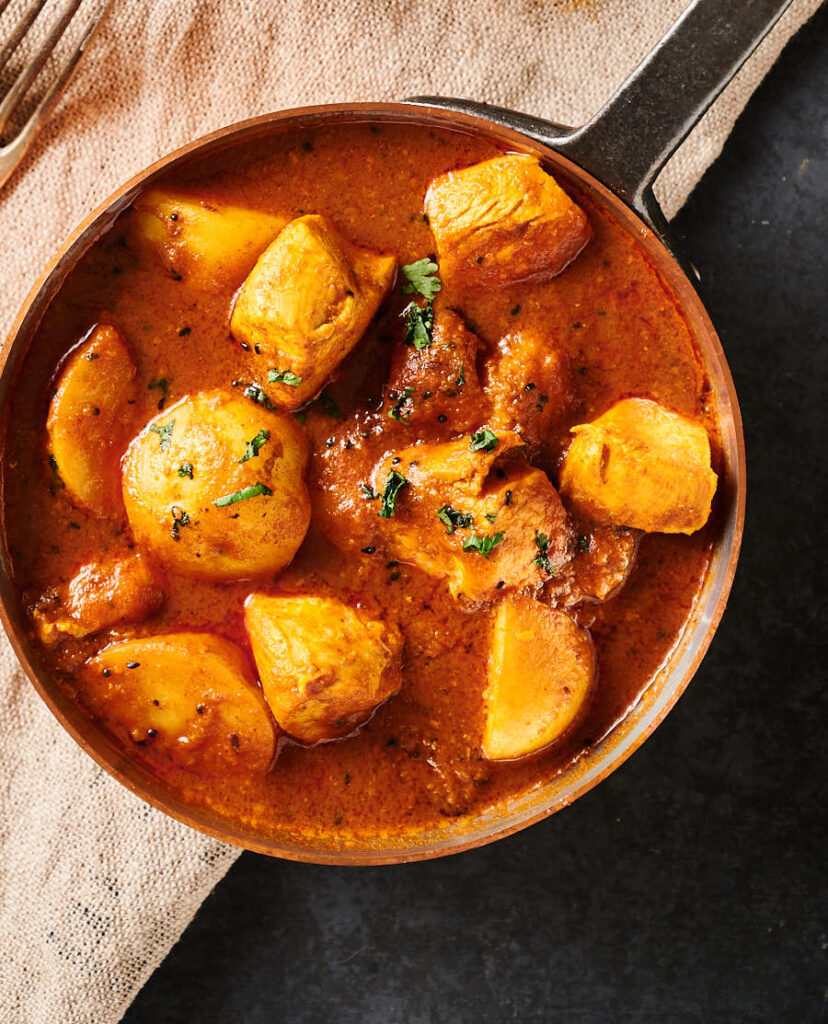
Bengali chicken curry re-imagined
Bengali chicken curry done restaurant style is a riff on food I grew up eating. The flavours of my childhood. But how they would make it in a restaurant. If only restaurants made it…
Back then it was called murgir jhol. Or just chicken curry. Because when I was growing up this was the definitive chicken curry.
Everybody made it. Some did it better than others. But the backbone was always there. That wonderful Bengali five spice called panch phoran. Garlic. Ginger. Potatoes. Always potatoes. A hint of cinnamon. And chicken.
Sometimes green chili. A bit of sugar. Or mustard oil. Mustard oil is a nice touch. I’ve made it optional here but a 50/50 mix of mustard oil and vegetable oil adds a nice touch.
Murgir jhol is a runny curry. Almost soupy. Which is very different from restaurant style curries. If you’ve only had restaurant style curries try a runny one some time. Totally different experience. Like lemon coriander chicken curry . Tasty stuff.
This version is restaurant style. And that means rich, thick gravy. That’s what you will get here. I should do a homestyle version though. So you can compare. Both good.
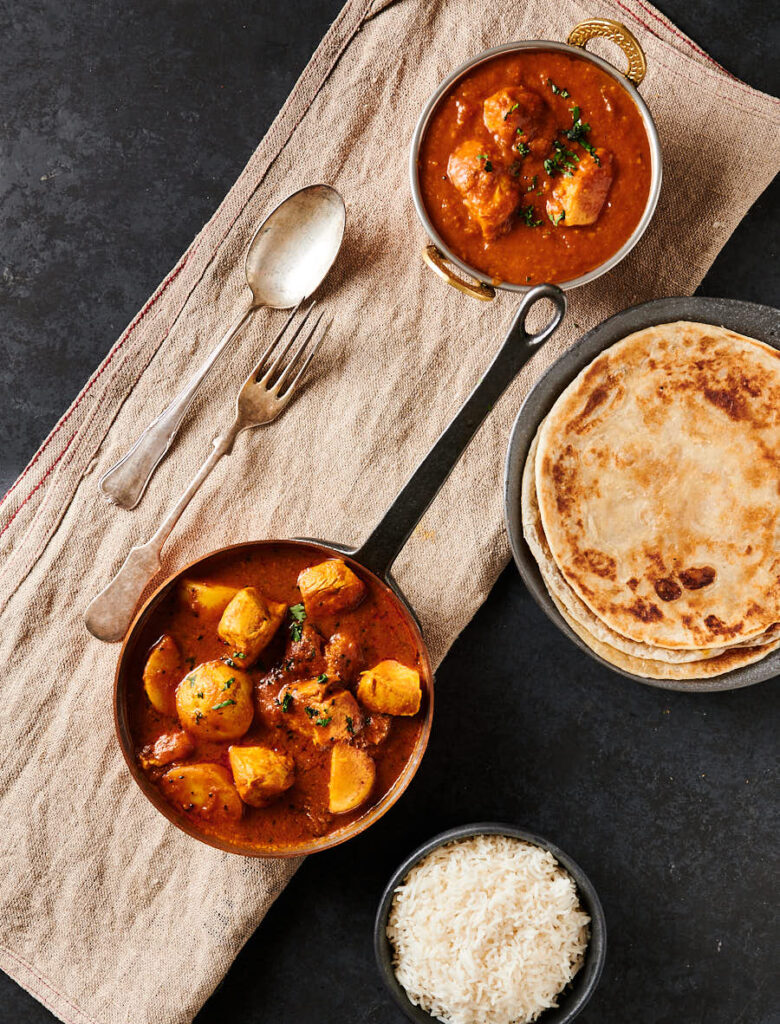
Don’t let the simplicity of this chicken curry recipe fool you
There isn’t a long list of ingredients in Bengali chicken curry. So you might think the flavours are a bit ho hum.
You would be wrong. I am into big flavours. That’s pretty much what glebe kitchen is about. Bland is not a word I ever want to hear.
There’s Bengali five spice. That’s five spices in one. And there’s restaurant mix powder. Another seven spices. It’s just streamlined. Like they would do in restaurants. So it doesn’t take 30 minutes to measure out ingredients.
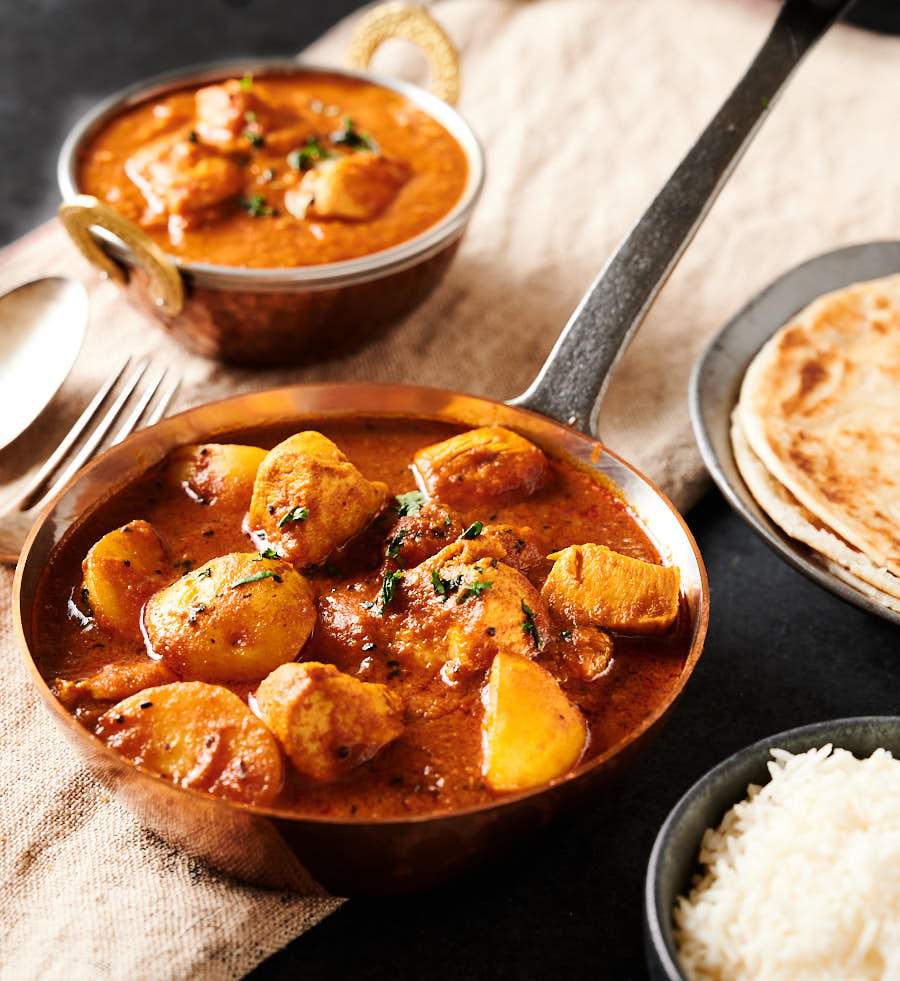
Panch phoran makes this Bengali chicken curry special
Panch phoran is the Bengali signature spice blend. Never heard of it? Not surprising. It’s big in Eastern India and Bangladesh. But you don’t see it often elsewhere.
That’s too bad. It is seriously tasty stuff. Secret weapon tasty in my book.
It’s not that exotic. Just a blend of whole spices. You can get it at any Indian grocer. Or you can make it yourself.
It’s a mix of fenugreek seed, cumin seed, mustard seed, nigella seed and fennel seed. Nothing so unusual. Except maybe nigella seed. You won’t find that at a bulk store.
Not exotic maybe. But distinctive. Flavourful. Surprisingly so. Try it. It’s addictive. And it’s what brings the magic to Bengali chicken curry.
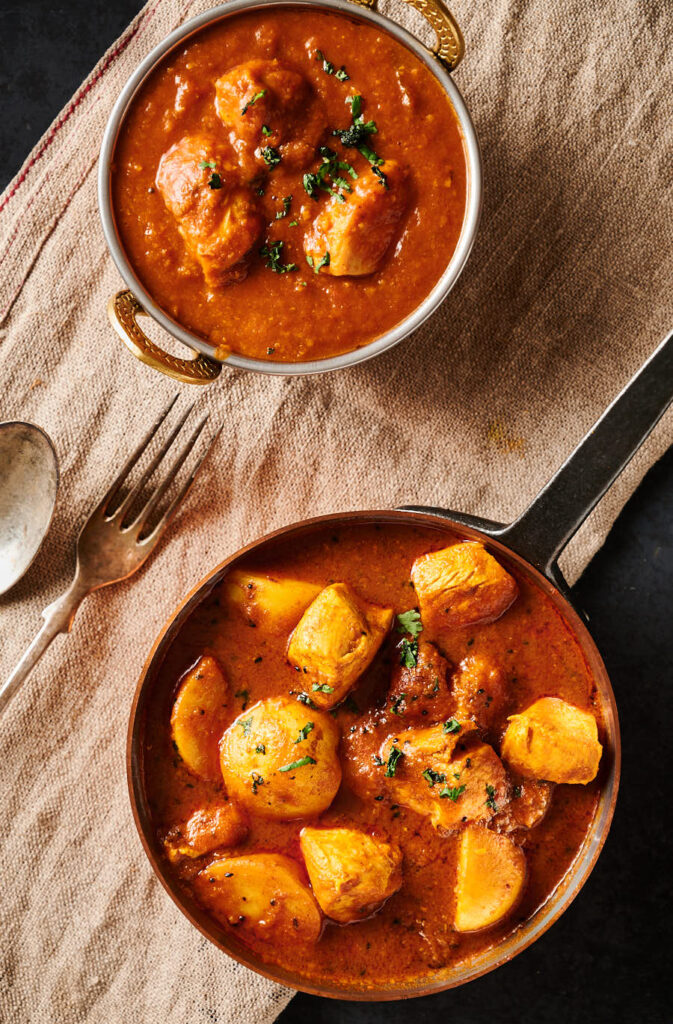
This is a dish to make when you want something new
Bengali chicken curry. This is not standard Indian restaurant fare. Different. But delicious.
The spicing is unique. But if you try it you’ll get a glimpse into a totally different set of flavours.
Indian restaurants have a formula. And it’s all pretty similar. Which is wrong. Makes me crazy. Would you go out for Italian if every restaurant had the same menu? A world where Olive Garden reigned supreme? Not a happy place in my mind.
Indians don’t eat the same 20 dishes you see on every Indian restaurant menu. And you shouldn’t either.
Try this. Or another dish you’ve never seen on a restaurant menu. There is so much more to Indian cooking. Give your tastebuds a treat.
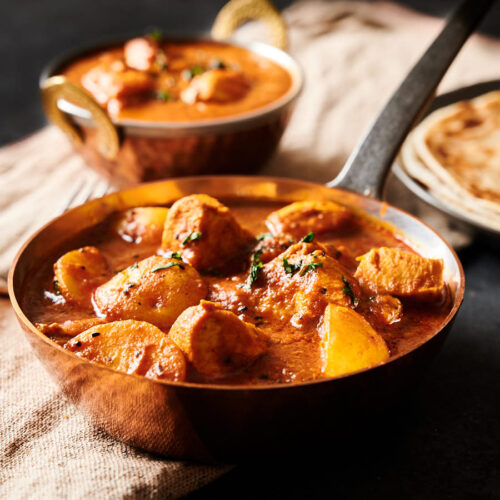
bengali chicken curry – restaurant style
Ingredients
The whole spice mix
- 1 tsp panch phoran – Bengali spice mix available at Indian grocers
- 1/2 tsp brown mustard seeds
The powdered spice mix
- 1 tsp kashmiri chili powder
- 2 tsp Indian restaurant spice mix recipe link below
- 1/16 tsp cinnamon powder – just a pinch really. Use 1/2 your 1/8 tsp measuring spoon to be precise.
- 1/2 tsp kosher salt
The curry ingredients
- 4 Tbsp neutral oil or use a 50/50 mix neutral and mustard oil
- 1 Tbsp garlic/ginger paste – recipe link below
- 1 1/2 Tbsp tomato paste Diluted in about 3 tbsp water
- 15 oz curry base – recipe link below
- 10-12 oz pre-cooked chicken see note
- 1 small to medium potato cut into 8 bite size chunks and pre-cooked in well salted water
Instructions
Do your prep
- Pre-cook your chicken. Cut the chicken into large bite size pieces. Put them in a pan with enough chicken stock or water to cover. Add a bit of spice mix or curry powder and a pinch of salt. Simmer until just barely done. The chicken cooks again briefly in the gravy.
- Pre-cook your potatoes. Cut them into pieces about the same size as the chicken. Add them to a small sauce pan and cover with well salted water. Bring to a simmer. The potatoes are done when a fork slides into them easily.
- Make the spice mixes. Combine the restaurant spice mix, kashmiri chili powder, cinnamon and salt in one small bowl. This is your powdered spice mix. Combine the mustard seeds and panch phoran in another small bowl.
- Combine 1 1/2 tablespoons of tomato paste with about 3 tablespoons of water.
Make the Bengali chicken curry
- Heat your frying pan (don’t use non-stick) briefly over medium heat. Add the oil.
- Once the oil starts to shimmer add the panch phoran and mustard seed mix. You should see little bubbles forming around the spices. Cook 15-20 seconds.
- Now add the garlic ginger paste. Cook, stirring constantly, until it stops sputtering. This should take 30 seconds or so.
- Add the powdered spice mix. This is the critical step. Stir it constantly for 30 seconds. If it starts to darken lift the pan off the heat. You want the spice mix to cook in the oil but not burn. You can go a little longer if you want. Really cook out the spices. Just be careful. Burnt spices are not tasty.
- Turn the heat up to medium high. This is important. The heat is what drives Indian restaurant flavour. The Maillard reaction kicks in and magic happens. As you become more comfortable with this technique try pushing it. Add the diluted tomato paste and stir until bubbles form (the oil will likely separate). This takes around 30 seconds to one minute depending on the heat.
- Add around 3 oz of curry base (you don’t need to be super precise here). Stir until bubbles form (little craters really), around 30 seconds. Think lively boil. Watch the edges of the pan. The curry can stick here. Sticking is OK. Just scrape it back into the base. Burning is bad.
- Now add 6 oz of curry base and stir briefly. Let it cook until the bubbles form again. This takes 1-2 minutes.
- Add the rest of the curry base and let cook until the bubbles form. Turn the heat down to low and add the pre-cooked chicken and potatoes.
- Let the curry simmer for about 5 minutes. If it gets too thick add a bit more curry base. Don’t add water.
- Garnish with a bit of chopped fresh cilantro if you like. Serve with rice or Indian flatbread (or both!).
Notes
Nutrition
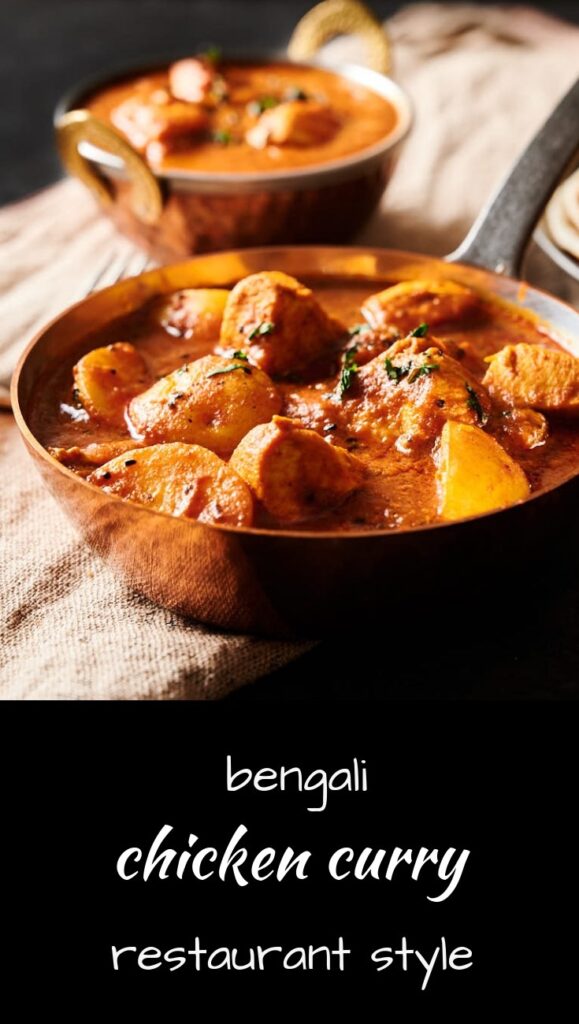
bengali chicken curry - restaurant style
Ingredients
The whole spice mix
- 1 tsp panch phoran - Bengali spice mix available at Indian grocers
- 1/2 tsp brown mustard seeds
The powdered spice mix
- 1 tsp kashmiri chili powder
- 2 tsp Indian restaurant spice mix recipe link below
- 1/16 tsp cinnamon powder - just a pinch really. Use 1/2 your 1/8 tsp measuring spoon to be precise.
- 1/2 tsp kosher salt
The curry ingredients
- 4 Tbsp neutral oil or use a 50/50 mix neutral and mustard oil
- 1 Tbsp garlic/ginger paste - recipe link below
- 1 1/2 Tbsp tomato paste Diluted in about 3 tbsp water
- 15 oz curry base - recipe link below
- 10-12 oz pre-cooked chicken see note
- 1 small to medium potato cut into 8 bite size chunks and pre-cooked in well salted water
Instructions
Do your prep
- Pre-cook your chicken. Cut the chicken into large bite size pieces. Put them in a pan with enough chicken stock or water to cover. Add a bit of spice mix or curry powder and a pinch of salt. Simmer until just barely done. The chicken cooks again briefly in the gravy.
- Pre-cook your potatoes. Cut them into pieces about the same size as the chicken. Add them to a small sauce pan and cover with well salted water. Bring to a simmer. The potatoes are done when a fork slides into them easily.
- Make the spice mixes. Combine the restaurant spice mix, kashmiri chili powder, cinnamon and salt in one small bowl. This is your powdered spice mix. Combine the mustard seeds and panch phoran in another small bowl.
- Combine 1 1/2 tablespoons of tomato paste with about 3 tablespoons of water.
Make the Bengali chicken curry
- Heat your frying pan (don’t use non-stick) briefly over medium heat. Add the oil.
- Once the oil starts to shimmer add the panch phoran and mustard seed mix. You should see little bubbles forming around the spices. Cook 15-20 seconds.
- Now add the garlic ginger paste. Cook, stirring constantly, until it stops sputtering. This should take 30 seconds or so.
- Add the powdered spice mix. This is the critical step. Stir it constantly for 30 seconds. If it starts to darken lift the pan off the heat. You want the spice mix to cook in the oil but not burn. You can go a little longer if you want. Really cook out the spices. Just be careful. Burnt spices are not tasty.
- Turn the heat up to medium high. This is important. The heat is what drives Indian restaurant flavour. The Maillard reaction kicks in and magic happens. As you become more comfortable with this technique try pushing it. Add the diluted tomato paste and stir until bubbles form (the oil will likely separate). This takes around 30 seconds to one minute depending on the heat.
- Add around 3 oz of curry base (you don’t need to be super precise here). Stir until bubbles form (little craters really), around 30 seconds. Think lively boil. Watch the edges of the pan. The curry can stick here. Sticking is OK. Just scrape it back into the base. Burning is bad.
- Now add 6 oz of curry base and stir briefly. Let it cook until the bubbles form again. This takes 1-2 minutes.
- Add the rest of the curry base and let cook until the bubbles form. Turn the heat down to low and add the pre-cooked chicken and potatoes.
- Let the curry simmer for about 5 minutes. If it gets too thick add a bit more curry base. Don’t add water.
- Garnish with a bit of chopped fresh cilantro if you like. Serve with rice or Indian flatbread (or both!).
Notes
Nutrition
Malaysian curry chicken or kari ayam is what happens when India goes traveling. Familiar spices slammed up against the flavours of south east Asia. Just. Good. Eating.
Never heard of kari ayam? Time to change that. It’s addictive. Think curry flavours with even more flavours. Coconut milk. Haunting notes from star anise. And lemongrass to really mix things up. Puts a smile on your face and a glow in your stomach.
Kari Ayam is Indian meets Thailand
I’m probably going to get in trouble for saying this. But to me it, kari ayam has many of the flavours of a South Indian curry. Coconut milk. Check. Curry leaves. Check. Garlic and ginger. Check. Big spices. Check.
But then you add lemongrass. A bit of fish sauce. Star anise. You might not think that changes everything. But it does. Just like that. Amazing.
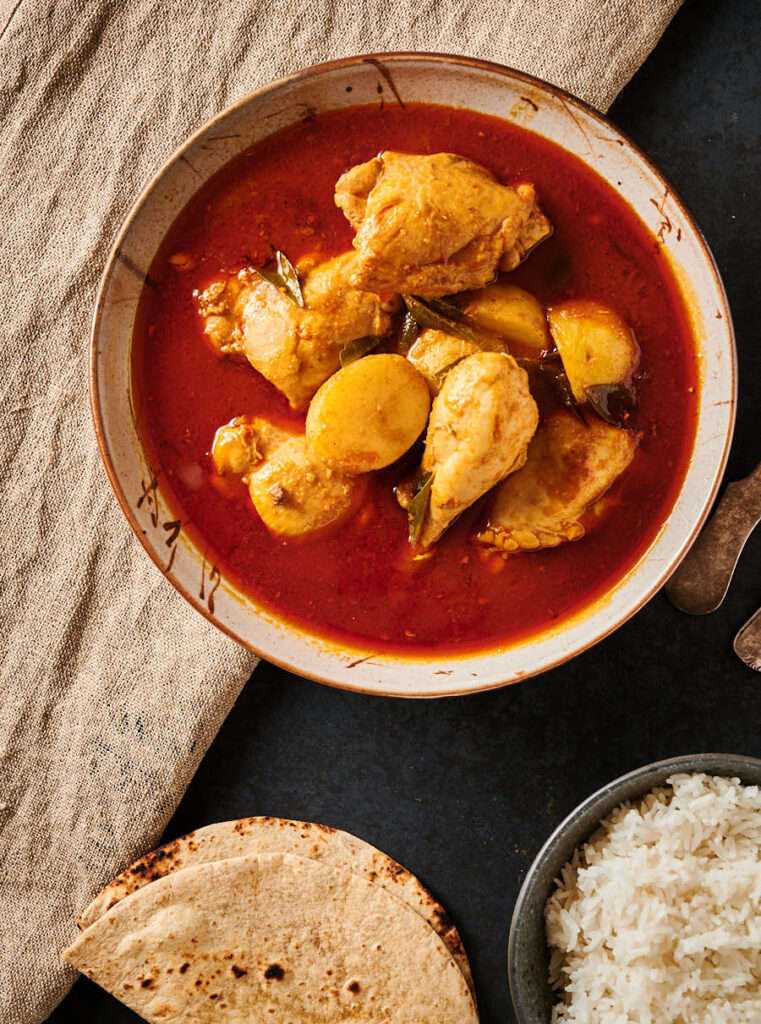
Malaysian curry chicken needs the right curry powder
I know. I know. Curry powder? Who uses that? How can this be a serious recipe if it calls for curry powder? Trust me. Kari ayam is best with a Malaysian blend.
Don’t substitute the electric yellow stuff that you get at the grocery store. That’s just wrong. Malaysian curry chicken uses meat curry powder. That’s what it’s called. Meat curry powder. Malays use it. And so do I. Because it works. Because it’s delicious.
I use Babahs’ brand. Not because I have tried every Malaysian curry powder in the world. But because a Malay foodie friend told me to use it. And I can get it. Shopping for Malaysian is not easy where I live…
There are other brands. Probably not a lot different. So if you can find something from Malaysia go for it.
Cook your potatoes separately
You don’t have to do this. But I do. And I do it because I don’t like overdone chicken. Once you put potatoes into a dish you wait for potatoes to be done. Some days that takes too long.
And that means overdone chicken. The dark meat used here is more forgiving than white. But even still. Overdone is overdone. Not good.
So I cook the potatoes separately. Not completely. But most of the way. And I save the water. There’s starch in the water. And that thickens the curry a bit. So I use it instead of stock.
Kari Ayam doesn’t need to be mild
A lot of Malaysian curry chicken recipes are pretty tame. Maybe that’s a bit overstated. Maybe not though. This version has a bit of bite.
It’s not blow a hole in the back of your head hot. Not even close. But it does have a little zing. Unless you start adding Kashmiri chili powder. Then it gets spicy.
There’s more spice. A lot more spice. I use 5 tablespoons of curry powder. Seem like a lot? Not to me. It takes a lot to give it the big flavours I want. You could probably add more…
This is a saucy curry
Don’t think this is one of those lush Indian curries. Kari Ayam is a saucy curry. Almost soupy. Like laksa.
So make sure there’s a spoon on the table. To get every last drop. Because if you don’t people are going to pick up their bowls and lick them. Which is flattering. But not very elegant.
Malaysian curry chicken. It’s for when you want something a little different. But still magically delicious.
kari ayam – malaysian curry chicken
Ingredients
malaysian curry chicken
- 8 chicken thighs or a mix of drumsticks and thighs
- 1 star anise
- 2 inch cinnamon bark (cassia)
- 2 potatoes coarsely chopped (yukon gold works well)
- 1 stalk lemongrass
- 5 sprigs fresh curry leaves (leaves removed from stems, stems discarded)
- 2 tbsp fish sauce
- 2 cups coconut milk
- 4 tbsp neutral oil (e.g. vegetable or corn oil)
curry paste
- 3 large shallots
- 4 cloves garlic
- 2 inch ginger root
- 5 tbsp malaysian curry powder
- 0-2 tsp kashmiri chili powder depending on your spice tolerance (see note)
- 3 tbsp neutral oil plus enough water to puree the paste
Instructions
Make the curry paste
- Combine the shallots, ginger, garlic, Malaysian curry powder, kashmiri chili powder and oil in a blender.
- Add a couple tablespoons of water. Puree. If it won’t go add more water a tablespoon at a time until it does. In my blender it takes around 5 tablespoons of water. Every blender is different.
Cook your potatoes
- Cook the potatoes in salted water until just barely done. They will cook a little longer in the curry. Reserve one cup of the cooking water. Set the potatoes aside.
Malaysian curry chicken
- Heat the remaining 4 tablespoons of oil in a pot large enough to hold the final curry over medium low heat. When the oil is hot add the cinnamon and star anise. Let cook for 15-20 seconds.
- Add the curry paste. Cook the curry paste, stirring occasionally, until the oil separates. Cook another two or three minutes after that. This should take about 10 minutes total. You don’t want to skip this. Frying the paste cooks the raw spice flavour out. Smooths the flavours out.
- Add the chicken and stir to combine. Cook for a minute or two. You aren’t trying to brown the chicken here.
- Add 1/2 cup of the reserved potato cooking water. Stir, scraping up any bits on the bottom until it’s pretty well combined.
- Add the coconut milk, fish sauce and curry leaves. Stir to combine.
- Slip in the lemongrass stalk and bring to a simmer. Cover. Cook for 20 minutes.
- Add the potatoes. Stir to combine and simmer until the chicken is done. This takes another 10-15 minutes.
- Serve with jasmine rice and a flat bread like roti or parathas.
Notes
Nutrition